Disclosure: This article contains affiliate links. We may earn a commission from purchases at no extra cost to you, which helps our travel content.
The taxi driver looked at me with genuine confusion when I told him I'd traveled to Brunei specifically to explore Kuala Belait. 'But why?' he asked, 'There's nothing there but oil fields.' His bewilderment only confirmed I'd made the right choice. After fifteen years of seeking out overlooked destinations, I've learned that places dismissed as 'nothing special' often hide the most authentic experiences—and KB, as locals call it, promised exactly the kind of industrial beauty and untouched cultural landscape I've grown to love.

The Industrial Symphony of Kuala Belait
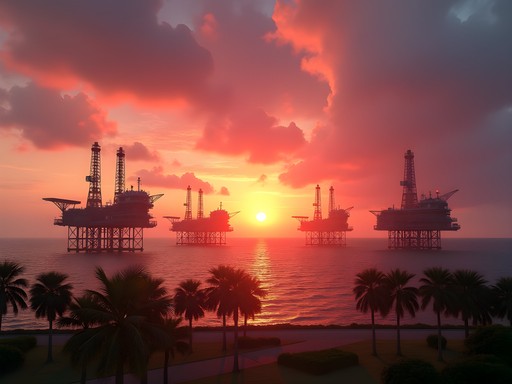
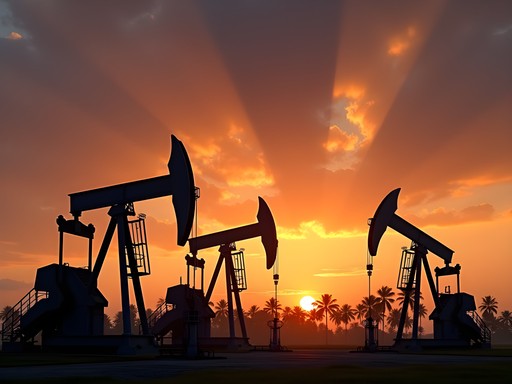
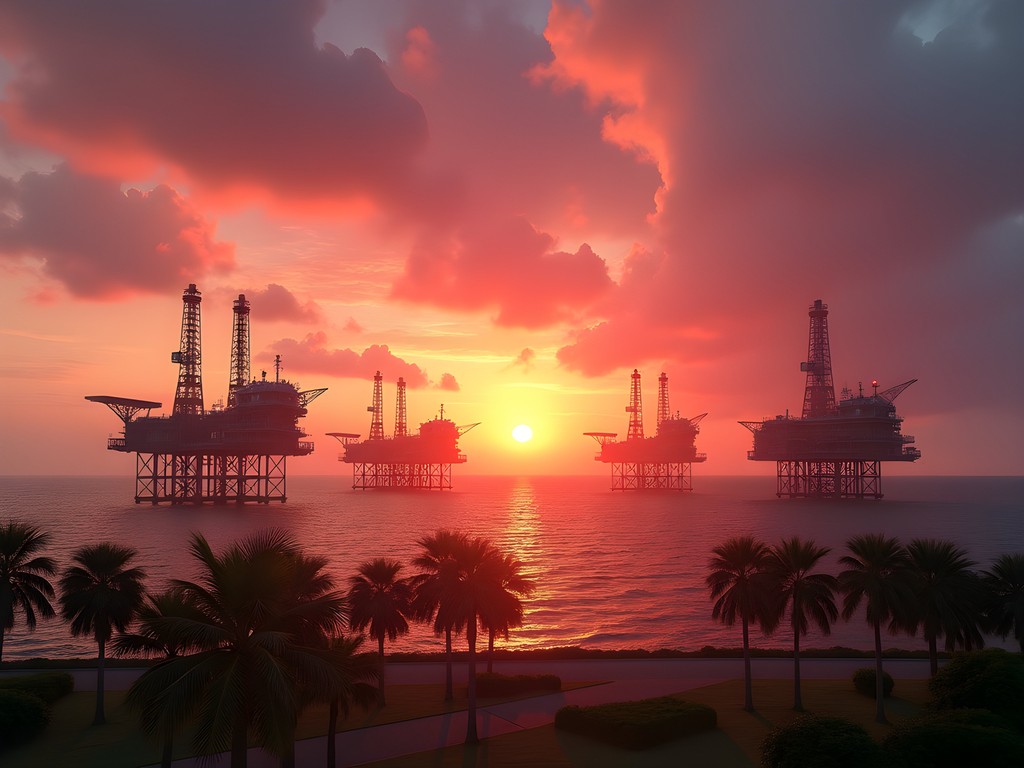
Kuala Belait isn't trying to be pretty—and that's precisely what makes it beautiful. As Brunei's oil town, the landscape is punctuated by nodding pumpjacks, distant flares, and the occasional offshore platform visible on the horizon. Most travelers rush through on their way to somewhere else, but slowing down reveals an industrial symphony worth experiencing.
My first morning, I woke before dawn, grabbed my travel thermos (filled with strong local coffee from a night market vendor), and headed to Silver Jubilee Park. From this vantage point, I watched the sunrise illuminate offshore platforms while locals performed their morning exercises—a perfect metaphor for how industry and daily life harmonize here.
Later that day, I followed the coastline toward the border with Malaysia, finding unexpected beauty in the contrast between industrial structures and the South China Sea. The beaches aren't postcard-perfect, but they offer something more compelling: authenticity. Workers in hard hats shared space with families having picnics, creating a cultural tableau you won't find in any guidebook.
💡 Pro Tips
- Visit Silver Jubilee Park at sunrise for the best views of industrial structures against the morning light
- Bring a polarizing filter for your camera to cut glare when photographing metal structures against the water
- Ask permission before photographing workers or industrial sites—some areas have security restrictions
Finding Food Authenticity in a Company Town
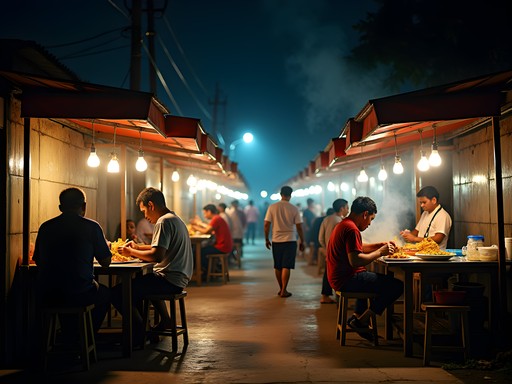
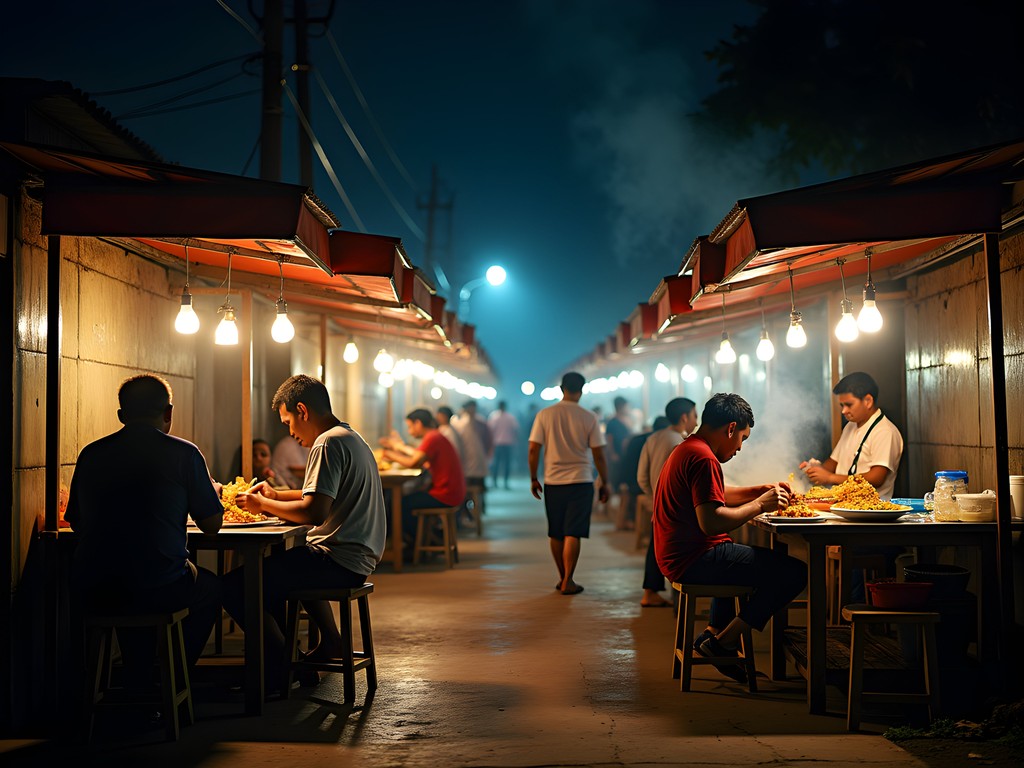
Kuala Belait's status as an oil company town has created a unique food culture that reflects both local Bruneian traditions and the international influence of expatriate workers. The real food scene exists not in fancy restaurants but in simple kedai kopi (coffee shops) and night markets where oil workers, locals, and the occasional adventurous traveler converge.
My favorite discovery was Restoran Nur Wanita, a humble establishment run entirely by women who serve traditional Bruneian and Malay dishes. Their ambuyat—a starchy staple made from sago palm that you eat with a bamboo fork called a chandas—offers a truly local experience few tourists ever try. I've documented countless meals across four continents, and this ranks among the most authentic.
For night photography in these dimly lit food stalls, my mini tripod proved invaluable. Its flexible legs wrapped around railings and poles, allowing me to capture low-light food images without disturbing other diners.
KB's night market near the bus station comes alive after 6 PM, offering everything from grilled fish to kolo mee (noodles with minced meat). Bring small Brunei dollar notes and an empty stomach—the portions are generous and ridiculously affordable.
💡 Pro Tips
- Try ambuyat at least once, but be prepared for its unusual texture—it's an acquired taste
- Visit kedai kopi during morning hours (7-9am) when they're bustling with workers having breakfast
- Look for stalls with long local queues—they invariably serve the best food
Crossing Cultural Boundaries at the Borderlands
One of Kuala Belait's most fascinating features is its position just minutes from the Malaysian border. This proximity creates a cultural blending zone where Bruneian and Malaysian influences intermingle in architecture, language, and daily life.
I spent an afternoon exploring the border area, walking as close as permitted to the actual crossing point. The contrast between Brunei's oil wealth and Malaysia's more modest development is visible in the infrastructure, yet locals move between the two with casual familiarity—many Malaysians work in KB's petroleum industry while living across the border.
For this border exploration, I wore my quick-dry pants which proved perfect for the humid climate and occasional rain shower. Their hidden zippered pocket kept my passport secure during the journey.
The most revealing experience came from simply sitting at a coffee shop near the border and listening to conversations flowing seamlessly between Malay, English, and Chinese dialects. Here, I met Hassan, a petroleum engineer who invited me to join his family for dinner, where I learned more about daily life in KB than any guidebook could possibly contain.

💡 Pro Tips
- Respect border regulations and don't photograph official checkpoints or personnel
- Learn a few basic Malay phrases—locals appreciate the effort even if you're not fluent
- Visit on weekdays to observe the flow of cross-border workers that defines the region's economy

The Forgotten History of Seria Oil Field
Just a short drive from KB's center lies the Seria Oil Field, where Brunei's petroleum history began in 1929. While the country's wealth is now synonymous with the Sultan's opulence, the true story of Brunei's development lies in these oil fields and the communities that formed around them.
The Oil and Gas Discovery Centre offers context through exhibits, but I found more authentic connections by seeking out retired oil workers in local coffee shops. Armed with my pocket translator to help bridge language gaps, I collected stories that revealed how the industry transformed a sleepy fishing village into an industrial hub.
Most memorable was my encounter with Mr. Yong, who worked the fields for 42 years and now spends his days at a local kopitiam. His weathered hands traced invisible pipelines across the table as he described how Japanese forces destroyed the oil fields during World War II, and how workers rebuilt everything from scratch afterward.
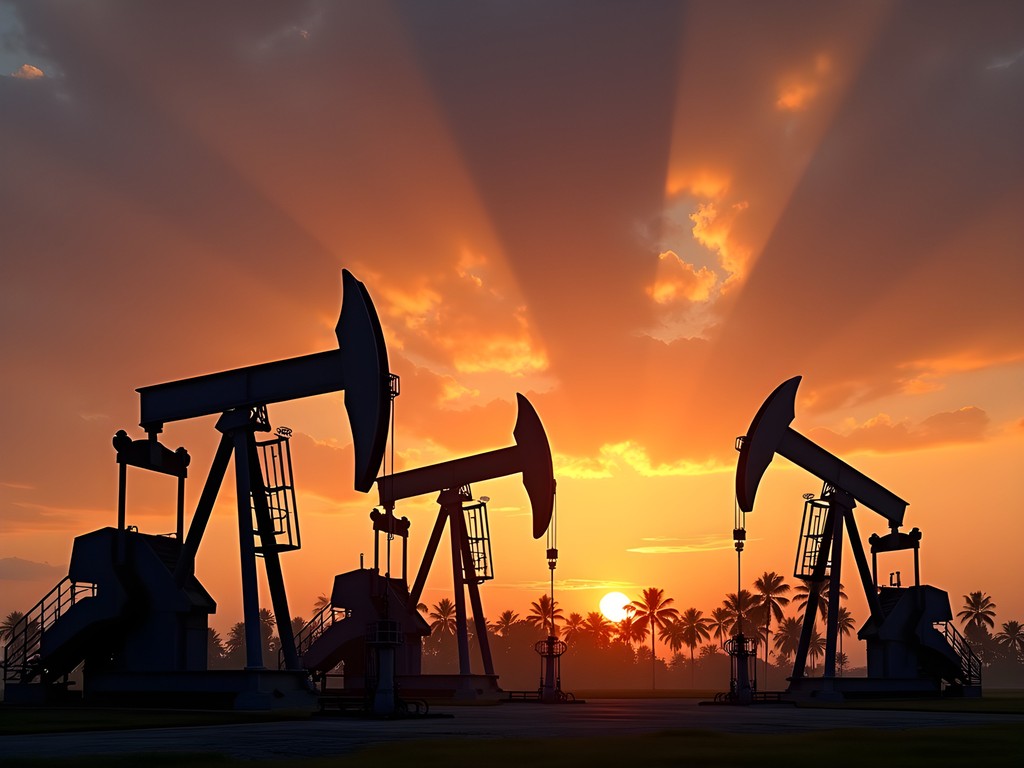
For photographers, the nodding pumpjacks against the setting sun create striking silhouettes, reminiscent of the American plains oil fields I've photographed in North Dakota, yet with a distinctly Southeast Asian context. I recommend using a lens cleaning kit to protect your equipment from the combination of industrial particulates and coastal humidity that can quickly fog lenses.
💡 Pro Tips
- Visit the Oil and Gas Discovery Centre early to avoid school groups
- Seek permission before entering any active industrial areas
- Bring older printed photos of oil fields if you have them—they make great conversation starters with retired workers
Final Thoughts
As my weekend in Kuala Belait drew to a close, I found myself sitting at the same coffee shop where my journey began, watching oil workers change shifts as fishing boats returned to harbor. KB won't make many 'must-visit' lists—and that's precisely its value. In a world where tourism increasingly means following influencers to the same photogenic spots, places like this offer something increasingly rare: an unfiltered glimpse into working landscapes where industry and everyday life coexist without pretense.
I've spent years seeking beauty in overlooked places, from Nebraska's Sandhills to Ireland's bog lands, and KB fits perfectly into this collection of honest landscapes. The town doesn't ask to be admired, doesn't dress itself up for visitors, yet rewards the patient observer with authentic connections and visual contrasts that tell a deeper story about Brunei than any palace tour.
If you're the kind of traveler who finds meaning in places others pass through, who seeks cultural authenticity over comfort, consider giving Kuala Belait a weekend of your time. You won't find luxury, but you'll discover something increasingly rare in our over-traveled world: a place that still belongs primarily to the people who live and work there, rather than to tourism.
✨ Key Takeaways
- Industrial landscapes offer unique photographic opportunities and cultural insights not found in traditional tourist destinations
- Authentic connections with locals are more likely in overlooked destinations where tourism hasn't created artificial experiences
- Border regions like KB provide fascinating glimpses into how neighboring cultures blend and influence each other
📋 Practical Information
Best Time to Visit
September-November (less rainfall, moderate temperatures)
Budget Estimate
$150-200 for a weekend (accommodations, food, local transport)
Recommended Duration
2-3 days
Difficulty Level
Challenging (Limited Tourist Infrastructure, Few English Speakers Outside Oil Industry)


Comments
Haley Hamilton
This is brilliant, Taylor. I've been guilty of skipping over industrial towns in favor of 'prettier' destinations, but you've reminded me why I started traveling in the first place - to understand different ways of life. The way you described the shift changes and the rhythm of a company town brought back memories of hitchhiking through Kazakhstan's oil regions. There's poetry in those landscapes that most people miss. The forgotten history angle is particularly compelling - I'm always drawn to places where economic forces have shaped entire communities. Adding KB to my Southeast Asia route for next year. Did you use this camera for those industrial shots? The lighting is incredible.
Taylor James
Thanks Haley! Actually just used my phone camera - the golden hour light there does all the work!
bluediver
This is really interesting! Quick question - is it safe for solo female travelers? And what's the accommodation situation like? Can't seem to find much info online about hotels there.
smartexplorer
Very safe! Brunei in general is super safe. There are a few basic hotels, nothing fancy but clean and cheap.
redperson
Love the photos of the oil fields!
smartexplorer
Finally someone writes about KB! I lived there for 6 months in 2023 and kept telling people it's underrated. The food scene is legit - especially the Malay and Indonesian workers' cafes near the industrial area. Try the nasi katok if you haven't already. Also the Malaysian border crossing you mentioned is super easy, and Miri is just 30 mins away if you want to compare the two oil towns. They have completely different vibes despite being so close.
Claire Hawkins
Taylor, I love how you found beauty in the unexpected! This reminds me of when we took our kids to Wolfsburg in Germany - everyone thought we were crazy to visit a 'car factory town' but it ended up being one of our most memorable trips. There's something special about seeing how real people live and work, not just the postcard views. The section about the borderlands culture really resonated - those in-between spaces often have the most interesting stories. Did you find the locals welcoming to tourists, or were you a bit of a curiosity?
Taylor James
Definitely a curiosity! But in the best way. People were so eager to share their stories once they realized I was genuinely interested.
adventureexplorer
Never heard of this place but now I'm curious!
tripking
How easy is it to get around without a car? Planning Brunei trip for April and wondering if KB is doable as a day trip from BSB?
happytime
Not OP but it's about 90 mins by bus. Honestly worth staying overnight though - the vibe is totally different from the capital.
Taylor James
Agree with happytime. The buses run regularly but stay at least one night to really experience the town's rhythm.
happytime
THIS is what travel writing should be! I'm so tired of the same old tourist trap articles. Spent 3 days in Seria back in 2019 for work and totally get what you mean about the industrial beauty. The oil fields at sunset are honestly mesmerizing. Did you make it to the Billionth Barrel Monument? Sounds cheesy but it's actually pretty interesting when you learn the history behind it.
Taylor James
Yes! The monument was fascinating. The local guide I met there told me stories about the early days that I couldn't find in any guidebook.
brunei_local
As someone who grew up near KB, it's refreshing to see an outsider appreciate what we take for granted! The oil fields have been our backdrop for generations - my grandfather and father both worked there. If you ever return, check out the small fishing villages just outside town. The authentic Malay-Chinese fusion food there is even better than in KB proper. And the Billionth Barrel Monument in Seria (just 10 min away) is worth visiting for anyone interested in the oil history.
Taylor James
Thank you for sharing that local perspective! I did visit the Billionth Barrel Monument but didn't make it to those fishing villages - definitely on my list for next time. Would love to hear more about your family's history with the oil industry there.
offbeat_explorer
Finally a blog about somewhere different! Tired of the same Instagram spots everywhere.
Venture X
Premium card with 2X miles, $300 travel credit, Priority Pass