



Disclosure: This article contains affiliate links. We may earn a commission from purchases at no extra cost to you, which helps our travel content.
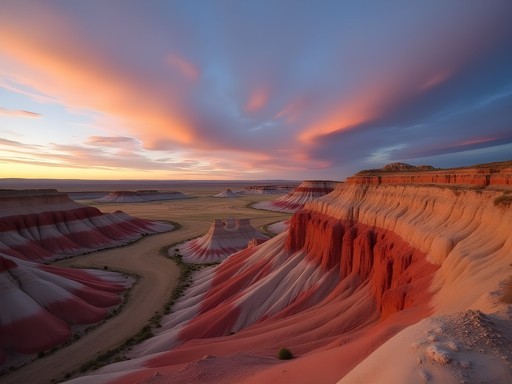
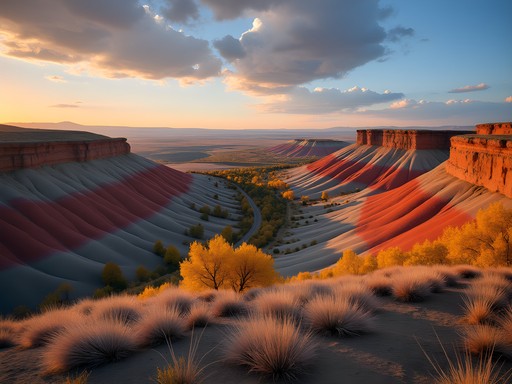
The mention of North Dakota often conjures images of Theodore Roosevelt National Park and the rugged Badlands. Yet nestled just 30 miles east of these iconic landscapes sits Dickinson—a prairie city that exemplifies the fascinating ecological transition zone between the Great Plains and the Badlands. As a wildlife biologist who has documented urban adaptations across North America for three decades, I find these interface communities particularly revealing of our complex relationship with the natural world.

The Dickinson Museum Center: A Window into Prairie Ecosystems
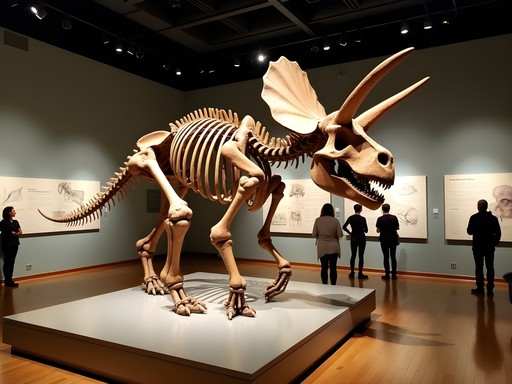
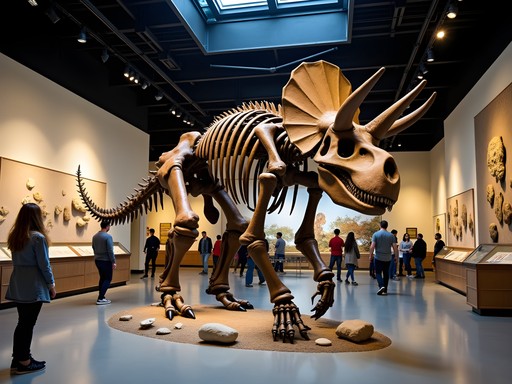
The Dickinson Museum Center complex serves as my first recommendation for any visitor seeking to understand this region's ecological context. The Dakota Dinosaur Museum section houses an impressive collection of fossils that tell the story of this landscape's ancient past. What particularly struck me was the museum's thoughtful integration of paleontology with contemporary conservation narratives.
During my visit, I spent nearly three hours examining the well-preserved specimens, including a complete triceratops skeleton. The museum staff, noting my professional interest, graciously shared details about recent fossil discoveries in the region. Their passion for connecting prehistoric ecology to contemporary environmental challenges mirrors my own approach to science communication.
The adjacent Joachim Regional Museum offers complementary exhibits on human settlement patterns and how they've shaped—and been shaped by—the prairie ecosystem. I recommend bringing a field notebook to record observations that might connect to other sites you'll visit throughout Dickinson. My decades of fieldwork have taught me that patterns emerge when you document observations systematically across different urban spaces.

💡 Pro Tips
- Visit on weekday mornings for a quieter, more contemplative experience with fewer school groups
- Ask staff about recent paleontological discoveries in western North Dakota—they're often eager to share information not yet included in formal exhibits
- The museum offers senior discounts; bring identification
Prairie Outpost Park: Living History in an Ecological Context
Adjacent to the Museum Center lies Prairie Outpost Park, an open-air museum featuring historic buildings relocated from throughout southwestern North Dakota. As someone who studies the intersection of human development and wildlife adaptation, I find this site particularly valuable for understanding regional settlement patterns.
The park includes a schoolhouse, church, and various homestead buildings arranged to recreate a turn-of-the-century prairie community. What fascinates me is observing how these structures were designed in response to the harsh continental climate—the steep roof pitches to shed snow, the strategic placement of windows for cross-ventilation during summer heat, the sheltering windbreaks.
During my exploration, I documented several species of native prairie plants that have recolonized areas between the historic structures—a microcosm of ecological succession that mirrors larger patterns throughout the Great Plains. I recommend wearing a good pair of hiking sandals for comfortable exploration of both the buildings and the surrounding grounds. The terrain is relatively flat but requires substantial walking to see everything.

💡 Pro Tips
- Visit in early morning or evening when the slanting light accentuates architectural details and improves photography
- Look for evidence of native plant species reclaiming spaces between the historic structures
- Bring water—the prairie exposure offers little natural shade
Downtown Dickinson: Urban Ecology in a Prairie Context
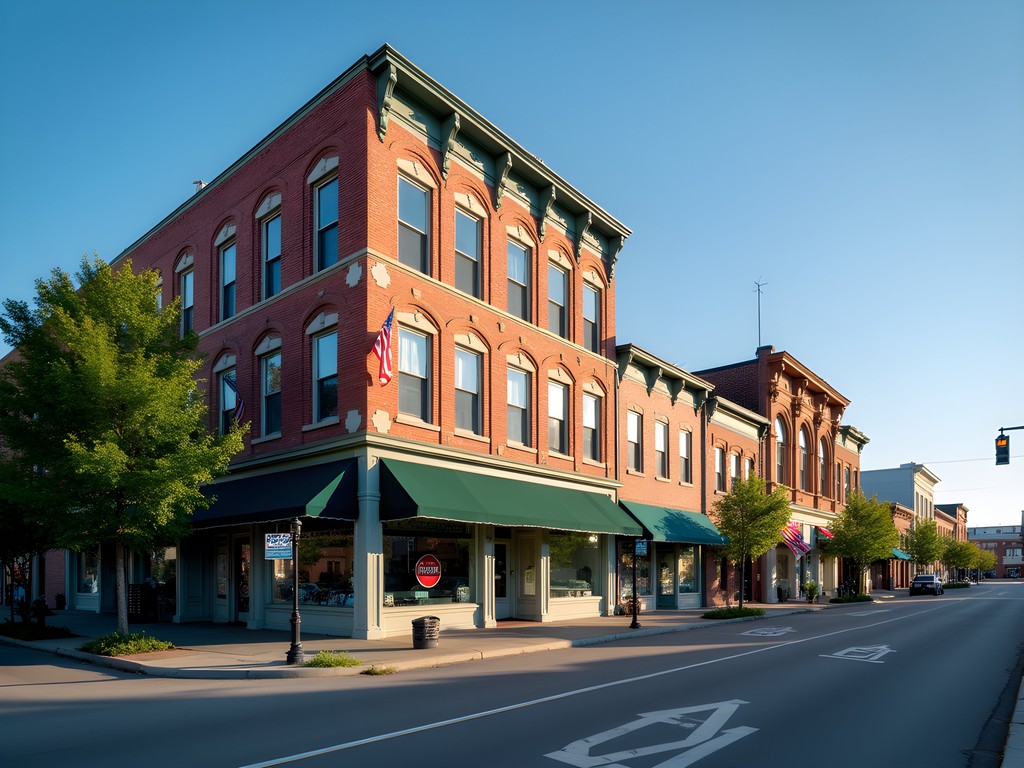
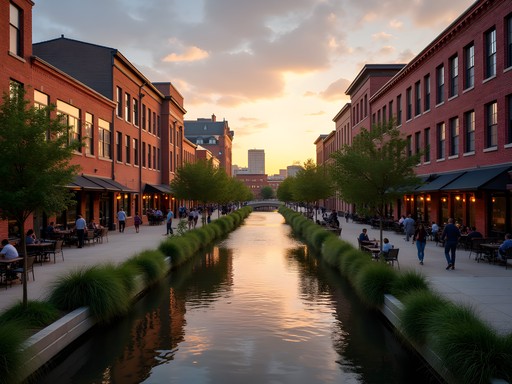
Dickinson's downtown corridor offers an excellent case study in small-city development patterns. The brick buildings along Villard Street, many dating to the early 1900s, tell the story of a community established during the Great Northern Railway expansion. My professional interest in urban wildlife corridors drew me to observe how the city's layout creates micro-habitats even in its most developed areas.
I recommend beginning at the corner of Sims and Villard Streets, then proceeding east along Villard to observe the architectural progression. The historic Stark County Courthouse provides an excellent vantage point to observe the city grid and its relationship to the surrounding topography. During my exploration, I used my pocket monocular to observe nesting birds that have adapted to the urban environment—particularly cliff swallows that have colonized several building facades, treating them as surrogate cliff faces.
Make time to visit Hawks Point, a newer development that demonstrates contemporary approaches to integrating built environments with prairie landscapes. The contrast between this area and the historic downtown provides insights into changing attitudes toward land use over the past century.
💡 Pro Tips
- The public library offers excellent historical maps that illustrate the city's development patterns
- Visit the Stark County Veterans Memorial for a quiet moment of reflection and an elevated view of the cityscape
- Several downtown buildings feature historic murals that depict the region's natural history

Patterson Lake Recreation Area: Urban-Wildlife Interface
Located just southwest of Dickinson, Patterson Lake Recreation Area provides an excellent example of how engineered landscapes can create new ecological niches. The lake itself is a reservoir created by the Heart River Dam, constructed in the 1950s. What makes this site particularly interesting from my biological perspective is observing how wildlife has adapted to this human-altered environment over several decades.
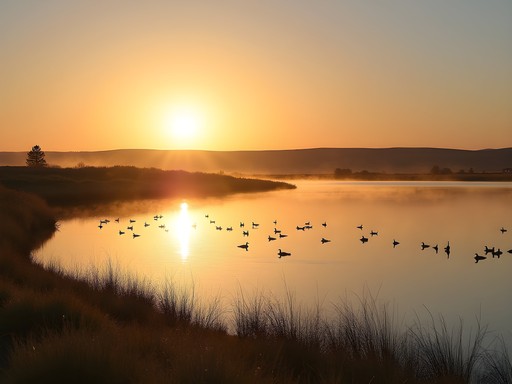
During my weekend visit, I documented several waterfowl species utilizing the reservoir, including breeding populations that would historically have been uncommon in this semi-arid region. The riparian zones along the lake edges have developed distinct plant communities that differ markedly from the surrounding prairie.
For optimal wildlife viewing, I recommend bringing a spotting scope and positioning yourself along the eastern shore in early morning. The recreation area includes several well-maintained trails that allow observation of the transition zones between aquatic, riparian, and prairie ecosystems. I was particularly impressed by the educational signage explaining the reservoir's creation and its ecological impacts—both positive and negative.
If time permits, rent one of the inflatable kayaks available at the recreation area office to explore the lake's perimeter from the water perspective. This allows access to shoreline areas not visible from the trails and provides opportunities to observe beaver activity along the northwestern coves.

💡 Pro Tips
- Visit at dawn for optimal wildlife viewing and photography opportunities
- The western shore trails offer excellent views of both the lake and the distant Badlands topography
- Bring insect repellent during summer months—the riparian areas support healthy mosquito populations
Dickinson State University: Academic Resources for the Curious Explorer
As a scientist who values academic resources, I recommend visitors make time for Dickinson State University's campus, particularly the Natural Sciences department and their excellent library. The university maintains several collections related to regional ecology that aren't widely advertised but are accessible to interested visitors.
The campus itself represents an interesting case study in landscaping choices—some areas feature traditional turf grass while others showcase native prairie restoration projects. This juxtaposition creates an excellent opportunity to observe different management approaches within a single property.
During my visit, I was fortunate to connect with a faculty member researching grassland bird populations who shared valuable insights about regional conservation efforts. While such spontaneous professional exchanges can't be guaranteed, I've found that most academic colleagues are generous with their knowledge when approached respectfully. For serious nature enthusiasts, I recommend bringing a plant identification guide to make the most of campus exploration.
The university's May Hall houses a small but well-curated display of regional geological specimens that complements what you'll see at the Dickinson Museum Center. The Theodore Roosevelt Digital Library, housed at the university, provides fascinating historical context about conservation in the region for those interested in the intersection of policy and ecology.

💡 Pro Tips
- Check the university events calendar for public lectures that might coincide with your visit
- The campus bookstore often carries regional natural history publications not available elsewhere
- Visit the university greenhouse if it's open—it sometimes features native prairie plant propagation projects
Final Thoughts
Dickinson exemplifies what I've observed throughout my career—that small urban centers often reveal more about our relationship with the natural world than we might initially expect. The city functions as an ecological text that can be read by those willing to look beyond surface appearances. From the paleontological treasures of the museum complex to the engineered ecosystem of Patterson Lake, Dickinson offers windows into both natural history and potential conservation futures.
As climate change continues to impact the Great Plains, communities like Dickinson will face adaptation challenges that mirror those of the wildlife I've studied throughout my career. By understanding how this city has developed in response to its environmental context, visitors gain insights applicable far beyond North Dakota.
I encourage fellow solo travelers to approach Dickinson with the curiosity of a naturalist—observe patterns, document transitions between built and natural environments, and engage with local knowledge keepers. The richest urban explorations happen when we bring our scientific curiosity to seemingly ordinary spaces and discover the extraordinary ecological stories they contain.
✨ Key Takeaways
- Small prairie cities like Dickinson offer unique insights into human-environment relationships that differ from larger urban centers
- The transition zone between the Great Plains and the Badlands creates distinctive ecological patterns visible throughout the urban landscape
- Museum collections, historic architecture, and engineered landscapes all provide windows into the region's environmental history
📋 Practical Information
Best Time to Visit
Late May through September, with June offering optimal prairie wildflower displays
Budget Estimate
$200-300 for a weekend (accommodations, meals, and activities)
Recommended Duration
2-3 days
Difficulty Level
Easy

Comments
Amit Sullivan
This brought back memories of my unexpected layover in Dickinson years ago when I was chasing a story about prairie restoration. What was meant to be a one-night stay turned into three days of discovery. An elderly gentleman at the Prairie Outpost Park spent hours showing me how the early settlers adapted European farming techniques to the harsh Dakota climate, and how those adaptations still influence local agriculture today. Sophia, your observation about small urban centers revealing our relationship with the natural world resonates deeply. These overlooked places often tell us more about sustainable coexistence than our celebrated metropolises. Dickinson's blend of Ukrainian, German-Russian and Norwegian heritage creates a cultural ecosystem as diverse as the prairie itself.
Sophia Wilson
Amit, what a wonderful experience! Those unexpected encounters often become the most meaningful. The cultural-ecological connection in these prairie towns is something I'm exploring more in my upcoming work.
wavenomad
If you're visiting Dickinson in summer, check out the Ukrainian Cultural Institute! Small museum but they sometimes have workshops on traditional egg decorating and embroidery. The prairie wildflower bloom at Patterson Lake in late May is stunning too - bring a good camera and field guide if you're into plant identification.
travelway
Great photos of the downtown area! Love those brick buildings.
journeyexplorer
We stopped in Dickinson last summer on our way to Theodore Roosevelt NP and were pleasantly surprised! The Dickinson Museum Center was perfect for our kids to learn about dinosaurs and prairie ecology. Downtown had some cute shops and we found this amazing little bakery that made German pastries (the owner said it's part of the area's heritage). Wish we'd known about Patterson Lake though - looks like a good place to relax after hiking in the Badlands. Adding it to our list for next time!
wavenomad
Was that bakery Baker Boy? Their kuchen is amazing - authentic German-Russian heritage food. Dickinson has surprising food gems!
journeyexplorer
Yes! That's the one! The kuchen was incredible. We bought extra for our hikes.
Douglas Bradley
Sophia, this is a refreshing perspective on a region that's typically reduced to its national park. What struck me during my own visit to Dickinson was how the Prairie Outpost Park functions as both historical preservation and ecological education. The juxtaposition of pioneer structures against the native prairie restoration creates a compelling narrative about human-environment interactions over time. I'm curious if you noticed how the city's urban planning seems to acknowledge the prairie ecosystem more thoughtfully than many larger Midwestern cities? The downtown green spaces with native plantings suggest a more integrated approach.
roamseeker
Never thought of Dickinson as a destination! Is Patterson Lake good for fishing? Planning a road trip through ND this summer.
Sophia Wilson
Absolutely! Patterson Lake is stocked with walleye and northern pike. The recreation area has great fishing piers too.
travelway
Was there last year. Decent catches and rental equipment available at the marina if you don't bring gear.
nomadhero
Just wanted to say THANK YOU for highlighting places like this! Everyone flocks to the same Instagram spots while missing these authentic experiences. Adding Dickinson to my road trip plans!
dreamzone
Would Dickinson be good for families with young kids (5 and 7)? Planning a road trip next summer and looking for stops that aren't just the major parks.
Sophia Wilson
Absolutely! Kids that age would love the dinosaur exhibits at the Museum Center, and Patterson Lake has great swimming areas and playgrounds. The Prairie Outpost Park also has hands-on historical activities during summer months that are perfect for children.
hikingfanatic
Love that sunset shot over downtown! The prairie light is something special.
roadtripmama
Is Patterson Lake good for kids? Planning to visit with my 7 and 9 year olds next month.
localND_guide
Patterson Lake is great for kids! There's a nice playground, shallow swimming areas, and easy walking paths. My kids love the little beach area on the north side.
roadtripmama
Perfect, thanks so much for the info!
Venture X
Premium card with 2X miles, $300 travel credit, Priority Pass