


Disclosure: This article contains affiliate links. We may earn a commission from purchases at no extra cost to you, which helps our travel content.
There's something magical about Chicago in autumn. As the summer crowds disperse and the lakefront breeze carries the first hints of coolness, the city's architectural marvels stand in stark relief against skies that shift from cerulean to amber as the day progresses. Having explored cities across five continents, I can confidently say that nessuna città parla come Chicago — no city speaks quite like Chicago. Its buildings tell stories of ambition, rebirth, and innovation that resonate regardless of your native tongue. After bringing my daughter here last fall to supplement her school project on urban design (and yes, to catch a cricket match in the suburbs), I've crafted these self-guided walking tours that reveal Chicago's architectural narrative without breaking the bank. Whether you're architecture enthusiasts or simply appreciate beauty in human creation, these routes offer couples a perfect weekend of discovery in America's first city of architecture.

The Loop: Chicago's Architectural Heart
The Loop isn't merely Chicago's downtown—it's an open-air museum of architectural evolution spanning over a century. Begin your exploration at the Chicago Architecture Center on East Wacker Drive, where the impressive scale model of the city provides essential context for what you're about to experience. While the center's official tours are excellent, their free ground-floor exhibition gives budget-conscious travelers enough orientation to self-guide effectively.
From here, walk south on Michigan Avenue to admire the magnificent Carbide & Carbon Building, its dark granite and green terra cotta designed to resemble a champagne bottle during Prohibition—a subtle architectural rebellion that always makes me smile. Continue to the Chicago Cultural Center, whose Tiffany glass dome rivals many I've seen in European palaces.
The true gems of the Loop reveal themselves when you look up and notice the stylistic dialogue between buildings: Art Deco masterpieces like the Chicago Board of Trade building conversing across decades with Mies van der Rohe's minimalist Federal Center. This architectural conversation reminds me of Seoul's Bukchon Hanok Village, where traditional Korean homes similarly tell stories across generations through their design elements.
As you walk, download the excellent Chicago Architecture Guide for historical context and detailed information about each building's significance. The app has saved me countless times when my daughter asks those unexpectedly profound questions about why buildings look the way they do.

💡 Pro Tips
- Visit on weekday mornings to avoid crowds and catch beautiful morning light on east-facing facades
- Many building lobbies are open to the public and feature stunning interior details—don't be shy about entering respectfully
- The Cultural Center offers free restrooms and WiFi—a perfect midpoint break
Riverside Revelations: The Chicago River Architecture Trail
The Chicago River isn't merely a waterway—it's the reason the city exists, and walking along its banks offers perspectives you simply can't appreciate from street level. Begin at the Michigan Avenue Bridge (officially DuSable Bridge) and look for the plaques that mark the site of Fort Dearborn, Chicago's origin point. The bridge itself, with its distinctive double-deck design, represents Chicago's practical approach to urban challenges.
From here, follow the Chicago Riverwalk westward. This pedestrian pathway completed in 2016 has transformed a formerly industrial zone into one of my favorite urban walks worldwide. The way it integrates historical elements with modern design reminds me of Seoul's Cheonggyecheon Stream restoration project—both reclaim waterways for public enjoyment while honoring their industrial past.
As you stroll, you'll pass beneath bridges with distinct personalities and engineering styles. My daughter counted seventeen different bridge types during our visit—each one representing the technology and aesthetic preferences of its era. The Marina City towers (affectionately known as the 'corn cobs') stand in conversation with the sleek glass of 333 West Wacker Drive, whose curved façade perfectly mirrors the river's bend.
For the best photos, I recommend bringing a wide angle lens if you use a DSLR camera. The tight quarters along the river make capturing the full height of buildings challenging without one. If you're using a smartphone, most newer models have adequate wide-angle capabilities built in.

💡 Pro Tips
- Visit at sunset when buildings on the west side of the river glow with golden light
- Coffee shops along the Riverwalk offer reasonably priced refreshments with million-dollar views
- Every bridge has a distinctive history—look for the year markers and engineering details
Frank Lloyd Wright's Oak Park: Prairie School Perfection
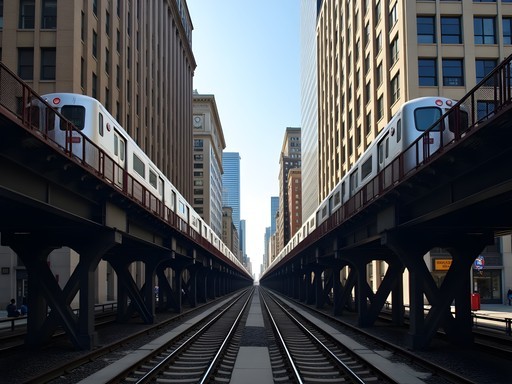
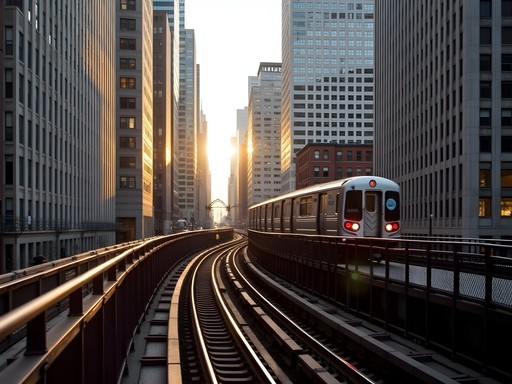
While technically outside Chicago proper, no architectural pilgrimage would be complete without visiting Oak Park, home to the largest collection of Frank Lloyd Wright-designed buildings in the world. The journey there on the Green Line 'L' train is itself a lesson in how Chicago's neighborhoods evolved outward from the center.
Begin at Wright's Home and Studio on Chicago Avenue, where for a modest fee you can see where the Prairie School style was born. What fascinates me most about this complex is how it served as Wright's laboratory—you can literally see his architectural philosophy evolving room by room, year by year.
From here, follow the self-guided walking tour map (available for free online or inexpensively at the gift shop) through the surrounding neighborhood. The Frank Lloyd Wright Trust has thoughtfully marked each significant house with informative plaques. As you walk these quiet, tree-lined streets, you'll notice how Wright's designs interact with nature—a philosophy that reminds me of traditional Korean hanok homes with their careful orientation to natural elements.
The crown jewel is Unity Temple on Lake Street, Wright's revolutionary concrete church that somehow manages to feel simultaneously monumental and intimate. Having visited sacred spaces across continents, I find Unity Temple's manipulation of light particularly masterful—reminiscent of how traditional tea rooms in Korea use indirect illumination to create contemplative atmospheres.
Bring along a good architecture guidebook to appreciate the subtle details that make each building revolutionary for its time. I found myself constantly referencing mine to understand how Wright's innovations influenced architects worldwide for generations to come.

💡 Pro Tips
- Visit on weekdays when residential streets are quieter and you can linger without disrupting residents
- Many Wright houses are still private homes—respect boundaries while photographing exteriors
- The Hemingway birthplace is nearby and makes a complementary cultural stop

North Side Narratives: From Gold Coast to Old Town
Chicago's North Side neighborhoods offer a different architectural story—one of wealth, social aspiration, and resilience after the Great Fire of 1871. Begin your exploration at the Water Tower on Michigan Avenue, one of the few structures to survive the fire and now a poignant symbol of the city's rebirth.
From here, wander west into the Gold Coast Historic District, where Chicago's industrial barons built mansions to display their newfound wealth. The juxtaposition of Victorian, Romanesque, Gothic Revival, and Georgian styles creates a visual tapestry that reminds me of certain neighborhoods in Rome, where different historical periods similarly coexist within blocks of each other.
Astor Street presents particularly well-preserved examples, including the Patterson-McCormick Mansion with its distinctive red brick and limestone trim. What strikes me most about these homes is how they communicate social messages through architectural choices—the same way traditional Korean yangban houses used specific design elements to signal the owner's scholarly status.
Continue north to Old Town, where post-fire wooden cottages stand in charming contrast to the grand Gold Coast mansions. The neighborhood feels almost European in scale and offers glimpses of Chicago before steel-frame construction enabled buildings to reach skyward. St. Michael's Church, with its 574-foot spire, was once the tallest point in Chicago and served as a beacon for immigrants seeking community in a new land.
Bring comfortable walking shoes like cushioned walking sneakers as this tour covers significant ground over sometimes uneven historic pavements. My translator's instinct for detail appreciation finds endless satisfaction in this neighborhood, where every facade tells a story of aspiration, craftsmanship, and the American dream rendered in brick and stone.

💡 Pro Tips
- The Chicago History Museum at the southern edge of Lincoln Park makes an excellent starting or ending point for historical context
- Many historic homes open their doors during the annual architectural open house weekend in October
- Cafés along Wells Street offer perfect rest stops with neighborhood character
Bridgeport & Pilsen: Immigrant Influences on Chicago's Vernacular Architecture
Away from downtown's soaring skyscrapers, Chicago's immigrant neighborhoods tell equally compelling architectural stories through more modest structures. Begin in Bridgeport, historically Chicago's Irish neighborhood and later home to various European and Asian communities. The modest worker cottages here—rectangular, one-and-a-half-story homes with side hallways—represent a distinctly Chicago vernacular style born of necessity and practicality.
As you walk these streets, notice how residents have personalized these simple forms over generations, adding details reflecting their cultural heritage. This architectural adaptation reminds me of how Korean families modify traditional hanok homes to accommodate modern life while preserving essential elements.
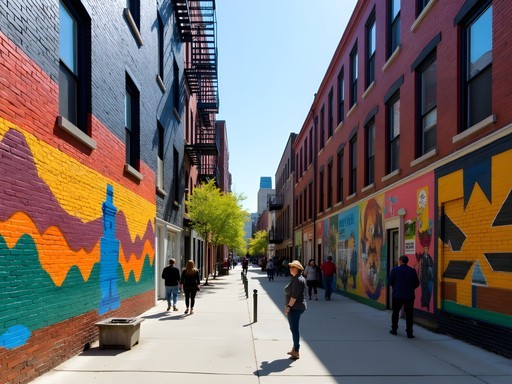
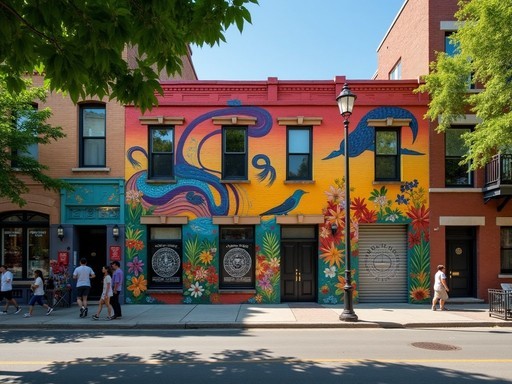
Continue to nearby Pilsen, where the Czech and later Mexican communities transformed the built environment. The Bohemian-style buildings feature distinctive baroque-inspired parapets and lintels that would look at home in Prague. As Mexican residents arrived in the mid-20th century, they added vibrant murals and mosaics that transform utilitarian structures into cultural expressions.
The National Museum of Mexican Art provides excellent context for understanding how architecture and public art intertwine in immigrant communities. What fascinates me most is how these neighborhoods demonstrate architecture as an ongoing conversation between people and place—buildings constantly reinterpreted rather than frozen in time.
Bring a portable charger for your phone, as you'll want to photograph countless details and murals throughout these visually rich neighborhoods. The way cultural identity expresses itself through built environments reminds me of Seoul's rapidly changing neighborhoods, where traditional and contemporary elements similarly coexist in dynamic tension.

💡 Pro Tips
- Sunday mornings offer quiet streets perfect for photography and contemplation
- Many family-owned restaurants in these neighborhoods offer authentic, budget-friendly meals
- Look for repurposed buildings—former factories and warehouses now serving as community spaces tell stories of economic transition
Final Thoughts
As I boarded my flight back to Seoul, my notebook filled with architectural sketches and observations, I found myself reflecting on how Chicago's buildings speak a language that transcends borders. Like the best urban environments worldwide, Chicago reveals itself differently with each visit—the same buildings transform with changing light, seasons, and our own evolving perspectives. The city's architectural narrative isn't merely about famous architects or engineering feats; it's about how communities express values through built environments. Whether you're drawn to soaring modernist towers or humble worker cottages, Chicago offers architectural conversations worth joining. La bellezza è negli occhi di chi guarda—beauty is in the eye of the beholder—but Chicago makes beholders of us all. I hope these self-guided tours help you discover your own architectural narrative in this remarkable American city.
✨ Key Takeaways
- Chicago's architecture is best appreciated on foot through neighborhoods with distinct architectural characters
- Fall offers ideal weather and light conditions for architectural photography and extended walking tours
- Budget travelers can access most architectural highlights through self-guided tours rather than paid experiences
- Each neighborhood's architecture tells stories of immigration, economic change, and cultural identity
📋 Practical Information
Best Time to Visit
September-October for mild temperatures and beautiful fall colors
Budget Estimate
$200-300 for a weekend (excluding accommodations)
Recommended Duration
2-3 days minimum
Difficulty Level
Easy To Moderate (5-8 Miles Of Walking Daily)
Comments
Bryce Diaz
Man, this brings back memories. I did almost this exact route back in 2019 but made the rookie mistake of wearing brand new boots. By the time I hit Oak Park my feet were screaming. Pro tip from that painful lesson: break in your walking shoes first! I also stumbled onto this tiny cafe called The Silver Room in Hyde Park that had the best coffee and the owner just talked architecture with me for like an hour. Not sure if it's still there but worth checking. Your point about the Prairie School houses in Oak Park is spot on - they really do look like they grew out of the Midwest landscape.
islandbuddy
Ha! Made the same boot mistake in Boston once. Never again.
greenguide
Love this!! The photos are gorgeous too 📸
Jean Wells
Brooklyn, your routing through the Loop is smart - starting at the Monadnock Building and working north really does give you the chronological progression of Chicago's architectural evolution. I'd note for other readers that autumn timing is strategic beyond just aesthetics. The angle of light in October particularly enhances the relief work on buildings like the Rookery. I visited in July once and the harsh overhead sun washed out so much detail. Also found that early Sunday mornings in the financial district offer the emptiest streets for photography.
summerwanderer
Great post! I'd add that the Chicago Architecture Center has a decent free exhibit if you want some context before hitting the streets. Also the 360 Chicago observation deck gives you a good overview of how everything fits together geographically. The river cruise is worth it too if your feet need a break but honestly walking is the best way to really see the details.
roamace
Good call on the observation deck! Adding to my list.
roamace
This is EXACTLY what I needed!! Going to Chicago in May and was overwhelmed with all the architecture options. Love that you mapped out specific routes!
globeblogger
How long did each walking tour take you? Planning a 3-day trip and trying to figure out if I can fit them all in.
Brooklyn Washington
The Loop took me about 2-3 hours with photo stops. River walk was maybe 90 minutes. Oak Park is a half day if you do the interior tours. You could definitely hit Loop + River in one day, Oak Park another!
globeblogger
Perfect, thanks!
islandbuddy
Oak Park is incredible! Did this last fall.
skylife964
Thanks for sharing!
redexplorer
Is this doable with a wheelchair? My mom uses one and she's really into architecture. Wondering about the Oak Park section especially.
islandlegend
The Loop and River walk are totally accessible. Oak Park has some older sidewalks that might be tricky but the main Wright sites have ramps. Call ahead to the Frank Lloyd Wright Trust, they're really helpful about accessibility questions.
redexplorer
Thanks so much! Will definitely call ahead
sunnyway
Your photos are gorgeous!! The one of the Wrigley Building at sunset is amazing 😍
Venture X
Premium card with 2X miles, $300 travel credit, Priority Pass