

Disclosure: This article contains affiliate links. We may earn a commission from purchases at no extra cost to you, which helps our travel content.
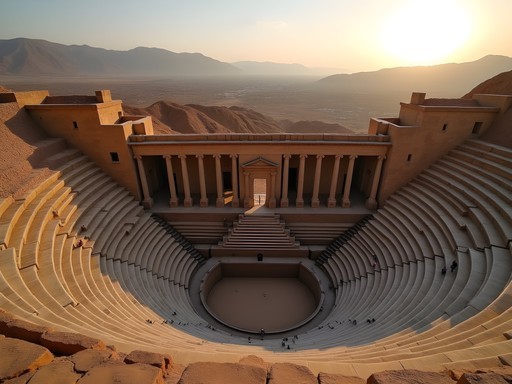
The first time I laid eyes on the Roman Theater of Bosra, it felt like stumbling upon a secret the world had somehow forgotten. Standing in silent magnificence amid the small Syrian town of Bosra ash-Sham, this 2nd-century architectural marvel represents one of the most complete and well-preserved Roman theaters on Earth. Perfettamente conservato, as my mother would say—perfectly preserved. Unlike its more famous counterparts drowning in tourists, Bosra's theater exists in a strange limbo—an archaeological wonder of staggering significance that geopolitical circumstances have rendered nearly inaccessible. As someone who has spent a lifetime bridging cultures through language, I found myself drawn to this place where Roman, Byzantine, and Islamic influences converge in striking black basalt stone. My journey here was neither simple nor conventional, but for those willing to navigate the complexities of visiting southern Syria, Bosra offers something increasingly rare in our hyper-documented world: a genuine encounter with the ancient past, largely undisturbed by the machinery of mass tourism.

A Translator's Journey to Forgotten Magnificence
My path to Bosra began, as many meaningful journeys do, through language. While translating a scholarly text on Roman provincial architecture from Italian to Korean—a peculiar linguistic bridge I'm often called upon to build—I became fascinated by references to this theater that once hosted 15,000 spectators. The text described a structure so well-preserved that the original stage buildings still stand, a rarity in the ancient world.
Arranging this visit required patience, persistence, and professional connections. As a translator with contacts across academic institutions, I secured necessary permissions through a Damascus University archaeological program. While Syria's tourism infrastructure has been devastated by conflict, specialized academic visits remain possible for those with proper arrangements and local guides.
The journey from Damascus took approximately two hours by private car with my university-appointed guide, Faisal. As we drove south through changing landscapes, Faisal shared stories of Bosra's multiple historical identities—Roman outpost, Byzantine center, and important Islamic city. I recorded his narratives on my trusty digital voice recorder, a habit from my translation work that serves me equally well in travel.
When the black basalt city finally appeared on the horizon, the contrast against the golden landscape was startling. Unlike the warm, golden-hued ruins I'd grown up with in Rome, Bosra's structures emerge from the earth in dramatic darkness, as if carved from solidified shadow.

💡 Pro Tips
- Arrange visits through academic institutions when possible—they often have established protocols for research-oriented travel
- Hire a knowledgeable local guide who speaks your language; they're essential for both safety and deeper cultural understanding
- Document audio notes rather than just photographs—the sounds and spoken histories add crucial dimension to your experience
Architectural Marvel in Black Basalt
What distinguishes Bosra's theater isn't just its remarkable state of preservation but its unique construction material. While most Roman theaters were built from marble or limestone, Bosra's architects utilized the region's abundant black basalt—a volcanic stone of extraordinary durability that has withstood both time and conflict with remarkable resilience.
The theater's most striking feature is its defensive integration. During the 12th century, Ayyubid forces transformed the structure into a fortress by enclosing it within a citadel with 12 towers. This ingenious adaptation likely saved the theater from destruction, as subsequent rulers maintained the fortification rather than dismantling it for building materials.
Wandering through the cavea (seating area), I ran my hands along the smooth basalt, worn by centuries of human contact. The stone holds heat differently than Roman travertine—absorbing the day's warmth and releasing it slowly as evening approaches. I measured these subtle temperature changes with my infrared thermometer, a quirky travel companion that helps me document the physical properties of historical materials.
The acoustics remain astounding. Standing at the orchestra level, I whispered a few lines from Virgil's Aeneid—words I'd learned as a schoolgirl in Rome—and heard them return with crystalline clarity. Faisal smiled knowingly and explained that local folklore attributes magical properties to the theater's acoustics, claiming they can heal certain ailments if one listens to music performed there during specific lunar phases.
The stage building, or scaenae frons, retains its two-story columned façade—an architectural rarity that offers invaluable insights into Roman theatrical traditions. Elaborate carvings depict mythological scenes alongside geometric patterns that hint at the region's transition between classical and early Byzantine artistic sensibilities.

💡 Pro Tips
- Visit in late afternoon when the angle of light dramatically enhances the texture of the basalt stones
- Test the acoustics by standing at center stage and speaking at normal volume—you'll be amazed how clearly your voice carries to the uppermost seats
- Look for the subtle fusion of Roman and local Syrian architectural elements in the decorative carvings
Cultural Crossroads: Beyond the Roman Façade
What fascinates me most about Bosra is not just its Roman origins but how the site embodies cultural layering—a physical manifestation of the linguistic palimpsests I encounter in my translation work. The theater exists within a broader archaeological zone where Roman, Byzantine, and early Islamic structures stand in remarkable proximity.
Just steps from the theater stands the Al-Omari Mosque, one of the oldest surviving mosques in Islamic history, dating to the 7th century. The juxtaposition of these monuments—pagan entertainment venue and monotheistic house of worship—offers a powerful reminder of how cultural transitions rarely involve complete erasure. Rather, new traditions build upon and adapt earlier foundations, both literally and figuratively.
As a translator who navigates between Italian, English, and Korean daily, I'm particularly sensitive to these cultural interweavings. Walking through Bosra with my notebook, I documented instances of architectural code-switching—Roman arches repurposed in Byzantine churches, classical columns incorporated into Islamic structures, and decorative motifs that blend multiple artistic traditions.
The local community's relationship with these monuments proves equally fascinating. Unlike many archaeological sites cordoned off from contemporary life, Bosra's ancient city remains partially inhabited. Families live in structures that incorporate ancient walls; children play in courtyards where Byzantine mosaics occasionally peek through the soil.
Faisal introduced me to Um Hassan, an elderly woman whose family has lived in a house adjoining the eastern edge of the theater complex for generations. She invited us for tea in a courtyard where a Roman column serves as an impromptu table. As we sipped from small glasses, she recounted local legends about the theater—stories passed down through generations that blend historical facts with magical elements. I recorded our conversation (with permission) using my portable audio recorder, capturing not just her words but the ambient sounds of this living archaeological space—children playing, birds nesting in ancient niches, the call to prayer echoing against two-thousand-year-old stones.

💡 Pro Tips
- Engage respectfully with local residents—their generational knowledge offers insights no guidebook can provide
- Visit the Al-Omari Mosque near the theater to understand the site's cultural evolution across different religious traditions
- Look for evidence of architectural 'recycling' where materials from Roman structures were repurposed in later buildings

Navigating Modern Complexities
I cannot write about Bosra without acknowledging the profound challenges of visiting Syria in current times. This is not a destination for casual tourism or inexperienced travelers. The ongoing humanitarian situation demands both practical preparation and ethical consideration.
My visit was possible through academic connections and carefully arranged permissions. For those considering similar journeys, working through educational institutions remains the most viable approach. Several European universities maintain limited archaeological programs that occasionally accept qualified visitors with relevant research or professional backgrounds.
Logistical challenges abound. Banking infrastructure remains severely limited; I carried sufficient cash in small denominations secured in a travel money belt worn beneath my clothing. Communication infrastructure is unpredictable—I arranged for a local SIM card through my university contacts but also carried a satellite communication device for emergencies.
Security considerations cannot be overstated. Conditions change rapidly, and areas considered stable can quickly become inaccessible. My visit was limited to specific approved routes with mandatory accompaniment by university-appointed guides. Independent travel remains impossible in most regions.
The ethical dimensions deserve equal consideration. I struggled with questions about whether my presence might normalize a devastating situation or potentially benefit those responsible for suffering. After considerable reflection, I proceeded with the understanding that cultural heritage transcends political circumstances, and that documenting these sites serves a purpose beyond tourism.
Perhaps most importantly, I approached this journey with awareness of my privileged position as someone who could choose to visit briefly and then leave. The Syrian people have no such luxury. Every interaction was informed by this understanding, and I made conscious efforts to direct any spending toward local families rather than government-affiliated enterprises.
Despite these complexities—or perhaps because of them—the experience carried profound meaning. In a world where tourism increasingly feels like consumption of experiences, Bosra demanded something different: presence, respect, and the humility to acknowledge that some places cannot be reduced to Instagram moments or travel checklist items.

💡 Pro Tips
- Work exclusively through established academic institutions with official permissions—never attempt independent travel
- Carry sufficient cash in small denominations and multiple secure locations on your person
- Research the current humanitarian situation thoroughly and consider the ethical implications of your visit
Preserving Memories Through Language
As a translator, I'm acutely aware that languages carry cultural memories that transcend physical preservation. While Bosra's basalt structures have withstood centuries, equally fascinating are the linguistic echoes that survive in local dialects and place names.
During my visit, I collected words and phrases that reflect Bosra's layered history. The theater itself is locally called al-masrah al-romani, but older residents sometimes use terms derived from Byzantine Greek. Street names incorporate Latin, Aramaic, and Arabic elements, creating a linguistic archaeology that parallels the physical one.
I spent one memorable afternoon with Ahmad, a local teacher who has documented traditional stories about the theater. He shared narratives passed through generations—tales of Roman actors whose ghosts supposedly still perform on moonlit nights, of hidden chambers containing lost treasures, and of the theater's legendary acoustic properties.
These stories exist in a fascinating linguistic space between Arabic and the region's older languages. Ahmad pointed out words of Aramaic origin that survive only in these specific stories—linguistic fossils preserved through oral tradition. As someone who works daily with language evolution, I found these verbal artifacts as compelling as any physical ruin.
To document these encounters, I relied on my field notebook and audio recordings. My waterproof notebook proved invaluable during an unexpected afternoon rainstorm that sent us seeking shelter beneath the theater's ancient arches. There, listening to the rain echo through the structure while Ahmad continued his stories, I experienced one of those transcendent travel moments that no luxury resort could ever provide.
For those interested in linguistic aspects of archaeological sites, I recommend preparing by learning basic greeting terms in Syrian Arabic and perhaps a few words related to architectural features. Even this minimal effort opens doors to deeper connections with local knowledge keepers.
Before leaving, I promised Ahmad I would share his stories in my writings—a small contribution toward preserving cultural memories that exist beyond the physical monuments. In a region where so much has been lost, these intangible cultural elements carry special significance.

💡 Pro Tips
- Learn basic greeting terms in Syrian Arabic before visiting—this simple gesture opens many doors
- Ask about local names for architectural features, which often preserve historical information lost in academic terminology
- Record (with permission) conversations with local residents about site histories and traditions
Final Thoughts
As I reluctantly departed Bosra, watching the black basalt theater recede in the distance, I carried with me more than photographs and notes. I had experienced a profound connection with a place where human creativity has persisted across millennia, despite war, natural disasters, and political upheaval. The theater stands as testimony to our capacity for creating beauty that endures—a reminder I desperately needed in our disposable era. For those with the determination, preparation, and appropriate background to navigate the complexities of visiting Syria, Bosra offers something increasingly rare: an encounter with history that hasn't been polished and packaged for mass consumption. It remains authentic, challenging, and deeply moving. Come un ponte tra mondi—like a bridge between worlds—this remarkable theater connects us across time to our shared human heritage. Until Syria finds peace and Bosra becomes more accessible, I hope my words serve as a small window into this extraordinary place where stone, story, and spirit converge.
✨ Key Takeaways
- Bosra's Roman theater represents one of the best-preserved ancient theaters in the world, uniquely constructed from durable black basalt
- The site demonstrates remarkable cultural layering where Roman, Byzantine, and Islamic influences visibly converge
- Visiting requires substantial preparation, academic connections, and careful ethical consideration given Syria's current situation
- Local knowledge and oral traditions provide essential context that complements the physical archaeology
📋 Practical Information
Best Time to Visit
March-May when temperatures are moderate and occasional rainfall enhances the contrast of the black basalt
Budget Estimate
$1500-2500 for necessary permits, guides, transportation, and accommodation
Recommended Duration
1-2 days at the archaeological site, with 4-5 days total including necessary travel arrangements
Difficulty Level
Challenging - Requires Advance Permissions, Guided Access, And Comfort With Uncertain Conditions

Comments
Gregory Boyd
Brooklyn, fascinating post. The black basalt construction is what really sets Bosra apart from other Roman theaters I've visited - Ephesus, Jerash, even Aspendos in Turkey. There's something haunting about that dark stone. I'm curious about your experience as a translator there - did you find many locals still living in or around the theater complex itself? I know some Roman sites in the Middle East have had modern settlements built directly into the ancient structures. Also, how did you navigate the documentation and permissions for your visit? That's always the trickiest part of traveling to restricted areas.
adventurefan
Have you been to Jerash? That's on my list too!
Gregory Boyd
Yes! Jerash is fantastic and much easier to visit since it's in Jordan. The colonnaded street there is one of the best preserved I've seen anywhere. Definitely recommend it as a more accessible alternative while Syria remains difficult.
adventurefan
This looks incredible! Is it even possible to visit Syria right now as a tourist? Would love to go but seems complicated
Gregory Boyd
It's definitely complicated. I haven't been to Syria myself, but from what I understand tourist visas are being issued again in limited circumstances. You'd need to go through a registered tour operator and the security situation varies by region. Southern Syria where Bosra is located has been more stable than other areas, but you really need to do thorough research and probably wait for more diplomatic relations to normalize. That said, the architecture looks absolutely worth it when the time is right.
adventurefan
Thanks! Yeah maybe I'll put it on the long term bucket list
springninja
Those black stone walls against the desert backdrop look incredible! Thanks for shining light on places that don't make mainstream travel lists. Hope to see it myself someday!
dreamseeker
Right? The contrast is stunning. I've never seen a theater made of black stone before!
tripdiver
This is why I follow travel blogs! Never would have known about this place otherwise. Adding it to my someday-when-it's-safer bucket list. Your descriptions really bring it to life!
Jean Wells
Brooklyn, thank you for highlighting this overlooked masterpiece. The Roman Theater of Bosra represents one of the best-preserved examples of Roman provincial architecture in the Middle East, yet receives a fraction of the attention of sites like Palmyra or Jerash. What's particularly fascinating is how the Ayyubid fortress integration preserved the theater during medieval conflicts. Your observations about the basalt construction are spot on - the material choice has contributed significantly to its longevity compared to marble structures elsewhere. For anyone planning to photograph ancient theaters, I found my wide angle lens essential for capturing the full grandeur of these spaces. Did you notice the subtle architectural adaptations that reflect local Syrian building traditions versus standard Roman templates?
freenomad
Great post! How did you arrange transportation to Bosra? Is it accessible from Damascus or did you need special arrangements?
citybackpacker
Those acoustics must be amazing! Did you try speaking from the stage?
Brooklyn Washington
I did! Even a whisper carries perfectly to the back row. One of the most impressive acoustic designs I've ever experienced.
Lillian Diaz
Brooklyn, this post brought back so many memories! I visited Bosra back in 2010, before the conflict intensified, and the theater was just as magnificent then. What struck me most was how the locals had built their homes into the ancient structure over centuries - that layering of history is something you don't see in more 'preserved' sites. I remember sitting in the upper tiers as the sun set, just listening to the sounds of the town. Did you get to experience any performances or was it quiet when you visited? Your description of the black basalt against the desert landscape took me right back there.
Brooklyn Washington
Lillian, it must have been incredible to see it before the conflict! No performances during my visit - it was eerily quiet, which had its own kind of power. The caretaker mentioned they occasionally host small cultural events now, but nothing regular yet.
tripwanderer
Beautiful post! How safe is it to travel to Syria right now? I've always wanted to visit these kinds of historic sites but worried about the situation there.
Brooklyn Washington
Thanks for your question! The situation remains complex. I went with a specialized tour company that handles all permits and security considerations. Certain regions are more accessible than others, and conditions change frequently. I'd recommend checking your country's travel advisories and connecting with recent travelers before planning anything.
tripwanderer
Thanks for the honest response! I'll definitely do more research before considering a trip.
dreamseeker
Wow! I had no idea Syria had such incredible Roman ruins. Your photos are absolutely stunning!
Venture X
Premium card with 2X miles, $300 travel credit, Priority Pass