
Disclosure: This article contains affiliate links. We may earn a commission from purchases at no extra cost to you, which helps our travel content.
Standing before a three-story mural depicting a masked gunman, I felt the weight of Belfast's troubled history pressing against my chest like a heavy manuscript. Just minutes later, around a corner in the Cathedral Quarter, I found myself smiling at a vibrant, abstract piece that could have been at home in Brooklyn or Berlin. This is Belfast in microcosm – a city where street art serves as both historical document and contemporary expression, where paint on brick tells stories of division and healing in equal measure. As someone who spent two decades editing other people's stories, I've developed an eye for narrative threads that weave through seemingly disparate elements. Belfast's walls offer precisely this: a visual anthology of its complex past and hopeful present, accessible to anyone willing to walk its streets with open eyes and an open heart.

Understanding Belfast's Dual Art Narrative
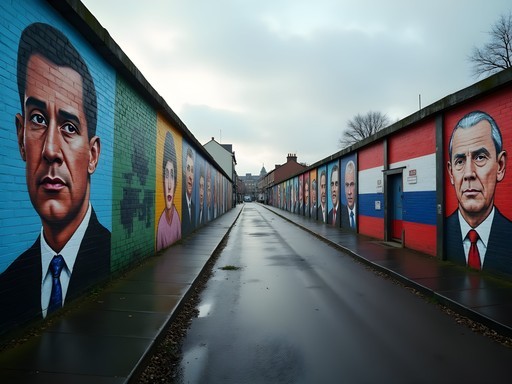
Belfast's street art exists in two parallel worlds that occasionally intersect like chapters in a well-crafted novel. On one hand are the political murals – powerful, provocative works dating back decades that chronicle The Troubles through loyalist and republican perspectives. On the other are the contemporary pieces transforming neglected spaces into vibrant galleries, often deliberately apolitical yet unmistakably shaped by the city's history.
My journey into understanding this duality began years ago while editing a photographic essay on conflict zones for National Geographic. Those images of Belfast's political murals stayed with me – stern-faced paramilitaries, commemorations of hunger strikers, and territorial markings that functioned as visual borders between communities. What those photographs couldn't capture was the emotional resonance of standing before these works, how they command attention and respect regardless of your political leanings.
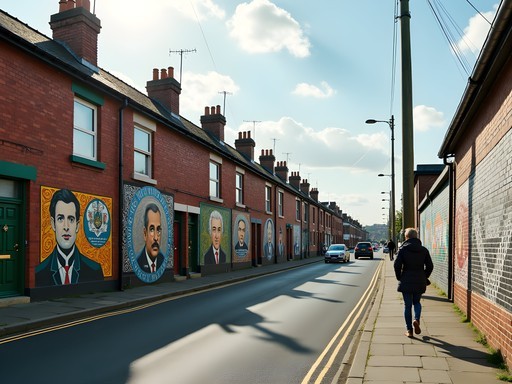
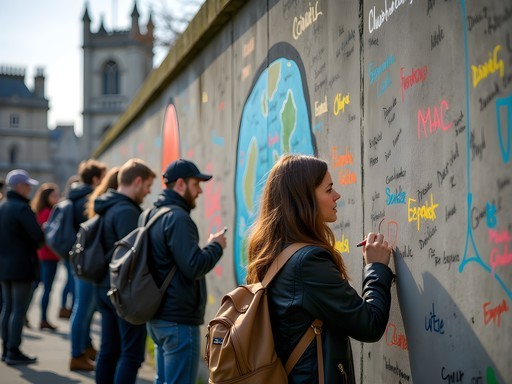
The political murals primarily cluster in two areas: the loyalist Shankill Road (predominantly Protestant neighborhoods supporting union with Britain) and the republican Falls Road (predominantly Catholic areas supporting a united Ireland). Walking between these areas today, you'll cross the Peace Line – a series of barriers separating communities that, despite the 1998 Good Friday Agreement, remain largely segregated. The contrast between these areas and the city center's contemporary street art scene provides a perfect lens through which to understand Belfast's ongoing evolution from conflict zone to cultural hub.
💡 Pro Tips
- Join a Black Cab tour for context on political murals – local drivers often have personal connections to The Troubles
- Visit both loyalist and republican areas to understand different perspectives
- Look for recurring symbols: King William of Orange and Queen Elizabeth in loyalist areas; Celtic imagery and hunger strikers in republican neighborhoods
The Political Murals: Walking Through Living History
My exploration began with a Black Cab tour – an experience I cannot recommend highly enough for first-time visitors. My driver, Tommy, grew up during The Troubles and offered perspectives no guidebook could provide. At £35 for a 90-minute private tour, it's worth every penny for the contextual understanding it provides. I complemented this with a self-guided walking tour the following day, using my pocket guidebook to navigate between key sites.
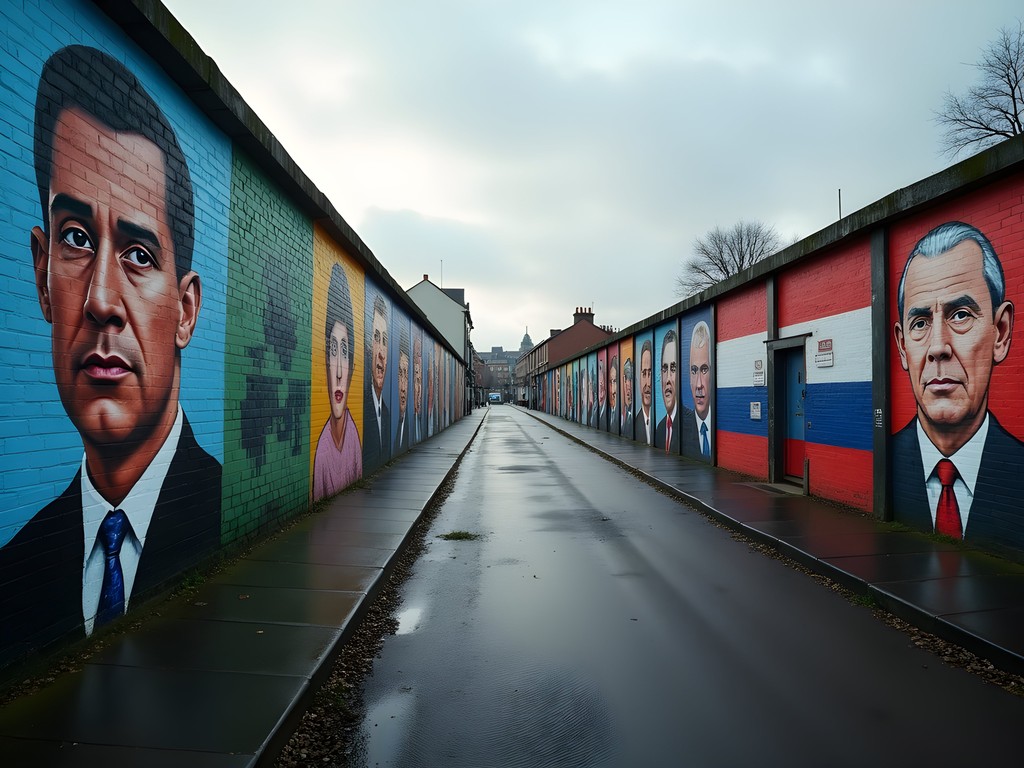
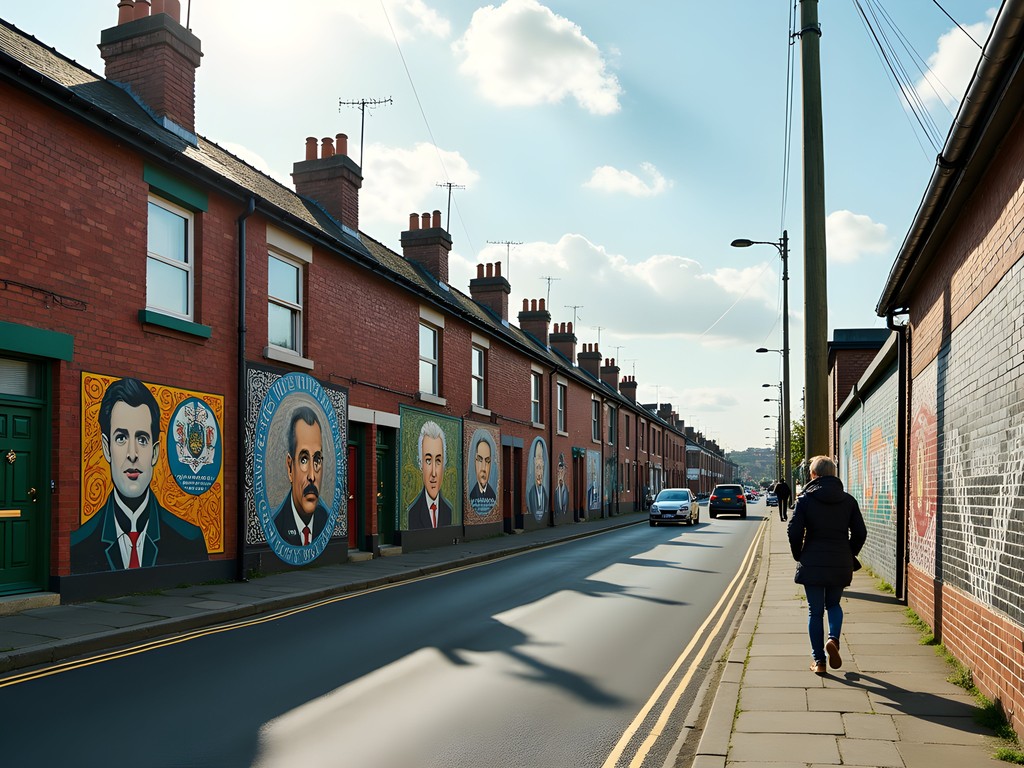
On the Shankill Road, loyalist murals celebrate British identity through depictions of the Queen, Union Jack flags, and commemorations of paramilitary fighters. The most striking feature uniformed men in balaclavas pointing guns directly at viewers – an unsettling experience that Tommy explained was intentional: "These weren't just decorations; they were warnings about who controlled the territory."
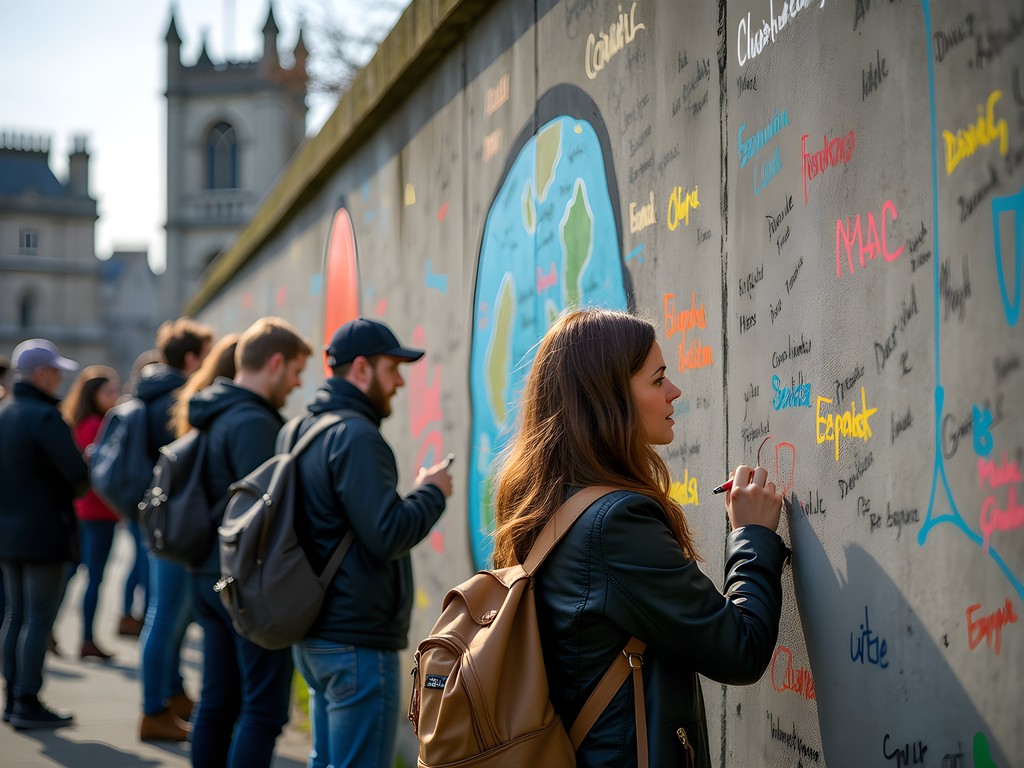
Just a short walk away but separated by the Peace Wall, Falls Road presents republican narratives through murals honoring hunger strikers, depicting Celtic imagery, and expressing solidarity with other global struggles like Palestine and Catalonia. The International Wall, with its constantly changing artwork addressing human rights issues worldwide, demonstrates how republican murals in particular have evolved to connect local experiences to global movements.
What struck me most was how these murals function as outdoor history books, continuously edited and updated to reflect changing political realities. Some of the most aggressive imagery has been replaced with more community-focused pieces, though plenty of provocative work remains. Standing before a memorial to fallen IRA volunteers, I watched as local children rode past on bicycles, completely unfazed by imagery that had me reaching for my pocket notebook to capture my thoughts on this normalization of political imagery.
💡 Pro Tips
- Respect these areas as residential neighborhoods, not just tourist attractions
- The murals change regularly – some famous ones may have been painted over
- Avoid wearing clothing with obvious political affiliations (certain soccer jerseys can be problematic)
The Cathedral Quarter: Belfast's Street Art Renaissance
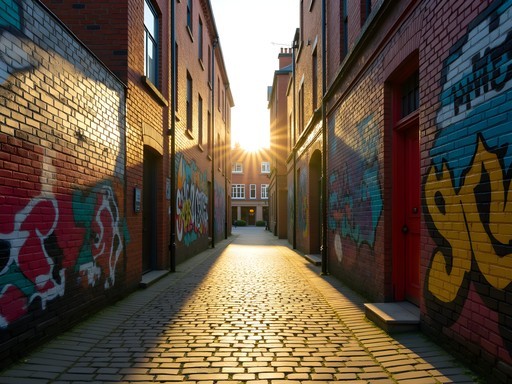
If the political murals represent Belfast's complex past, the explosion of street art in the Cathedral Quarter embodies its creative future. This neighborhood, once neglected, has transformed into the city's cultural heart through organic artistic development and deliberate regeneration efforts.
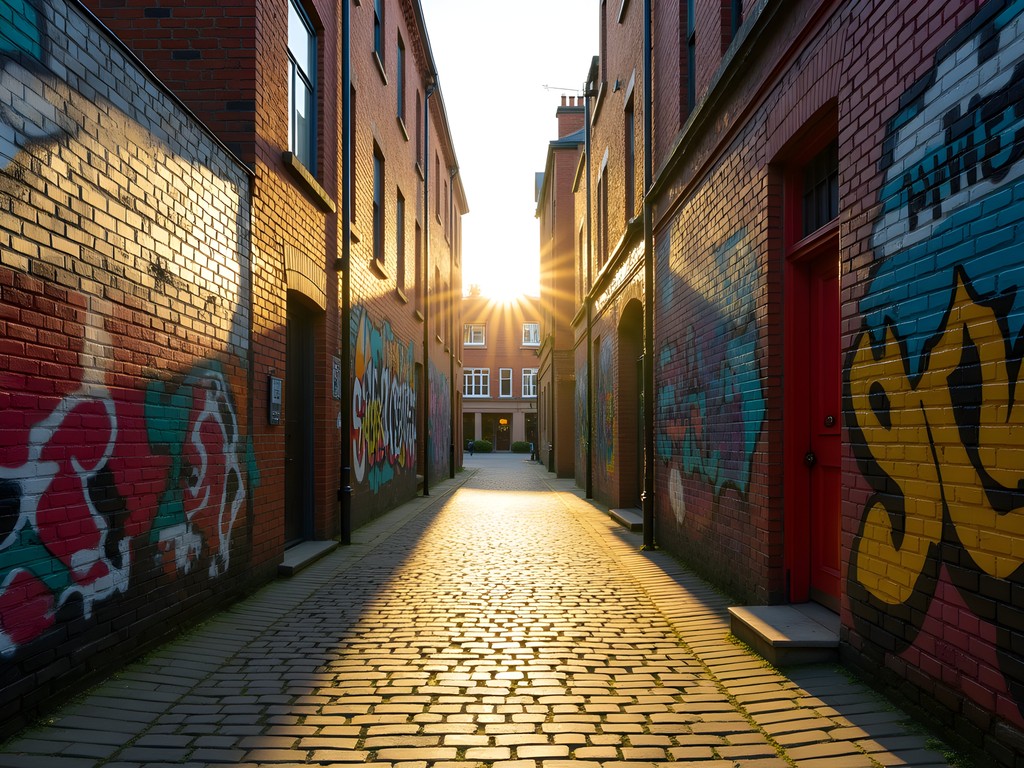
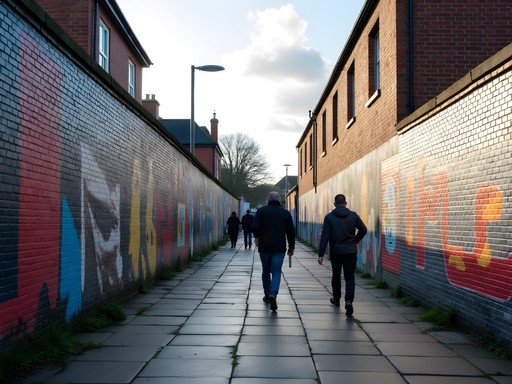
My exploration began at The MAC (Metropolitan Arts Centre), where I oriented myself before venturing into the surrounding alleyways. Commercial Court and Hill Street host the highest concentration of pieces, with new works appearing regularly. Unlike the political murals, which often follow established visual languages and themes, these works showcase diverse styles from photorealism to abstract expressionism.
The annual Hit the North festival has been instrumental in this transformation, inviting international artists to paint alongside local talents. The result is a neighborhood that feels simultaneously distinctly Belfast and cosmopolitan – much like the city itself as it continues to redefine its identity in the post-Troubles era.
What makes this area particularly appealing for budget travelers is its accessibility. I spent an entire morning wandering these streets with nothing but my camera and a coffee from Established (a local favorite with excellent pour-overs). The juxtaposition of centuries-old architecture with contemporary art creates a uniquely Belfast aesthetic that I found myself trying to capture from every angle with my camera lens, which proved perfect for the narrow alleyways and variable lighting conditions.
Most compelling was finding pieces that subtly bridged Belfast's dual art narrative – contemporary works that referenced historical themes without being explicitly political. A massive mural of two children reaching across a divide spoke volumes without saying a word about politics.
💡 Pro Tips
- Visit during weekday mornings for empty streets that make photography easier
- The Duke of York pub area has some of the most photographed pieces
- Check with The MAC for information about any recent additions or guided tours

Beyond the Center: Emerging Art Districts
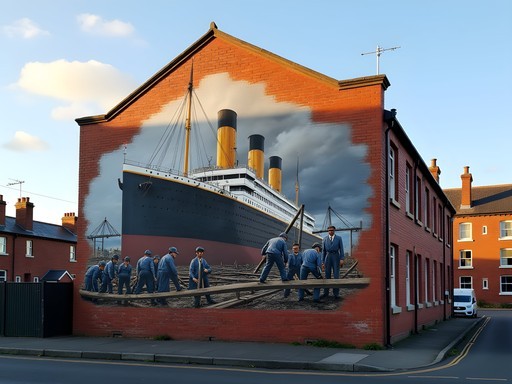
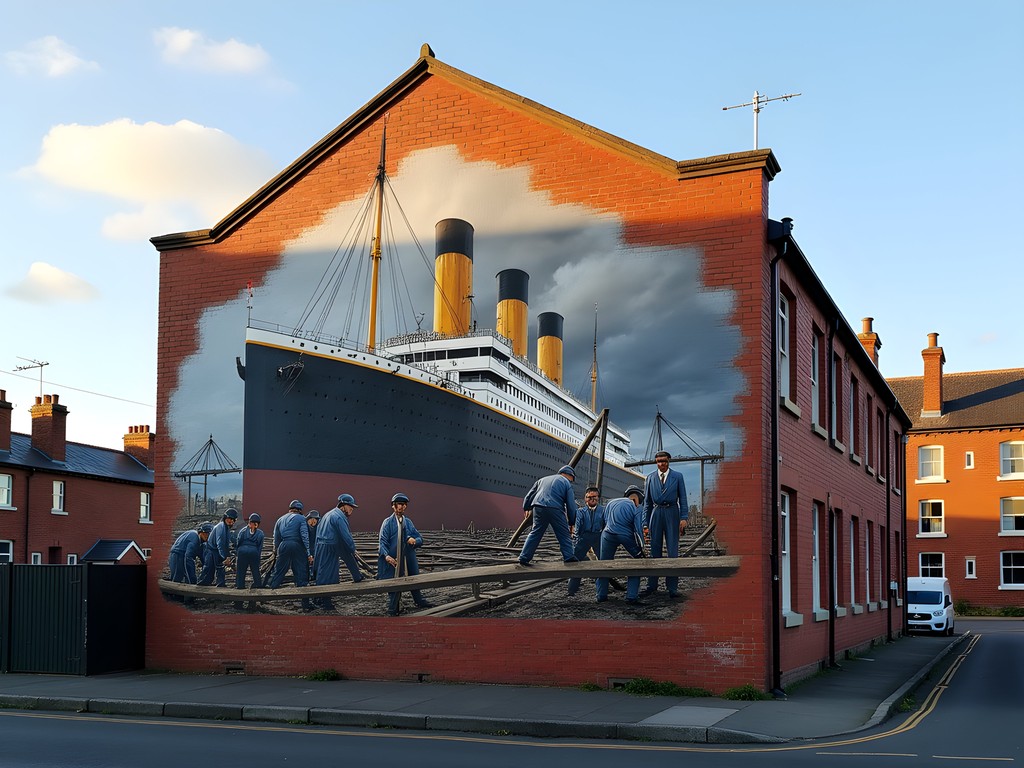
While the Cathedral Quarter receives most attention, Belfast's street art ecosystem extends well beyond this central hub. East Belfast, traditionally a loyalist area, has seen a remarkable artistic renaissance in recent years. The EastSide Visitor Centre provides maps for self-guided tours of murals that reflect the area's industrial heritage, particularly the Harland & Wolff shipyards where Titanic was built.
The Seedhead Arts organization has been instrumental in developing these emerging districts through their Street Art Walking Tours (£15 per person, running on Sundays). Unlike the politically-focused Black Cab tours, these excursions emphasize artistic techniques, international influences, and the stories behind individual artists.
During my weekend exploration, I ventured to North Belfast's New Lodge area, where community-led initiatives have transformed once-bare walls into powerful statements about local identity. Here, traditional political imagery sometimes merges with contemporary street art styles, creating fascinating hybrid works that document a city in transition.
What struck me most was how these emerging districts use street art differently than either the traditional political areas or the Cathedral Quarter. In these neighborhoods, murals often address hyperlocal concerns – celebrating community heroes, commemorating local history, or addressing issues like mental health that particularly affect post-conflict societies.
For photographers, these less-visited areas offer opportunities to capture authentic interactions between artwork and everyday life. I found myself documenting not just the murals but the contexts surrounding them – children playing football beneath massive portraits, elderly residents sitting on benches before vibrant scenes, the juxtaposition of ordinary life against extraordinary art. My portable tripod proved invaluable for capturing low-light evening shots when the murals take on new dimensions under street lighting.
💡 Pro Tips
- Contact community centers before visiting residential areas outside the city center
- The EastSide Visitor Centre offers free walking maps of East Belfast murals
- Some emerging art districts are best visited with local guides who understand neighborhood dynamics
Practical Tips for Street Art Explorers
Belfast's compact size makes it ideal for a weekend exploration, but navigating between different areas requires some planning. I structured my weekend chronologically – starting with the historical political murals to understand the context, then moving to contemporary works that respond to that history.
Day 1: Historical Context - Morning: Black Cab tour of political murals (book in advance) - Afternoon: Self-guided walking tour of Falls Road and Shankill Road - Evening: Visit the Peace Wall at sunset when the light creates dramatic shadows
Day 2: Contemporary Scene - Morning: Cathedral Quarter exploration (start early for empty streets) - Afternoon: Seedhead Arts walking tour or East Belfast murals - Evening: North Belfast emerging art districts
While Belfast is generally safe for tourists, some sensitivity is required when visiting areas with political murals. I found locals incredibly welcoming but appreciated having researched the basic historical context beforehand. The city's compact size means public transportation works well, though I primarily explored on foot.
For accommodation, I stayed at a budget-friendly Airbnb near Queen's University, which positioned me equidistant from the main areas I wanted to explore. Food costs were reasonable – about £15-20 for a nice dinner, with plenty of budget options around £8-10 for lunch.
One final tip: Belfast's weather is notoriously changeable. I experienced sunshine, overcast skies, and rain showers all within hours. My packable rain jacket became my constant companion, allowing me to continue exploring (and importantly, photographing) regardless of conditions. The changing light actually enhanced many of the murals, particularly the way rain-slicked streets reflected the vibrant colors.
💡 Pro Tips
- Download offline maps as some areas have spotty mobile coverage
- Carry cash for small businesses in residential areas
- Consider the 'hop-on, hop-off' bus for an initial orientation before exploring specific neighborhoods in depth
Final Thoughts
As my weekend in Belfast drew to a close, I found myself reflecting on how street art functions as both mirror and window in this resilient city – reflecting its complex history while offering glimpses into its potential futures. The political murals stand as necessary reminders of conflicts not fully resolved, while the contemporary pieces suggest possibilities beyond division. For the solo traveler seeking to understand Belfast beyond superficial tourism narratives, these painted walls offer an accessible, budget-friendly education in history, politics, and artistic expression. Like any good editor, Belfast is continuously revising its story – painting over certain passages, emphasizing others, adding new perspectives. The privilege of witnessing this ongoing revision, brush stroke by brush stroke, is available to anyone willing to walk these streets with curious eyes and comfortable shoes.
✨ Key Takeaways
- Belfast's street art exists in two parallel worlds: historical political murals and contemporary urban expression
- Black Cab tours provide essential context for understanding the political murals and their significance
- The Cathedral Quarter represents Belfast's artistic renaissance and optimistic future
- Emerging art districts in East and North Belfast show how communities are using art for hyperlocal expression
📋 Practical Information
Best Time to Visit
May through September for best light and weather conditions
Budget Estimate
£150-250 for a weekend (accommodation, food, tours)
Recommended Duration
2-3 days
Difficulty Level
Moderate (Some Navigation Between Different Neighborhoods Required)
Comments
wildlife7049
Are there any good books about Belfast's murals and their history that you'd recommend reading before visiting?
Sarah Powell
"Drawing Support: Murals in the North of Ireland" by Bill Rolston is excellent - documents the evolution of the murals over several decades with great photography and context. There's also "The Belfast Mural Guide" which is smaller and good to carry while exploring.
wildlife7049
Perfect, thank you! Just ordered the Rolston book.
roamexplorer
Those photos are incredible! The contrast between the political murals and the colorful new stuff really tells the story of a city in transition. Adding Belfast to my bucket list!
Frank Garcia
As someone who grew up in Belfast during the tail end of The Troubles, I really appreciate how you've captured both the weight of our political art and the energy of our new creative scene. One tip for visitors: the murals aren't static! Many of the political ones get updated or replaced every few years to reflect evolving community sentiments. The paramilitary murals are gradually being replaced with cultural and historical ones in many areas. If you're interested in the artistic process, check out Seedhead Arts' Street Art Walking Tour (runs every Sunday) - they actually know many of the artists personally and can tell you the stories behind the newer works. Also worth noting that the best coffee while mural-hunting is at Established Coffee near Cathedral Quarter!
mountainninja
Great post! I'm heading to Belfast next month and definitely want to see these murals. Is it safe to explore these areas solo or would you recommend joining a tour? Also, how long would you suggest setting aside for seeing both the political murals and the newer street art areas?
Frank Garcia
As a Belfast local, I can tell you it's perfectly safe to explore solo during daylight hours. That said, a tour gives you the historical context that makes the murals so powerful. I'd recommend at least a half-day for the political murals (Shankill and Falls Roads) and another half-day for Cathedral Quarter. The Belfast Free Walking Tour starts at City Hall at 11am and gives a good overview if you're short on time.
mountainninja
Thanks so much for the insider info, Frank! I'll definitely check out that free walking tour and then maybe explore more on my own afterward. Really appreciate it!
Sarah Powell
What a thoughtful piece on Belfast's dual art identity. I spent three weeks in Northern Ireland last year researching post-conflict tourism, and your analysis of how street art functions as both historical document and forward-looking expression is spot on. I found the peace walls particularly affecting - the juxtaposition of these barrier structures covered in messages of hope and unity. For anyone planning a visit, I'd recommend bringing a good waterproof jacket as Belfast's weather is notoriously unpredictable, and you'll want to spend hours walking these neighborhoods. The emerging art in East Belfast is also worth venturing out for - there's a fascinating tech-meets-traditional-industry theme developing there that reflects the city's evolution.
redseeker
I visited Belfast last summer and was completely blown away by the political murals. That feeling you described of history pressing against your chest - I felt that exact same weight standing in front of the Bobby Sands mural. It's one thing to read about The Troubles in history books and another to see these massive artworks that still carry so much emotion. The contrast with the new colorful stuff in Cathedral Quarter is wild - like two different worlds in one city. Did you take a black cab tour? That was the highlight of our trip.
Leah Clark
Yes! I did take a black cab tour on my second day. The driver was actually from the Falls Road area and had lived through much of The Troubles. His personal stories added so much context to the murals. Highly recommend it to anyone visiting.
redseeker
That makes such a difference, hearing from someone who lived it. Our driver was similar - had stories about specific streets and buildings we passed. Really brings history to life in a way no museum can.
Gregory Boyd
Having documented street art across 30+ countries, I found Belfast's scene particularly compelling because of this duality you've captured so well, Leah. The political murals carry a gravitas I've rarely encountered elsewhere - they're not just art but historical documents. What fascinates me is how the city manages to honor this difficult history while simultaneously embracing contemporary expression in areas like the Cathedral Quarter. I spent three weeks photographing the transition between these styles across different neighborhoods, and the geographical boundaries between them tell as much of a story as the art itself. For anyone visiting, I'd recommend allowing at least 2-3 days to properly absorb both aspects of Belfast's street art revolution.
luckyblogger
Gregory, did you publish your Belfast photos anywhere? Would love to see your perspective after reading this post!
greenvibes
Just got back from Belfast last week and YES do this! The murals are incredible. Pro tip: download a walking tour map before you go because cell service was spotty for me in some areas. Also the Titanic Quarter is worth adding to your itinerary if you have time. Such a fascinating city!
starqueen
is it safe to walk around alone?
luckyperson
This is SO cool!! Belfast has been on my list forever and this just moved it way up! The Cathedral Quarter sounds amazing, love how cities are reclaiming spaces with art. Do you need a full weekend or could you see the main murals in a day trip?
wildexplorer
you could do a day but a weekend is better for sure
Venture X
Premium card with 2X miles, $300 travel credit, Priority Pass