Disclosure: This article contains affiliate links. We may earn a commission from purchases at no extra cost to you, which helps our travel content.
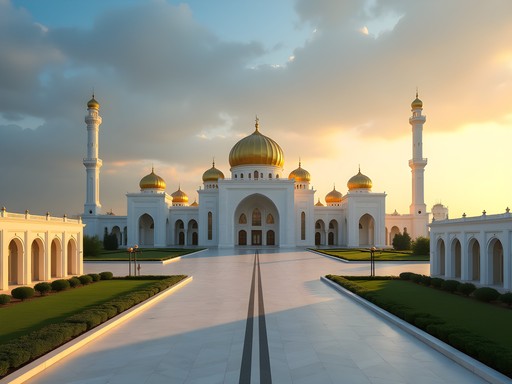
Standing beneath the towering white marble monuments of Ashgabat, I couldn't help but feel I'd stepped into a parallel universe—one where extravagance and emptiness coexist in perfect harmony. This city, rebuilt after the devastating 1948 earthquake, now gleams with more Guinness World Records for marble buildings than any place on earth. Bellissimo in its audacity, yet puzzling in its purpose. As a translator who's spent decades decoding cultural nuances, Turkmenistan's capital presented me with perhaps my most fascinating urban text yet—a city that speaks volumes through its architectural exclamations while whispering secrets in its quiet corners.

First Impressions: The Surreal Marble Landscape
Arriving in Ashgabat feels like entering an elaborate film set where someone forgot to call in the extras. The airport—a massive falcon-shaped marvel—welcomes you into President Gurbanguly Berdimuhamedow's vision of national grandeur. My taxi driver, Azat, chuckled at my wide-eyed expression. "First time in White City?" he asked in Russian, which I'd brushed up on before this trip.
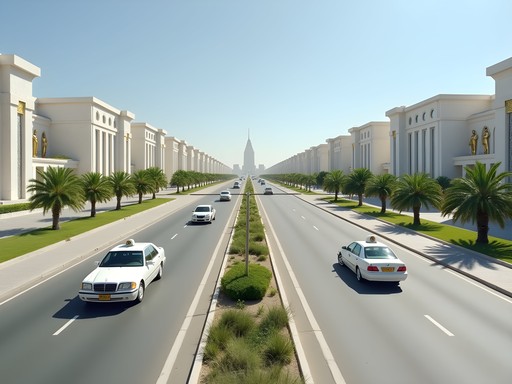
The 15-minute drive to my hotel revealed boulevard after spotless boulevard lined with identical white marble buildings accented with gold domes. Traffic lights change on empty streets. Pristine parks remain largely unvisited. The gleaming white expanse is punctuated only by the occasional government worker sweeping already immaculate sidewalks.
My travel water filter proved invaluable here—Ashgabat's tap water isn't recommended for visitors, and the city's intense heat (reaching 45°C/113°F in summer) demands constant hydration. Even in spring, I found myself refilling frequently during my architectural explorations.

💡 Pro Tips
- Exchange currency at official banks only—the black market carries serious risks
- Dress conservatively despite the heat (shoulders covered, no shorts)
- Always carry your passport and visa documents—random checks are common
Navigating the Marble Maze: Essential Landmarks
Ashgabat's urban landscape defies conventional navigation. Without familiar chains or recognizable commercial landmarks, you'll need to orient yourself by the city's monumental structures. My first strategic stop was Independence Park and the towering Neutrality Monument—a 95-meter white marble column topped with a golden statue of former President Niyazov that rotates to always face the sun.
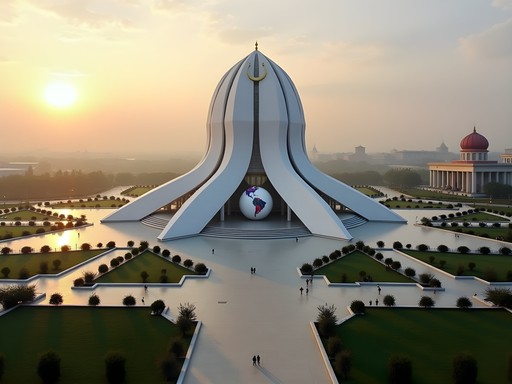
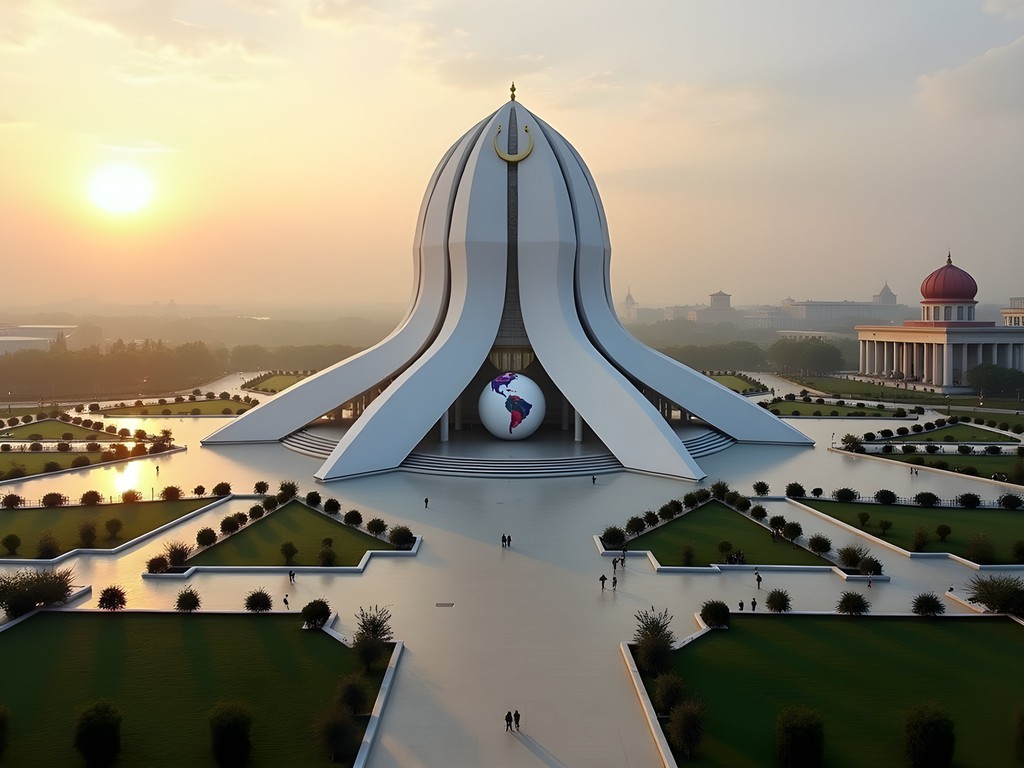
The Wedding Palace (locally known as Bagt köşgi) resembles an enormous wedding cake crowned with a massive geometric star encasing a globe of Turkmenistan. Inside, you'll find surprisingly ornate marriage halls and registration offices. As a translator fascinated by cultural rituals, I arranged a tour through my hotel concierge, though photography remains strictly limited.
For these architectural explorations, my polarized sunglasses were essential—the blinding reflection of sunlight on acres of white marble can be disorienting without proper eye protection. The polarization specifically helped me appreciate the intricate details carved into many buildings without squinting through the glare.
💡 Pro Tips
- Photograph buildings from a distance—close-up photography of government buildings can attract unwanted attention
- Use the Arch of Neutrality as your primary landmark for orientation
- Visit major monuments early morning or late afternoon when the marble isn't blindingly bright
Beyond Marble: Discovering Ashgabat's Cultural Heart
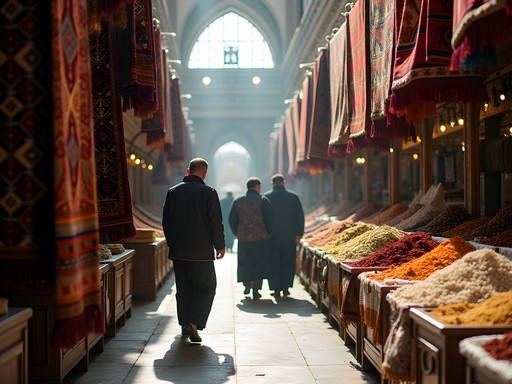
While the marble monuments dominate Ashgabat's skyline, the city's soul resides in less ostentatious quarters. The Russian Bazaar (Tolkuchka Bazaar in its former location) offers a rare glimpse into everyday Turkmen life. Unlike the sterile governmental districts, here you'll find a cacophony of sounds, smells, and colors—vendors selling everything from hand-woven carpets to traditional telpek hats made from sheep's wool.
As someone obsessed with fermentation traditions, I was delighted to discover local çal (fermented camel milk) being sold by Turkmen women in traditional dress. The slightly effervescent, yogurt-like drink has been produced the same way for centuries. After some friendly negotiation in my limited Turkmen (aided by my translation background), I convinced a vendor to explain her fermentation process—knowledge I've eagerly added to my collection of global fermentation techniques.
For tea enthusiasts, the portable tea infuser is perfect for sampling local green tea blends. Turkmen tea culture differs fascinatingly from Korean traditions I've grown accustomed to—here, tea often includes desert herbs and is served in small porcelain bowls rather than cups.

💡 Pro Tips
- Bargain respectfully at markets—aggressive haggling is considered rude
- Ask permission before photographing people, especially women in traditional dress
- Try the national dish, pilaf (palow), at small local restaurants rather than hotels

Hidden Corners: Where Locals Actually Live
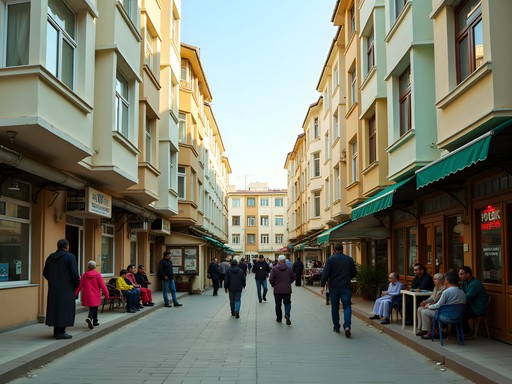
The true Ashgabat reveals itself in the residential districts far from the marble showcase center. Here, Soviet-era apartment blocks painted in pastel colors house most of the city's population. While tourists rarely venture here, these neighborhoods offer authentic glimpses into Turkmen daily life.
In the eastern district, I discovered a small teahouse (çayhana) where elderly men played backgammon while sipping green tea. With my translation background opening doors, I was invited to join a game—though my skills proved embarrassingly inadequate against players who'd been strategizing for decades. These moments of connection transcended the language barriers and cultural differences.
For urban explorers venturing into residential areas, I recommend the pocket translator. While I rely on my language skills, this device proved invaluable for complex conversations about local history and traditions. Unlike smartphone apps, it works offline—essential in Turkmenistan where internet access is severely restricted.
Nearby, I found the National Museum of History—less architecturally imposing than other attractions but housing remarkable artifacts from ancient Merv and the Silk Road period. The museum's English signage is limited, making it challenging for non-Russian speakers, but the visual impact of the gold artifacts and textiles transcends language barriers.

💡 Pro Tips
- Respect privacy in residential areas—Turkmen people are hospitable but value discretion
- Visit local bakeries early morning for fresh *çörek* (traditional bread)
- Carry small denominations of manat for teahouses and small purchases
Practical Matters: Navigating Turkmenistan's Bureaucracy
Visiting Ashgabat requires advance planning and patience with bureaucratic procedures. Tourism infrastructure remains underdeveloped despite the city's architectural grandeur. Most visitors require a letter of invitation from a registered tour company to obtain a visa—a process that can take weeks.
Once in Ashgabat, internet access is severely restricted. Public WiFi is nonexistent, and local SIM cards provide minimal data at slow speeds. I found my portable WiFi device with pre-loaded global data essential for maintaining basic communications and navigation. Even with this device, expect frequent disconnections and limited bandwidth.
Hotels require registration of foreign guests with local authorities within three days of arrival. Most mid-range and luxury hotels handle this automatically, but always request confirmation. I stayed at the Yyldyz Hotel—while expensive by regional standards, it offered reliable service and assistance with navigating local regulations.
Transportation within Ashgabat is challenging without Turkmen language skills. Taxis are plentiful but unmetered—negotiate fares before entering. For longer stays, consider hiring a driver through your hotel for day trips. My hotel arranged a driver who became an invaluable cultural interpreter, explaining nuances of Turkmen society I might have otherwise missed entirely.

💡 Pro Tips
- Download offline maps before arrival—Google Maps has limited functionality in Turkmenistan
- Register with your embassy upon arrival for safety updates
- Carry printed hotel information in Turkmen/Russian for taxi drivers
Final Thoughts
As my week in Ashgabat drew to a close, I found myself reflecting on this city of contradictions from the vantage point of the Kopet Dag mountains that cradle its southern edge. Below me stretched a monument to human ambition—a gleaming white testament to national identity constructed almost overnight. Yet within this carefully controlled urban experiment, I discovered genuine moments of connection: the carpet weaver who shared her family patterns, the teahouse owner who insisted I try his mother's special çorba soup, the museum guide passionate about Bronze Age pottery.
Ashgabat demands we look beyond the obvious. Behind the marble facades and golden monuments lies a city still finding its voice, a culture navigating the space between ancient traditions and imposed modernity. For the curious traveler willing to venture beyond architectural spectacle, Turkmenistan's capital offers rare insights into a nation few outsiders truly understand. Come preparato—come prepared—with patience, respect, and genuine curiosity. The White City's most valuable treasures aren't carved from marble but woven into the stories of its people.
✨ Key Takeaways
- Ashgabat's architectural grandeur requires context to appreciate—learn about Turkmenistan's recent history before visiting
- The contrast between monumental center and residential areas tells the real story of the city
- Personal connections with locals provide the most authentic experiences in this tightly controlled environment
📋 Practical Information
Best Time to Visit
Spring (April-May) or Fall (September-October)
Budget Estimate
$100-150/day including accommodation, meals, and local transportation
Recommended Duration
5-7 days
Difficulty Level
Moderate


Comments
travelzone
is it expensive to visit? hotel prices look crazy online
Gregory Boyd
It's not cheap. Accommodation runs $80-150/night for decent places, and you'll likely need a guide for many activities. Budget at least $100-150/day.
Nicole Russell
This is SO on my bucket list now! I love destinations that feel completely otherworldly. The section about where locals actually live really resonated with me—I always try to get beyond the tourist facade when I'm traveling solo. Quick question: how safe did you feel as a solo traveler there? And were people generally friendly/open to interacting with tourists? I'm planning a Central Asia trip for later this year and trying to decide if Turkmenistan should make the cut despite the visa hassle.
Brooklyn Washington
Nicole, I felt very safe! People were curious and friendly, though there's definitely a language barrier. If you're already doing Central Asia, it's worth the visa effort—unlike anywhere else in the region.
hikingguy
Those marble building shots are incredible. Looks like something from a sci fi movie
Douglas Bradley
Fascinating post, Brooklyn. I visited Ashgabat in 2024 and your description of the 'extravagance and emptiness' really resonates. What struck me most was photographing those massive boulevards with almost no people—it's like an architectural museum city. Did you get a chance to visit the Tolkuchka Bazaar? That's where I found the real cultural heartbeat beyond all the marble facades. The contrast between the government district and the actual lived-in neighborhoods is absolutely stark. Also curious—did you find the restrictions on photography challenging? I had a guide constantly worried about what I was shooting.
Brooklyn Washington
Yes! Tolkuchka was incredible—definitely the highlight. And you're right about the photography restrictions. My guide was super nervous anytime I pointed my camera at anything that wasn't an official monument. The paranoia is real there.
wanderlustking
How hard is it to actually get into Turkmenistan? I've heard the visa situation is crazy and they're really strict about where tourists can go?
Gregory Boyd
It's definitely one of the more challenging visas to obtain. You need a letter of invitation from a registered tour company, and transit visas are only valid for 5 days. Independent travel is possible but limited.
wanderlustking
thanks! might be too complicated for me right now lol
Gregory Boyd
Brooklyn, excellent piece on one of Central Asia's most enigmatic destinations. I visited Ashgabat in 2023 and your observation about the 'extravagance and emptiness' really resonates. The contrast between the gleaming marble facades and the relatively sparse street life is striking. Did you manage to visit the Tolkuchka Bazaar on the weekend? That's where I found the most authentic glimpse of daily Turkmen life, away from the sanitized city center. Also curious about your experience with the tourist visa process—it's notoriously complex and I'm wondering if things have improved since my visit.
Brooklyn Washington
Thanks Gregory! Yes, the bazaar was definitely a highlight. The visa process was still pretty involved—took about 3 weeks and required a letter of invitation. Worth it though!
oceanblogger
Wow this place looks insane!
wanderstar4497
This looks insane!! How hard was it to get the visa? I've heard Turkmenistan is super difficult to visit
Brooklyn Washington
Not gonna lie, the visa process was a bit of a headache! I went through a local tour agency which is basically required. Took about 3 weeks to get approved. Totally worth it though for such a unique experience!
wanderstar4497
thanks! might be too complicated for me lol but the photos are amazing
Jean Wells
Brooklyn, your observations about the contrast between monumental architecture and everyday life mirror my experience there last year. Ashgabat presents such a fascinating study in urban planning with ideological purposes. I found the most revealing moments came from early morning walks when locals were going about their routines before the city's official face was fully on display. The Tolkuchka Bazaar (though relocated from its original site) offered the most authentic interactions. Did you notice how the further you get from the central districts, the architectural narrative shifts dramatically? I documented this gradient effect in my own travels and found it particularly telling about the priorities of national identity construction. I'd recommend visitors bring a compact telephoto lens for capturing architectural details from respectful distances, especially in areas where photography sensitivities exist.
nomadstar
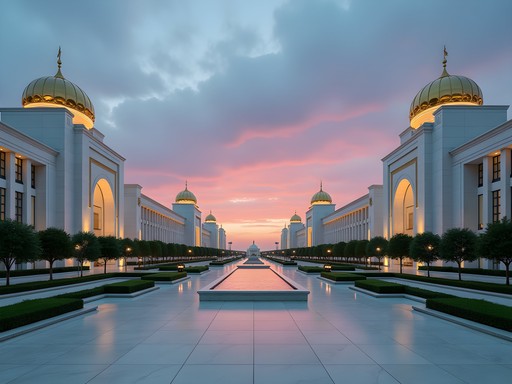
Those white marble buildings at night look incredible! 😮
Brooklyn Washington
The lighting displays are something else, right? Almost like a light show every single night!
Venture X
Premium card with 2X miles, $300 travel credit, Priority Pass