




Disclosure: This article contains affiliate links. We may earn a commission from purchases at no extra cost to you, which helps our travel content.
As someone who's spent years calculating risk probabilities professionally, I can confidently state that navigating public transportation in a foreign city represents one of the most cost-effective travel decisions you can make. Stockholm's integrated network initially appears complex—a web of tunnelbana (metro) lines, buses, trams, commuter trains, and ferry routes—but beneath this apparent complexity lies a mathematically elegant system that's remarkably family-friendly. During my recent winter expedition to study traditional Sámi crafting techniques in northern Sweden, I bookended my journey with a week in Stockholm, armed with nothing but my analytical mindset and a determination to master the city's transit system. What I discovered was not just efficient transportation but an underground art museum, a maritime adventure network, and a gateway to authentic local experiences that most tourists miss while overpaying for taxis.
Understanding the SL Card: Your Golden Ticket to Stockholm
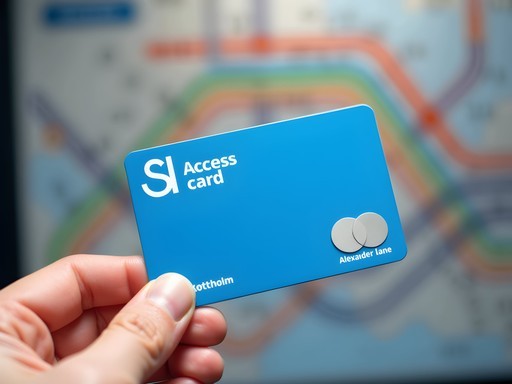
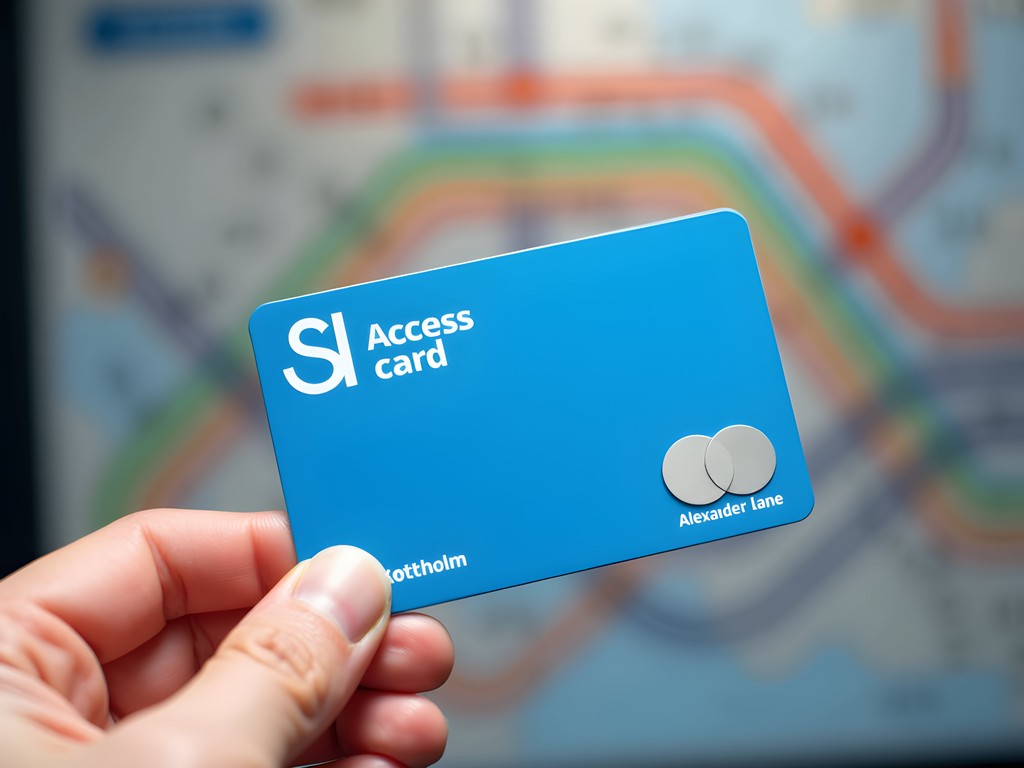
The foundation of Stockholm's transit system is the SL Access card—a reloadable smart card that works across all transportation modes. After analyzing the options, I can confidently say this is where your transportation strategy should begin.
The SL card operates on a simple probability model: the more you plan to use public transport, the more value you'll extract from longer-duration passes. For my week-long stay, I calculated that the 7-day pass (approximately 430 SEK/~$41 USD) would break even after just 8-9 individual rides—a threshold I knew I'd easily exceed.
For families, the math becomes even more favorable. Children under 7 travel free with a paying adult, and up to 6 children aged 7-11 can travel free on weekends and holidays when accompanied by an adult with a valid ticket. For older children (12-19), reduced fares apply.
The card itself costs 20 SEK (~$2), but this one-time investment is negligible compared to the convenience it provides. I recommend purchasing your card immediately upon arrival at Arlanda Airport, where you can buy it from the Pressbyrån convenience store or SL Center in the arrivals hall. Load it with your chosen time period (24/72 hours or 7/30 days) or with a cash value for individual trips.
Before my trip, I downloaded the official SL app (SL app) which proved invaluable for real-time updates and route planning. The app allows you to purchase mobile tickets, but having the physical card provided a reassuring backup when my phone battery dwindled during long exploration days.
💡 Pro Tips
- Purchase your SL card immediately upon arrival at the airport
- For families staying 3+ days, the 7-day pass typically offers the best value
- Download the SL app before your trip for journey planning and real-time updates
The Tunnelbana: Stockholm's Underground Art Gallery
Stockholm's metro system—locally known as Tunnelbana—transcends mere transportation. It's a 110-kilometer art installation that my analytical mind couldn't help but admire for its dual functionality: efficient transit combined with cultural enrichment.
The system consists of three main lines (green, red, and blue), each with multiple routes denoted by numbers. For families, I found the color-coding particularly helpful—even my friend's 5-year-old daughter could confidently announce, "We need the blue line!" during our exploration day.
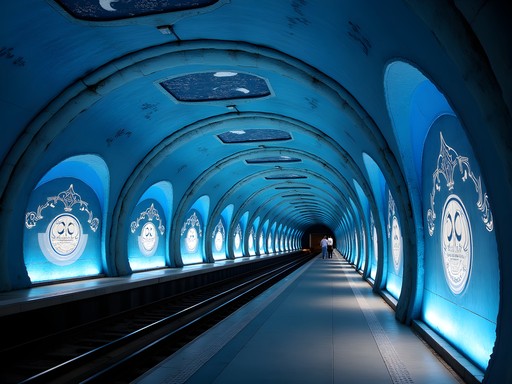
What makes Stockholm's metro truly exceptional is that over 90 of the 100 stations feature artistic installations—sculptures, mosaics, paintings, and installations—created by more than 150 artists since the 1950s. This effectively makes it the world's longest art gallery, a fact that transformed routine transit into a highlight activity during my stay.
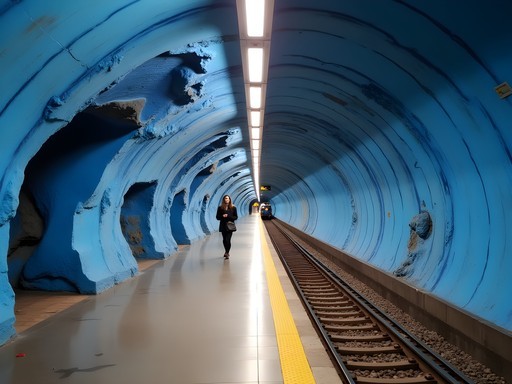
I dedicated an entire afternoon to what locals call "konst på tunnelbanan" (art on the metro), methodically visiting the most spectacular stations. T-Centralen's blue line platform features dramatic blue vine motifs against white cave-like walls. Solna Centrum's cavernous red ceiling creates an apocalyptic atmosphere. Stadion station's vibrant rainbow arch celebrates the 1912 Olympics. Each station presents a unique aesthetic experience worth exploring.
For families with children, I recommend turning station-hopping into a scavenger hunt. Have children count specific elements or colors at each station, or challenge them to sketch their favorite artistic details. This transformed potentially boring transit time into an engaging cultural activity during my friend's family visit.
To maximize this experience, I carried my portable phone charger to ensure I could photograph these underground masterpieces without battery anxiety. The lighting conditions in these stations are challenging but rewarding for photography enthusiasts.

💡 Pro Tips
- Purchase a 24-hour pass for dedicated art station exploration
- Visit during off-peak hours (10am-3pm weekdays) for less crowded photo opportunities
- Don't miss T-Centralen, Stadion, and Solna Centrum for the most dramatic installations
Navigating the Archipelago: Stockholm's Ferry Network
One of Stockholm's most underutilized transit secrets—and a highlight for families—is that your SL card grants access to several ferry routes within the city limits. As someone who calculates risk-reward scenarios professionally, this represents one of the highest-value components of the transit system.
The most useful ferry for visitors is Line 82 between Slussen and Djurgården, running every 10-20 minutes. This 10-minute journey not only saves you walking time but offers spectacular views of Gamla Stan (Old Town) and the waterfront that you simply can't experience from land. Djurgården houses many of Stockholm's premier family attractions including Skansen open-air museum, ABBA The Museum, and the Vasa Museum.
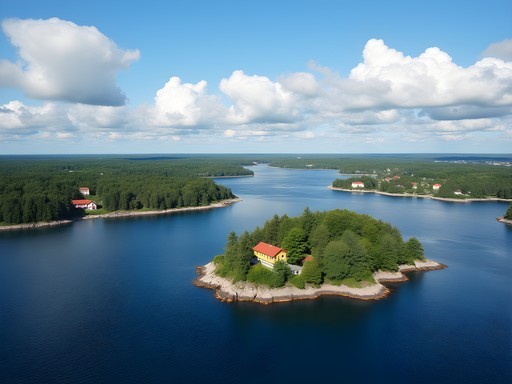
During summer months, I highly recommend the ferry to Fjäderholmarna (Line 80). These small islands offer hiking trails, artisan workshops, and seafood restaurants just 20 minutes from downtown—all accessible with your regular SL card. I spent a fascinating afternoon watching traditional glass-blowing techniques that reminded me of the mathematical precision I've observed in indigenous crafts across North America.
For families with children, these ferry rides serve dual purposes: efficient transportation and an exciting activity in themselves. The open decks provide cooling breezes during summer heat, while the enclosed cabins offer warmth during Stockholm's chilly seasons. My friend's children were more excited about spotting birds from the ferry deck than they were about our actual destination.
I recommend carrying a compact binoculars for wildlife spotting and distant landmark identification during these water journeys. The maritime perspective of Stockholm reveals architectural details and city planning aspects that aren't apparent from street level—something my analytical mind particularly appreciated.

💡 Pro Tips
- Use Line 82 ferry between Slussen and Djurgården to reach major museums
- In summer, take advantage of Line 80 to Fjäderholmarna islands for a quick nature escape
- Sit on the right side when departing Slussen for the best Old Town views

Beyond the Basics: Buses, Trams and Commuter Trains
While the tunnelbana forms Stockholm's transit backbone, mastering the supplementary networks—buses, trams, and commuter trains—elevates your exploration capabilities exponentially. As an actuary accustomed to analyzing interconnected systems, I appreciated how these modes complement each other with minimal redundancy.
Stockholm's bus network fills the gaps between metro stations with over 400 routes. Blue buses serve inner-city routes, while green buses connect suburban areas. For visitors, the most valuable are routes 1, 2, 3, and 4—which operate as "trunk lines" with frequent service and stops at major attractions. Bus 69 to/from Djurgården is particularly useful for families visiting the museums when the weather doesn't favor ferry crossing.
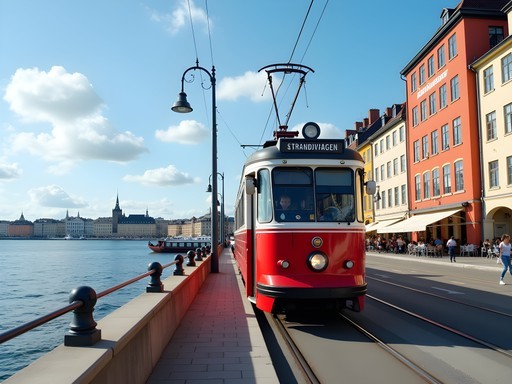
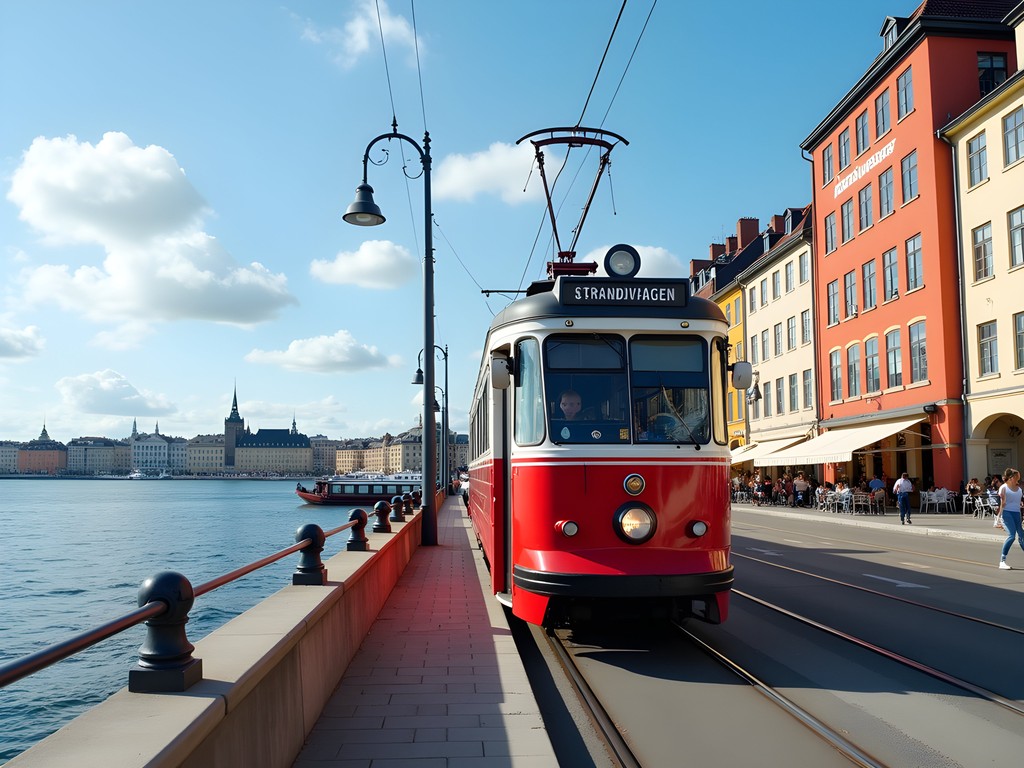
The heritage tram line 7 (Spårväg City) runs vintage trams along Strandvägen waterfront to Djurgården, offering a charming alternative to bus 69. During summer months, this nostalgic ride became a highlight for my friend's children, who were fascinated by the historic wooden interiors.
For day trips beyond the city center, the commuter trains (pendeltåg) proved invaluable. Using my SL card, I ventured to Uppsala (Sweden's fourth-largest city) in just 40 minutes for approximately the same cost as my daily transit within Stockholm. Similarly, the beautiful lakeside town of Sigtuna—Sweden's first town—is accessible via commuter train to Märsta followed by a short bus connection.
For families staying longer than a few days, I recommend investing in a travel guidebook with detailed sections on regional destinations accessible by public transit. The small towns surrounding Stockholm often reveal authentic Swedish life that central tourist areas can't match.
One crucial insight: Stockholm's transit system operates on the honor system with random ticket inspections. The 1500 SEK (~$145) fine for riding without a valid ticket far exceeds any potential savings from skipping fares. The mathematician in me recognizes this as a simple expected value calculation that heavily favors compliance.
💡 Pro Tips
- Use bus routes 1-4 for most inner-city destinations not directly served by metro
- Consider the commuter train for day trips to Uppsala, Sigtuna, or coastal destinations
- Always tap your SL card when boarding buses, even if you have an unlimited pass
Family-Friendly Transit Strategies for Different Seasons
Stockholm's transit experience varies dramatically with the seasons, requiring different strategic approaches for family travelers. Having experienced the system in both winter and summer conditions, I've developed season-specific recommendations that optimize for both efficiency and comfort.
Winter Transit Strategy (November-March)
During Stockholm's winter months, when daylight is scarce and temperatures frequently drop below freezing, the tunnelbana becomes your primary transit mode. The underground stations and trains maintain consistent temperatures regardless of external conditions, making them ideal for families with small children.
I recommend planning indoor connection points whenever possible. The T-Centralen main hub connects to an underground shopping area where you can transition between lines without exposing yourself to the elements. Similarly, Odenplan and Fridhemsplan stations offer indoor connections to multiple bus routes.
For winter visitors, a packable down jacket that compresses easily into a backpack is invaluable. Stockholm's heated indoor environments contrast sharply with outdoor temperatures, necessitating adaptable layering.
Summer Transit Strategy (May-September)
Stockholm transforms during summer months, with extended daylight (up to 18+ hours in June) and pleasant temperatures. This season calls for maximizing above-ground transit options that showcase the city's beauty.
The ferry network expands significantly in summer, with additional routes and increased frequency. Similarly, the full heritage tram network operates, including the charming Djurgårdslinjen route 7.
For families visiting in summer, I recommend structuring your days around these scenic transit options. My calculation shows that the marginal time cost of taking slightly slower scenic routes (ferry/tram vs. metro) is offset by the experiential value gained—especially for children who appreciate the variety.
A useful summer transit strategy involves using the tunnelbana for longer distances, then switching to above-ground options for final destinations. This balances efficiency with experience—a mathematical optimization I naturally gravitate toward in my travel planning.

💡 Pro Tips
- In winter, use the SL app to minimize outdoor waiting time by tracking real-time arrivals
- During summer, consider 3-day bike rentals as a supplement to public transit
- For rainy days, plan routes with underground connections between major attractions
Budget-Optimizing Transit Hacks for Families
As someone who analyzes numbers professionally, I've calculated several optimization strategies that can significantly reduce transportation costs for families visiting Stockholm. These approaches maintain the quality of your experience while maximizing your travel budget's efficiency.
Strategic Accommodation Selection
The single most impactful decision for transit budgeting is accommodation location. Properties advertising "central Stockholm" vary dramatically in transit connectivity. I recommend prioritizing locations within 300 meters of a tunnelbana station on the green or red lines, which offer the highest service frequency.
During my visit, I selected a modest apartment near Fridhemsplan station—not in the tourist center but just 3 metro stops from T-Centralen. This strategic position saved approximately 30% on accommodation costs while maintaining convenient access to all attractions. The mathematical value proposition was clear: minor location compromise yielded major financial benefit.
Airport Transfer Optimization
Arlanda Airport connects to the city via multiple options with dramatically different price points:
- Arlanda Express train: 299 SEK (~$29) per adult (fastest but most expensive)
- Commuter train (pendeltåg): 169 SEK (~$16) per adult (includes SL card access for 75 minutes after arrival)
- Flygbussarna airport bus: 119 SEK (~$11) per adult
For families, the commuter train represents the optimal balance of speed and value. Children under 18 travel free with paying adults on the airport segment of this route, creating substantial savings for families. The journey takes approximately 40 minutes to Stockholm Central versus 20 minutes on the Arlanda Express.
I calculated that a family of four saves approximately 900 SEK (~$86) by choosing the commuter train over Arlanda Express—enough for a quality meal or museum visit.
Meal Planning Around Transit
Stockholm's food costs can strain family budgets, but strategic use of transit creates savings opportunities. Many suburban tunnelbana stations have nearby grocery stores with significantly lower prices than tourist areas. I made a habit of shopping at the ICA near Fridhemsplan station, where I found prices 15-20% lower than central locations.
For picnic supplies and snacks, I recommend carrying a packable daypack that compresses when not needed but expands to carry groceries or picnic supplies. This simple tool enabled impromptu picnics in Stockholm's beautiful parks, saving considerable food costs while enhancing our experience.

💡 Pro Tips
- Choose accommodation near tunnelbana stations rather than paying premium for central tourist locations
- For families, the commuter train (pendeltåg) to/from Arlanda Airport offers the best value
- Shop for groceries near residential subway stations to avoid tourist markup on food
Final Thoughts
Stockholm's public transportation system represents what I appreciate most as both an actuary and adventure traveler—elegant systems that balance efficiency, accessibility, and experience. For families visiting this spectacular Nordic capital, mastering the transit network isn't merely a cost-saving measure; it's an avenue to more authentic experiences and unexpected discoveries. The mathematical precision of the network—its thoughtful connections, predictable schedules, and logical fare structure—makes it remarkably navigable even for first-time visitors with children in tow. As you plan your Stockholm adventure, remember that each tunnelbana station, bus route, and ferry connection offers not just transportation but a window into Swedish life and culture. The system isn't merely a means to reach destinations—it's a destination itself, particularly the art-filled metro stations that transform mundane commutes into cultural experiences. So purchase your SL card, download the app, and approach Stockholm's transit network with confidence. The city awaits, connected by a system designed with the same precision and thoughtfulness that characterizes Swedish design itself.
✨ Key Takeaways
- The SL card is your essential first purchase upon arrival in Stockholm
- Stockholm's metro doubles as the world's longest art gallery—build time to explore stations into your itinerary
- Ferry routes included with your SL card provide both efficient transport and scenic experiences
- Strategic accommodation near tunnelbana stations optimizes both your budget and transit experience
📋 Practical Information
Best Time to Visit
year-round, though May-September offers the most pleasant conditions for above-ground transit
Budget Estimate
430 SEK (~$41) per adult for 7-day unlimited transit pass
Recommended Duration
Minimum 3 full days to appreciate the transit system's scope
Difficulty Level
Easy - Stockholm's Transit System Is Exceptionally Well-Designed For Visitors



Comments
journeytime
Just got back from Stockholm and your guide was spot on! The 7-day SL card was absolutely worth it. We stayed in Södermalm and could easily get everywhere. The T-Centralen blue line station was my favorite - those blue vine patterns on the ceiling are mesmerizing. One tip I'd add: download the SL app! It helped us plan routes and check real-time departures when we were exploring the outer neighborhoods. Made everything so much smoother.
Alexander Lane
Great tip about the app! I should have emphasized that more. And T-Centralen is stunning, isn't it? Glad you enjoyed Södermalm - such a cool area to stay in.
photoseeker
Those metro stations look amazing! Can't wait to see them in person next month.
sunsetbuddy
Great guide! How far in advance should I buy the SL card? Can I get it right at the airport when I land or better to order online?
Alexander Lane
You can definitely buy it right at the airport! There's an SL counter in the arrivals hall, and you can also get them from ticket machines or 7-Eleven stores throughout the city. No need to pre-order.
sunsetbuddy
Perfect, thanks for the quick reply! One less thing to worry about.
moonpro
Stockholm's transit is honestly goals for every city. So clean, so efficient, so beautiful! I kept my portable charger handy for using the SL app all day and never had issues. The real-time updates on the app are spot-on too.
bluewalker
Going there next month, this is super helpful!
Riley Griffin
You'll love it! Don't skip the ferry rides, they're included in your transit pass and the views are incredible.
photovibes
Love your photos!! The blue line stations are so photogenic. Did you get to T-Centralen?
Adam Nichols
Excellent breakdown, Alexander. I'd add that the cost-benefit analysis strongly favors the 7-day pass if you're staying more than 4 days. I tracked my usage during a week in Stockholm: averaged 6 trips daily between Tunnelbana, buses, and ferries. The unlimited pass paid for itself by day three. One overlooked aspect is the night buses (Nattbuss) - they run when the metro closes and use the same SL card. Saved me expensive taxi fares after late dinners in Södermalm.
beachwalker3663
How much does the weekly pass cost these days? Trying to budget for a trip in September.
Riley Griffin
We took our three kids through Stockholm last summer and I cannot emphasize enough how family-friendly this system is. The elevators at most stations made traveling with a stroller effortless. One tip I'd add: download the SL app before you arrive. We bought our 7-day passes right from the airport and had them loaded before we even got to baggage claim. Also, the commuter trains to Drottningholm Palace were spotless and ran exactly on time. My 8-year-old still talks about riding the ferry to Djurgården!
moonpro
The Djurgården ferry is the best! Such beautiful views.
oceanvibes4276
Quick question - can you use the same SL card for the ferries to the archipelago?
Adam Nichols
Yes, the SL card works for ferries within certain zones. If you're going further out to the archipelago islands, you might need a separate Waxholmsbolaget card for those routes.
oceanvibes4276
Thanks! Super helpful
Venture X
Premium card with 2X miles, $300 travel credit, Priority Pass