

Disclosure: This article contains affiliate links. We may earn a commission from purchases at no extra cost to you, which helps our travel content.
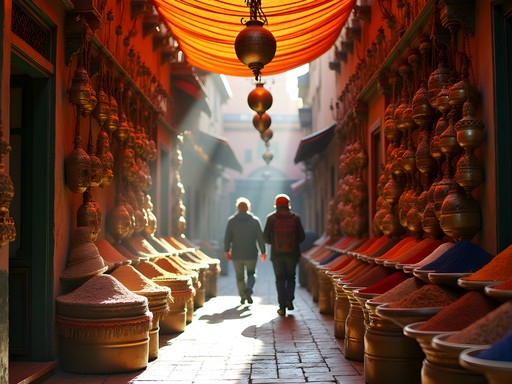
The first time I stepped into Marrakech's souks, I felt like Alice tumbling down the rabbit hole—disoriented yet utterly captivated. The sensory kaleidoscope of spice mountains, handcrafted lanterns casting constellation-like patterns, and artisans working with the precision I once applied to molars rather than metal. That was three years ago, when my astronomical pursuits first brought me to Morocco's dark sky regions. Since then, I've returned each spring, drawn not just by the stars above but by the earthly treasures within these ancient marketplaces. As a collector of traditional ceramics and someone who's haggled in markets from Kyoto to Cusco, I've developed a system for navigating these labyrinthine bazaars that transforms the often-intimidating experience into an enriching cultural exchange. Whether you're seeking a statement piece for your home or meaningful mementos of your Moroccan adventure, this guide will help you shop with confidence, respect, and joy.

Understanding the Souk Ecosystem
Marrakech's souks aren't just marketplaces; they're living museums where commerce and culture have intertwined for nearly a millennium. Unlike the sterile shopping experiences we've grown accustomed to in the West, these markets operate on traditions as old as the medina itself.
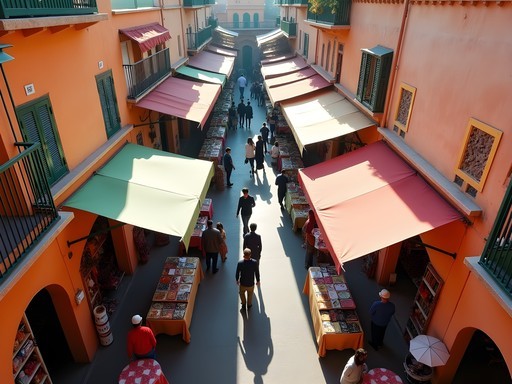
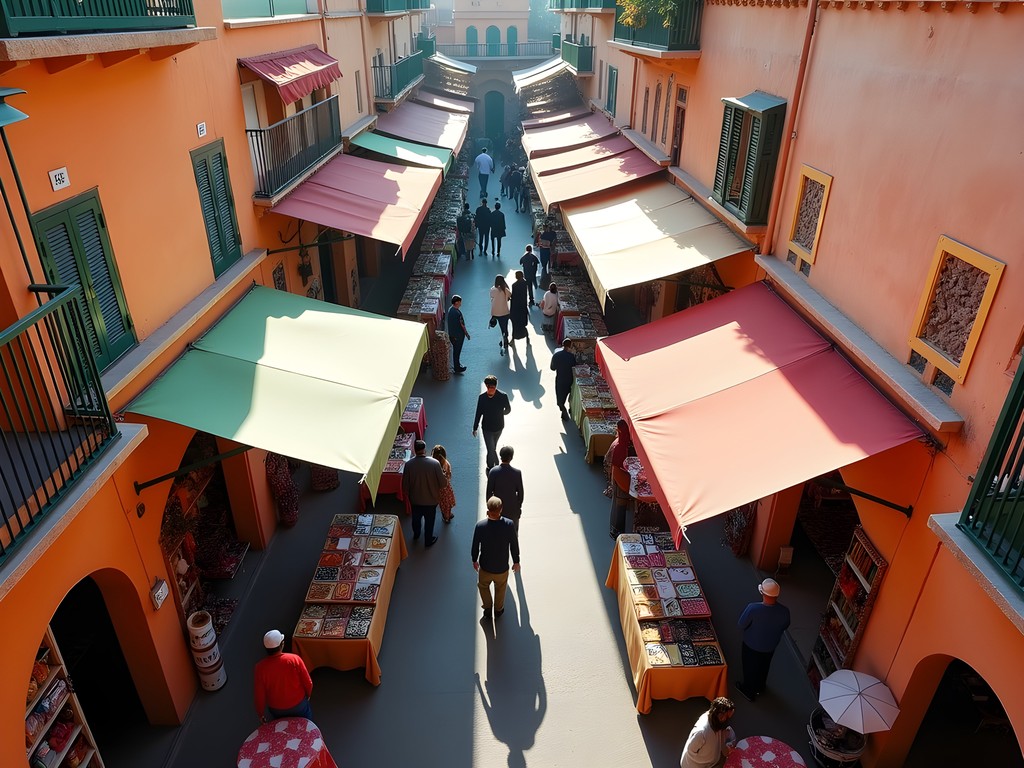
The souks are organized roughly by product—Souk Semmarine for textiles, Souk Cherratine for leatherwork, Souk Fekharine for my beloved ceramics, and so on. This organization dates back to medieval guild systems, though nowadays the boundaries blur as you venture deeper into the maze. During my second visit, I discovered that understanding this traditional layout provided both practical navigation benefits and deeper appreciation for the craftsmanship.
What continually fascinates me is how the souk ecosystem maintains its own internal logic. Prices aren't displayed because they're expected to be negotiated. Shopkeepers call out to passersby not out of aggression but tradition. The seemingly chaotic layout actually follows ancient urban planning principles that account for everything from sunlight exposure to delivery access.
Before diving into the shopping experience, I recommend spending your first morning simply observing. Find a rooftop café overlooking the souks—I'm particularly fond of Café des Épices—and watch the rhythm of the marketplace unfold below. This perspective shift helps you understand the ebb and flow before becoming part of it.
💡 Pro Tips
- Visit during early morning (8-10am) when shops are opening for a calmer experience
- Look up occasionally—the architecture above the shops often reveals the age and history of different sections
- Download an offline map, but don't rely on it completely—getting slightly lost is part of the experience
The Art of the Haggle: A Dentist's Precision Approach
As a dentist for three decades, I developed a methodical approach to complex procedures that, surprisingly, translates perfectly to bargaining in Marrakech's souks. Both require patience, precision, and a calm demeanor under pressure.
First, understand that bargaining isn't confrontational—it's conversational. In Moroccan culture, it's a dance of mutual respect. I've found that shopkeepers are more responsive to someone who approaches negotiation as a thoughtful exchange rather than a battle to be won.
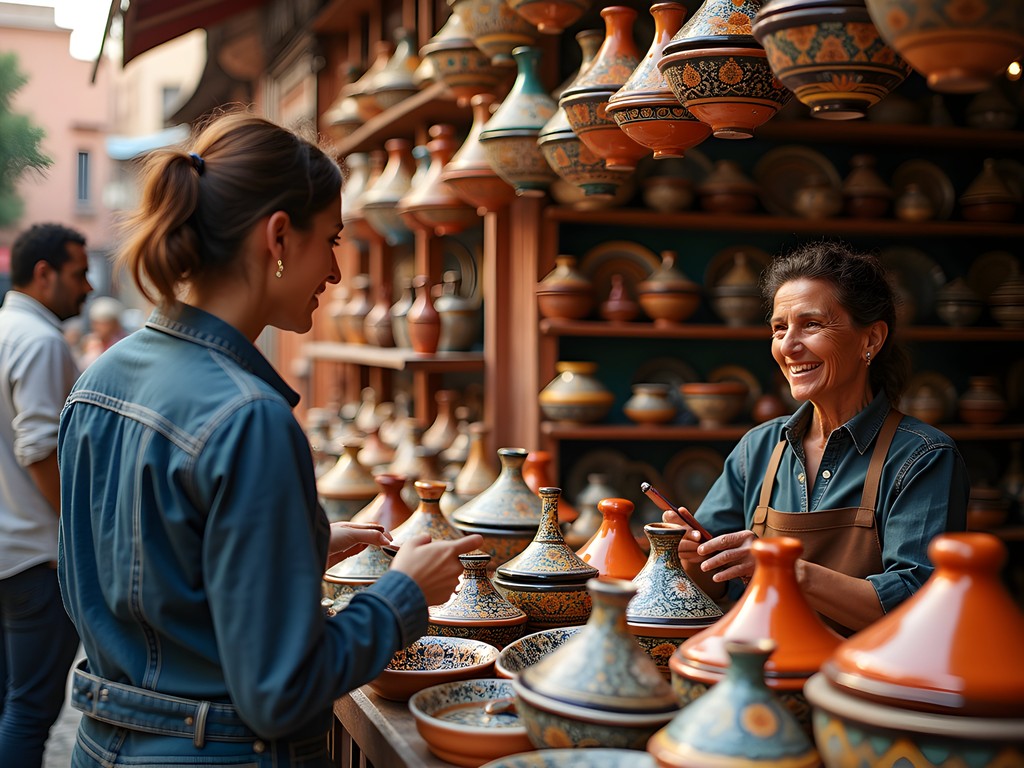
My strategic approach begins with observation. Before expressing interest in any item, I note its quality compared to similar pieces in other shops. For ceramics especially, I examine the glaze consistency, check for hairline cracks, and assess the symmetry—details my dental training taught me to spot instantly.
When ready to engage, I begin with the Moroccan greeting "Salam Alaikum" and perhaps a simple "Shukran" (thank you) when the shopkeeper shows items. These small courtesies establish respect. I never ask the price of something unless I'm genuinely interested, as this initiates the bargaining process.
When the initial price is quoted, I don't counter immediately. Instead, I thoughtfully consider the item, sometimes setting it down gently while maintaining interest. My response is typically about 40% of the initial offer—this gives room for the dance to continue. The shopkeeper will likely look shocked (part of the performance) before countering.
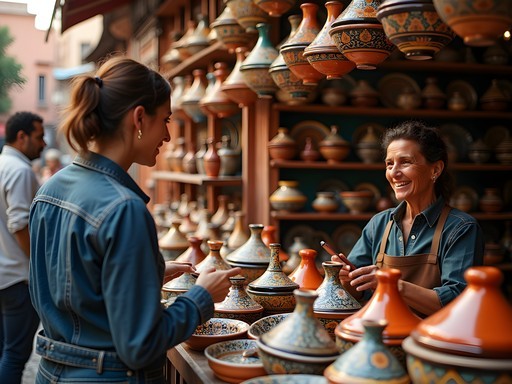
During my last visit, I had my eye on a particular ceramic tagine with intricate blue geometric patterns. The initial price was 800 dirham. I offered 300, we settled happily at 450—both parties satisfied with the exchange.
For keeping track of prices and conversion rates, I rely on my travel calculator which is compact enough to slip into a pocket yet sturdy enough to withstand being pulled out repeatedly during a day of shopping.
💡 Pro Tips
- Never show excessive enthusiasm for an item—maintain a poker face while assessing quality
- Have a maximum price in mind before starting negotiations and be prepared to walk away
- If you're quoted in euros, politely request the price in dirham instead—it's often advantageous
Authentic Treasures: Separating Artisanal from Assembly Line
After years of collecting ceramics across four continents, I've developed a discerning eye for authenticity—a skill particularly valuable in Marrakech where genuine handcrafted treasures share shelf space with mass-produced imitations.
The most coveted ceramics come from Fez (known for blue and white patterns) and Safi (famous for polychromatic designs). Authentic pieces have slight imperfections that reveal their handmade nature—asymmetries in pattern, variations in glaze, or the artisan's signature on the bottom. Mass-produced items, meanwhile, have suspicious uniformity and often feel lighter due to lower-quality materials.
When examining textiles like Berber rugs, I always carry a jeweler's loupe to inspect the knot density and dye quality. This small tool has saved me from numerous overpriced machine-made imitations. Authentic rugs have irregular knots visible on the back, natural fiber variations, and dyes that show subtle color gradations.
For metalwork, particularly the iconic Moroccan lamps, check for hand-punched designs rather than laser-cut patterns. Run your fingers along the edges—handcrafted pieces have subtle variations in texture that machine production cannot replicate.
During my last visit, I witnessed a disturbing trend: shops prominently displaying 'traditional' items that were clearly imported from China. When I expressed interest in seeing locally-made alternatives, many shopkeepers brought out their 'real stock' from back rooms—pieces made by family members or local artisans, often at similar prices but infinitely superior in quality.
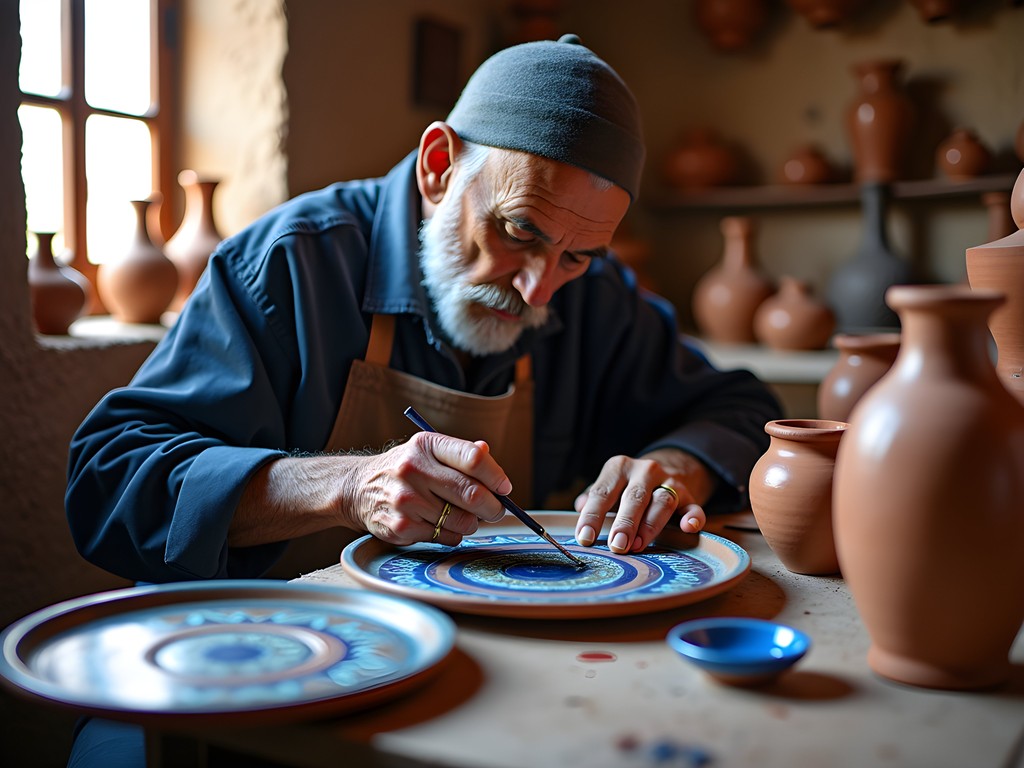
Perhaps most important is developing relationships with artisans themselves. In the less-touristed corners of the souks, you can often find workshops where items are being created on-site. My most treasured Moroccan possession is a ceramic plate I watched being painted by a third-generation artisan named Hassan, whose family has operated from the same small workshop for over 80 years.
💡 Pro Tips
- Look for workshops with artisans actively working—these typically sell authentic pieces
- Ask about the symbolism in designs—knowledgeable sellers can explain traditional patterns and their meanings
- For textiles and carpets, request to see both sides—the reverse often reveals construction quality

Navigational Strategies for the Directionally Challenged
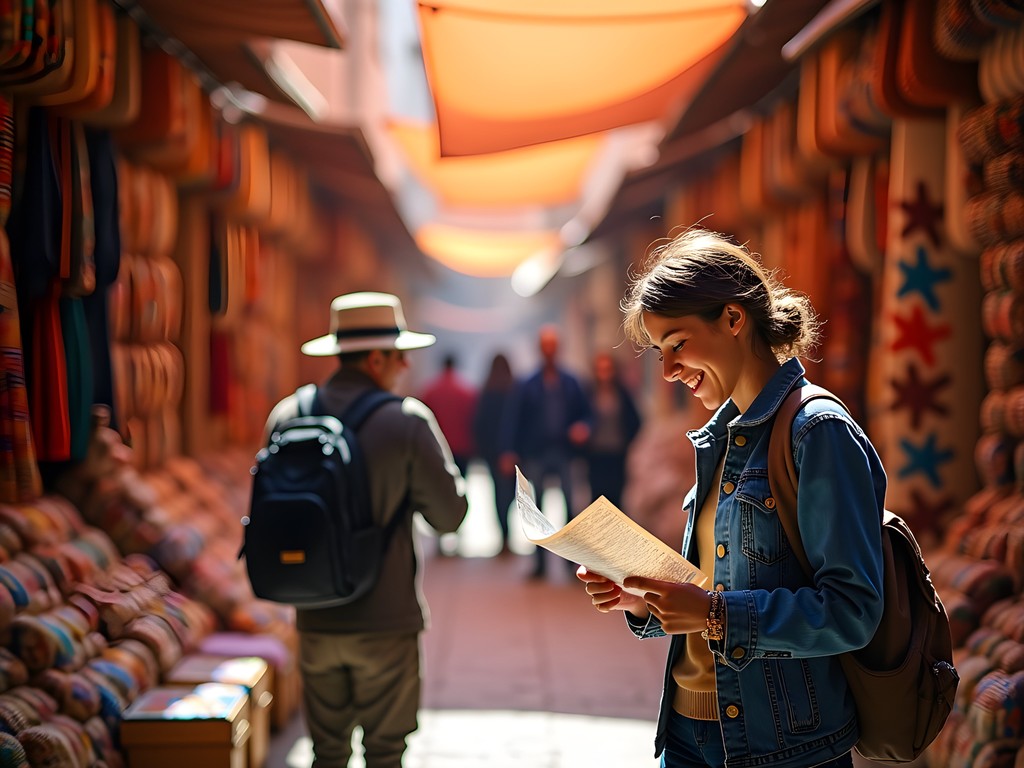
As someone who once got lost in a shopping mall in Canberra (true story), I approached Marrakech's infamous maze-like souks with considerable trepidation. Over multiple visits, I've developed navigation strategies that have transformed my experience from anxiety-inducing to confidence-building.
First, accept that getting lost is inevitable and part of the charm. The souks were intentionally designed with twisting pathways to slow down invaders—they weren't meant to be navigated efficiently! I now build 'getting lost time' into my itinerary, treating unexpected detours as opportunities for discovery rather than frustrations.
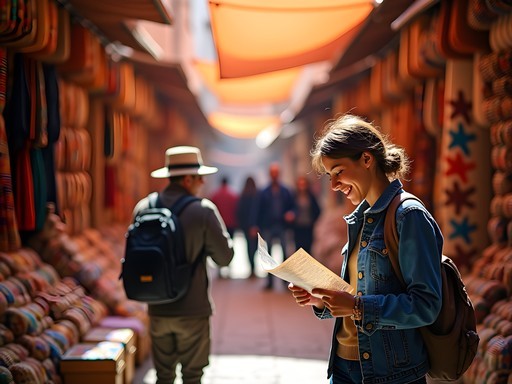
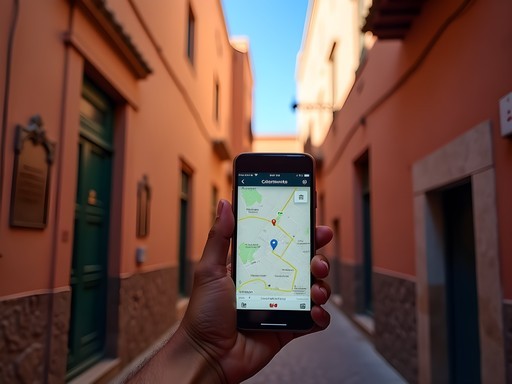
That said, having some navigational tools is essential. While smartphone maps work sporadically under the covered souks, I prefer a combination of digital and analog approaches. I use my hiking compass to maintain a general sense of direction—the same tool that serves me well on hiking trails around Mount Stromlo proves surprisingly useful in urban labyrinths.
Landmark identification is crucial. The minarets of major mosques serve as excellent orientation points when visible. Within the souks, I identify distinctive shops or architectural features (an unusually colored door, a specific cafe) to create mental breadcrumbs.
The most reliable strategy, however, is to focus on the flow of foot traffic. All paths eventually lead to major nodes—Djemaa el-Fna square, Rahba Kedima (the spice square), or one of the main entrance gates. When truly disoriented, I follow the most confident-looking locals, who invariably know the most direct routes.
During my second visit to Marrakech, I discovered the value of hiring a local guide for the first day. Mohammed, recommended by my riad, not only prevented me from getting hopelessly lost but also introduced me to hidden workshops I would never have found independently. The perspective gained during that guided day empowered me to explore independently afterward.
For those with serious concerns about navigation, consider dropping occasional location pins when you have GPS signal or taking photos of major junctions to help retrace your steps. And always carry your hotel's business card with the address in Arabic—if all else fails, any shopkeeper can point you toward a petit taxi.
💡 Pro Tips
- Look for numbered plaques on walls—these are official markers that correspond to medina maps
- Remember shop names rather than locations—shopkeepers can direct you to other well-known establishments
- When truly lost, head uphill—you'll eventually reach the outer edge of the souks
Beyond Bargains: Cultural Exchange Through Commerce
The most profound lesson I've learned through my souk adventures is that the true value lies not in the items purchased but in the human connections formed during the process. What began as simple transactions during my first visit have evolved into meaningful cultural exchanges and even friendships.
My approach to souk shopping has transformed from focusing solely on price negotiations to seeking authentic cultural engagement. I now prepare by learning a few phrases in Darija (Moroccan Arabic) beyond the basic greetings. Simple expressions like "Bshhal hada?" (How much is this?) and "Ghali bzzaf" (Too expensive) delivered with a smile create instant rapport.
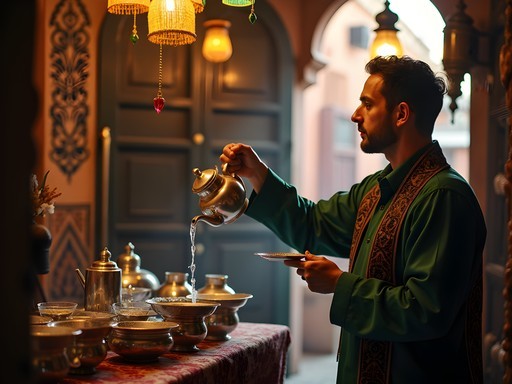
Accepting hospitality is crucial to this cultural exchange. When a shopkeeper offers mint tea, I've learned to accept graciously rather than suspecting a sales tactic. These tea ceremonies—where the beverage is poured from impressive heights into small glasses—create space for conversation that transcends commerce.
During my most recent visit, I brought a small photo printer that connects to my smartphone. After meaningful interactions with artisans, I would take their photo and instantly print a copy as a gift. This simple gesture reversed the typical tourist-vendor dynamic and opened doors to authentic connections. Hassan, the ceramic artist I mentioned earlier, was so touched by this gesture that he invited me to meet his family and share a home-cooked tagine.
I've also found that showing genuine interest in craft techniques elicits passionate responses. When I asked a woodworker about his specific carving methods, comparing them to techniques I'd observed in New Zealand, his entire demeanor transformed from salesman to proud artisan eager to demonstrate his skill.
Perhaps most importantly, I've learned to allocate time for these interactions. Rushing through purchases to check items off a shopping list misses the point entirely. Some of my most treasured Moroccan memories involve spending an hour with an elderly spice vendor who explained traditional medicinal uses for his wares, or learning backstrap weaving techniques from a Berber woman whose family has created textiles for generations.

💡 Pro Tips
- Learn the stories behind traditional crafts—many patterns and techniques have cultural significance worth understanding
- Ask permission before photographing artisans or their workshops
- Set aside specific days for 'slow shopping' with no agenda other than cultural immersion
Final Thoughts
As I carefully wrap my ceramic treasures in clothing before nestling them in my suitcase, I reflect on how Marrakech's souks offer far more than material acquisitions. Each piece carries a story—of the hands that crafted it, the cultural traditions it represents, and the memorable interactions that accompanied its purchase. The true souvenirs are the connections formed and perspectives gained through these commercial-cultural exchanges. Whether you're seeking a statement piece for your home or simply curious about traditional craftsmanship, approach the souks with patience, respect, and openness. The rewards extend far beyond the bargains secured. As the Moroccan saying goes, "He who brings back only what he went looking for returns empty-handed." May your souk adventures be filled with unexpected discoveries that continue to bring joy long after you've returned home.
✨ Key Takeaways
- Successful bargaining is about mutual respect and cultural understanding, not aggressive haggling
- Learning to identify authentic craftsmanship enhances both your shopping experience and the value of your purchases
- The most meaningful souvenirs are often the cultural exchanges and human connections formed during transactions
📋 Practical Information
Best Time to Visit
Spring (March-May) or Fall (September-November)
Budget Estimate
$50-100 per day for shopping, depending on purchases
Recommended Duration
Allocate at least 3 full days for souk exploration
Difficulty Level
Moderate




Comments
smartmate
YES to everything here!! The souks are absolutely magical and your tips are perfect. I wish I'd read this before my first visit - would've saved me from paying way too much for a 'genuine antique' lamp that definitely wasn't antique haha. Live and learn!
hikingmood542
Great guide! One thing that helped me was keeping my travel wallet tucked away and only pulling out the cash I was willing to spend for each item. Made it easier to stick to my budget and not get carried away in the moment. Also totally agree about the spice vendors - bought so much saffron and ras el hanout that I'm still using it a year later. The quality is just incomparable to what you get at home.
beachwanderer
This is EXACTLY what I needed!!! Marrakech is top of my bucket list and I've been so nervous about the haggling part. Bookmarking this for sure!!
Dylan Turner
Your section on distinguishing artisanal from mass-produced items is particularly valuable. I've analyzed souk economics across several North African markets, and Marrakech presents unique challenges in authenticity verification. The quality markers you mentioned - irregular stitching on leather goods, natural dye variations in textiles - are spot-on. I'd add that asking about production location often reveals much; genuine artisans proudly discuss their workshops. On my last visit, I invested in several museum-quality pieces from the Rahba Kedima area after verifying their provenance. The premium pricing was justified by craftsmanship that rivals gallery pieces I've seen in Fez and Tunis.
coolchamp
Going to Marrakech in March! Is it rude to walk away if they won't meet your price? I'm worried about offending anyone.
smartmate
Not rude at all! Walking away is literally part of the game. Half the time they'll call you back with a better offer lol
hikingmood542
Exactly what smartmate said. Just be polite and smile when you walk away. It's totally expected and nobody takes offense.
tripblogger
Love this! The photos are gorgeous too.
Oliver Duncan
Astrid, your navigational tips are gold! I got hopelessly lost in the souks back in 2023 and ended up in the same spice stall three times - the owner was laughing at me by the third visit. One thing I'd add: download an offline map before you go. The maze-like alleyways don't always have good signal. Also, I found that shopping in the late afternoon when things quieted down gave me more relaxed bargaining sessions. The morning rush can be intense, especially near Jemaa el-Fnaa. Got a beautiful handwoven Berber carpet that way, and the seller actually showed me his workshop in the back. Those authentic connections make all the difference.
Dylan Turner
The timing tip is excellent. I've found late afternoon shopping across multiple markets globally yields better results - vendors are more motivated and less rushed.
mountaingal
The dentist's precision approach to haggling made me laugh because it's SO true! I was in the souks last spring and started at 30% like you suggested. Walked away with the most gorgeous leather pouf for my living room. The vendor and I actually ended up having mint tea together after we agreed on a price. That's what I love about Marrakech - it's not just shopping, it's the whole experience. My only regret is not buying more of those argan oil products from the cooperative stalls.
beachwanderer
Omg the mint tea thing sounds amazing! Did you feel awkward drinking tea with them?
mountaingal
Not at all! It felt really genuine, like he actually wanted to chat. Made the whole transaction feel more like making a friend than just buying stuff.
waverider
Going next month!! What's a reasonable price for those leather bags? Don't want to overpay
Oliver Duncan
Depends on size and quality but I paid around 300-400 dirham for a decent medium crossbody bag. Start at 1/3 of their asking price and meet somewhere in the middle. Check the stitching quality first!
Nicole Russell
LOVED this post!! The "dentist's precision approach" made me laugh - so accurate! I just got back from Marrakech two weeks ago and used your tips. Walked away with the most beautiful hand-embroidered cushion covers and a vintage Berber rug that I'm OBSESSED with. The rug negotiation took literally 45 minutes and three glasses of mint tea but it was such a memorable experience. My only regret is not buying more of those argan oil products - the ones in the souk were so much better quality than what I've found online back home. Already planning my return trip!
Venture X
Premium card with 2X miles, $300 travel credit, Priority Pass