


Disclosure: This article contains affiliate links. We may earn a commission from purchases at no extra cost to you, which helps our travel content.
There's something poetic about cities that bear the marks of their industrial past while quietly reinventing themselves. Utica, nestled in the heart of Central New York, is precisely this kind of unsung visual treasure. As someone who fled New York City's relentless pace for quieter creative pursuits, I've developed a particular fondness for these overlooked American gems. During a recent spring weekend, I discovered that Utica offers photographers a rare visual feast: magnificent Gilded Age architecture, a tapestry of immigrant cultures, and the soft embrace of surrounding Mohawk Valley landscapes—all without the crowds or price tag of more famous destinations.

Architectural Time Travel: Utica's Golden Hour
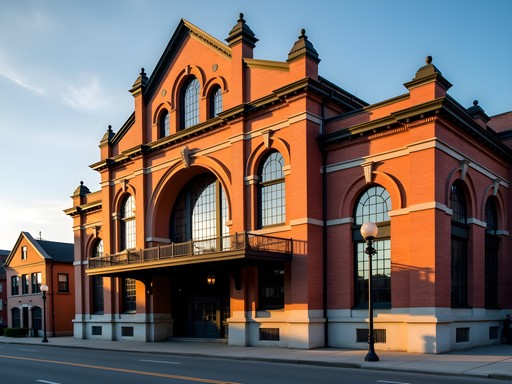
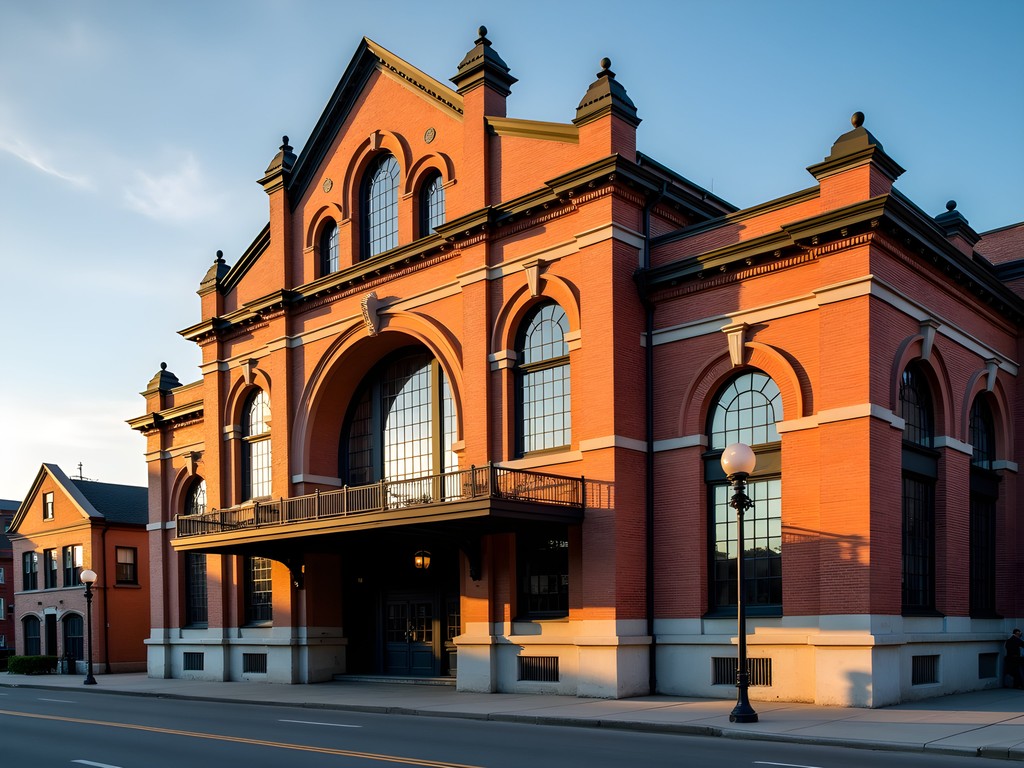
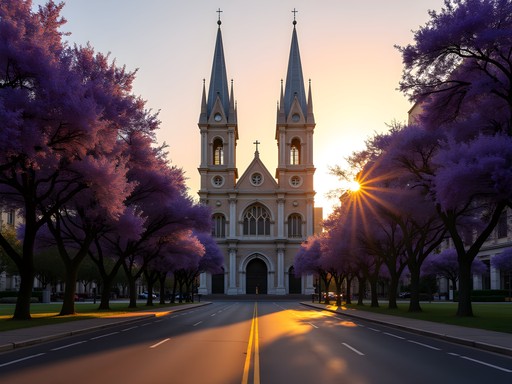
Utica's downtown reveals itself best in the golden hour, when late afternoon light warms the red brick and terracotta details of buildings that have witnessed over a century of American history. The 1928 Art Deco masterpiece of Union Station stands as my favorite subject—arrive around 5:30 PM in spring to catch the sunlight illuminating its grand arched windows and ornate façade.
A few blocks away, Genesee Street offers a parade of architectural styles that tell the story of Utica's boom years. The Stanley Theater's intricate exterior details reward photographers willing to look up and zoom in. For intimate architectural portraits, I relied on my prime lens, which handles the dramatic light-to-shadow transitions beautifully.
The abandoned industrial buildings along the canal corridor offer a more contemplative photographic experience. These weathered brick facades with their faded signage speak to the city's manufacturing heritage—I found myself spending an entire hour capturing just one crumbling factory wall, the texture of each brick telling its own story.
💡 Pro Tips
- Visit Union Station around sunset when the interior Grand Hall glows with warm light
- For architectural detail shots, bring a lens with at least 85mm focal length
- The Landmark Building offers public access to its lobby—ask security nicely for permission to photograph
Cultural Kaleidoscope: Documenting Utica's Diverse Communities
What makes Utica visually unique is its role as a refugee resettlement center, creating a multicultural tapestry that rivals cities many times its size. The Bosnian Islamic Association mosque sits just blocks from Vietnamese grocery stores and traditional Italian bakeries—each offering distinct visual stories.
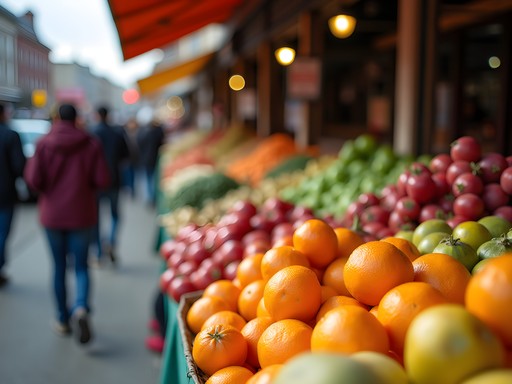
For street photographers, Bleecker Street provides a vibrant canvas of daily life. I spent a morning capturing the colorful produce displays outside the ethnic markets, where the vendors graciously allowed me to photograph their meticulously arranged goods. The key to these encounters was my translator device, which helped me ask permission in multiple languages and learn the stories behind what I was photographing.
The Mohawk Valley Resource Center for Refugees occasionally hosts cultural celebrations that offer stunning photographic opportunities. During my visit, a Karen community dance performance created a blur of traditional textiles and movement that challenged and delighted my camera's capabilities. When photographing cultural events, remember that respect comes before the perfect shot—always ask permission when photographing individuals up close.

💡 Pro Tips
- Visit the Bosnian Islamic Association mosque outside of prayer times for architectural shots
- Farmers markets on Saturday mornings offer vibrant cultural photography opportunities
- Learn a few basic phrases in Bosnian, Vietnamese, and Arabic to connect with shopkeepers before asking to photograph
Aerial Perspectives: Drone Photography Over the Mohawk Valley
Utica's position in the Mohawk Valley creates dramatic topographical contrasts that are best captured from above. After researching local drone regulations (always my first step), I found several perfect launch sites that offered stunning aerial compositions.
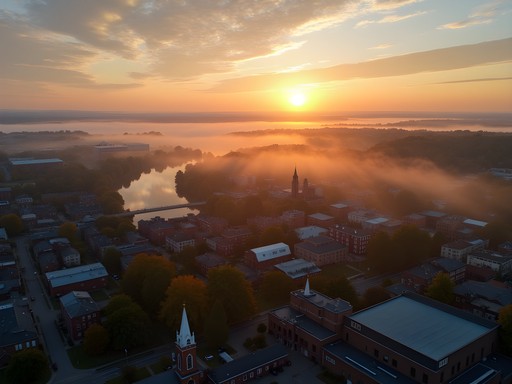
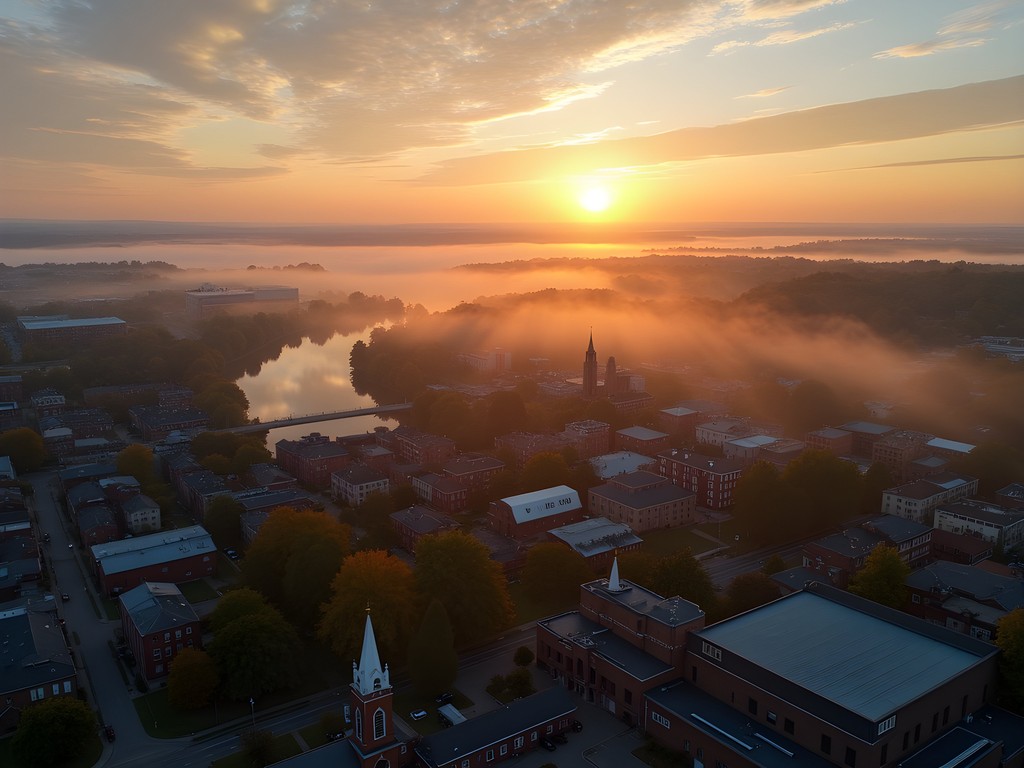
The remnants of the Erie Canal system create fascinating geometric patterns when viewed from above. For the best light on the waterways, I launched my drone at dawn when the mist was still rising from the water. My drone landing pad proved essential on the dewy spring mornings, keeping my equipment dry during takeoffs and landings.
The contrast between the city's grid and the surrounding rolling hills creates compelling compositional opportunities. From Roscoe Conkling Park, I captured the urban density gradually giving way to the lush green landscape. When flying near residential areas, I used my drone strobe light to ensure visibility and safety—a small investment that prevents potential issues with concerned residents.
Remember that drone photography requires careful attention to FAA regulations. Utica is generally drone-friendly, but always check for temporary flight restrictions before launching, especially near the airport or during public events.
💡 Pro Tips
- Launch from Roscoe Conkling Park for the best city-meets-landscape compositions
- The hour after sunrise offers the most dramatic shadows across the valley
- Keep drone batteries warm in spring mornings when temperatures can still be chilly

Artisan Encounters: Photographing Utica's Maker Renaissance
As both a photographer and ceramicist, I'm drawn to cities where traditional crafts are finding new life. Utica's affordable studio spaces have attracted a growing community of artisans whose workshops offer intimate photographic subjects that capture the human element of creativity.
The Utica Makerspace hosts a rotating cast of craftspeople whose hands and tools create compelling close-up photography opportunities. I spent an afternoon documenting a glassblower at work, experimenting with high-speed settings to freeze the molten glass in mid-transformation. For these challenging lighting conditions, my variable ND filter allowed me to maintain a wider aperture while controlling exposure in the fiery workshop environment.
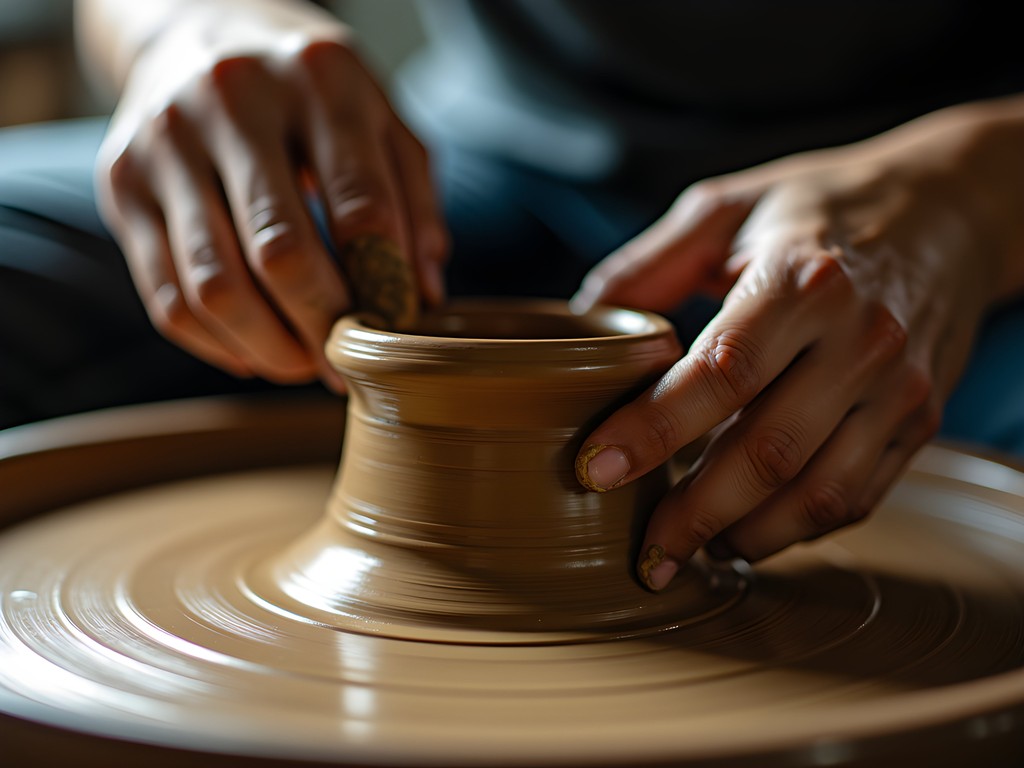
Thrive Pottery Studio welcomed me to photograph their community classes, where the tactile nature of clay created wonderful textural images. As someone who found healing through ceramics during my own sabbatical, these images of hands working clay resonated deeply with me.
When photographing artisans, I've found that spending time understanding their process before raising the camera yields the most authentic images. Many craftspeople in Utica are reviving techniques that were once central to the city's manufacturing identity—creating a visual through-line from the city's past to its creative future.
💡 Pro Tips
- Use a 50mm or 85mm lens for artisan portraits to capture detail while maintaining context
- Bring a small LED light panel to supplement challenging workshop lighting
- Visit studios on weekdays when artisans are working rather than displaying finished work
Natural Frames: Utica's Urban-Meets-Rural Landscapes
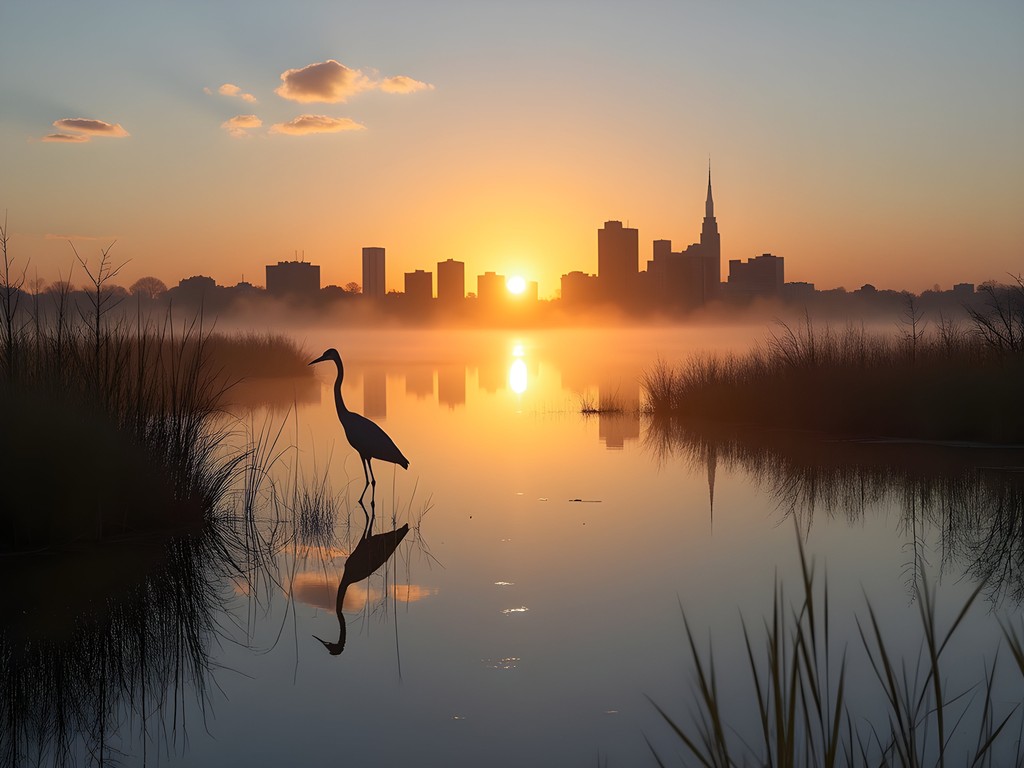
Just minutes from downtown, Utica offers photographers the rare gift of accessible natural landscapes that frame the urban environment. The Utica Marsh Wildlife Management Area provides 213 acres of wetlands where I spent hours capturing the juxtaposition of natural systems against the city skyline.
For landscape photographers, the elevated view from the Val Bialas Ski Center offers a spectacular panoramic perspective, especially at sunrise when the city is bathed in soft light. I arrived before dawn with my camera rain cover, which proved essential when an unexpected spring shower passed through—protecting my gear while adding dramatic clouds to my compositions.
The Switchbacks Trail in the South Woods provides another photographic treasure, with stone staircases built during the WPA era creating strong leading lines through the forest. In spring, these historic paths are lined with wildflowers that create delicate foreground interest against the rugged stonework.
When photographing these natural areas, I've found that including human elements—a distant church spire, a canal lock, or century-old stone walls—creates images that tell a more complete story of how Utica has always existed in conversation with its surrounding landscape.
💡 Pro Tips
- Visit Utica Marsh in early morning when wildlife is active and city reflections are crisp in the water
- The South Woods are most photogenic after light rain when the stone paths glisten
- Pack a polarizing filter to manage reflections when shooting near water bodies
Final Thoughts
As I packed away my camera and drone on my final Utica morning, I found myself reluctant to leave this visually rich city that had offered so much to my lens in just a weekend. What makes Utica particularly special for photographers is the accessibility of its visual treasures—no permits required for most locations, no crowds to navigate, no exorbitant fees to access viewpoints. It's a city that rewards the curious eye rather than the tourist checklist.
Perhaps most meaningful to me was discovering how Utica's visual story parallels themes I've documented worldwide: traditional craftsmanship finding new expression, immigrant communities weaving their cultural threads into the local fabric, and industrial heritage being reimagined rather than erased. If your photography seeks to capture authentic American narratives beyond the glossy postcard cities, Utica offers a canvas both accessible and profound.
Bring your camera, yes—but also bring time to simply observe, to speak with locals, to understand the stories behind the facades. In cities like Utica, the most compelling images emerge not from rushing between landmarks but from the quiet moments of connection with place and people.
✨ Key Takeaways
- Utica offers diverse photographic opportunities spanning architecture, culture, nature and artisan crafts in one compact city
- Golden hour and early morning provide the most dramatic lighting for both urban and natural settings
- Engaging respectfully with local communities yields more authentic images than simply capturing facades
- Budget-friendly accommodations and free access to most photographic locations make Utica ideal for photographers on a limited budget
📋 Practical Information
Best Time to Visit
April-June for lush landscapes and comfortable temperatures
Budget Estimate
$250-400 for a weekend (accommodations, food, transportation)
Recommended Duration
2-3 days
Difficulty Level
Moderate (Some Hiking Required For Best Viewpoints)




Comments
sunnyexplorer
What's the weather like in October? Thinking about visiting same time you did.
Haley Hamilton
This post hits different for me because I grew up about an hour from Utica and always dismissed it as just another struggling rust belt city. Your photos prove I was completely wrong. Last fall I finally went back with fresh eyes and spent three days wandering around with my camera strap getting those exact architectural shots you're talking about. The Bosnian community on Bleecker Street is incredibly welcoming - ended up being invited into someone's home for coffee after photographing their storefront. That kind of genuine human connection is what makes travel photography meaningful. Beautiful work capturing the soul of a place most people drive right past.
waveguy
Been to Utica three times now and totally agree about the cultural diversity angle. The refugee communities there have really transformed the food scene and street life. Got some amazing candid shots at the farmers market on Saturday mornings - people are super friendly once you ask permission. The light bouncing off those old brick buildings downtown around 7am is chef's kiss. Also the Adirondack Bank building is an absolute gem if you're into Art Deco stuff.
citynomad
Good to know about the farmers market!
journeyace
How many days would you recommend to really capture everything you mentioned?
Taylor Moreau
Excellent guide, Lily. I passed through Utica during a business trip last year and completely overlooked its photographic potential. The section on the Maker Renaissance is particularly intriguing—I've been documenting similar urban renewal movements across the Midwest. The architectural contrast you've captured between the industrial heritage and contemporary revitalization is spot on. Would you recommend staying in the downtown area for easy access to these locations, or is mobility essential?
sunnyexplorer
Also curious about this! Where did you stay?
vacationgal
Is golden hour really that good for the old buildings? Planning a trip in March and trying to figure out best time of day to shoot.
reddiver
What are the drone regulations like there? Can you fly pretty much anywhere or are there restricted zones?
waveguy
Not the author but I flew there last year. Pretty open except near the airport obviously. Just check the FAA app before you go up.
citynomad
Never thought about Utica for photography. Love this!
sunnyguide
Those golden hour shots of the brick buildings are amazing! 😍
oceantime
Great post! I'm a beginner photographer heading to Utica next month. What lens would you recommend for capturing those architectural details you mentioned? I have a basic DSLR setup but limited lenses.
Lily Thomas
For architecture in Utica, I'd recommend a versatile 24-70mm lens. The buildings are often on narrow streets, so having that wider angle helps. I used my standard zoom for most of the architectural shots in this post!
oceantime
Perfect, thanks! I've been saving up for a lens upgrade so that's really helpful advice.
Venture X
Premium card with 2X miles, $300 travel credit, Priority Pass