

Disclosure: This article contains affiliate links. We may earn a commission from purchases at no extra cost to you, which helps our travel content.
In the quantum realm, we observe that particles can exist simultaneously in contradictory states until measured. My recent expedition through Chiang Mai and Ashgabat revealed a similar duality in human nightlife ecosystems. These two cities, separated by 3,700 kilometers of Asian continent, represent opposite ends of the nocturnal spectrum—one pulsating with spontaneous energy exchanges, the other operating under strict thermodynamic constraints. As a physicist, I've always been fascinated by contrasting systems, and this 14-day journey through Thailand and Turkmenistan offered the perfect laboratory for observing how cultural forces shape nighttime social interactions. What began as a conference trip evolved into a fascinating study of light, sound, and human behavior after dark. For couples seeking both adventure and intellectual stimulation, this dual-city exploration offers a remarkable opportunity to witness how political systems, cultural values, and historical contexts create entirely different nightlife wavelengths.

Chiang Mai: Organic Nightlife Ecosystem
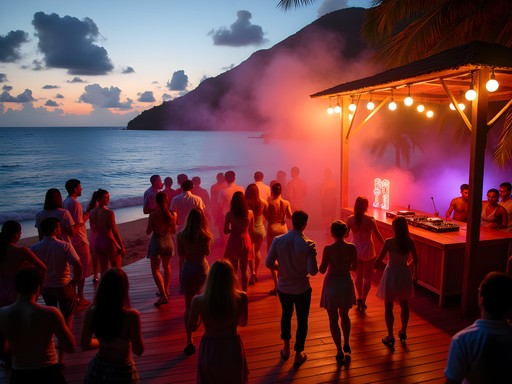
Arriving in Chiang Mai during the autumn shoulder season proved fortuitous—the monsoon rains had subsided, yet the tourist density remained below critical mass. The city's nightlife operates like a complex adaptive system, with emergent properties that can't be predicted by examining individual components.
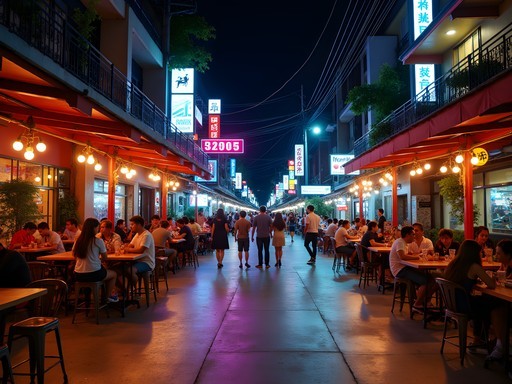
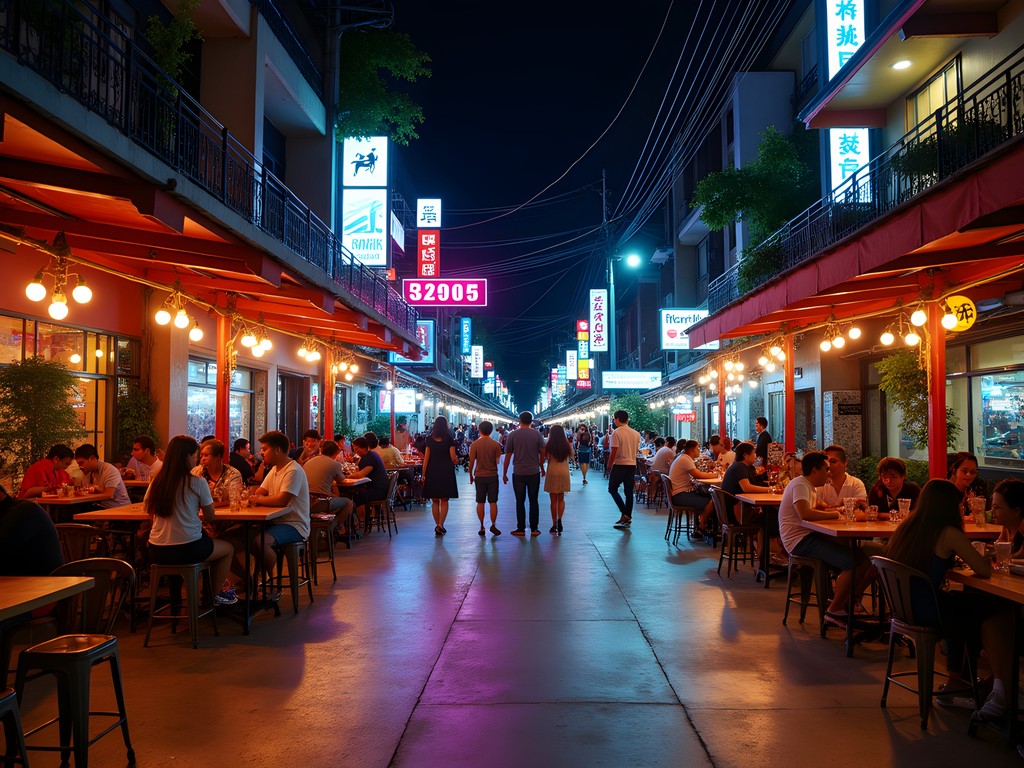
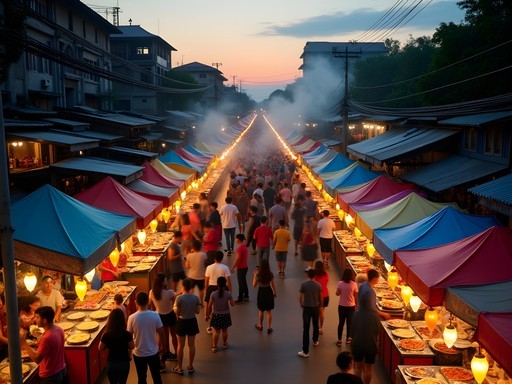
The Night Bazaar represents the lowest energy state of Chiang Mai's nightlife—accessible and requiring minimal activation energy. Here, couples can ease into the local nocturnal rhythm, sampling street food while browsing handcrafted goods. The electromagnetic spectrum comes alive through colorful textiles and the infrared radiation of food stalls cooking khao soi and grilled meats.
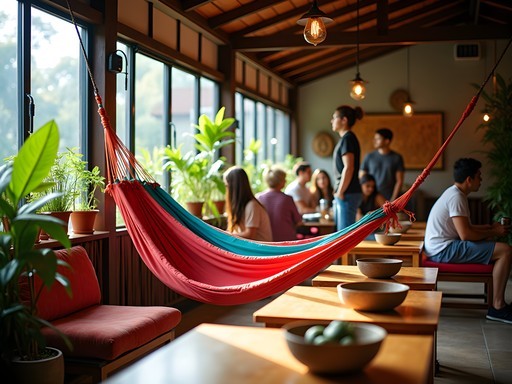
For a more elevated energy state, Nimmanhaemin Road offers a fascinating study in social thermodynamics. The soi (small streets) branching from the main road contain bars where potential energy transforms into kinetic as the evening progresses. One particularly memorable establishment, the Warm Up Café, demonstrates perfect entropy balance—organized enough for comfortable conversation early in the evening, yet chaotic enough for dancing as midnight approaches.
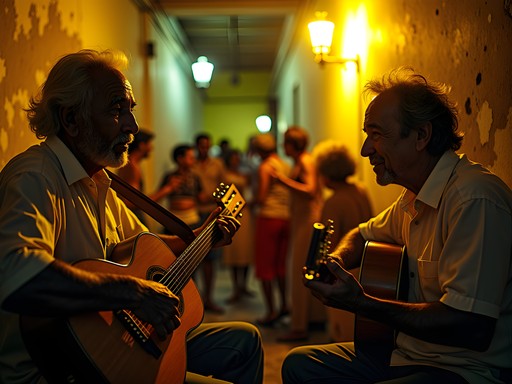
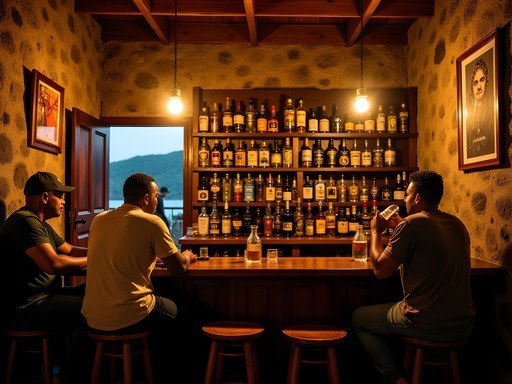
The most intriguing aspect of Chiang Mai's nightlife is its quantum uncertainty. On my third evening, following a random trajectory away from tourist-dense areas, my wife and I discovered a local live music venue where a Thai band performed remarkable jazz fusion. This spontaneous discovery principle holds true throughout the city—the most authentic experiences often materialize when you allow your path to remain undefined.
For capturing these nocturnal adventures, my travel camera proved invaluable. Its superior low-light performance allowed me to document the vibrant scenes without disrupting the natural flow of energy in these spaces.
💡 Pro Tips
- Visit Nimmanhaemin Road on weeknights first to acclimate before experiencing the weekend intensity
- The northern corner of the Night Bazaar transforms into a vibrant street food collective after 9 PM
- For authentic live music, ask local university students rather than hotel concierges
The Physics of Sound: Chiang Mai's Audio Landscape
As both physicist and occasional club-goer, I find the acoustic properties of nightlife venues particularly fascinating. Chiang Mai presents a complex waveform of auditory experiences that warrants scientific observation.
The city's North Gate Jazz Co-Op exemplifies perfect acoustic engineering despite its seemingly simple structure. The venue's partially open-air design creates a resonance chamber that amplifies brass instruments while dampening percussion to conversational levels. My spouse—whose background in biophysics gives her an equally analytical perspective—noted how the crowd's density affected sound propagation throughout the evening, with optimal acoustics occurring at approximately 75% capacity.
In stark contrast, the bass-heavy environments of venues along the Ping River demonstrate how low-frequency sound waves can physically alter human behavior. The subwoofer systems create pressure differentials you can feel in your chest cavity—a literal embodiment of music. One particularly memorable evening at Riverside Bar included a fascinating demonstration of constructive and destructive interference patterns as different speaker systems competed and occasionally synchronized.
For those sensitive to excessive decibel levels, I recommend the noise cancelling earbuds. These remarkable devices allowed me to modulate my auditory input throughout the evening, preserving both my hearing and sanity when the amplitude exceeded comfortable levels.
The most unexpected acoustic discovery came from Chiang Mai's temple complexes after hours. Several temples permit evening meditation sessions, creating zones of near-perfect silence just meters away from bustling night markets. This juxtaposition of acoustic extremes provides couples an opportunity to experience both energetic immersion and contemplative withdrawal within the same evening.

💡 Pro Tips
- Visit North Gate Jazz Co-Op on Tuesdays for optimal crowd density and acoustics
- Request seating along the perimeter walls at bass-heavy venues to minimize uncomfortable pressure waves
- Many temples offer evening meditation from 7-9pm—perfect for acoustic recalibration before continuing your night
Ashgabat: Nightlife Under Constraints
Transitioning from Chiang Mai to Ashgabat creates cognitive dissonance akin to observing quantum particles suddenly conforming to classical physics. Turkmenistan's capital operates under fundamentally different principles that transform the very concept of nightlife.
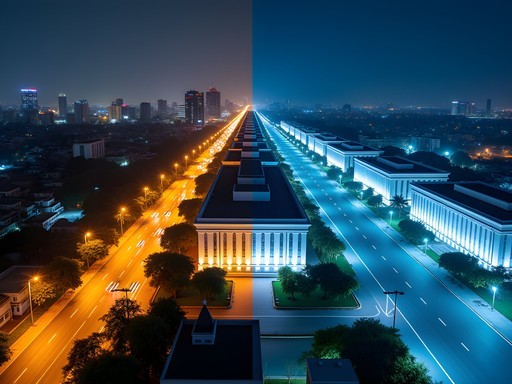
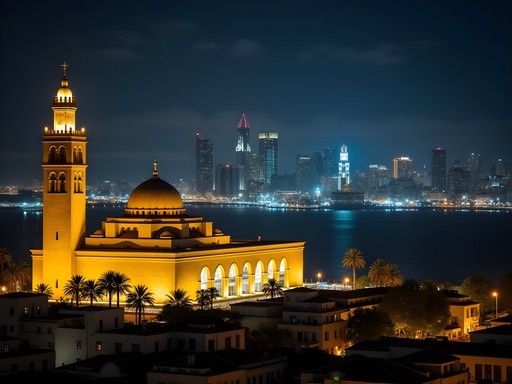
The first principle to understand is that Ashgabat's nighttime activities function within a highly ordered system with minimal entropy. The city's white marble buildings, illuminated by meticulously programmed LED systems, create a surreal landscape that feels simultaneously futuristic and antiquated. This architectural luminescence serves as both practical lighting and ideological statement—a government-sanctioned definition of acceptable nighttime aesthetics.
For couples accustomed to Western or Southeast Asian nightlife, the adjustment requires recalibrating expectations. Turkmenistan maintains a legally mandated 11 PM curfew in many areas, compressing the traditional nightlife timeline. This temporal constraint creates interesting social adaptations, with evening activities beginning and peaking earlier than in most global cities.
The Berkarar Shopping Center represents one of the few consistently accessible evening venues, remaining open until 10 PM. Here, local couples engage in the universal ritual of shared consumption and social display, though with notably different parameters than their Thai counterparts. The center's top floor contains a collection of restaurants and cafés where Turkmen youth congregate in a carefully monitored environment.
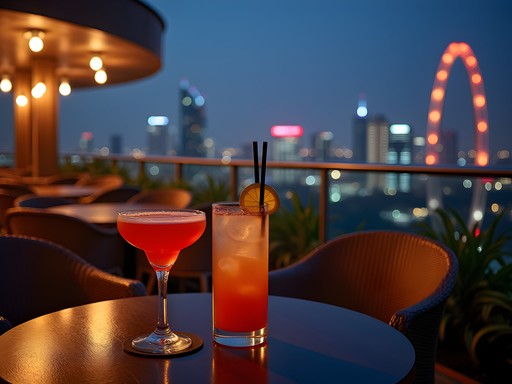
For those seeking alcoholic beverages, options exist but require navigational expertise. The Yacht Club, despite Ashgabat's landlocked geography, offers one of the few venues where couples can enjoy cocktails in a setting that approximates international nightlife standards. During my visit, I witnessed fascinating social dynamics as patrons balanced conservative cultural expectations with desires for cosmopolitan experiences.
Navigating Ashgabat after dark necessitates reliable transportation. Rather than attempting to decode the limited public options, I recommend arranging a private driver through your hotel. For documenting these unique experiences, my travel journal proved essential, as photography restrictions in many areas make digital documentation problematic.

💡 Pro Tips
- Arrange evening activities to conclude by 10:30 PM to allow comfortable return to accommodations before curfew
- Carry your passport at all times—evening security checks are common and unpredictable
- When photographing Ashgabat's illuminated buildings, avoid including government facilities or officials

Regulated Revelry: Navigating Ashgabat's Sanctioned Entertainment
While Ashgabat lacks spontaneous nightlife, it offers structured entertainment options that provide fascinating insights into Turkmen culture. The key difference from Chiang Mai lies in the predetermined nature of these experiences—quantum uncertainty gives way to Newtonian predictability.
The Turkmen State Circus represents one of the city's most accessible evening attractions for foreign visitors. Performances typically conclude by 9 PM, aligning with the city's compressed nighttime schedule. The circus combines traditional Central Asian horsemanship with Soviet-influenced acrobatics, creating a cultural fusion unique to the region. My spouse, whose background in biophysics gives her particular appreciation for the biomechanics of human performance, was mesmerized by the physical precision of the acrobats.
For a more traditional cultural experience, the Mukamlar Palace hosts folk music and dance performances several evenings weekly. These government-sanctioned presentations offer a carefully curated version of Turkmen heritage, though the technical skill of the performers remains undeniably impressive. The acoustics of the main hall demonstrate remarkable engineering—even whispered conversations from the stage remain audible throughout the venue.
The most unexpected evening activity came through an invitation to a wedding celebration at the Älem Cultural and Entertainment Center. While technically a private event, our conference connections facilitated access to this fascinating social ritual. Turkmen weddings represent one of the few contexts where the usual social constraints relax slightly, though still within clearly defined parameters. The choreographed nature of the celebration—with precisely timed dance performances and meal courses—contrasted sharply with the organic flow of Thai social gatherings.
For couples visiting Ashgabat, I recommend packing formal attire suitable for these structured events. My travel blazer proved invaluable, offering both appropriate sophistication and practical wrinkle resistance. My wife similarly appreciated having a conservative yet elegant outfit option that respected local customs while remaining comfortable in the desert climate.

💡 Pro Tips
- Purchase tickets for cultural performances through your hotel concierge rather than attempting online bookings
- Photography is permitted at the circus but flash is prohibited—adjust your camera settings accordingly
- When invited to Turkmen homes or celebrations, bringing a small gift of quality tea is always appropriate
The Luminous Contrast: Light Phenomena Analysis
As a physicist with particular interest in optics, the contrasting light environments of these cities provided a fascinating natural experiment. The photonic landscapes of Chiang Mai and Ashgabat represent opposite approaches to nighttime illumination, each revealing core cultural and political values.
Chiang Mai's light environment demonstrates emergent complexity—thousands of independent light sources combining without central coordination. The resulting illumination creates a fractal pattern visible from surrounding hillsides, with areas of varying intensity and color temperature. The Night Bazaar region produces a spectral signature rich in mid-range frequencies, while the university area skews toward the blue end of the spectrum due to newer LED implementations.
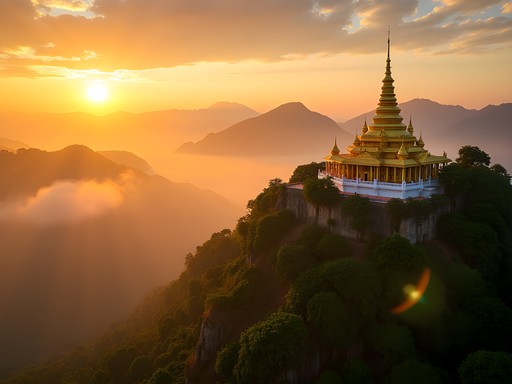
During one particularly memorable evening, my spouse and I hiked to Doi Suthep's observation point after sunset. From this vantage, Chiang Mai's lights revealed patterns similar to cellular automata—complex systems emerging from simple rules. The city's illumination expanded and contracted with traffic patterns and human activity, creating a living light organism that responded to countless individual decisions.
Ashgabat presents the antithesis of this organic light ecosystem. The city's illumination follows precise governmental specifications, with uniform color temperatures and intensities across massive architectural spaces. The presidential palace complex demonstrates this most dramatically, with perfectly synchronized lighting programs that activate and deactivate with millisecond precision at designated hours.
For photographing these contrasting light environments, I relied heavily on my travel tripod. Its remarkable combination of stability and portability allowed me to capture long exposures that revealed the cumulative light patterns of both cities without adding excessive weight to my luggage.
The most striking observation came when comparing time-lapse recordings from both locations. Chiang Mai's light patterns showed constant fluctuation and adaptation, while Ashgabat's remained static until predetermined transition points. This perfect encapsulation of their respective nightlife philosophies—one embracing chaos and emergence, the other imposing order and control—reveals how deeply political systems influence even the photons that illuminate our nocturnal experiences.

💡 Pro Tips
- For optimal views of Chiang Mai's light landscape, visit Doi Suthep observation point between 8-9 PM
- In Ashgabat, the Independence Monument lighting display occurs precisely at 8 PM nightly
- When photographing night scenes, use neutral density filters to capture both bright architectural lights and dimmer street-level illumination
Final Thoughts
As we traverse the quantum landscapes of human experience, few contrasts prove as illuminating as the nocturnal worlds of Chiang Mai and Ashgabat. These cities exist as complementary states in the waveform of human social organization—neither inherently superior, but each revealing profound truths about how we structure our collective existence. For couples seeking both adventure and intellectual stimulation, this dual-city exploration offers a unique opportunity to witness firsthand how political systems, cultural values, and historical contexts manifest in nighttime social interactions. The freedom and spontaneity of Chiang Mai's organic nightlife ecosystem provides a striking counterpoint to Ashgabat's regulated precision, each beautiful in its own way when observed with scientific curiosity rather than judgment. As my spouse wisely noted while we watched Ashgabat's synchronized lighting display, 'Different initial conditions inevitably produce different outcomes.' Whether you prefer the chaotic resonance of Thai jazz clubs or the mathematical precision of Turkmen cultural performances, this journey will transform how you perceive nightlife forever.
✨ Key Takeaways
- Chiang Mai's nightlife operates as a complex adaptive system with emergent properties and quantum uncertainty
- Ashgabat's evening activities function within a highly ordered framework with precise temporal and behavioral constraints
- The contrasting photonic landscapes of both cities reveal fundamental differences in social and political organization
- For couples, experiencing both environments provides unique insights into how cultural contexts shape social interactions
📋 Practical Information
Best Time to Visit
September-November (autumn)
Budget Estimate
$2,500-3,500 per person for 2 weeks
Recommended Duration
14 days (7 days in each location)
Difficulty Level
Intermediate
Comments
coolrider
Good write-up. Ashgabat is definitely unique - I found the nightlife pretty tame compared to most places in Asia, but the white marble architecture lit up at night is worth seeing. The hotel bars are basically your only option for drinks. Chiang Mai is obviously way more fun if you're looking for a party scene. The Sunday Walking Street market at night is also amazing if you're into that vibe.
freeexplorer8664
This is such a cool comparison! Never even heard of Ashgabat before
photofan1669
Can you actually take photos at night in Ashgabat? I read somewhere that photography is really restricted there.
Nicole Russell
LOVE this comparison Chase!! I spent 3 weeks in Chiang Mai last year and the nightlife really is something special. The way you described it as an 'organic ecosystem' is so accurate - you just wander and discover. Those little jazz bars in the Old City? Pure magic. Haven't made it to Ashgabat yet but it's definitely on my bucket list now. The contrast sounds fascinating from a cultural perspective!
freeexplorer8664
Which jazz bars?? I'm going in March and need recommendations!
Nicole Russell
Check out The North Gate Jazz Co-Op! It's tiny but the musicians are incredible. Also Boy Blues Bar is great for live music.
starperson
Okay the quantum physics intro is wild lol. But seriously, how hard is it actually to get into Turkmenistan? I've heard the visa process is insane.
coolrider
It's definitely not easy. You basically need a letter of invitation and most people go through tour companies. Took me like 6 weeks to sort it all out when I went in 2024.
starperson
Damn, 6 weeks! Thanks for the heads up
wildnomad
Coming back to this post because I can't stop thinking about the contrast. I've experienced similar cultural whiplash going between Bangkok and Yangon. It's fascinating how government policies shape nightlife so dramatically. In Chiang Mai, I loved how the night seemed to unfold organically - one minute you're browsing handicrafts, the next you're joining locals for street food, then somehow ending up at a hidden jazz bar. That spontaneity is exactly what makes travel magical. Chase, do you think Ashgabat's controlled atmosphere actually preserves certain cultural elements that might get lost in more commercialized destinations? Or is it mostly just restrictive?
oceanexplorer
Is it even worth trying to visit Ashgabat as a solo female traveler? The restrictions sound intense.
Frank Garcia
It's definitely possible, but I'd recommend joining a small group tour. The cultural experience is unique, but navigation can be challenging without local guidance. I used my pocket translator constantly there since English isn't widely spoken. As a solo female traveler, you'd be safe but would attract curiosity - Turkmenistan sees few western tourists in general.
vacationmood
Heading to Chiang Mai next month! Any specific night spots you'd recommend that weren't in the article?
wildnomad
Not the author, but don't miss the rooftop bar at Maya Mall for sunset drinks before heading to Nimmanhaemin Road. The whole soi 9 area has amazing little bars with live music!
vacationmood
Thanks! Adding those to my list. So excited!
coffeeninja
Love how you connected quantum physics to nightlife! Such a unique perspective!
wildnomad
This contrast between Chiang Mai and Ashgabat is fascinating! I spent three weeks in Chiang Mai last year and the nightlife energy is exactly as you described - organic and flowing. Those night markets with their mix of food stalls, live music, and impromptu gatherings were the highlight of my trip. Never made it to Turkmenistan though - those visa restrictions always seemed too daunting. Did you find it difficult getting permission to visit Ashgabat? The regulated entertainment scene sounds like something from another world entirely.
Frank Garcia
The visa process for Turkmenistan is indeed challenging. I had to secure an official letter of invitation through a registered tour company and specify my exact itinerary beforehand. The contrast is part of what makes the comparison so striking - Chiang Mai is accessible and free-flowing, while Ashgabat requires planning and adherence to rules. The experience is worth it though, as few Western travelers make it there.
wildnomad
Thanks for the insight! Maybe I'll brave the bureaucracy someday. Did you feel watched the whole time you were there?
Venture X
Premium card with 2X miles, $300 travel credit, Priority Pass