

Disclosure: This article contains affiliate links. We may earn a commission from purchases at no extra cost to you, which helps our travel content.
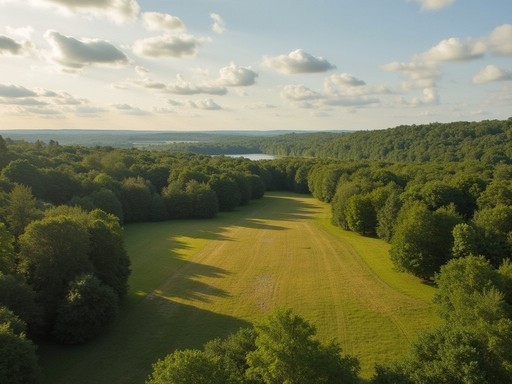
The limestone karsts of Vang Vieng rise from the Nam Song River like ancient sentinels, their forms following patterns that speak to my designer's eye. Having spent a week here last autumn, away from the backpacker crowds, I discovered a landscape where natural geometry and human settlement exist in remarkable harmony. This small Laotian town, once notorious for its party scene, has matured into something far more fascinating—a place where traditional life, natural wonder, and thoughtful development intersect in ways that urban designers like myself find utterly captivating.

Rediscovering Vang Vieng's Architectural Soul
My approach to travel has always been shaped by my professional obsession with how humans arrange themselves in space. Vang Vieng offers a fascinating study in transition—a town reclaiming its identity after years of being defined by tourism alone.
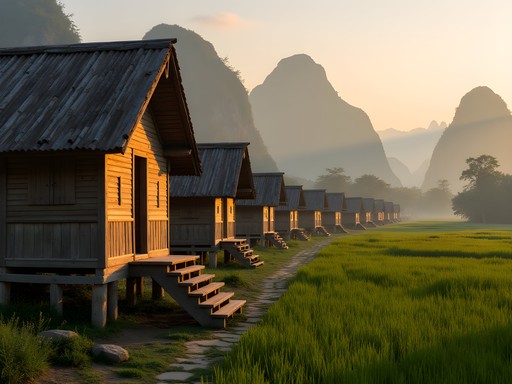
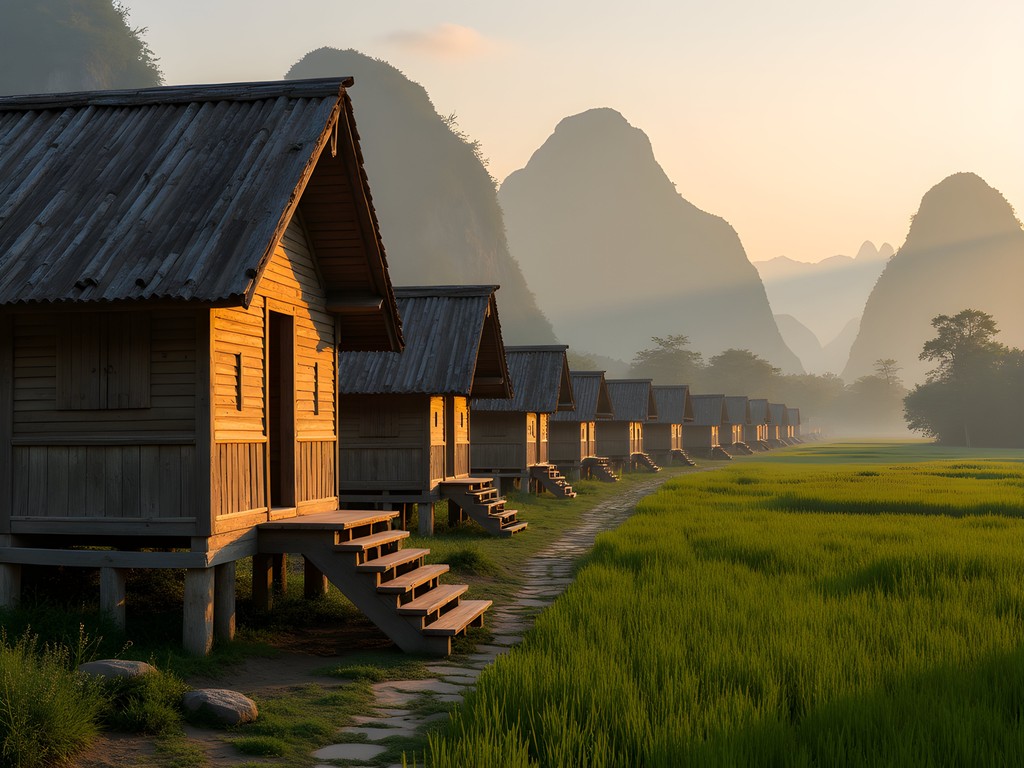
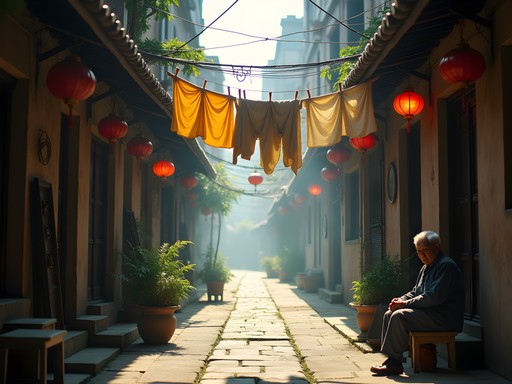
Walking through the quieter eastern neighborhoods across the wooden bridges, I found traditional Lao homes built on stilts, their proportions following ancient principles of balance. The wooden structures create natural ventilation patterns, perfectly adapted to the tropical climate without mechanical intervention. I spent mornings sketching these homes, noting how their positioning relates to the rising sun and the karst formations beyond.
For those interested in architectural exploration, I recommend rising early with a strong cup of local coffee brewed in my trusty portable coffee maker. The morning light on the weathered wood structures reveals subtle details lost in the midday glare, and you'll likely be invited to share breakfast with curious locals wondering why you're drawing their homes.
💡 Pro Tips
- Visit homes east of the Nam Song River for authentic architecture
- Ask permission before photographing or sketching private residences
- Learn basic Lao greetings to establish rapport with homeowners
Celestial Alignments in the Limestone Landscape
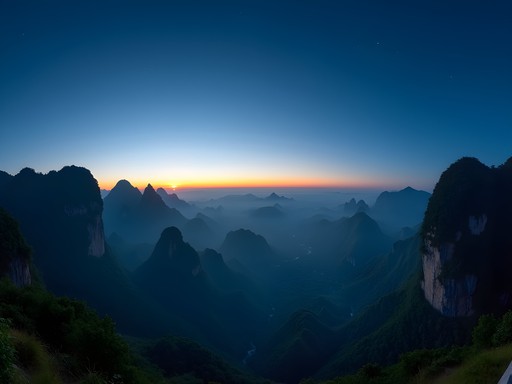
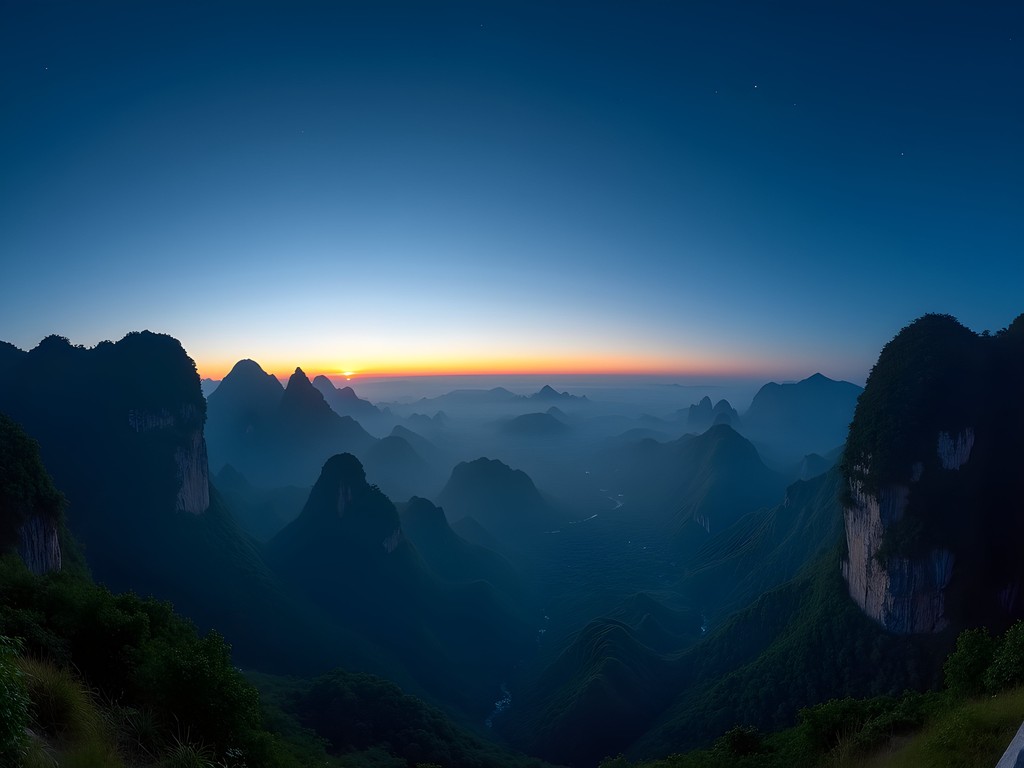
My fascination with sacred geometry led me to a discovery that few tourists notice: the major karst formations surrounding Vang Vieng create a celestial map when viewed from specific vantage points. Working with a local guide named Sengkeo, I visited several elevated viewpoints at dusk where these alignments become apparent.
The most remarkable was from Pha Ngeun viewpoint, reached via a moderately challenging 30-minute hike. From here, the major limestone formations create a pattern that aligns with significant star positions during the autumn equinox. This is unlikely to be coincidental—many ancient Southeast Asian settlements positioned important structures in relation to celestial events.
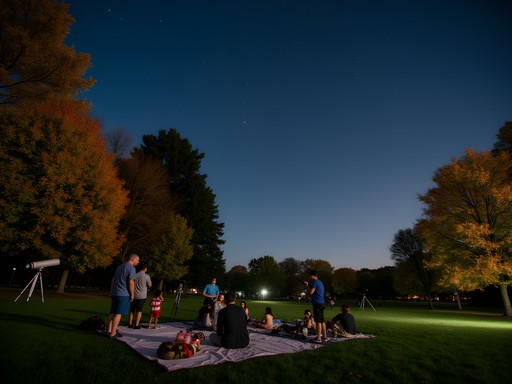
For serious stargazers, I recommend bringing a star chart compass to help identify constellations. The lack of light pollution makes Vang Vieng ideal for astronomical observation, though you'll want a headlamp with red light mode to preserve your night vision while navigating after dark. Sengkeo can be contacted through the information center in town—mention your interest in star patterns rather than just sunset views to access his specialized knowledge.
💡 Pro Tips
- Visit Pha Ngeun viewpoint 30 minutes before sunset for optimal lighting
- Bring water and proper footwear as the trail gets slippery
- Ask guides specifically about celestial alignments as this knowledge isn't commonly shared
The Geometric Patterns of Local Agriculture
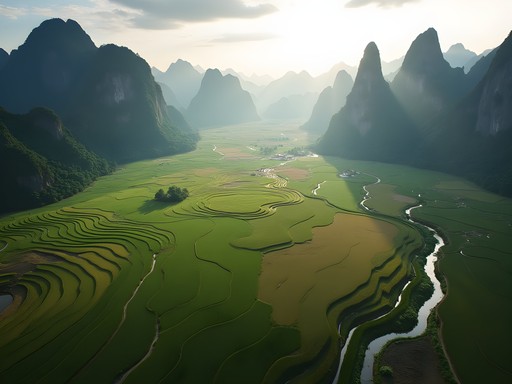
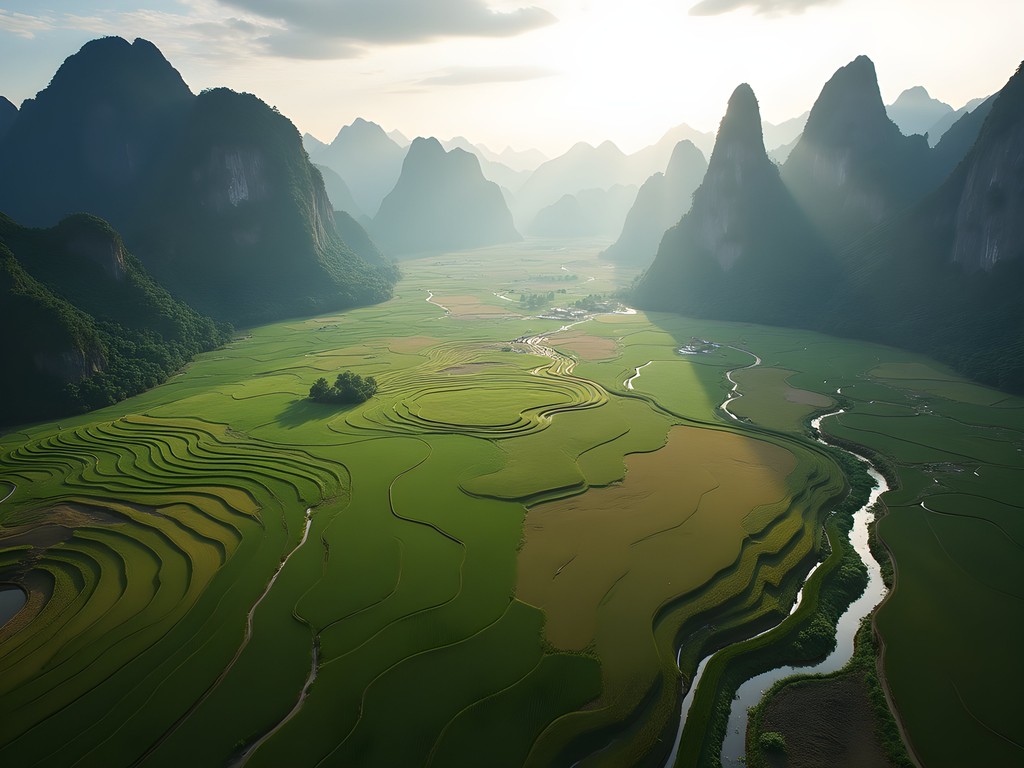
One afternoon, I rented a bicycle from the unassuming shop near the bus station (150,000 kip for a quality mountain bike) and ventured north along the river road. After about 4 kilometers, the landscape opened into agricultural fields arranged in a fascinating patchwork. Unlike the rigid grid systems of Western agriculture, these fields follow organic patterns that respond to water flow and topography.
I was fortunate to meet a farmer named Ms. Bounmee who explained how traditional Lao agricultural knowledge includes understanding of water movement patterns that Western irrigation engineers are only now beginning to appreciate. The curved field boundaries and irrigation channels create natural filtration systems while maximizing productive land.
For this exploration, I recommend bringing a quick-dry microfiber towel as you'll likely want to cool off in the river during your ride. The local farmers are generally welcoming if approached respectfully, and a small gift of fruit purchased from the morning market creates goodwill. My waterproof notebook proved invaluable for sketching these field patterns while sitting by the riverside.
💡 Pro Tips
- Rent bicycles from the shop near the bus station for better quality
- Bring small gifts (fruit is appropriate) when approaching farmers
- Visit fields in early morning or late afternoon when farmers are actively working

Finding Sacred Geometry in Blue Lagoon 3
While the popular Blue Lagoons 1 and 2 draw crowds of tourists, the lesser-visited Blue Lagoon 3 (sometimes called Secret Lagoon by locals) offers both solitude and a remarkable example of natural sacred geometry. Located about 7km from town, this spring-fed pool is nestled within a limestone grotto whose proportions follow the golden ratio with surprising precision.
I spent an entire day here, alternating between swimming in the crystalline waters and measuring the cave dimensions with my laser measure. The results confirmed my suspicion: the main chamber's proportions closely match those found in sacred architecture across cultures. Whether this is coincidence or evidence of ancient knowledge, it creates a space of remarkable acoustic properties and visual harmony.
To reach this spot, you'll need to hire a tuk-tuk driver willing to wait (negotiate around 200,000 kip for a half-day). Bring your waterproof phone case as you'll want to document the space without worrying about water damage. The locals who maintain this site appreciate visitors who show interest in more than just swimming—questions about the site's history are welcomed with enthusiasm.

💡 Pro Tips
- Visit on weekdays to avoid the few tourists who find this spot
- Bring cash for the small entrance fee (20,000 kip) that supports local conservation
- Pack a lunch as there are no food vendors at this remote location
Connecting with Local Artisans: Geometric Textile Traditions
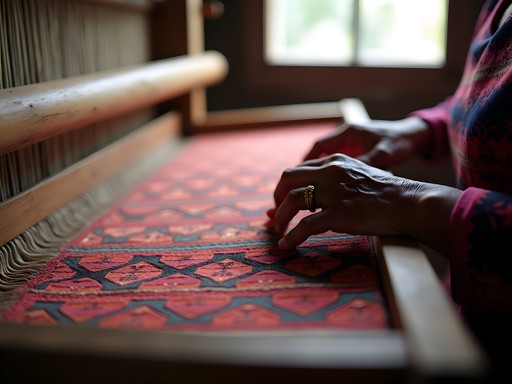
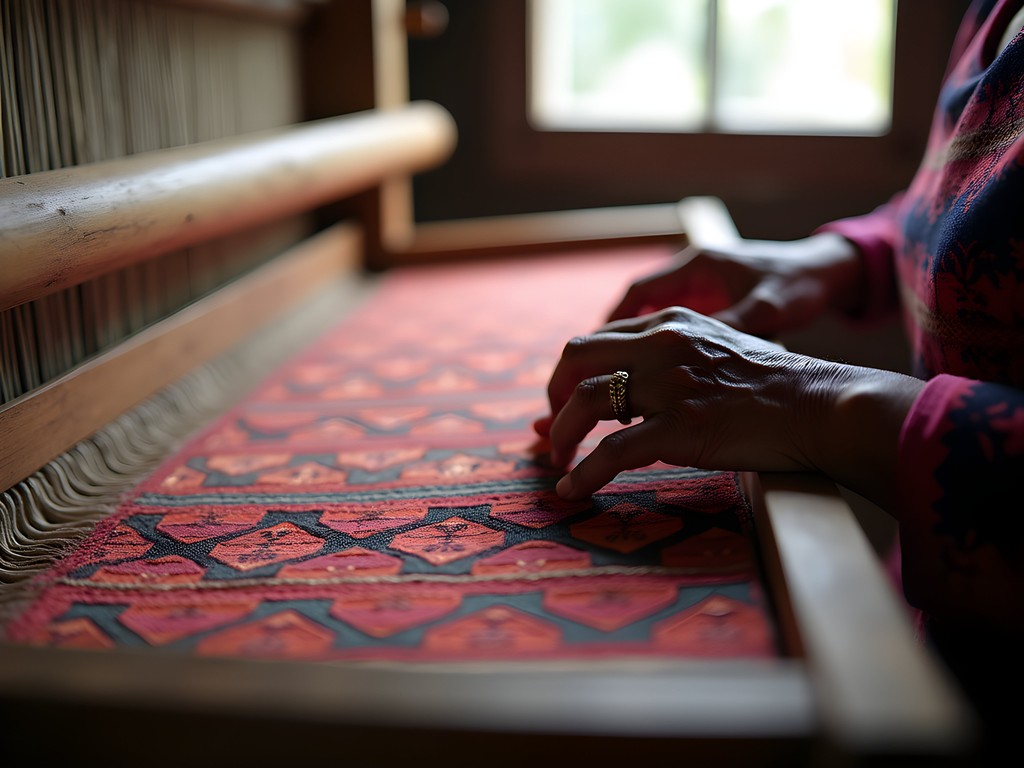
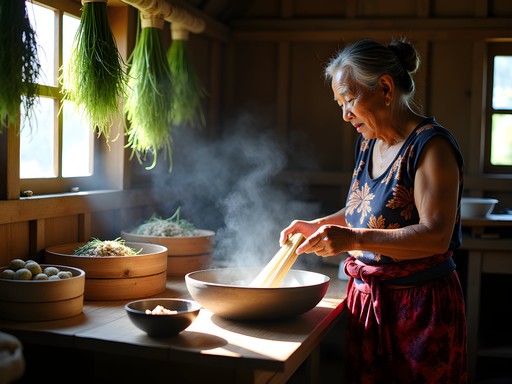
On my final days in Vang Vieng, I discovered a small collective of weavers working in a wooden house near the northern edge of town. Unlike the tourist-oriented textile shops in the center, these women were creating pieces with intricate geometric patterns passed down through generations.
What fascinated me most was how these patterns encode mathematical principles similar to those I've studied in Islamic geometric art—evidence of how fundamental mathematical understandings emerge independently across cultures. The weaver Khamla showed me how certain traditional Hmong patterns represent celestial observations, with repeated motifs tracking lunar cycles.
I spent hours in their workshop, sketching these patterns and discussing their origins. While I don't normally purchase souvenirs, I couldn't resist acquiring a handwoven textile whose pattern reminded me of architectural motifs I'd documented in Morocco. Now it hangs in my Tulsa studio, a daily reminder of these cross-cultural geometric connections.
To find this workshop, ask locals for directions to 'Mae Khamla's weaving house.' Bring your drawing tablet if you're interested in recording patterns. The women appreciate visitors who show genuine interest in their craft rather than just making purchases.
💡 Pro Tips
- Visit in the morning when the natural light is best for seeing textile details
- Learn basic weaving terminology in Lao to facilitate deeper conversations
- Ask permission before photographing the weavers or their work
Final Thoughts
As I departed Vang Vieng, my sketchbooks filled with drawings of proportional systems both human-made and natural, I realized that this town offers something rare in our increasingly homogenized world—a place where ancient knowledge and contemporary life still coexist in visible harmony. The geometric patterns I documented here—from the karst formations to the woven textiles—speak to universal mathematical principles that cross cultural boundaries.
For the thoughtful solo traveler willing to venture beyond the well-worn tourist path, Vang Vieng reveals itself as a living laboratory of sacred geometry and sustainable design. The lessons here aren't shouted but whispered—in the curve of a farmer's field, the proportions of a limestone cave, or the pattern on a handwoven textile.
I invite you to visit with open eyes and a curious mind. Bring your measuring tools, your sketchbooks, and your questions. The patterns you discover may well change how you see not just Vang Vieng, but the mathematical harmony underlying our entire world.
✨ Key Takeaways
- Vang Vieng offers profound insights into sacred geometry for those willing to look beyond its party reputation
- Local knowledge about celestial alignments and natural proportions is accessible through respectful engagement
- The town represents a rare example of harmonious transition between traditional wisdom and modern development
- Solo travelers benefit from slower exploration focused on patterns rather than activities
📋 Practical Information
Best Time to Visit
October-November (dry season with clear skies for stargazing)
Budget Estimate
$30-50 USD per day including accommodations and meals
Recommended Duration
5-7 days minimum to discover beyond-the-surface patterns
Difficulty Level
Moderate (Requires Some Hiking And Cultural Navigation)

Comments
smartseeker
Those limestone formations look stunning! Is it easy to get around without a tour guide? I prefer exploring at my own pace.
Hunter Thompson
Super easy to explore independently! Rent a scooter (about 80,000 kip/day) or bicycle and most sites are within 10km of town. Just download offline maps before you go as signal can be spotty.
exploreblogger
Going there next month! Is Blue Lagoon 3 really less crowded?
Fatima Parker
Way less crowded! It's further out so most people don't make the trek. Go early morning for the best experience.
Marco Flores
Can confirm - Blue Lagoon 3 is worth the extra distance. Rent a scooter and make a day of it, there are some amazing caves nearby too.
Marco Flores
I love this perspective on Vang Vieng! I was there two years ago and honestly just did the typical backpacker route - tubing, partying, the usual. But I remember biking past some of those rice fields you mentioned and thinking there was so much more to explore. The way you describe the geometric patterns in the agriculture is fascinating. Did you get a chance to talk with any of the local farmers about their methods? I'm heading back to Laos in March and want to experience it differently this time. Your approach of looking at the sacred geometry and architectural elements is really inspiring - makes me want to slow down and actually observe instead of just ticking off activities.
Fatima Parker
Yes! I spent an afternoon with a family near Tham Phu Kham. They were so welcoming and patient with my terrible Lao. The terracing systems are centuries old and the proportions are just perfect. Definitely take time to bike the back roads - that's where the magic is.
wildphotographer
Those limestone karst shots are incredible! Did you shoot at sunrise or sunset?
Fatima Parker
Thanks! Most were early morning around 6:30am when the mist was still rising from the river. The light is softer and you get those beautiful layers.
wildphotographer
Perfect, that's what I thought. Definitely waking up early when I go!
traveltime
Going in April, is it too hot then?
Hannah Woods
April is hot and humid but manageable if you start early morning. The caves stay cool which is nice.
freelife
Love the photos!
dreammood
Did you rent a scooter to get around or how did you explore the agricultural areas?
hikingseeker
Not the author but I biked everywhere when I was there. You can rent bikes cheap on the main road and the countryside is pretty flat. Way better than scooter imo because you can actually stop and look at stuff.
Hannah Woods
This is a fascinating read. I spent three weeks in Vang Vieng in 2024 and observed a similar tension between the party tourism and the authentic cultural landscape. Your focus on sacred geometry and agricultural patterns really resonates. I found that staying in homestays north of town gave me access to farmers who were happy to explain their rice terrace systems - the engineering is remarkable. The challenge is that most visitors never venture beyond the main strip. Have you considered doing a follow-up post about the villages around Vang Vieng? The traditional wooden architecture in Phoudindaeng is stunning.
hikinglegend
Which blue lagoon is #3? Is it far from town?
freelife
It's about 7km north. Less crowded than 1 and 2, way more chill vibe.
hikinglegend
thanks!
Nicole Russell
Fatima, I LOVE this perspective!! I was in Vang Vieng two years ago and totally missed all of this because I got caught up in the backpacker scene. The way you describe the limestone formations through a design lens is so refreshing. Did you find any local guides who could explain the traditional architectural elements? I'm heading back to Laos in March and want to experience it completely differently this time. Your approach is inspiring me to slow down and really observe!
hikingseeker
Same! I did the tubing thing and barely saw the real town. Definitely going back.
Venture X
Premium card with 2X miles, $300 travel credit, Priority Pass