

Disclosure: This article contains affiliate links. We may earn a commission from purchases at no extra cost to you, which helps our travel content.
The border between tea cultures is as fascinating as any geopolitical boundary I've monitored in my career. Having spent the last decade scrutinizing crossings of a different nature with the Canadian Border Services Agency, I've developed an eye for cultural transitions that most travelers overlook. My recent two-week expedition comparing the tea traditions of Darjeeling's misty Himalayan slopes and Corfu's sun-drenched Mediterranean cafés revealed how a single beverage can embody entirely different civilizations. This journey—part of my ongoing documentation of cultural boundaries—offered a rare opportunity to trace tea's journey from Asia to Europe while indulging in two distinct luxury experiences that, despite sharing a common leaf, could not be more different in their presentation, consumption, and cultural significance.

Darjeeling: The Aristocrat of Teas
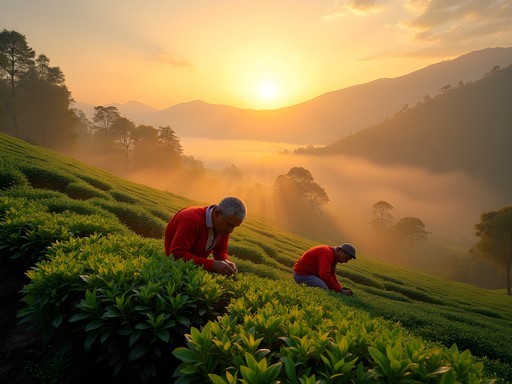
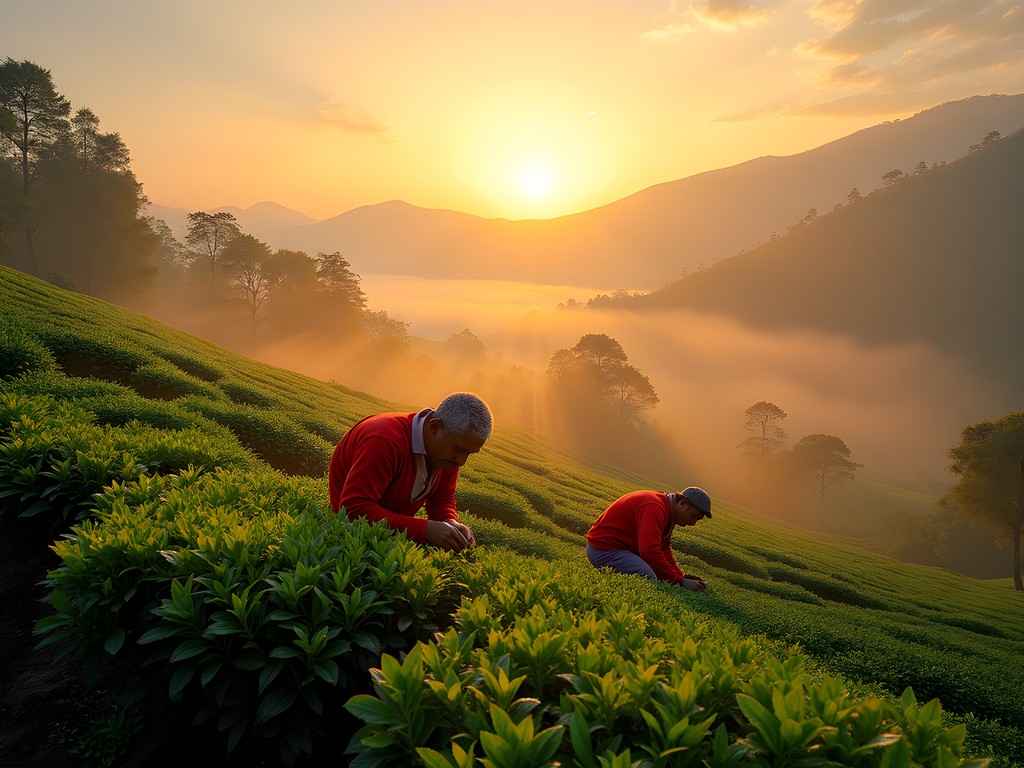
Arriving in Darjeeling after the monsoon season presents a landscape transformed—emerald terraces cascading down mountainsides, with the occasional glimpse of Kanchenjunga's snow-capped peak through the morning mist. The security checkpoint at Bagdogra Airport proved surprisingly efficient, though I noted the careful scrutiny of foreign passports—a habit from my border service days I can't seem to shake.
I arranged accommodations at the Glenburn Tea Estate, a colonial-era plantation bungalow converted into a boutique hotel. The property maintains the architectural integrity of British colonial rule while offering modern luxuries that would satisfy even the most discerning traveler. My suite featured panoramic views of the tea gardens and distant Himalayan ranges—a strategic vantage point that would have pleased military planners of bygone eras.
The ritualistic precision of tea production here mirrors the methodical approach I once applied to border security protocols. During my private tour of the estate's production facilities, I observed the meticulous hand-plucking process—only the top two leaves and a bud—followed by withering, rolling, oxidation, and firing. The factory manager, Mr. Sharma, explained that timing is critical; even a 15-minute deviation can alter the tea's character irreparably.
For serious tea enthusiasts, I recommend rising at dawn for the 'first flush' experience. Watching the morning light gradually illuminate the plantations while sampling the previous day's production creates a sensory connection to the landscape that no afternoon tasting can replicate.
💡 Pro Tips
- Book accommodations on tea estates at least 3 months in advance, as the luxury properties have limited capacity
- Request a private tea tasting with the estate's tea sommelier for a comprehensive education on flavor profiles
- Bring a waterproof case for your tasting notes—sudden mountain mists can appear without warning
The Science of Darjeeling Tea Appreciation
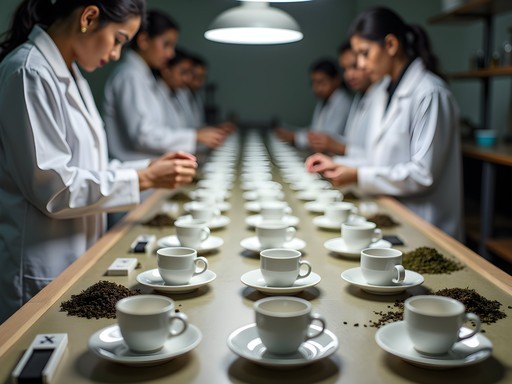
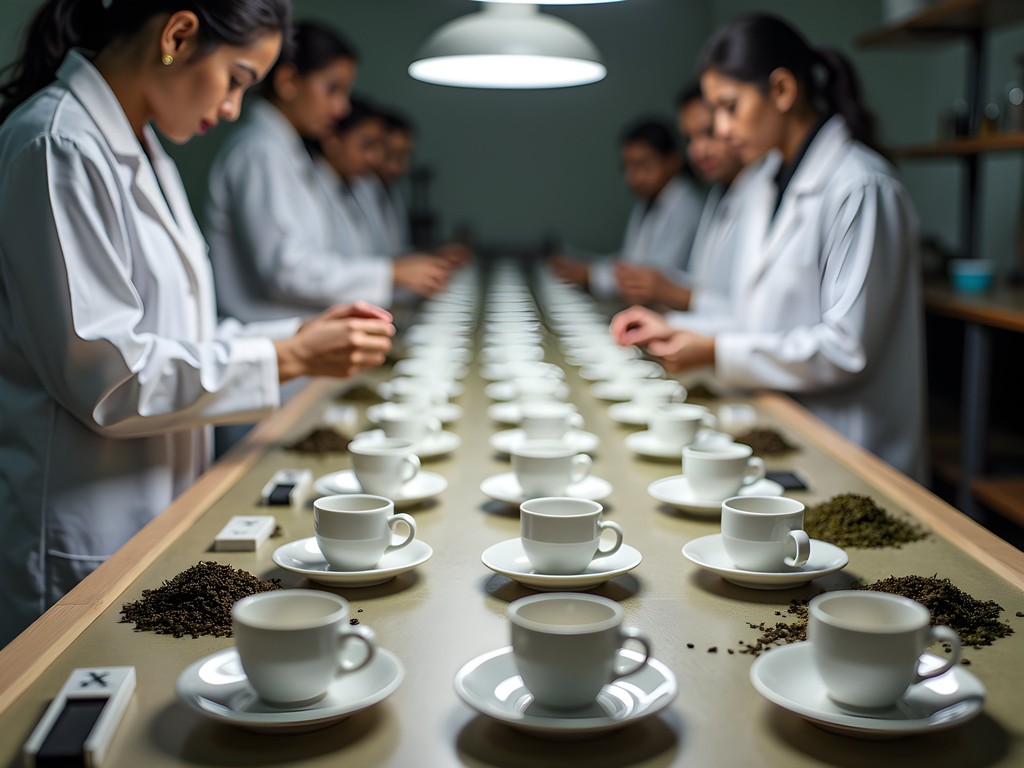
What distinguishes Darjeeling from other tea regions is not merely geography but the scientific precision applied to every aspect of production. During my visit to the Makaibari Estate—one of the oldest in the region—I was granted rare access to their testing laboratory, a privilege I suspect was extended due to my background in methodical assessment protocols.
The estate's chief taster demonstrated the five-point evaluation system: leaf appearance, aroma, infusion color, body, and flavor notes. Each category is scored with military precision, creating a comprehensive profile that determines market value. I was particularly impressed by their use of the digital refractometer to measure dissolved solids in the brew—a level of scientific rigor I hadn't anticipated in this traditional industry.
For travelers seeking to develop a sophisticated palate, I recommend participating in a cupping session at one of the major estates. These professional tastings typically occur in the morning when the palate is most receptive. The experience begins with examining dry leaves, progresses to evaluating wet leaves and their aroma, and culminates in the actual tasting—a process involving loud slurping to aerate the tea across all taste receptors.
During my stay, I documented flavor variations between morning and afternoon harvests from identical sections of the garden, noting subtle shifts in muscatel notes and astringency. This attention to detail reminded me of border inspection procedures, where the slightest anomaly can reveal significant underlying factors.
💡 Pro Tips
- Purchase tea directly from estate shops rather than tourist markets to ensure authenticity and freshness
- Maintain a tea journal with precise tasting notes and environmental conditions to track your developing palate
- Invest in a quality thermometer for brewing—temperature precision is critical for Darjeeling's delicate leaves
Corfu: Mediterranean Tea Through a Different Lens
Transitioning from Darjeeling's misty elevations to Corfu's sun-drenched shores presented a study in contrasts that would intrigue any cultural observer. The island's strategic position—historically contested by Venetians, French, British, and Greeks—has created a fascinating confluence of tea traditions that reflects its complex heritage.
I selected the Corfu Palace Hotel as my base of operations, a grand dame property overlooking Garitsa Bay that maintains the aristocratic atmosphere of the British protectorate era. The colonial architecture and formal gardens create a fitting backdrop for exploring the island's unique tea culture—one that bears the unmistakable imprint of British influence while embracing Mediterranean sensibilities.
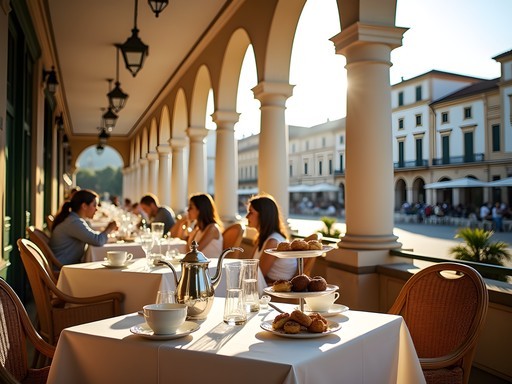
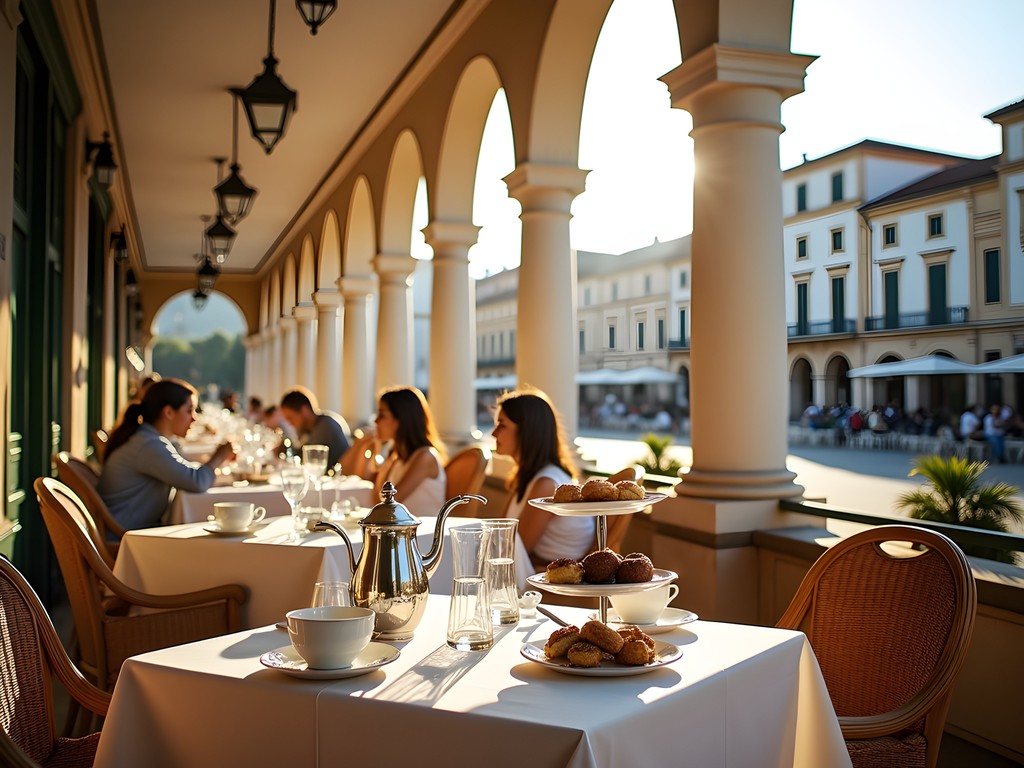
Unlike Darjeeling's production-focused tea experience, Corfu celebrates tea as a social institution. The ritual unfolds not in plantations but in elegant cafés along the Liston, a colonnaded promenade modeled after Paris's Rue de Rivoli. Here, tea service occurs in the late afternoon rather than morning, transforming from a precision-focused tasting exercise to a leisurely social engagement.
The island's café culture reflects its position at the crossroads of East and West. Traditional English tea services featuring multi-tiered stands with scones and cucumber sandwiches coexist with Greek variations incorporating local honey, citrus, and herbs. This cultural fusion mirrors my own mixed heritage and perhaps explains my fascination with borderlands where traditions intermingle.
For the most authentic experience, I recommend the portable tea infuser for impromptu brewing sessions at scenic viewpoints around the island. This allowed me to compare local herbal infusions with the Darjeeling samples I carried while documenting the dramatic coastal landscapes.
💡 Pro Tips
- Visit the Liston cafés between 4-6pm when locals gather for their afternoon tea ritual
- Request the British colonial tea service at heritage hotels for historical context on the island's tea traditions
- Learn the Greek phrase 'tsái vounó' (mountain tea) to access authentic local herbal infusions not on tourist menus

The Historical Context: Colonial Legacies in Teacups
Both Darjeeling and Corfu bear the unmistakable imprint of British colonial influence, though expressed through dramatically different landscapes and cultural contexts. This historical parallel fascinated me throughout my journey, as my security background has trained me to identify patterns across seemingly disparate scenarios.
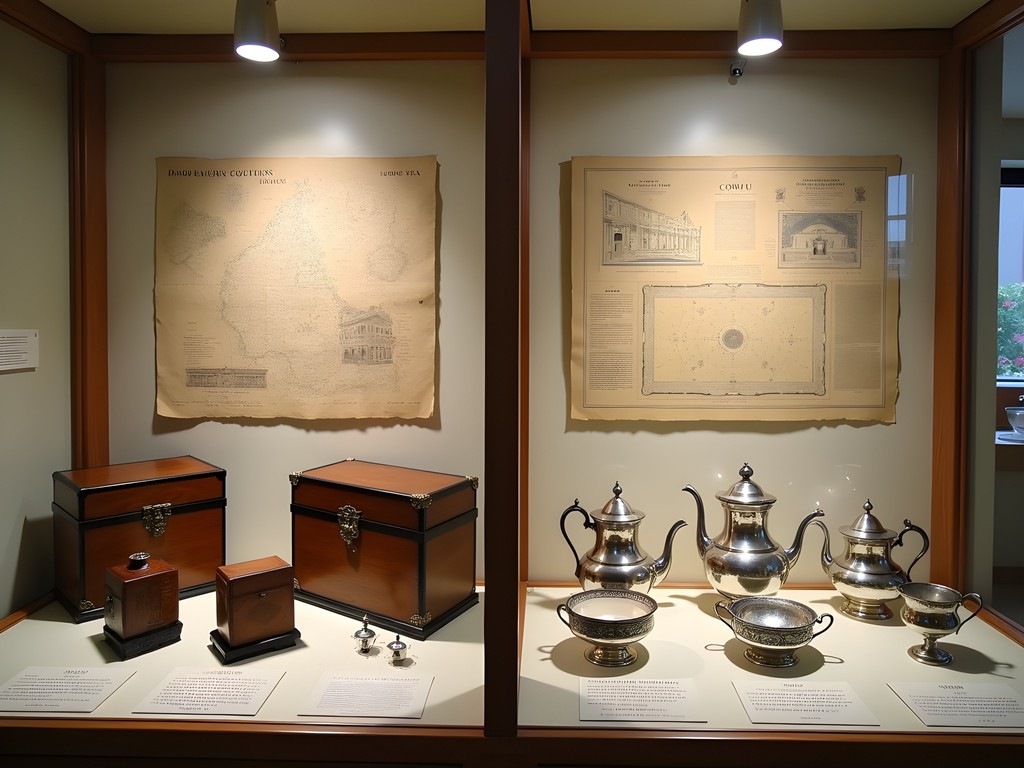
In Darjeeling, the colonial legacy is omnipresent—from the narrow-gauge Himalayan Railway (a UNESCO World Heritage site) to the architecture of the hill station itself. The tea industry was established by the British in the 1850s using seeds smuggled from China, transforming the region's economy and landscape permanently. During my visit to the Darjeeling Planters' Club, I examined historical documents detailing the strategic importance of tea production to the British Empire—not merely as a commercial enterprise but as a geopolitical asset.
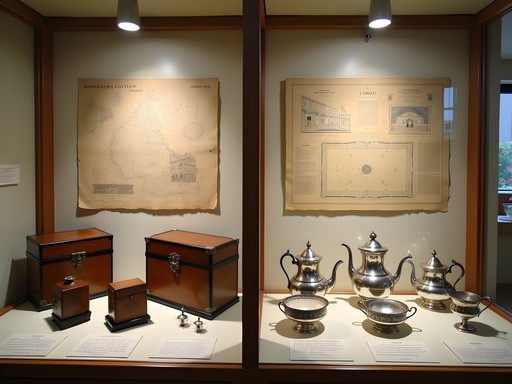
Corfu's relationship with British influence took a different form. The island served as a British Protectorate from 1815 to 1864, a period that established tea culture among the local aristocracy. At the Museum of Asian Art, housed in the former Palace of St. Michael and St. George, I studied the remarkable collection of porcelain that documents this cultural exchange. The curator pointed out how Greek motifs were incorporated into traditional English tea sets—a visual representation of cultural adaptation.
For travelers interested in this historical dimension, I recommend carrying the compact travel kettle which allowed me to prepare authentic tea while reviewing my historical notes in various research libraries. This attention to proper brewing temperature enhanced my appreciation of how tea traditions evolved differently in these distinct colonial contexts.
💡 Pro Tips
- Visit the Darjeeling Planters' Club and request access to their historical archives for unique insights into colonial tea development
- Explore Corfu's Museum of Asian Art for their exceptional collection of tea-related porcelain and artifacts
- Read up on the East India Company's tea operations before your visit for critical historical context
Tea Ceremonies: Ritual and Social Dimensions
The ceremonial aspects of tea consumption in both destinations reveal fundamental cultural differences that extend beyond mere beverage preferences. As someone who has studied boundary delineations professionally, I find these ritual distinctions particularly revealing of deeper societal structures.
In Darjeeling, tea ceremony emphasizes individual expertise and precision. During my visit to the Goomtee Estate, I participated in a traditional first flush tasting led by a third-generation tea master. The ceremony unfolded with almost scientific rigor—precise water temperature (85°C for first flush, 90°C for second), exact steeping times measured with a precision timer, and careful evaluation of leaf quality before brewing. The experience was largely educational rather than social, focusing on developing personal discernment.
By contrast, Corfu's tea rituals prioritize social connection over technical precision. At the historic Cavalieri Hotel's rooftop garden, I observed how the British afternoon tea tradition had been reinterpreted through a Greek lens. The three-hour affair featured multiple infusions served alongside local preserves and pastries, with conversations flowing as freely as the tea. Water temperature and steeping times were approximate rather than precise, with emphasis placed on the quality of interaction rather than technical perfection.
What fascinated me most was how these contrasting approaches reflect broader cultural values. Darjeeling's ceremony honors craftsmanship and individual expertise, while Corfu's celebrates community and shared experience. Neither is superior—they simply represent different solutions to the universal human desire for meaningful ritual around consumption.

💡 Pro Tips
- In Darjeeling, always wait for the tea master to invite you to taste rather than helping yourself—this shows respect for their expertise
- On Corfu, bring a small gift of quality tea when invited to a local home—preferably something from your home region
- Allow at least three hours for a proper Corfu tea experience; rushing through it defeats the cultural purpose
Final Thoughts
As I departed Corfu's sunlit shores with Darjeeling's misty heights still fresh in my memory, I reflected on how these contrasting tea cultures embody the fascinating complexity of cultural boundaries. The precision and production focus of Darjeeling stands in marked contrast to the social leisure of Corfu's cafés, yet both celebrate the same remarkable leaf. For couples seeking a unique luxury journey, this tea-focused expedition offers rare insights into how colonial influences, geography, and local traditions transform a simple beverage into profound cultural expression. Whether you're methodically documenting flavor profiles in Himalayan plantations or lingering over afternoon conversations along Mediterranean arcades, the journey between these tea traditions will transform your understanding of this global beverage. I invite you to cross this particular border yourselves—passport optional, curiosity essential.
✨ Key Takeaways
- Tea culture reflects broader societal values—precision and expertise in Darjeeling versus social connection in Corfu
- Colonial influences created unique tea traditions that continue to evolve in both destinations
- The best luxury tea experiences combine historical knowledge with sensory appreciation
- Understanding tea customs provides unique insights into local culture that most tourists miss
📋 Practical Information
Best Time to Visit
May-June for Darjeeling (first flush season), June-September for Corfu
Budget Estimate
$8,000-12,000 for two weeks including luxury accommodations, private tea tours, and business class flights
Recommended Duration
7 days in each location plus travel days
Difficulty Level
Intermediate




Comments
Riley Griffin
Corey, this really resonated with me. We spent two weeks in Darjeeling last spring with our teenagers, and you captured something I struggled to put into words - how tea becomes this lens for understanding colonial history. My daughter actually wrote her school paper on it afterward. The contrast with Mediterranean café culture is spot-on. In Corfu, everything felt sun-drenched and spontaneous. In Darjeeling, there was this almost reverent quality to the tea service. Both beautiful, just completely different energies. Your photos brought it all back!
islandperson
Love this comparison. Greeks are more about coffee though lol
Riley Griffin
So true! I remember sitting in a Corfu café for three hours nursing one coffee and nobody rushed us. That's the real Greek culture right there - the ritual of slowing down. Tea or coffee, it's really about the pause.
bluequeen
This sounds amazing! Quick question - can you actually visit the tea plantations in Darjeeling or do you just see them from far away? Never been to India but this makes me want to go!
Riley Griffin
Yes! Most plantations offer tours. We took our kids to Happy Valley Tea Estate a few years back and they loved seeing the whole process from leaf to cup. Book ahead though - they fill up fast during peak season.
bluequeen
Thank you!! Adding to my list
SoloAdventurer
Just booked my flights to Corfu after reading this! Can't wait to experience those cafés firsthand.
GlobeTrekker88
If anyone's planning a Darjeeling trip, I recommend visiting during the first flush harvest (March-April). The excitement in the air is palpable and you'll taste the freshest teas. I used my travel teapot to sample teas throughout my journey - perfect for comparing different estates!
winterphotographer193
Great tip about first flush timing! Did you find accommodations more expensive during that season? Planning my budget now.
GlobeTrekker88
Slightly more expensive but not drastically. Book at least 2 months ahead though - the good guesthouses fill up quickly with tea buyers and enthusiasts!
worldtraveler55
Love this unique comparison! Never would have thought to connect these places through tea.
TravelWithJane
Those photos of the Darjeeling plantations are stunning! The mist hanging over the tea bushes looks magical.
MediterraneanDreamer
Love this comparison! Heading to Corfu in October - any specific cafés you'd recommend for the authentic tea experience you described?
Corey Andrews
For Corfu, don't miss Café Byzantino in the old town - they serve mountain tea with local honey that's incredible. Also, the small family-run place called To Koulouri near Spianada Square has an elderly owner who makes tea exactly as her grandmother did. Both places are perfect for people-watching too!
Gregory Boyd
Fascinating juxtaposition of these tea traditions, Corey. Your analysis of colonial influence on Darjeeling's tea culture particularly resonated with me. During my backpacking through Northeast India last year, I found the stratification of tea consumption quite telling - from roadside chai stalls to formal plantation tastings. The contrast with Corfu's more egalitarian café culture highlights how beverage traditions reflect broader social structures. I'd argue that tea in Darjeeling remains somewhat ceremonial while Corfu embraces it as casual social lubricant. Did you notice how the serving vessels themselves tell a story? In Darjeeling, those delicate porcelain cups versus Corfu's sturdy glasses seemed symbolic of their respective approaches.
Corey Andrews
Absolutely spot-on observation about the vessels, Gregory! The porcelain in Darjeeling maintains that colonial formality while Corfu's practical glassware reflects its working-class roots. I'm curious - did you make it to any of the smaller family-owned tea estates in Darjeeling? Those offered a fascinating counterpoint to the larger operations.
Gregory Boyd
I did visit a small family operation near Kurseong - completely different experience from the commercial estates. The family had been cultivating for four generations and approached tea with reverence but without pretension. They served their first flush in simple ceramic cups, bridging both worlds in a way. If you're planning another trip, I'd recommend seeking them out - Agarwal Tea Garden. No website, just local knowledge.
teaexplorer22
This thread is gold! I'm heading to Darjeeling next month and definitely adding Agarwal Tea Garden to my list. Anyone know if they're open to casual visitors or need appointments?
Gregory Boyd
They welcome visitors but best to have your guesthouse call ahead. They appreciate a day's notice. Bring a small gift if possible - nothing fancy, perhaps some chocolates or something from your home country. Makes for a warmer welcome!
winterphotographer193
Wow, your comparison of Darjeeling and Corfu tea cultures is exactly what I needed! I visited Darjeeling last year and was mesmerized by those misty plantations. The way workers delicately plucked just the top leaves was fascinating to photograph. Never been to Corfu though - those café shots make it look so inviting! Did you find the lighting challenging when shooting in those bright Mediterranean cafés compared to the cloudy Darjeeling hills?
Corey Andrews
Thanks for the kind words! Yes, the lighting contrast was significant. In Darjeeling, I used natural diffused light from the mist, while Corfu required polarizing filters to manage the harsh Mediterranean sun. The café scenes were particularly tricky with the contrast between bright outdoor seating and darker interiors.
winterphotographer193
That makes total sense! I struggle with those high-contrast scenes. Might need to invest in better filters before my next Mediterranean trip!
Venture X
Premium card with 2X miles, $300 travel credit, Priority Pass