

Disclosure: This article contains affiliate links. We may earn a commission from purchases at no extra cost to you, which helps our travel content.
There's something magical about experiencing a city through the eyes of those who call it home. During my third visit to Auckland—this time for a conference on sustainable tourism practices—I made a conscious decision to venture beyond the Sky Tower and ferry rides to Waiheke Island. Instead, I connected with local environmental educators who graciously shared their Auckland with me: a vibrant tapestry of community gardens, repurposed historic spaces, ecological sanctuaries, and neighborhood haunts where conversations flow as freely as the locally-brewed craft beer. What I discovered was an Auckland rarely featured in glossy travel brochures—one where sustainability initiatives thrive alongside cultural preservation efforts, creating spaces that honor both Māori heritage and New Zealand's commitment to environmental stewardship. This guide is my offering to fellow curious travelers seeking authentic connections in Tāmaki Makaurau (Auckland's Māori name) beyond the tourist trail.

Kelmarna Gardens: Urban Farming in Action
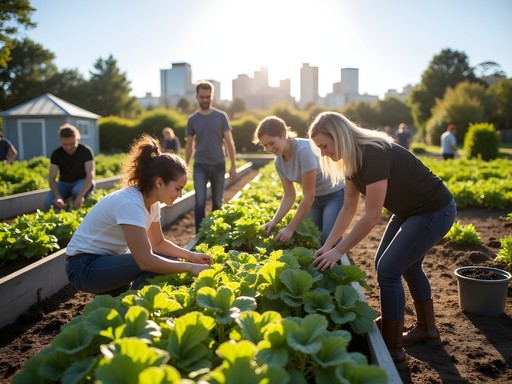
Nestled in the upscale neighborhood of Ponsonby, Kelmarna Gardens represents everything I love about Auckland's approach to urban sustainability. This 4.5-acre community farm has been operating as an organic oasis since 1981, though most visitors to the city never hear about it.
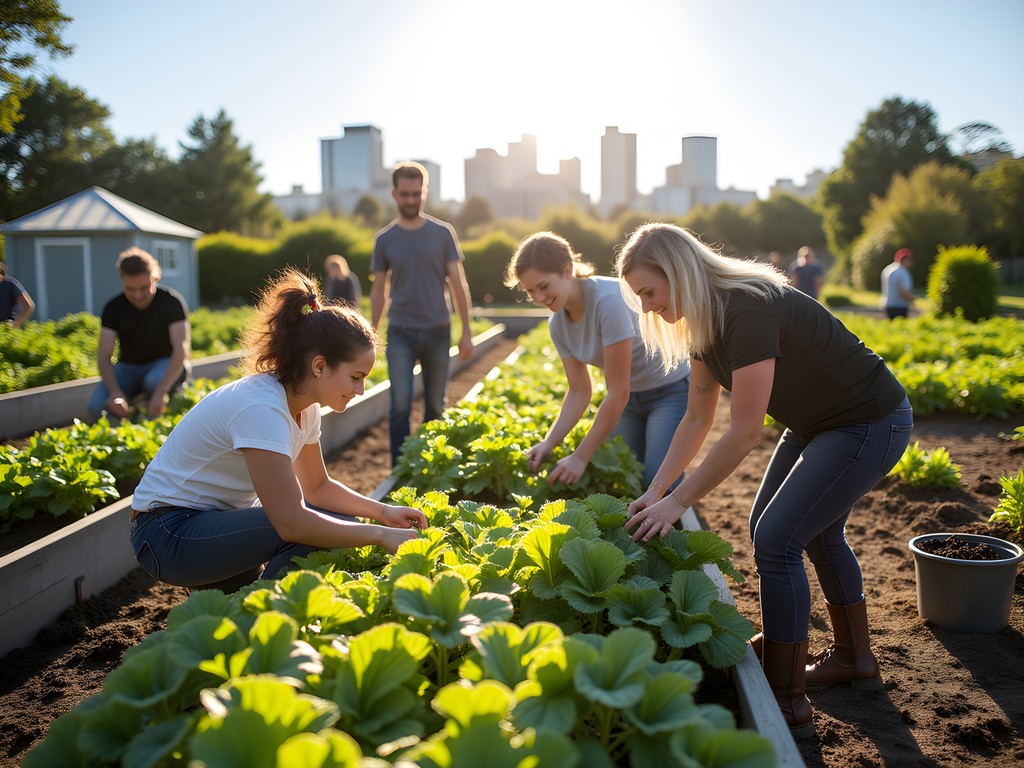
On my second morning in Auckland, I joined a volunteer gardening session after connecting with the farm's education coordinator through a mutual colleague. What struck me immediately was how this space functions as both a productive farm and a community gathering place. Local families worked alongside corporate volunteers and international visitors like myself, all of us getting our hands dirty while learning about regenerative agriculture practices.
'We're not just growing food here,' explained Manu, a longtime volunteer coordinator, as we harvested kūmara (sweet potatoes). 'We're growing community and showing city dwellers that food production can happen right in their neighborhood.'
The on-site café serves what might be Auckland's freshest farm-to-table experience, with a seasonal menu that changes based on what's being harvested that week. I enjoyed a simple but perfect salad of just-picked greens and herbs, dressed with locally-produced olive oil, while chatting with a retired teacher who volunteers weekly.
What makes Kelmarna special isn't just its organic produce but its role as an educational hub where Aucklanders connect with traditional growing practices, including Māori cultivation techniques that have been adapted for urban settings. The garden hosts workshops on everything from composting to beekeeping, serving as a living classroom for sustainable food systems.
💡 Pro Tips
- Visit on Saturday mornings when the farm store is open to purchase ultra-local produce and homemade preserves
- Check their website for volunteer opportunities—they welcome visitors for single sessions
- Bring a reusable container if you plan to take away food from the café
Karangahape Road: Auckland's Cultural Crossroads
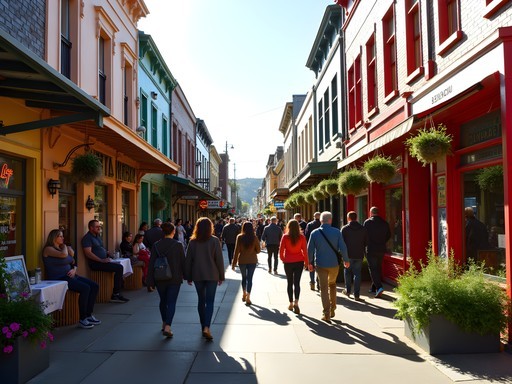
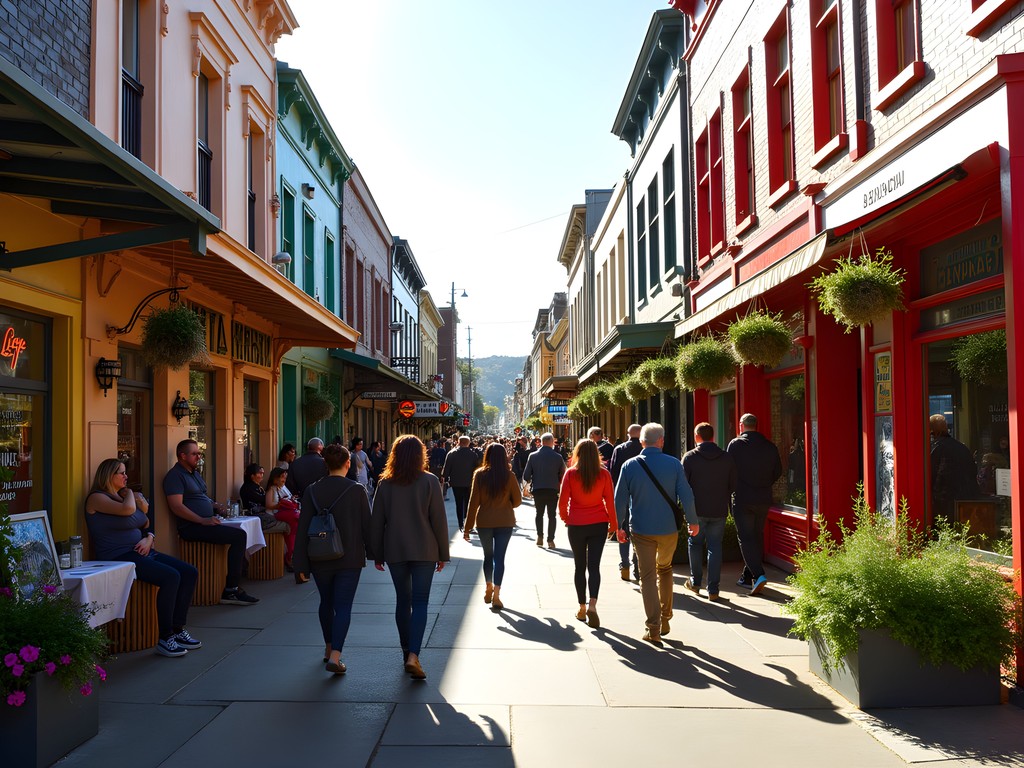
Locals call it 'K Road,' and it represents Auckland's most diverse and creatively vibrant thoroughfare—a place where the city's many cultural identities converge. While tourists flock to the commercialized Britomart and Viaduct areas, K Road offers something far more authentic and eclectic.
During my exploration, I was fortunate to meet Tania, a Māori artist who offers informal walking tours that reveal the street's layered history. 'K Road has always been a place of gathering and exchange,' she explained as we wandered past Victorian-era buildings now housing everything from Pacific Island churches to artist collectives. 'Before Europeans arrived, this ridge was a key travel route for Māori.'
What makes K Road special is its resistance to gentrification despite ongoing development pressures. The street maintains a delicate balance between honoring its history—including its era as the center of Auckland's LGBTQ+ community—and embracing change on its own terms.
For sustainable travelers, K Road offers Auckland's best collection of vintage and second-hand shops. I spent a delightful afternoon browsing Tango, Paper Bag Princess, and Fast and Loose, eventually finding a vintage New Zealand wool sweater that's become one of my favorite travel garments. When shopping for sustainable travel gear back home, I often use my packing cubes to organize these treasured finds alongside my regular travel wardrobe.
Food on K Road reflects its multicultural character. Skip the harbor restaurants catering to cruise ship passengers and instead try Coco's Cantina, a family-run Italian spot with a strong ethical focus. Their 'Feed Your People' philosophy extends to sourcing practices, staff treatment, and community engagement. The restaurant uses minimal packaging, composts food waste, and serves seasonal produce from many of the same urban farms I'd visited earlier in my trip.
💡 Pro Tips
- Visit on First Thursdays when galleries stay open late and the street comes alive with performances
- Look for heritage plaques that explain the history of significant buildings
- Respect that this is a neighborhood where people live and work, not just a tourist destination
Te Henga (Bethells Beach): Wild Coast Sanctuary
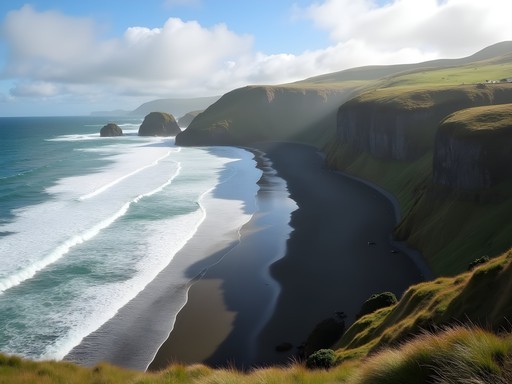
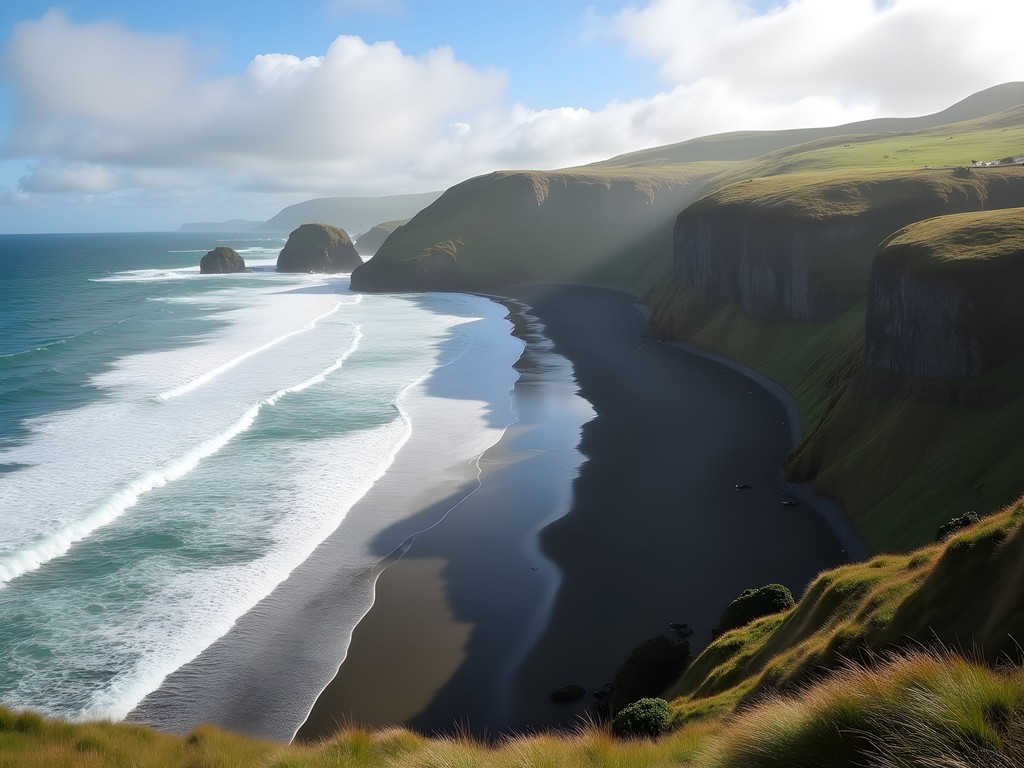
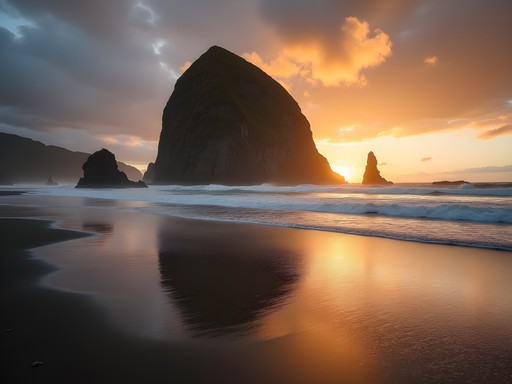
Just 40 kilometers from downtown Auckland lies Te Henga, known to most as Bethells Beach—a dramatic black sand coastline that feels worlds away from the city. While tourists typically head to the more accessible Piha Beach, locals pointed me toward Te Henga for its wilder character and fewer visitors.
I arrived early one morning, having packed my daypack with essentials for a day of coastal exploration. The drive itself offers glimpses into rural New Zealand life that most visitors miss, passing through small communities where roadside honor stands sell fresh produce and homemade preserves.
What makes Te Henga special is the convergence of multiple ecosystems: the thundering Tasman Sea, freshwater Lake Wainamu, massive sand dunes, and native coastal forest. I followed a local recommendation to hike the Te Henga Walkway, part of the Hillary Trail that connects Auckland's west coast beaches. The path hugs dramatic clifftops offering views that rival anything I've seen on New Zealand's more famous tracks, but here I encountered only a handful of fellow hikers—all Aucklanders.
'This is where we come to remember what New Zealand really feels like,' explained Kauri, a local environmental guide I met on the trail. He pointed out native plants and explained ongoing conservation efforts to protect nesting seabirds along the coast.
The environmental story here is particularly compelling. Community-led initiatives have focused on dune restoration and predator control to protect native species, with impressive results. Volunteers regularly conduct plantings of native sand-binding species and monitor wildlife populations—a perfect example of how tourism and conservation can work together when managed thoughtfully.
After hiking, I cooled off in the freshwater Lake Wainamu, reached by walking across a field of massive black sand dunes that create an almost otherworldly landscape. Unlike the crowded beaches closer to the city, here I found families and friends gathering in small groups, children building elaborate sand structures, and locals fishing from the shore with traditional methods.
💡 Pro Tips
- Check tide tables before visiting as some areas become inaccessible during high tide
- Bring all supplies as there are minimal facilities and just one small general store
- Always respect signs about protected wildlife areas, especially during bird nesting season

Hobsonville Point: Sustainable Urban Renewal
When I asked Aucklanders about neighborhoods showcasing innovative sustainability practices, Hobsonville Point came up repeatedly. This former defense force airbase has been transformed into what might be New Zealand's most ambitious sustainable community development—yet it rarely appears in tourist guides.
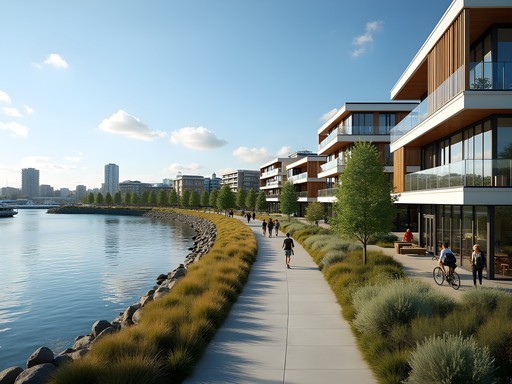
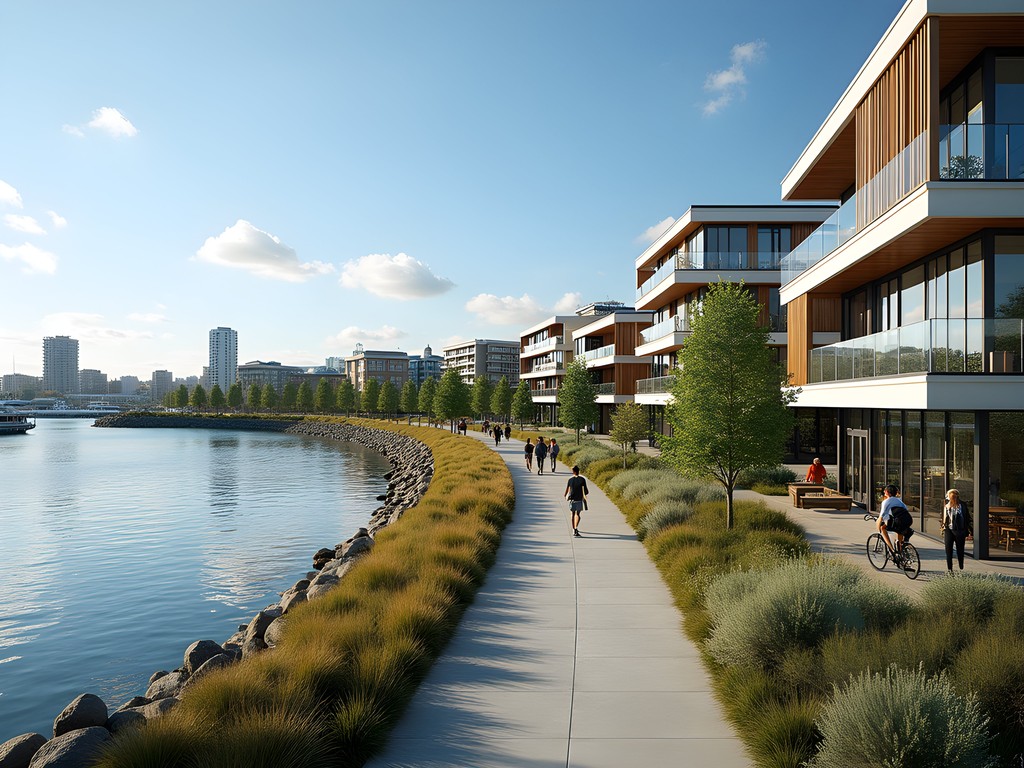
I spent a fascinating afternoon exploring this waterfront community, where careful planning has created a neighborhood that balances density with livability. What struck me immediately was how the development preserved heritage buildings while creating new structures designed for energy efficiency.
'We've tried to create a community where you don't need to drive everywhere,' explained James, an urban planner I met at the Catalina Café (housed in a repurposed Air Force building). 'The average Hobsonville home uses 67% less water than typical Auckland houses.'
For visitors interested in sustainable urban design, Hobsonville offers a living laboratory. The community incorporates rainwater harvesting systems, solar orientation for passive heating, community gardens, and extensive walking and cycling networks. Information panels throughout the development explain these features, making for a self-guided sustainability tour.
The weekend farmers market in the historic Catalina Bay hangars showcases local producers committed to sustainable practices. I enjoyed chatting with vendors about their approaches to everything from beekeeping to artisanal cheese production. For capturing these meaningful interactions, I rely on my portable camera which is compact enough for travel but captures professional-quality images and video, perfect for documenting sustainability initiatives.
What makes Hobsonville Point special is seeing sustainability principles applied at neighborhood scale rather than just individual buildings. The community demonstrates how thoughtful urban planning can create spaces that foster both environmental responsibility and social connection—a model increasingly relevant as cities worldwide grapple with growth and climate challenges.
💡 Pro Tips
- Rent a bicycle from the Hobsonville Point ferry terminal to explore the extensive waterfront pathways
- Visit on weekends when the farmers market operates and more community spaces are active
- Download the free Hobsonville Heritage Trail app for a self-guided tour of historic buildings and sustainability features
Onehunga: Auckland's Community-Driven Revival
Ask an Auckland tourist where to go, and Onehunga rarely makes the list. Ask a local where the city's most interesting transformation is happening, and this historic suburb frequently tops their recommendations. Once an industrial area separated from the harbor by motorways, Onehunga has experienced a community-led revival that exemplifies grassroots urban regeneration.
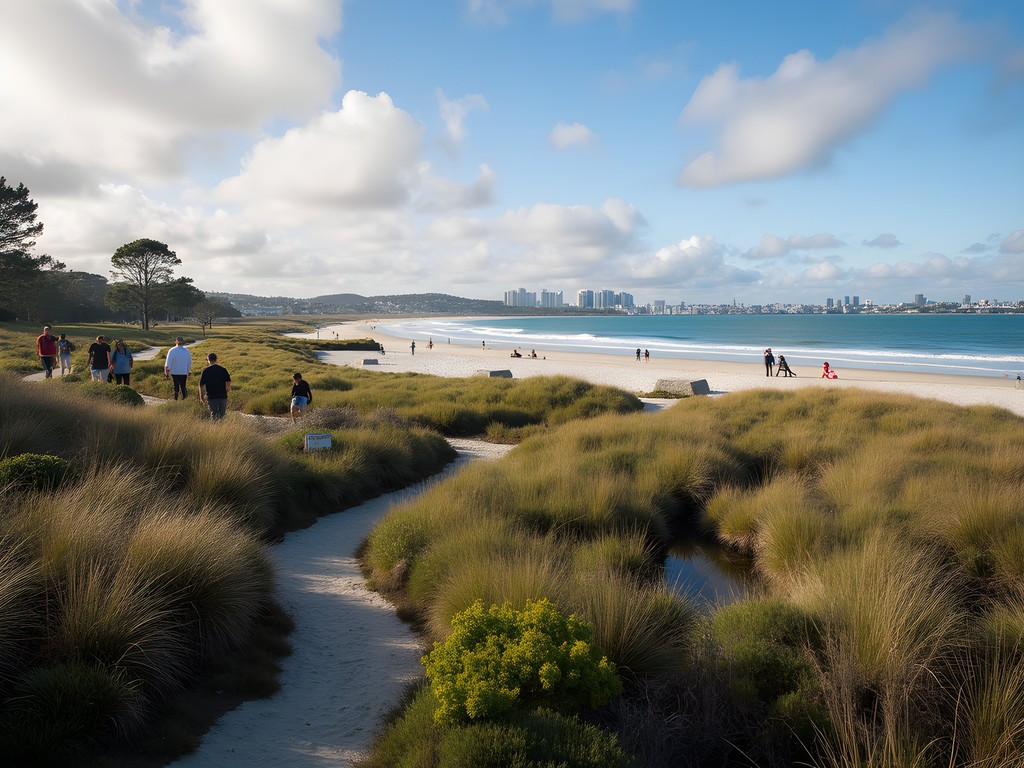
My exploration began at the Onehunga Foreshore, where a remarkable community campaign succeeded in reconnecting the neighborhood to the Manukau Harbour after decades of separation. Local resident Meg, who joined the original campaign, walked with me through the restored beach and wetland areas.
'This was all highway before,' she explained, gesturing toward children playing on the newly created beaches. 'The community fought for years to heal this connection to the water that was severed in the 1970s.'
The foreshore project incorporated significant environmental restoration, including native plantings and stormwater treatment systems that filter road runoff before it reaches the harbor. Interpretive signs explain these features while also acknowledging the area's significance to local Māori.
In Onehunga's town center, I discovered a vibrant main street that has maintained its character through community-driven initiatives. Unlike other Auckland neighborhoods where chain stores dominate, Onehunga's Dress Smart outlet center has actually helped preserve surrounding independent businesses by drawing steady foot traffic to the area.
The Onehunga Community House operates as a hub for environmental and social initiatives, hosting workshops on everything from beekeeping to traditional Māori weaving using locally sourced materials. I was fortunate to participate in a community dinner where dishes represented the diverse cultural backgrounds of area residents—a perfect example of how environmental and cultural sustainability intersect.
What makes Onehunga special is its authenticity. This isn't a neighborhood that was carefully curated for visitors, but rather one that has evolved organically through resident activism and community vision. The result feels genuinely local in a way that more polished areas of Auckland sometimes lack.
💡 Pro Tips
- Visit the Onehunga Library to pick up a free heritage walking tour map that highlights historical buildings
- Check the Onehunga Community House schedule for workshops open to visitors
- Support local businesses on the main street rather than only shopping at the outlet center
Titirangi: Art and Nature in the Waitakere Ranges
Tucked against the eastern edge of the magnificent Waitakere Ranges, Titirangi offers a perfect blend of artistic community and environmental consciousness that most Auckland visitors never experience. This village-like suburb serves as a gateway to the rainforest but has developed its own distinct cultural identity centered around sustainability and creativity.
My journey to Titirangi began with a recommendation from an environmental educator I met during my conference. 'If you want to see how Aucklanders connect art with nature conservation, that's where you need to go,' she insisted. Following her advice led me to one of my most memorable Auckland experiences.
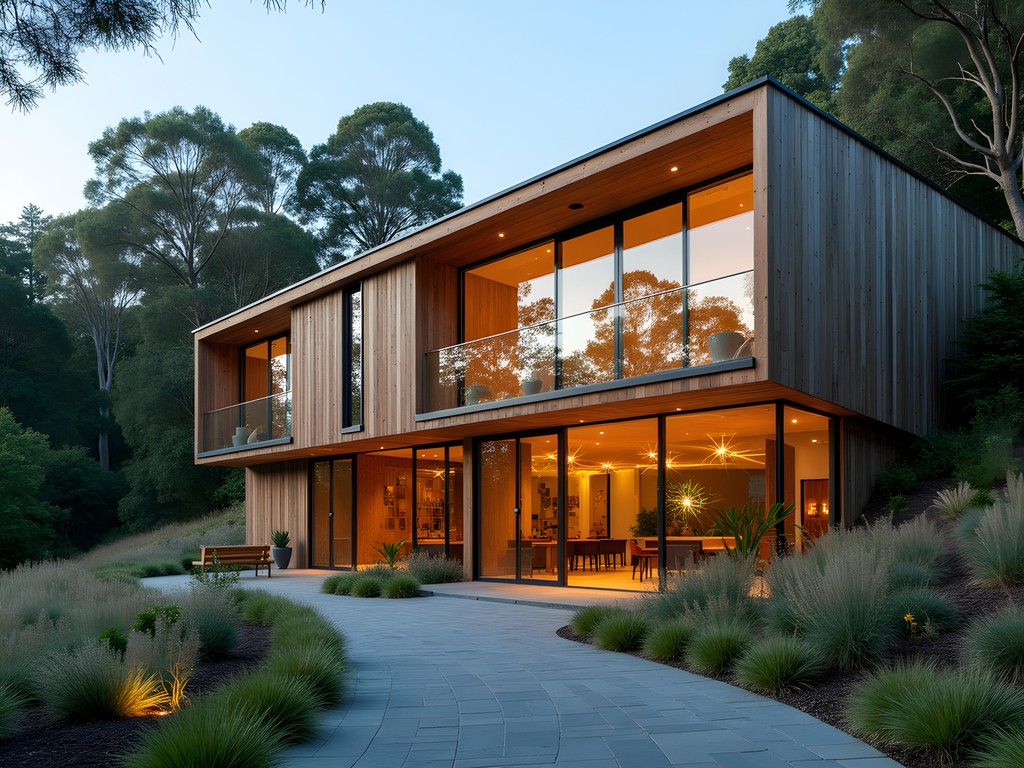
The heart of Titirangi is Te Uru Waitakere Contemporary Gallery, housed in an award-winning sustainable building that seems to emerge organically from the surrounding landscape. Unlike the larger city galleries, Te Uru frequently features exhibitions exploring environmental themes and showcasing indigenous perspectives on land and conservation.
During my visit, I was fortunate to catch an exhibition documenting community efforts to combat kauri dieback disease, which threatens the region's ancient kauri trees. The gallery serves as both artistic space and educational center, demonstrating how cultural institutions can advance environmental awareness.
'We see our role as helping people understand this unique ecosystem through multiple lenses,' explained the gallery attendant as she directed me toward a series of works by Māori artists exploring traditional relationships with the forest.
Beyond the gallery, Titirangi village itself feels worlds away from urban Auckland despite being just 30 minutes from downtown. The community has embraced eco-conscious businesses, including Deco Eatery, housed in the historic Lopdell House. Here I enjoyed a memorable lunch featuring ingredients sourced from local producers, served with minimal waste.
For nature enthusiasts, Titirangi provides access to spectacular walking tracks in the Waitakere Ranges, though many remain closed to protect kauri trees from dieback disease. I was impressed by how residents have responded to these closures—not with frustration but with determination to protect the forest, developing alternative community activities that don't impact vulnerable ecosystems.
When exploring such sensitive natural environments, I always carry my hiking boots which can be thoroughly cleaned between hikes to prevent spreading plant diseases—a small but important practice for responsible eco-tourism.
💡 Pro Tips
- Check the Auckland Council website for current track openings and closings in the Waitakere Ranges
- Visit the Titirangi Village Market (last Sunday of each month) to meet local artisans and food producers
- Always use boot cleaning stations when they're available at trailheads to protect kauri trees
Final Thoughts
As I boarded my flight home, I found myself reflecting not just on Auckland's hidden physical spaces but on the underlying ethos that connects them. What makes these locations special isn't merely their off-the-beaten-path status but how they embody a distinctly Kiwi approach to urban life—one that values community initiative, environmental stewardship, and cultural preservation in equal measure. These places reveal an Auckland that's actively engaging with questions central to our global future: How do we balance development with conservation? How can urban spaces nurture both environmental and cultural sustainability? By seeking out these local treasures, you'll not only experience a more authentic Auckland but participate in a larger conversation about sustainable tourism—one where travelers become temporary locals rather than mere observers. I invite you to explore these spaces with respect and curiosity, to support the communities that maintain them, and perhaps to discover your own hidden gems along the way.
✨ Key Takeaways
- Auckland's most authentic experiences connect environmental sustainability with cultural preservation
- Community-led initiatives are creating the city's most innovative spaces
- Venturing just 30-40 minutes from downtown reveals dramatically different environments
- Supporting local businesses and community spaces creates more meaningful travel experiences
📋 Practical Information
Best Time to Visit
year-round, though February-April offers stable weather with fewer tourists
Budget Estimate
$120-180 NZD per day including accommodations, local transport, and meals
Recommended Duration
5-7 days to explore both city neighborhoods and nearby natural areas
Difficulty Level
Easy - Most Hidden Gems Are Accessible Via Public Transportation Or Short Drives





Comments
mountainwanderer
Really like your photos! The one of Bethells Beach is stunning
smartmate
Been living in Auckland for 2 years and honestly didn't know about Kelmarna Gardens. Will definitely check it out this weekend. K Road is my go-to for vintage shopping and the best dumplings in the city!
Savannah Torres
Love this perspective on Auckland! We took our kids to Bethells Beach last summer and it was absolutely magical—wild, windswept, and so different from the typical tourist beaches. The black sand was a hit with the kids, though be warned it gets EVERYWHERE. We packed a picnic and spent hours exploring the dunes. One thing I'd add: the surf can be really rough there, so it's more for playing in the shallows than swimming. Hobsonville Point was also a surprise favorite—the playground by the water kept our kids entertained while we grabbed coffee from one of the cute cafes.
travelvibes
Going to Auckland in March! Is K Road safe to walk around at night?
Savannah Torres
We walked around K Road in the evening with our kids (ages 8 and 11) and felt perfectly safe. It's busy and well-lit, especially on weekends. Just use normal city awareness like anywhere else!
Megan Martin
Great post, Lionel! I visited Hobsonville Point last year during a work trip and was genuinely impressed by the sustainable development approach. The waterfront walkway is perfect for an early morning run, and the weekend farmers market is excellent. K Road has also evolved so much—the diversity of restaurants and vintage shops there now is incredible. One tip: if you're visiting Kelmarna Gardens, check their website first as they have volunteer days that are great for meeting locals.
mountainwanderer
Did you need to book ahead for the gardens or just show up?
Megan Martin
You can just show up during open hours, but volunteer sessions need a quick email registration.
vacationfan9064
How do you get to Te Henga without a car? Is there public transport or do you need to rent one?
smartmate
You'll need a car for Bethells. It's pretty remote, no buses go out there. Totally worth the drive though!
vacationfan9064
Thanks! Guess I'll look into car rentals then
moonbackpacker
Bethells Beach looks amazing! Adding to my list
NZExplorer
Love that you included Hobsonville Point! The Sunday markets there are fantastic.
SoloTrekker
If you're heading to Te Henga, check tide times before you go! The caves are only accessible at low tide and they're incredible for photos. I used my waterproof bag to keep my camera safe while exploring - those waves can surprise you!
winterperson
Just got back from Auckland and used this guide! K Road was exactly my vibe - vintage shops and those little cafes tucked away in old buildings. Found this tiny bookstore called Bashford Antiques that had the most amazing collection of NZ history books. We also hiked at Te Henga - those stairs down to the beach are no joke but SO worth it. Bring good shoes and water! The black sand gets super hot in the afternoon. One addition: we found this tiny Korean place called Ockhee on Queen Street that doesn't look like much but had the best bibimbap I've ever eaten. Thanks for this guide, it made our trip so much better than just doing the Sky Tower tourist thing.
FatimaTheExplorer
Adding Ockhee to my list for next time! Did you make it to Kelmarna Gardens? I found it so peaceful compared to the city bustle.
winterperson
We did! Went to their Saturday market and got amazing fresh produce. Made a picnic and took it to that little park nearby - Cornwall Park I think? Saw actual sheep grazing with the city skyline in the background. Only in NZ!
Venture X
Premium card with 2X miles, $300 travel credit, Priority Pass