


Disclosure: This article contains affiliate links. We may earn a commission from purchases at no extra cost to you, which helps our travel content.
As someone who spends their days designing sustainable energy systems for urban environments, I find myself drawn to places where human ingenuity and history intersect. Dover, New Hampshire might not make most travelers' bucket lists, but this unassuming New England town holds a fascinating historical narrative that's best explored on foot during the crisp autumn months when the colonial architecture stands in stark relief against a canvas of fiery foliage. Last October, I traded my blueprints and solar panels for a weekend of historical exploration in America's seventh oldest permanent settlement—and discovered an engineering heritage that resonated deeply with my technical sensibilities.

The Cochecho Mills: An Engineer's Paradise
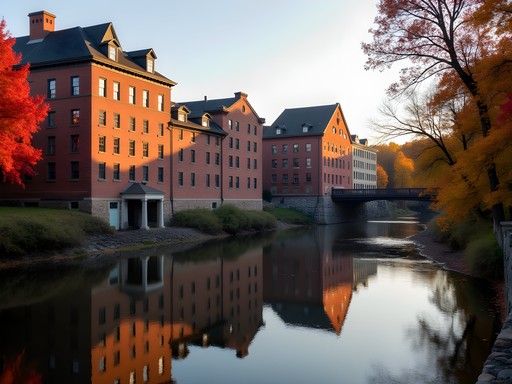
My exploration began at the remnants of the Cochecho Manufacturing Company, once one of America's largest cotton textile operations. As an engineer, I was immediately drawn to the innovative water management systems that powered these industrial behemoths. The brick facades still bear the marks of countless modifications as the mills evolved over decades, showcasing an impressive adaptive engineering that predates our modern sustainability concepts.
Walking through the mill district, I couldn't help but analyze the structural solutions employed by 19th-century engineers working without computer modeling or advanced materials. Their elegant use of local resources and gravity-fed water systems represents a kind of sustainability born of necessity rather than choice—something we could learn from in our current renewable energy landscape.
I spent nearly two hours examining the remaining architectural details, occasionally consulting my architectural guidebook to understand specific features. The industrial-era innovations documented here provide a fascinating counterpoint to the renewable systems I design today.

💡 Pro Tips
- Visit early morning for the best lighting to photograph the mill architecture
- Look for the subtle differences in brickwork that reveal different construction periods
- The Cochecho Falls are most impressive after rainfall, so check weather forecasts
The Woodman Institute: Where Science Meets History
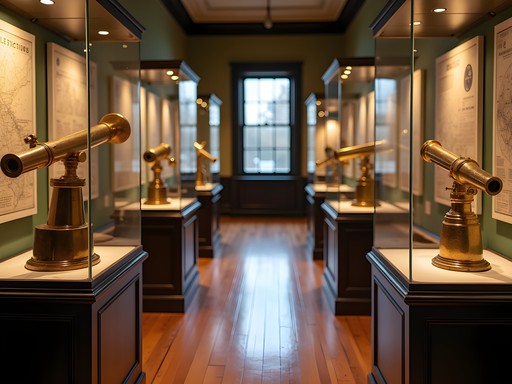
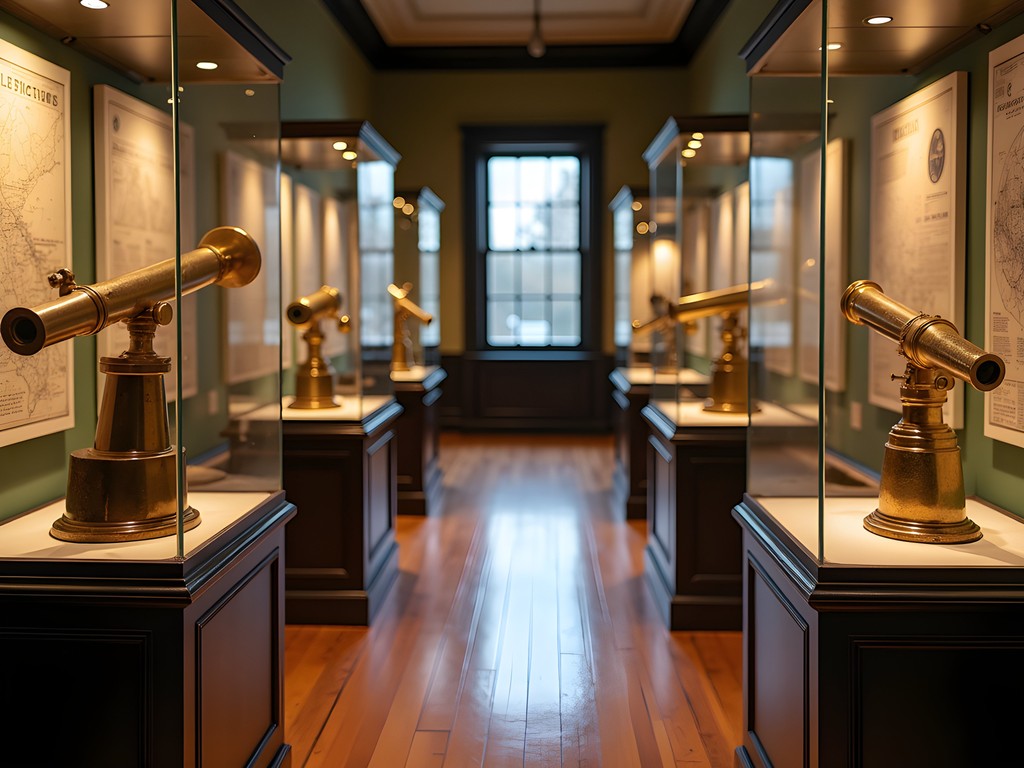
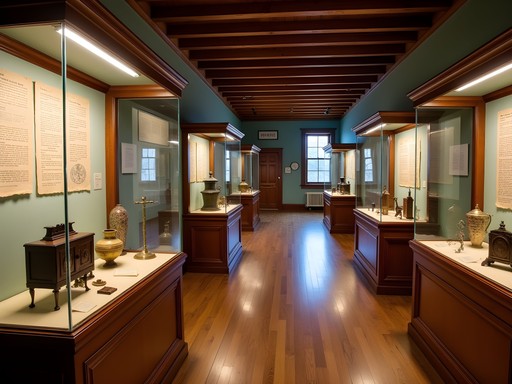
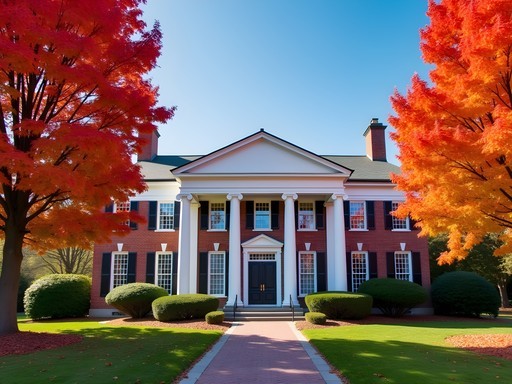
The Woodman Institute surprised me with its eclectic collection housed within a Federal-style mansion. As someone whose professional life straddles both technical and cultural spaces, I found this museum's blend of natural history, local artifacts, and astronomical instruments particularly captivating. The 1820s-era Damrell telescope immediately caught my attention—its brass fittings and precision optics a testament to early American scientific ambition.
What truly fascinated me was the museum's collection of navigational instruments, which reminded me of how astronomy and maritime exploration were once inextricably linked. As someone who regularly escapes light pollution to photograph celestial objects, I appreciated the museum's small but significant collection of astronomical artifacts that documented humanity's ongoing relationship with the night sky.
The narrow, creaking staircases and intimate exhibition spaces create a uniquely immersive experience. I recommend using a portable reading light to better examine the detailed exhibits in the dimly lit historical rooms—museum lighting is intentionally kept low to preserve sensitive artifacts.
💡 Pro Tips
- Allow at least 90 minutes to fully appreciate the diverse collections
- Ask about the Abraham Lincoln saddle—it's not always on display
- The staff historians often share fascinating stories not found on the placards if you show genuine interest
The Garrison Hill Tower: Dover's Best-Kept Secret
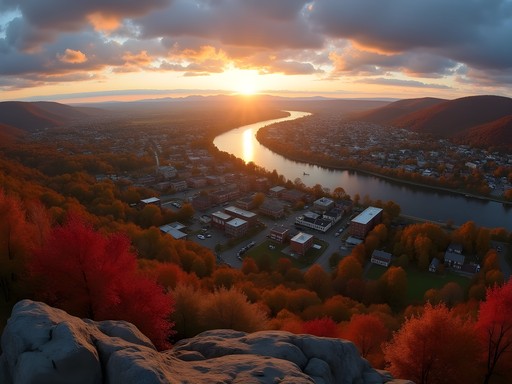
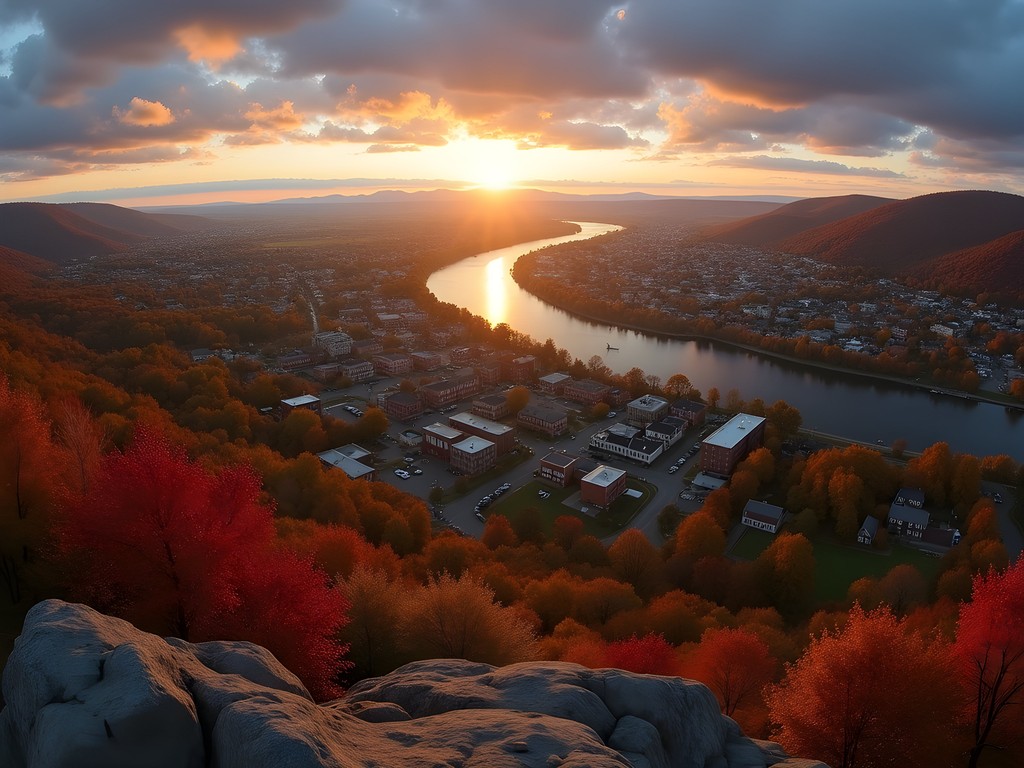
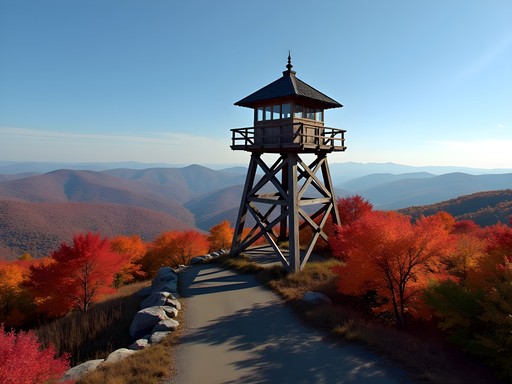
For someone who regularly seeks out dark sky reserves, finding Garrison Hill Tower was like discovering a hidden observatory in plain sight. This 76-foot observation tower offers panoramic views of Dover and, on clear days, visibility stretches to the White Mountains, the Atlantic Ocean, and even Mount Washington.
The tower itself is a modest but impressive engineering achievement, particularly considering its 1913 origins. As I climbed the spiral staircase, I couldn't help but analyze its structural integrity—the way the load-bearing elements distribute weight efficiently while maintaining stability against New Hampshire's notorious winds impressed my professional sensibilities.
I arrived about an hour before sunset with my insulated thermos filled with hot tea (essential for autumn evenings in New England) and spent nearly two hours watching the light change over the landscape. The tower provides a perfect vantage point to understand Dover's historical development—from the river that powered its mills to the colonial street grid that still defines downtown.
"Desde aquí se puede ver toda la historia de la ciudad desplegada como un mapa viviente" (From here, you can see the entire history of the city unfolded like a living map), I found myself explaining to another visitor—sometimes Spanish captures certain concepts more elegantly than English.
💡 Pro Tips
- Bring a windproof jacket as the tower platform can be significantly windier than ground level
- Visit during weekdays to avoid crowds and have a more contemplative experience
- The best photography light occurs 30 minutes before official sunset

First Parish Church: Engineering Faith
While I typically approach historical sites with an engineer's analytical eye, the First Parish Church connected with me on a deeper level. Founded in 1633, making it one of the oldest continuous parishes in America, the current 1829 structure represents a fascinating study in architectural acoustics.
As someone who designs systems with efficiency in mind, I was immediately struck by how the church's design creates nearly perfect sound distribution without modern amplification. The elliptical ceiling, curved walls, and strategic placement of sound-reflective surfaces demonstrate an intuitive understanding of acoustic principles that predates formal acoustic theory.
I was fortunate enough to visit during a small chamber music rehearsal, which provided the perfect opportunity to experience the space's acoustic properties in action. I found a quiet corner and used my noise-cancelling earbuds in transparency mode to better isolate and appreciate the natural acoustics—a technique I often use when analyzing how sound moves through architectural spaces.
The church's historical significance extends beyond its architecture; it stands as a testament to Dover's resilience. When I ran my hand along the wooden pews, worn smooth by nearly two centuries of use, I couldn't help but reflect on the continuity of human experience across generations—something that gives context to my own work in creating sustainable systems for future generations.

💡 Pro Tips
- Check the church bulletin for musical performances to experience the exceptional acoustics
- Look for the original Paul Revere bell in the tower (though tower access is limited)
- The historical archives are open by appointment and contain fascinating documents about Dover's development
The Dover Green: Urban Planning Through Centuries
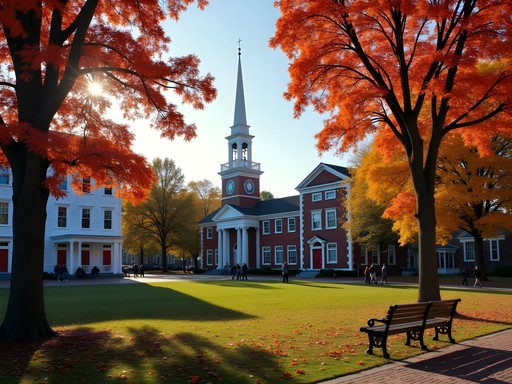
My professional work in Detroit often involves reimagining urban spaces for sustainability, so Dover's central green space provided a fascinating case study in centuries of evolving urban planning. This modest but charming town square dates to the original colonial settlement and has witnessed the transformation of American civic space from utilitarian marketplace to recreational park.
What struck me most was how the space has been continually adapted while maintaining its essential character—something we strive for in modern sustainable development. The careful placement of trees provides natural cooling in summer months, while the open design facilitates community gatherings and cultural events.
I spent a leisurely afternoon here with a cup of coffee from a local shop and my pocket sketchbook, drawing the architectural details of surrounding buildings and noting how pedestrian traffic naturally flows through the space. These observations might seem mundane, but as someone who designs systems for human interaction, I find such organic patterns revealing.
The green is surrounded by buildings spanning three centuries of American architectural development—from colonial to Federal to Victorian to modern—creating a living timeline of design evolution. For couples interested in architecture, this provides a perfect opportunity to discuss how building styles reflect changing cultural values and technological capabilities across generations.

💡 Pro Tips
- The farmers market on Wednesdays and Saturdays brings the historical marketplace function back to life
- The southeast corner offers the best vantage point to observe multiple architectural periods simultaneously
- Bring a picnic blanket for impromptu picnicking—local shops offer perfect takeaway options
Final Thoughts
As I boarded my train back to Detroit, I found myself reflecting on how Dover represents a microcosm of American innovation—from the water-powered mills that fueled industrial revolution to the sustainable urban planning evident in its evolving green spaces. For couples seeking a meaningful weekend escape that combines historical depth with engineering marvels, Dover offers an unexpected treasure trove of experiences that won't strain your budget.
What makes Dover truly special isn't just its preserved buildings but the continuity of purpose they represent—spaces designed for community, commerce, and contemplation that continue to serve those functions centuries later. In my professional life designing renewable energy systems, I often look to historical solutions for inspiration, and Dover provided a wealth of examples of sustainable thinking born of necessity rather than trend.
As we face modern challenges of urban sustainability and cultural preservation, places like Dover remind us that innovation isn't always about creating something new—sometimes it's about recognizing the elegant solutions our predecessors discovered through necessity and intuition. "El pasado no está muerto, ni siquiera es pasado"—the past isn't dead; it isn't even past. And in Dover, that past remains very much alive, waiting for curious travelers to discover its lessons.
✨ Key Takeaways
- Dover offers an accessible weekend historical experience that's particularly beautiful in autumn
- The town provides a perfect case study in early American engineering and sustainable design
- Couples can enjoy a meaningful cultural experience without the crowds of better-known New England destinations
- The combination of industrial heritage, scientific collections, and architectural preservation creates a uniquely multifaceted historical narrative
📋 Practical Information
Best Time to Visit
September-October for fall foliage; May-June for pleasant temperatures without summer crowds
Budget Estimate
$200-300 for a weekend (accommodations, meals, and admissions)
Recommended Duration
2-3 days
Difficulty Level
Easy


Comments
hikingblogger
Great photos of the mills!
wintergal
Right? That golden hour lighting is perfect
globequeen
Really cool! Adding to my New England list
wintergal
Love this! I grew up in Portsmouth and never really appreciated Dover until I moved away. The Woodman Institute is such a weird little gem - where else can you see a stuffed polar bear and Civil War artifacts in the same room? 😂 Did you get to see the old fire engines in the basement?
John Hart
Excellent piece, Matthew. Your engineering perspective adds a unique dimension to these historical sites. The Cochecho Mills really are remarkable - I visited similar textile mills in Lancashire last year and the parallels in industrial design are fascinating. The water management systems they engineered in the 1800s were truly ahead of their time. Dover's preservation efforts deserve more recognition. Have you explored any of the mill towns further north in New Hampshire? Amoskeag in Manchester has similar industrial archaeology that might interest you.
Matthew Black
Manchester is definitely on my list! The scale of Amoskeag is incredible from what I've read. Thanks for the recommendation, John.
wavebackpacker
Wait, Dover NH has all this?? I've driven through there like 100 times and had no idea. Is the Garrison Hill Tower open to the public or do you need special access?
Matthew Black
It's open but kind of unofficial - locals seem to know about it. Best to go during daylight hours. The view is absolutely worth the climb!
wavebackpacker
awesome, thanks!
summerqueen
Just booked our trip to Dover for April! So excited to check out the First Parish Church after reading this!
hikingdiver3869
April is perfect! Not too crowded and the spring gardens will be starting to bloom.
oceanadventurer
If you're visiting the Cochecho Mills area, I recommend stopping by Flight Coffee Co. nearby. Perfect spot to rest after exploring! The mills are even more impressive than described here - I spent hours photographing the architectural details. I used my travel tripod for some amazing low-light shots inside the converted mill spaces. The staff at the visitor center were super helpful with pointing out hidden architectural features too.
starguide
How accessible is the Garrison Hill Tower for someone with mobility issues? My mom uses a cane but would love the view!
oceanadventurer
I was there last month - there's parking near the base, but the tower itself has quite a few stairs. The park area is nice though with some benches if she wants to enjoy the outdoors while others climb up.
starguide
Thanks for the info! Maybe we'll stick to the ground-level spots then.
Jean Wells
Matthew, your engineering perspective on Dover's historical sites offers a refreshing analytical lens. I visited the Cochecho Mills last spring during my East Coast industrial heritage tour and was similarly impressed by the hydraulic engineering. The juxtaposition of 19th-century industrial innovation with modern adaptive reuse exemplifies sustainable urban development principles. I'd add that visitors should allow at least 90 minutes for the Woodman Institute - the meteorite collection alone deserves careful examination. The docents possess remarkably detailed knowledge about the scientific artifacts, which complements your observations perfectly.
summerqueen
Jean, is the Woodman Institute suitable for kids? My 10-year-old loves science stuff!
Jean Wells
Absolutely! Your science-loving 10-year-old would be fascinated by the natural history specimens and particularly the 10-foot polar bear. The institute balances educational value with visual interest quite effectively for younger visitors.
summerqueen
Perfect! Adding it to our spring break plans. Thanks so much!!
hikingdiver3869
Dover is such an underrated gem! Thanks for highlighting these spots!
Venture X
Premium card with 2X miles, $300 travel credit, Priority Pass