

Disclosure: This article contains affiliate links. We may earn a commission from purchases at no extra cost to you, which helps our travel content.
As someone who finds beauty in the mathematical precision of historical architecture, Brockton's Industrial Heritage Trail presents a fascinating numerical narrative of America's manufacturing evolution. This compact 4.7-mile trail chronicles the transformation of a small New England settlement into the world's largest shoe manufacturing center—a perfect weekend excursion for students seeking tangible connections to Industrial Revolution concepts beyond textbooks. The trail's 24 historical sites create a walkable algorithm of innovation, perseverance, and socioeconomic change that shaped not just Massachusetts, but America's industrial identity.

The Numerical Narrative of Shoe City
Brockton's transformation from agricultural community to 'Shoe City' presents a fascinating case study in exponential growth. In 1840, the town produced approximately 100,000 pairs of shoes annually. By 1865, that figure had jumped to 1.3 million, and by 1900, an astonishing 45 million pairs—representing a growth rate that would make any data analyst take notice.
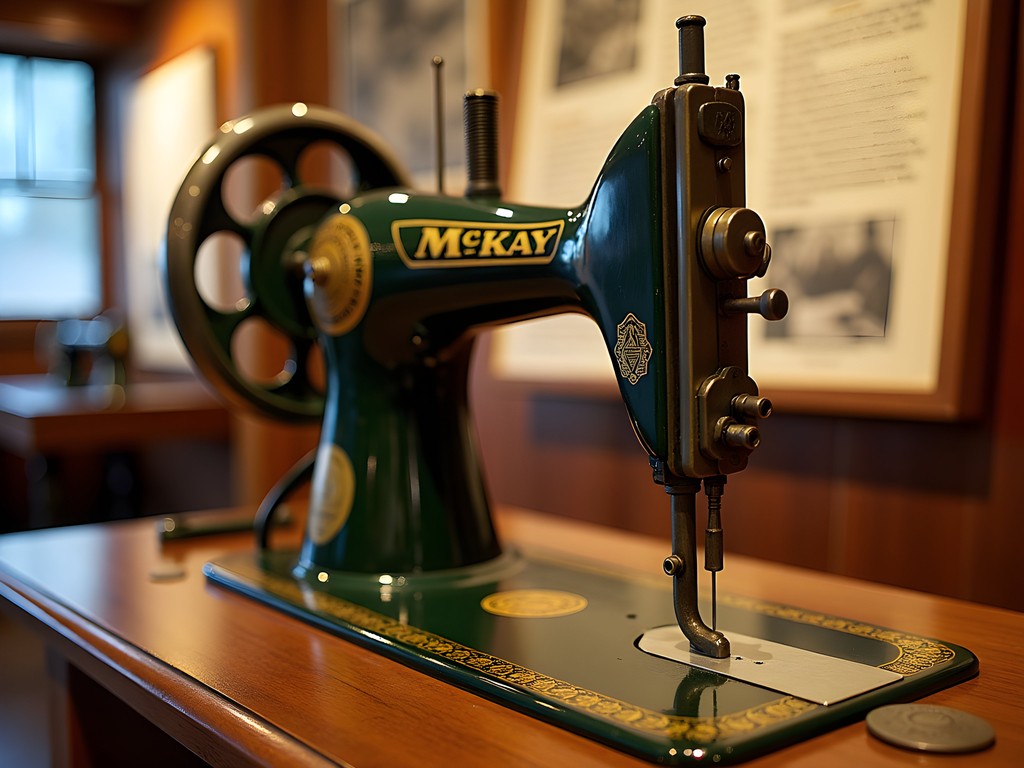
The Heritage Trail begins at the Brockton Historical Society, where a collection of vintage manufacturing equipment demonstrates the evolution of production efficiency. I was particularly struck by the mathematical precision of the McKay stitching machine, which increased production capacity by 500% in the 1860s—a technological disruption as significant as any we've witnessed in Silicon Valley.
As an actuary, I couldn't help calculating that a modern factory worker produces in 30 minutes what would have taken a full day in 1850. This efficiency revolution is tangibly presented through the trail's chronological layout, making abstract economic concepts concrete for students.
💡 Pro Tips
- Download the free audio guide from the Historical Society website for detailed manufacturing statistics at each stop
- Visit on weekdays when local historians often give impromptu talks
- Bring a notebook to sketch the geometric patterns in the factory windows—they're mathematically fascinating
Architectural Mathematics: Factory Design Evolution
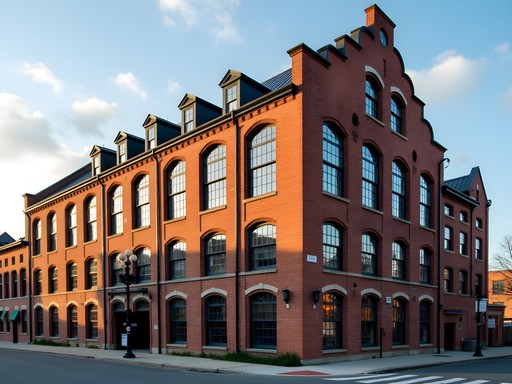
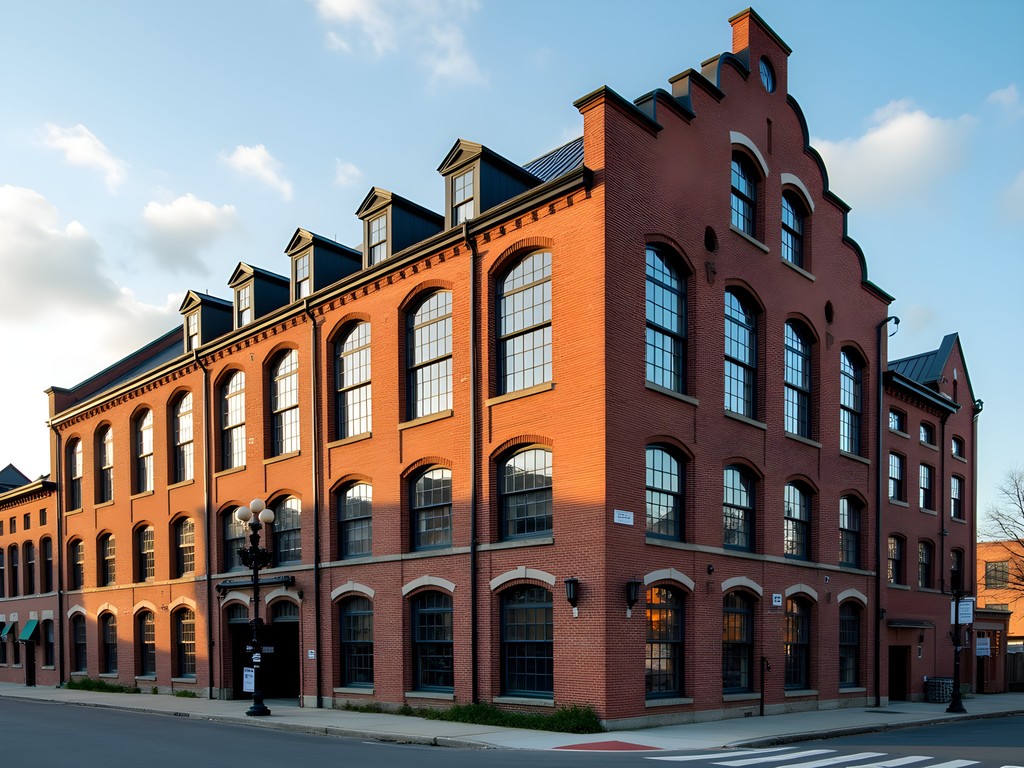
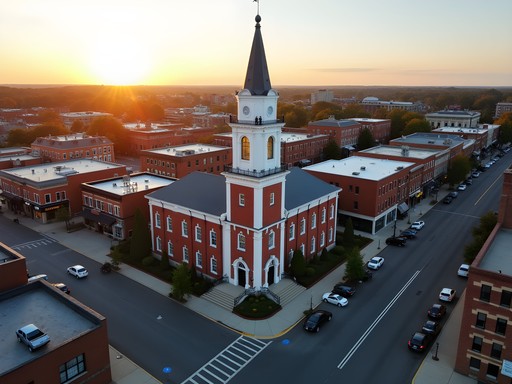
What truly captivates me about Brockton's industrial architecture is how factory design evolved following mathematical principles of efficiency and light optimization. The progression from small workshops to the massive Douglas Factory (Stop #7 on the trail) illustrates how industrialists intuitively applied calculus concepts to maximize production flow.
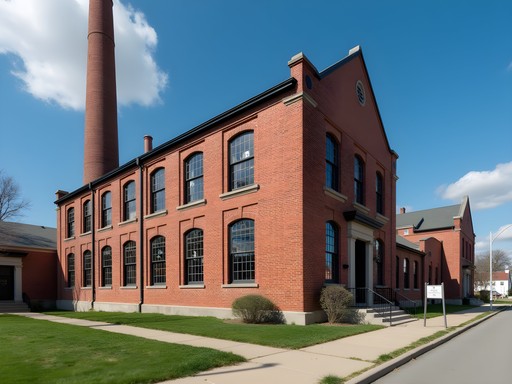
The Douglas Factory's sawtooth roof design—with north-facing windows precisely angled at 65 degrees—created consistent, shadow-free natural lighting that reduced eye strain and increased production quality. This architectural innovation spread throughout New England's industrial landscape, creating a distinctive regional aesthetic born of practical mathematics.
I spent nearly an hour photographing the geometric patterns formed by these windows, which create fascinating light distributions throughout the day. For students studying physics or engineering, these buildings are textbook examples of applied mathematics in architectural design.
For comfortable exploration, I recommend wearing a pair of supportive walking shoes as you'll be covering significant ground. The trail's urban terrain makes comfortable footwear essential for fully appreciating these architectural marvels.
💡 Pro Tips
- Visit between 10am-2pm when the sawtooth roof lighting effects are most dramatic
- Look for the golden ratio proportions in the W.L. Douglas Factory windows
- Compare the ventilation systems across different era factories to see the evolution of environmental engineering
Data Points in Time: The Human Stories
While architecture and production statistics fascinate me professionally, the Heritage Trail excels at humanizing these data points through stories of innovation and labor. Stop #12 features the Edison Power Plant, where Brockton became the first city with a three-wire underground electrical system and the first with electrically powered streetcars—technological disruptions that parallel today's digital transformations.
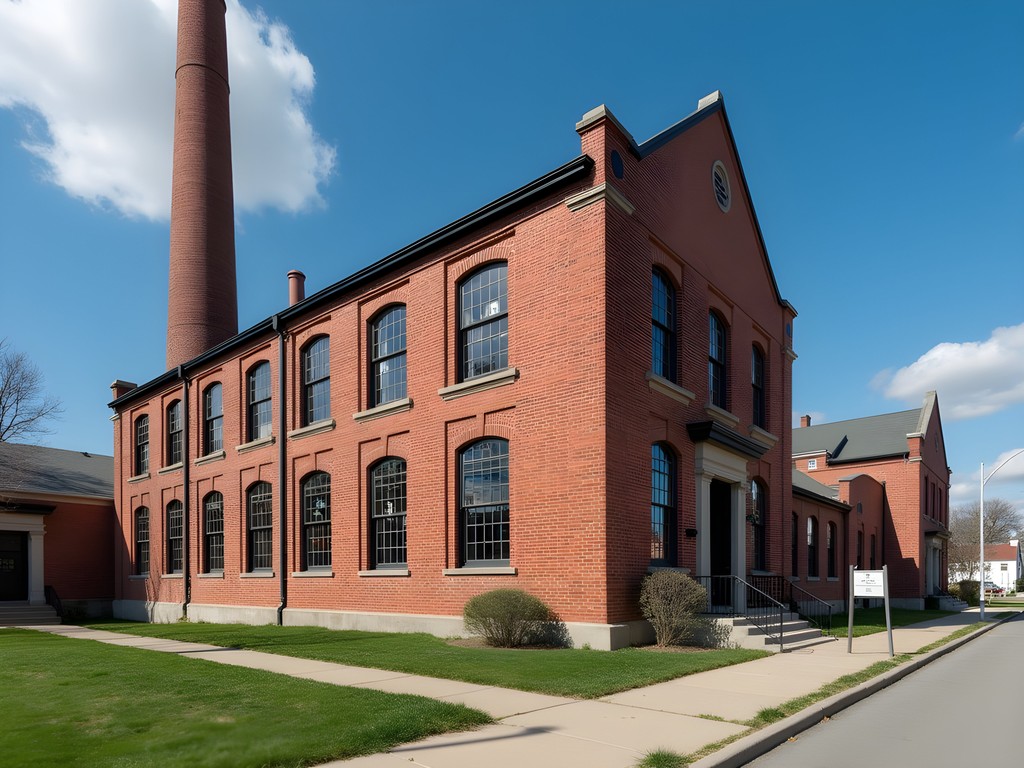
The trail doesn't sanitize history, either. At Stop #15, the Labor Union Memorial commemorates the strikes of 1933, where statistical analysis of wage data and working conditions provides insight into labor economics that students will find relevant to modern discussions about worker rights.
During my visit, I used the pocket voice recorder to capture the excellent narration provided by local guides. This proved invaluable for reviewing the wealth of statistical information later while organizing my photographs.
For students researching specific aspects of industrial history, I recommend bringing a portable document scanner to digitize the wealth of primary source documents available at several stops. The historical society allows scanning of most non-fragile materials, providing valuable research assets.
💡 Pro Tips
- Visit the Keith Block (Stop #9) where innovative entrepreneurs received microloans—a 19th century version of venture capital
- Compare worker demographic data across different factories to understand immigration patterns
- Calculate the productivity-to-wage ratios posted at the Labor Union Memorial for insights into historical labor economics

Budget-Friendly Educational Resources
What makes Brockton's Heritage Trail particularly valuable for student groups is its accessibility. The entire experience can be completed for under $15 per person, including the optional $5 donation to the Historical Society and a $9 guided tour package that includes printed materials.
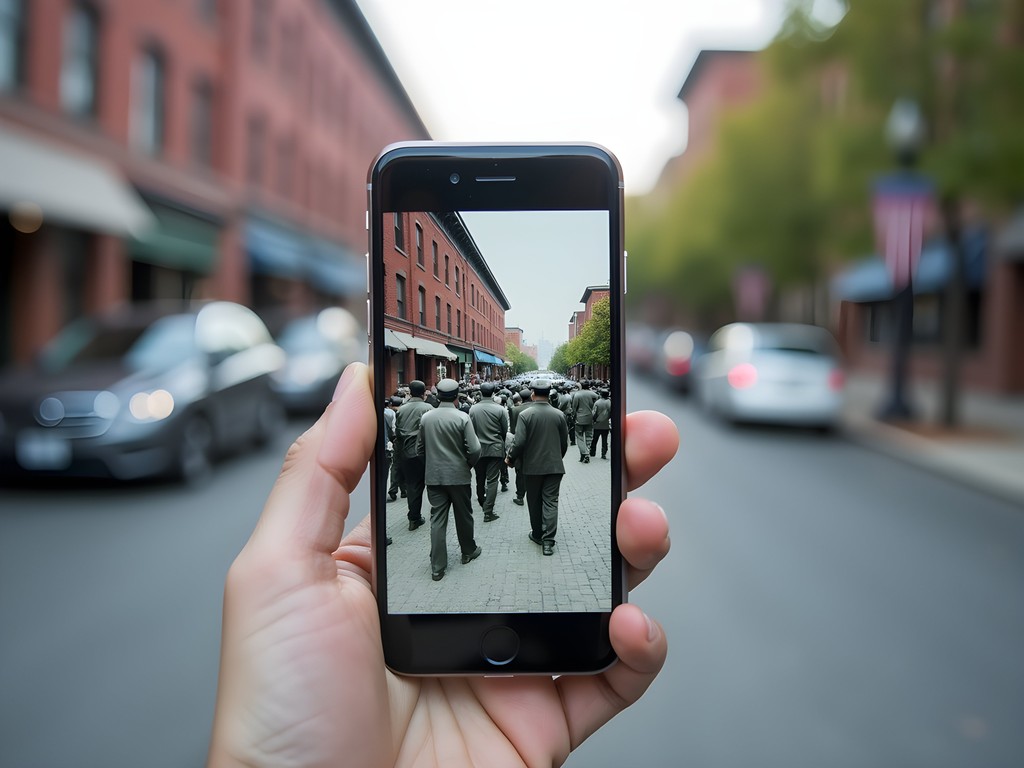
The trail's digital resources are equally impressive. I downloaded the free Heritage Trail app, which overlays historical photographs onto current viewpoints using augmented reality—allowing you to visualize the bustling factory scenes that once dominated these streets. The app includes detailed production statistics and worker demographic data that economics and sociology students will find particularly valuable.
For recording observations throughout your visit, I recommend the weatherproof notebook which proved invaluable during my rainy second day exploring the trail. Unlike typical notebooks that would have disintegrated in the New England drizzle, this allowed me to continue documenting architectural measurements and historical data points regardless of weather conditions.
To maximize the educational value, schedule your visit to coincide with the monthly 'Industrial Innovation' workshops at the Historical Society, where students can try operating simplified versions of historic shoe-making equipment—connecting theory to tangible experience.
💡 Pro Tips
- The Heritage Trail app works offline—download before arrival to access all features
- Tuesday afternoons feature free guided tours by retired factory workers with firsthand knowledge
- The Historical Society offers student group discounts for guided experiences with advance booking
Cycling the Extended Industrial Corridor
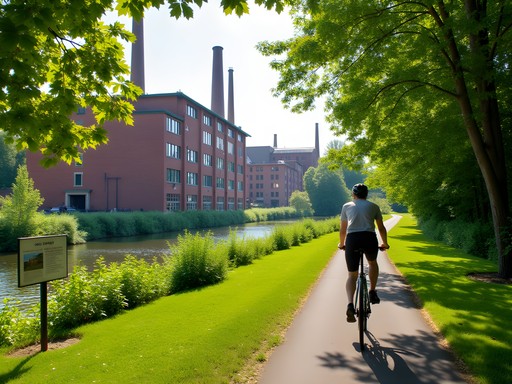
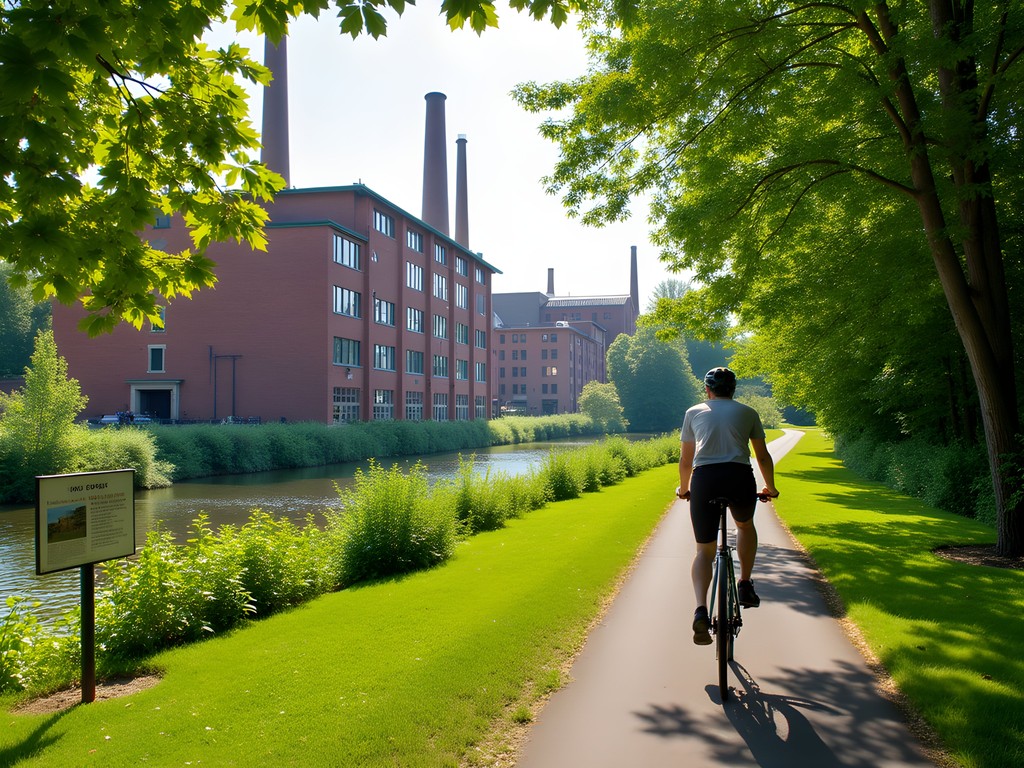
For energetic groups with additional time, I highly recommend the extended 12-mile cycling route that connects Brockton's Heritage Trail to neighboring industrial sites in East Bridgewater and West Bridgewater. This expanded route follows the mathematical logic of industrial development along water power sources and early transportation corridors.
Renting bicycles from Community Cycles (adjacent to Stop #3) costs just $15 per day, making this an affordable extension. The shop provides excellent route maps highlighting the statistical growth patterns of factory development along the river system—a perfect illustration of how geography and economics intersect.
During my ride, I used the handlebar phone mount to keep the trail map accessible while cycling between sites. This secure mounting system withstood New England's notoriously bumpy roads while keeping my navigation tools easily visible.
The extended route includes the fascinating Town River Factory, where water wheel efficiency calculations are displayed alongside the preserved machinery—a perfect case study in early industrial energy utilization that engineering students will appreciate. The mathematical progression of water power utilization from simple wheels to complex turbine systems tells the story of America's technological evolution in tangible form.
💡 Pro Tips
- The cycling route includes elevation gain data for each segment—useful for pacing group rides
- Pack water and snacks as options are limited along the extended route
- The Bridgewater State University library (accessible to visitors) contains digitized factory blueprints that illustrate mathematical precision in industrial design
Final Thoughts
Brockton's Industrial Heritage Trail offers a uniquely quantifiable window into America's manufacturing evolution. As an actuary who finds beauty in data patterns, I was struck by how clearly this compact trail illustrates the exponential growth curve of industrial innovation—from simple hand tools to complex manufacturing systems in just three generations. For students, particularly those studying economics, engineering, or social history, this trail transforms abstract textbook concepts into tangible experiences through carefully preserved industrial architecture and thoughtfully presented statistical context.
What makes Brockton particularly valuable is its accessibility—both financially and intellectually. Unlike larger industrial museums that can overwhelm with information, Brockton's trail presents a walkable algorithm of innovation that builds logically from one site to the next. The mathematical progression of manufacturing efficiency gains becomes viscerally apparent as you move chronologically through the sites.
As you plan your visit, I encourage you to allocate time for both structured learning and unguided exploration. Some of my most insightful moments came from simply sitting across from the Douglas Factory, calculating the precise angles of light through those innovative sawtooth windows—a reminder that industrial history is as much about mathematical elegance as it is about production volume.
✨ Key Takeaways
- Brockton's trail presents industrial history through a mathematical lens that makes abstract economic concepts tangible
- The free augmented reality app creates before/after visualizations that dramatically enhance understanding of industrial transformation
- Budget-friendly guided tours and workshops provide hands-on connections to manufacturing processes
- The extended cycling route reveals how geography and economics intersected to create industrial corridors
- Primary source documents available for scanning make this an excellent research destination
📋 Practical Information
Best Time to Visit
Late May through early October, with June offering optimal lighting conditions for architectural photography
Budget Estimate
$10-25 per person (trail is free, optional museum donation $5, guided tour $9, bicycle rental $15)
Recommended Duration
Walking tour: 4-5 hours; Extended cycling route: additional 3-4 hours
Difficulty Level
Easy - Mostly Flat Terrain On Paved Surfaces With Frequent Rest Opportunities



Comments
Casey Andersson
Jeffrey, this is such a refreshing take on industrial tourism! I visited similar mill towns in northern England last year and there's something haunting and beautiful about these spaces. The way you've approached it through the lens of data and architecture really highlights what makes these places special beyond just nostalgia. I'm curious - did you find any good local restaurants or cafes near the trail? I always think the food scene tells another layer of a city's story, especially in places reinventing themselves after industrial decline.
sunnyperson401
Love this perspective on industrial history!
escapeperson
Never thought about Brockton as a destination! How long does the whole trail take to walk? Planning a New England trip and this sounds different from the usual Boston stuff.
starmaster
Did it in about 3 hours. Worth it!
mountainlegend
I'd budget half a day if you really want to explore the old factory buildings and read all the historical markers! There's also a small museum that's worth checking out. The architecture is genuinely impressive once you start noticing the details Jeffrey mentioned.
summerexplorer
Thanks for sharing!
Taylor Moreau
Fascinating read, Jeffrey. As someone who frequently brings international business groups to New England, I'm always seeking alternatives to the standard Boston-Cambridge circuit. The mathematical framework you've applied here is quite novel—it reminds me of how I approach logistics planning. The budget-friendly aspect is particularly relevant for corporate groups working with fixed per diems. One question: is the trail wheelchair accessible throughout, or are there sections that might present challenges for delegates with mobility considerations?
Jeffrey Anderson
Taylor, most of the trail is accessible, though a few viewing points near the old rail lines have uneven surfaces. The main factory exteriors and downtown sections are fully accessible. I'd recommend contacting the Brockton Historical Society for specific accessibility maps.
wildguy
are there any good places to eat near the trail? want to make a full day of it
summerexplorer
downtown brockton has some decent spots, portugese food is good there
vacationtime
Adding this to my summer bucket list!! Love finding hidden gems like this
Megan Martin
Jeffrey, I appreciate your analytical approach to this piece. Industrial heritage tourism is often overlooked in New England travel content, yet it offers substantial educational value. I visited Lowell's mill district last year and found similar architectural precision. Have you compared Brockton's preservation efforts with other Massachusetts industrial sites? I'm considering a regional industrial heritage series for my corporate travel clients who want meaningful educational experiences between meetings.
Jeffrey Anderson
Excellent question, Megan. Brockton's approach is more grassroots compared to Lowell's NPS-managed sites, which gives it a different character. The preservation is less polished but more authentic in some ways. Would love to compare notes on this.
sunsetphotographer
Great shots of the old factory buildings!
escapewalker
how long does the full trail take? planning a day trip from boston
Venture X
Premium card with 2X miles, $300 travel credit, Priority Pass