

Disclosure: This article contains affiliate links. We may earn a commission from purchases at no extra cost to you, which helps our travel content.
As both a research scientist and mindfulness practitioner, I've always approached travel as a form of data collection—observing patterns, analyzing cultural phenomena, and documenting the sensory experience with methodical precision. Yet food transcends even my scientific framework, speaking directly to our most primal connections. My recent two-week culinary exploration comparing Zurich and Beijing presented a fascinating study in contrasts: Swiss precision versus Chinese complexity, Western restraint versus Eastern abundance, alpine simplicity versus imperial grandeur. These cities, separated by 5,000 miles and millennia of divergent culinary evolution, offered my analytical mind and curious palate an extraordinary opportunity to document how geography, history, and culture manifest on the plate. What follows is my methodical yet heartfelt analysis of these two distinct food worlds—and how they might inform your own culinary journey.

The Precision of Swiss Culinary Craft
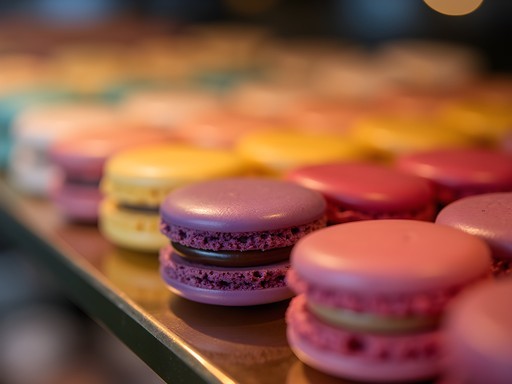
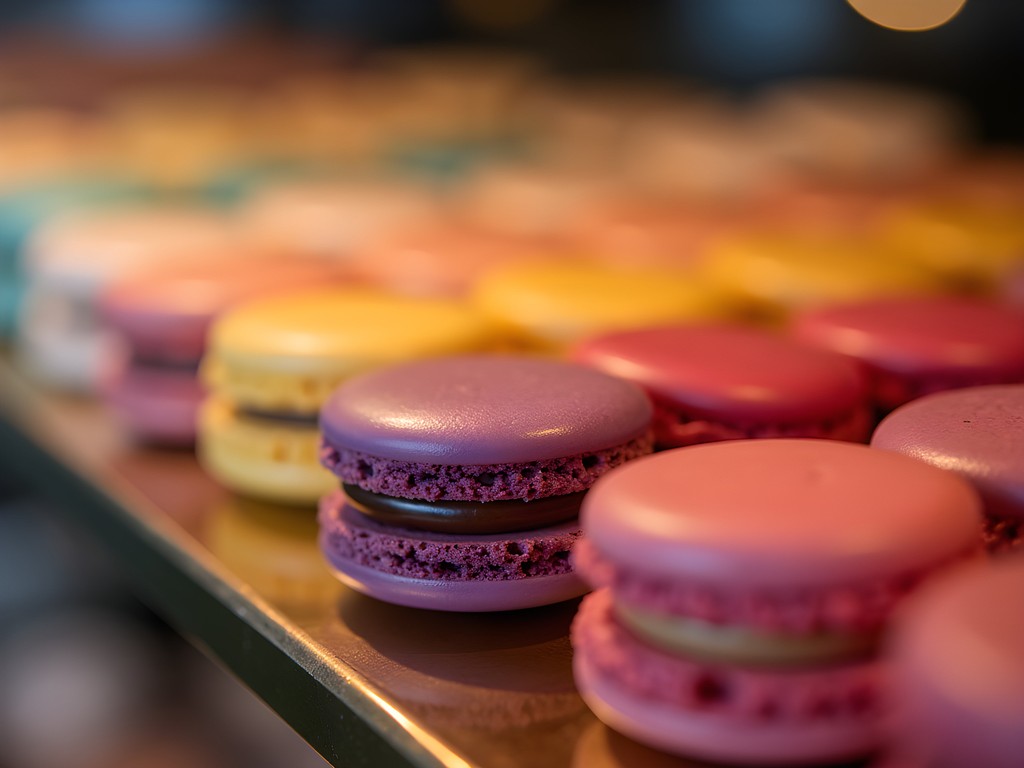
Zurich's culinary landscape functions with the same precision as the famous Swiss watches crafted within its borders. My first morning began at Confiserie Sprüngli on Bahnhofstrasse, where I observed the mathematical exactitude in their Luxemburgerli macarons—each one 2.8 centimeters in diameter, with a tolerance that would impress any laboratory technician. The consistency wasn't coincidental but rather the result of generations of refinement and standardization.
What struck me most was how this precision extended beyond mere appearance to flavor profiles. At Kronenhalle, a historic restaurant where Einstein once dined, I ordered their signature Zürcher Geschnetzeltes (sliced veal in cream sauce). The balance between the cream, white wine, and mushrooms demonstrated remarkable consistency—a culinary equation solved to perfection. The waiter explained that their recipes remain unchanged for decades, with chefs trained to reproduce rather than reinterpret.
This Swiss dedication to precision extends to their dairy production. During a day trip to a cheese farm in the nearby countryside, I documented the careful monitoring of temperature, timing, and bacterial cultures—not unlike protocols we'd follow in my research laboratory. The resulting Gruyère was a testament to controlled variables producing consistent outcomes.
I recorded my observations of each meal in my travel journal, noting not just flavors but the methodical service, precise portioning, and the almost scientific approach to traditional recipes. What appears simple on the Swiss plate actually represents generations of refinement distilled to its essential elements.
💡 Pro Tips
- Visit Confiserie Sprüngli early (before 10am) to see the fresh morning pastry preparation
- Book Kronenhalle at least two weeks in advance and request a table near the art collection
- Take the S-Bahn to nearby countryside towns like Rapperswil for more authentic Swiss dairy experiences
Beijing's Culinary Complexity and Controlled Chaos
Transitioning from Zurich to Beijing presented a fascinating contrast in culinary philosophy. Where Swiss cuisine demonstrates restraint and precision, Beijing embraces complexity and controlled chaos. My first morning at a traditional hutong breakfast stall was a sensory recalibration—vendors calling out orders, customers crowding small tables, and the air thick with the aroma of fried dough and soybean milk.
At the renowned Quanjude Roast Duck Restaurant, I observed how their signature Peking duck preparation involves over 20 distinct steps, with the final product judged not by standardization but by the chef's intuitive knowledge of when the skin has reached perfect crispness. When I inquired about specific cooking times, the chef smiled and pointed to his eyes and nose—his sensory data more trusted than any timer.
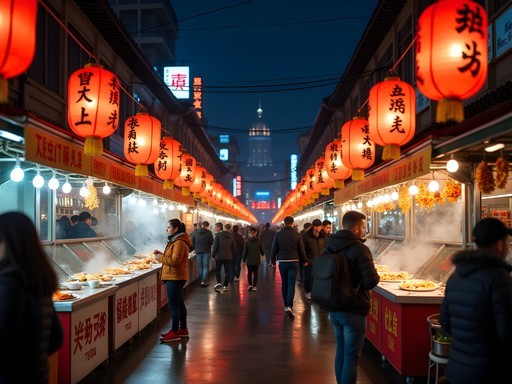
The night markets of Beijing further exemplified this difference. At Wangfujing Snack Street, I documented 37 distinct cooking methods across 50 stalls—from flash-frying to slow-braising, often with techniques that have remained unchanged for centuries. The vendors worked with remarkable efficiency despite the apparent disorder, a system optimized through generations of practice rather than formal standardization.
I captured these vibrant scenes with my travel camera, which proved invaluable in the low light conditions of evening markets while still capturing the vivid colors and textures of the food. The contrast between the quiet, orderly dining rooms of Zurich and the vibrant, seemingly chaotic food streets of Beijing couldn't be more pronounced, yet both achieve culinary excellence through entirely different approaches.

💡 Pro Tips
- Visit hutong breakfast stalls between 6-7am when locals eat before work
- For authentic Peking duck, book Quanjude's Hepingmen branch rather than more touristy locations
- Bring small bills for night markets and be prepared to point at what you want
The Mindful Practice of Tea Culture
My research into mindfulness practices has repeatedly demonstrated how food rituals can anchor us in the present moment. Nowhere was this more evident than in the tea cultures of both cities—similar in their reverence yet divergent in execution.
In Zurich, I visited Schwarzenbach, a tea merchant operating since 1864. The experience was characterized by quiet efficiency—teas categorized systematically, portions measured precisely, and brewing instructions provided with temperature specifications to the degree. The Swiss approach tea as they do most culinary endeavors: with respect for process and precision. My afternoon at Café Schober involved a timer for proper steeping and the methodical arrangement of accompaniments.
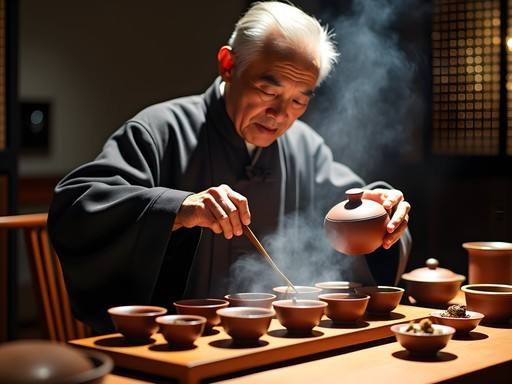
Beijing's tea houses, by contrast, transformed tea into performance art. At Lao She Teahouse, I participated in a gongfu tea ceremony where the focus wasn't on scientific precision but on the sensory journey. The tea master evaluated water temperature by sound and appearance rather than thermometer, adjusted steeping times based on intuitive knowledge of the leaves, and poured with fluid movements refined through decades of practice.
I documented these contrasting approaches in my mindfulness journal, noting how both achieved a similar end—presence with the tea—through different pathways. The Swiss approach cultivated mindfulness through methodical precision, while the Chinese approach achieved it through sensory immersion and tradition. Both created moments of perfect attention, just as valuable to my research as they were pleasurable to my palate.

💡 Pro Tips
- Ask for a demonstration of proper brewing at Schwarzenbach in Zurich
- Book the full gongfu ceremony at Lao She Teahouse rather than just ordering tea
- Practice the mindfulness technique of noting five sensory observations with each tea experience

Dining Rituals and Social Structures
As a research scientist, I'm particularly fascinated by how dining rituals reflect deeper social structures. In Zurich, I observed the distinctly individualized dining experience—each person receiving their own precisely portioned plate, with minimal sharing or communal elements. Even in social settings at places like Zeughauskeller, where long communal tables create the appearance of shared dining, each person maintains their distinct culinary territory.
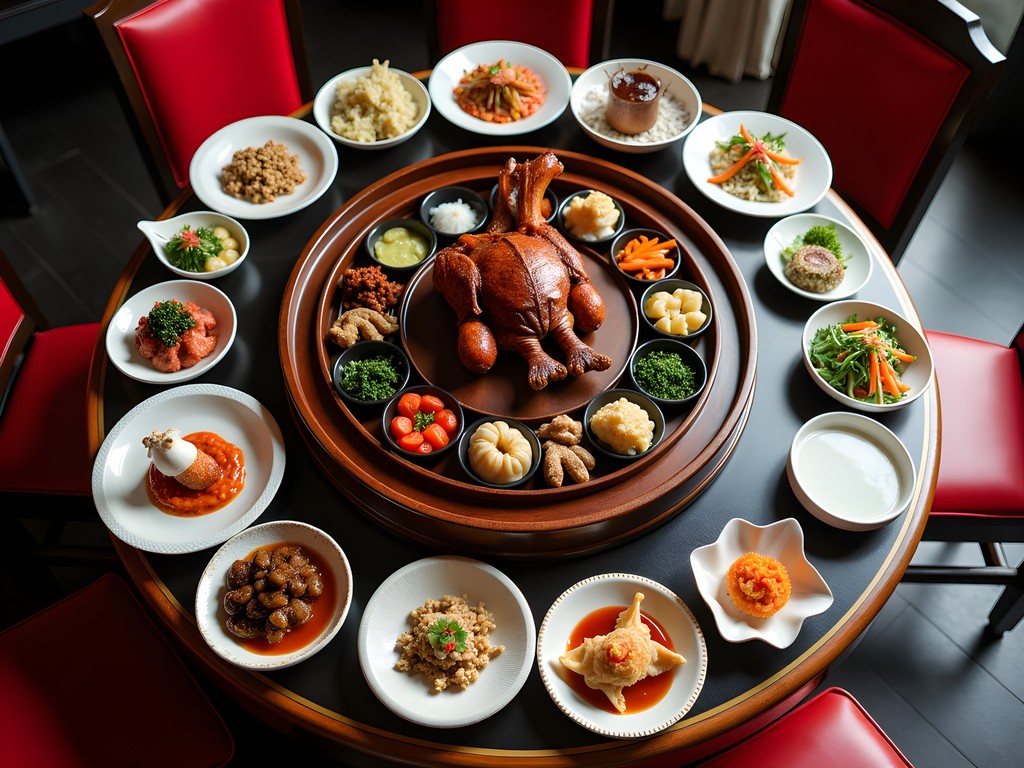
This contrasted dramatically with Beijing, where the circular dining table with its rotating center becomes a physical manifestation of communal values. At Family Li Imperial Cuisine, dishes arrived not as individual portions but as shared plates placed on the lazy Susan, creating a continuous negotiation of space and selection. The meal progressed not in the linear fashion of Swiss dining (appetizer, main, dessert) but in a circular rhythm dictated by the group's collective pace.
I found the Swiss approach facilitated focused appreciation of each dish's technical execution, while the Chinese approach created a more dynamic sensory experience with contrasting flavors and textures interplaying throughout the meal. Both were valid methodologies for experiencing cuisine, just optimized for different cultural values.
During large group meals in Beijing, I used my pocket translator to better understand the cultural nuances being discussed around the table—particularly helpful when my hosts explained the historical significance of certain imperial dishes. This technological assistance allowed me to document not just the food itself but its cultural context, enriching my comparative analysis.
💡 Pro Tips
- In Zurich, respect personal space even at communal tables
- In Beijing, never stick chopsticks vertically in rice (resembles funeral incense)
- When dining with locals in Beijing, learn the phrase 'ganbei' for toasting but pace yourself with the baijiu alcohol
Culinary Innovation vs. Preservation
Perhaps the most fascinating contrast between these culinary worlds lies in their relationship with tradition and innovation. Zurich demonstrates a careful balance: respecting culinary heritage while embracing controlled innovation. At Hiltl, the world's oldest vegetarian restaurant according to Guinness World Records, I observed how they've maintained core techniques while incorporating global influences and modern nutritional science.
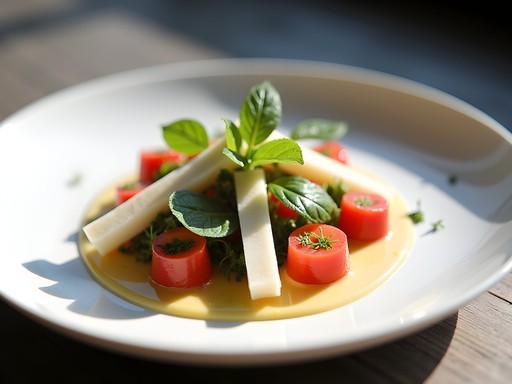
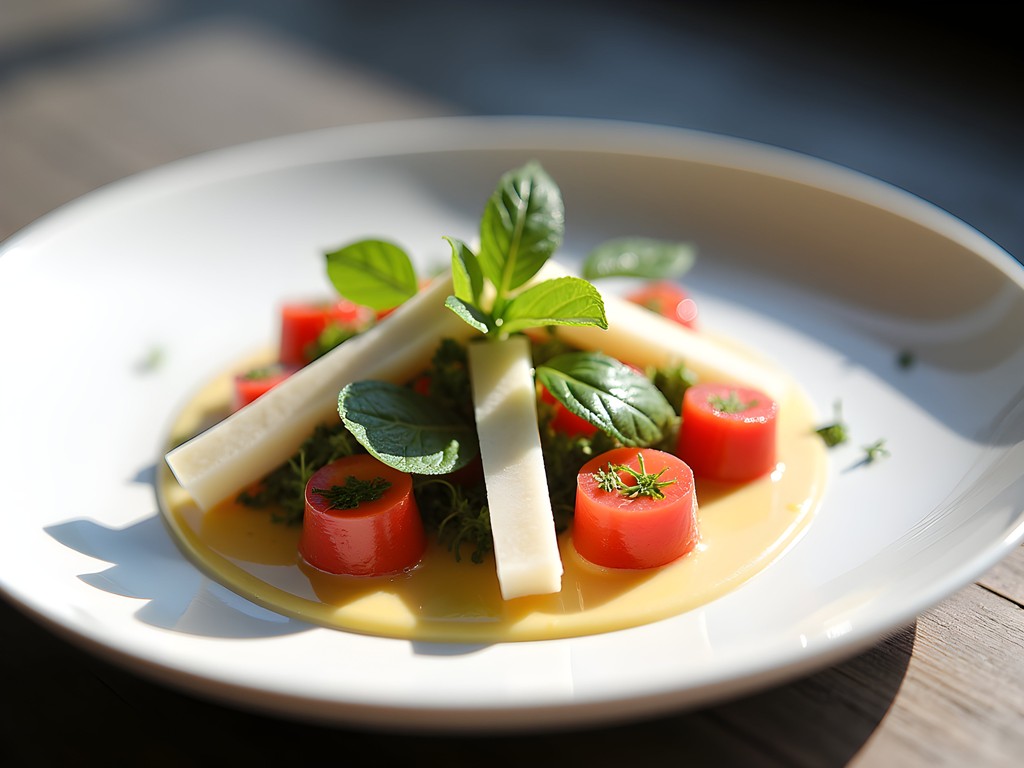
This Swiss approach to innovation is methodical—new elements are integrated with the same precision as traditional components. At Maison Manesse, the tasting menu featured traditional Swiss ingredients reimagined through molecular gastronomy techniques, yet the experimental dishes maintained the clean, distinct flavor profiles characteristic of Swiss cuisine.
Beijing's relationship with culinary tradition is more complex. At imperial restaurants like Fangshan in Beihai Park, dishes are preserved with almost archaeological precision—recipes from the Qing Dynasty reproduced according to historical documentation. Yet simultaneously, in areas like the 798 Art District, avant-garde restaurants reinterpret Chinese cuisine with dramatic presentation while maintaining core flavor principles.
I documented this fascinating duality in both cities, noting how Zurich's innovations tend to be incremental and precision-focused, while Beijing oscillates between perfect preservation and dramatic reinvention. The contrast reminded me of different approaches to scientific research—the methodical, step-by-step Western model versus the sometimes revolutionary paradigm shifts of Eastern scientific traditions.
To better understand these culinary philosophies, I carried my food reference guide throughout the journey, making annotations about how each culture approached flavor combinations and culinary innovation. This comparative framework helped me analyze not just what was being served, but the underlying cultural values informing each culinary tradition.
💡 Pro Tips
- Book Maison Manesse in Zurich at least three weeks in advance for their innovative tasting menu
- Visit both an imperial restaurant and a modern fusion place in Beijing for the full spectrum
- Ask chefs about their inspiration—most are happy to discuss their approach to tradition and innovation
Final Thoughts
As my two-week culinary exploration came to an end, I found myself reflecting on how these contrasting approaches to food mirror broader cultural values. The Swiss precision and individualized dining experience speaks to Western ideals of personal space and standardization, while Beijing's communal tables and intuitive cooking methods reflect Eastern values of collective experience and knowledge passed through generations. Neither approach is superior—they simply represent different solutions to the universal human need for nourishment and connection. As both a scientist and mindfulness practitioner, I've learned that understanding these contrasts enriches not just our palates but our capacity for cultural empathy. Whether you prefer the methodical precision of Zurich or the sensory abundance of Beijing, I encourage you to approach each meal with both analytical curiosity and mindful presence—the true recipe for transformative culinary travel.
✨ Key Takeaways
- Swiss cuisine values precision and consistency while Chinese cuisine embraces complexity and intuitive knowledge
- Tea cultures in both cities achieve mindfulness through different pathways—methodical measurement versus sensory immersion
- Dining structures reflect deeper cultural values—individual portions in Zurich versus communal sharing in Beijing
- Both culinary traditions balance innovation and preservation, just through different approaches
📋 Practical Information
Best Time to Visit
year-round, though spring and fall offer most comfortable temperatures in both cities
Budget Estimate
$150-250 per day per couple (excluding flights)
Recommended Duration
5-7 days in each city
Difficulty Level
Intermediate







Comments
Claire Hawkins
Your post took me right back to our family trip last year that spanned both cities! My kids still talk about the culture shock of going from Zurich's Confiserie Sprüngli (where my daughter was gently corrected for speaking too loudly) to a boisterous Beijing dumpling house where the chef invited them behind the counter to try making jiaozi! The dining rituals you mentioned were exactly what fascinated us too - how the Swiss dining experience feels almost choreographed while Beijing meals feel like beautiful improvisation. My husband still raves about that Peking duck place near the Forbidden City. Did you notice how children are treated so differently in restaurants between the two cultures? In Zurich, our kids were expected to behave like mini-adults, while in Beijing they were celebrated and indulged by staff everywhere!
Violet Perry
Claire, that's such a wonderful observation about children in restaurants! I didn't focus on that aspect but you're absolutely right. The different approaches to family dining reveal so much about cultural values. Your kids got quite the cultural education!
journeyway
Love how you connected food to mindfulness practice. Never thought of travel that way!
wanderhero
Did you take any tea ceremony classes in Beijing? Planning my trip and wondering if it's worth it!
Violet Perry
I did! I took a class at Maliandao Tea Market - absolutely worth it. The instructor spoke enough English to guide me through the basics, and I left with a beautiful tea set that I still use. Just make sure to book in advance!
Jean Wells
Violet, your analytical approach to culinary experiences mirrors my own methodology when examining cultural intersections. Having spent considerable time in both cities, I found your observations on tea culture particularly astute. The Swiss precision in measurement versus the Chinese intuitive approach reflects deeper cultural paradigms that extend beyond cuisine. During my last visit to Zurich, I documented how even their most casual cafés maintain rigid quality standards, while Beijing's hutong restaurants embrace a beautiful improvisation that still somehow produces consistent results. I'd be interested in your thoughts on how climate influences these contrasting approaches - the harsh northern Chinese winters versus Switzerland's alpine environment.
journeyway
Jean, that's such an interesting point about climate! Never thought about that connection before.
luckyway
Been to both. Spot on comparison!
coffeestar
Those food pics from Beijing have my mouth watering! The contrast between the two cities is fascinating.
wanderway
OMG this post is EXACTLY what I needed!! I'm heading to both Zurich and Beijing next month for work and was wondering how different the food scenes would be. The way you described the precision of Swiss chocolate-making vs the controlled chaos of Beijing street food markets has me so excited to experience both! Did you find it hard to adjust between the two different dining styles? I'm a bit nervous about the etiquette differences!
Violet Perry
Thanks @wanderway! The adjustment wasn't too difficult once I approached it with curiosity rather than judgment. In Zurich, just remember everything runs precisely on schedule (even restaurant reservations!), while Beijing requires more flexibility. The biggest tip I can give is to observe locals first before diving in!
wanderway
That's super helpful, Violet! I'll definitely keep that in mind. Can't wait to try both culinary worlds!
Frank Garcia
Fascinating analysis of these two culinary worlds! Having backpacked through both cities (on very different budgets lol), I noticed similar patterns but never articulated them this well. In Zurich, I found the precision extended to street food too - even simple pretzels were perfectly crafted. Beijing was sensory overload in the best way. The hutong food scene deserves its own anthropological study! I'd add that the economic aspects of dining differ dramatically too - in Beijing I could feast for days on what a single Zurich meal cost. Anyone traveling to these cities should consider how dining etiquette reflects larger cultural values. In Beijing, I was initially overwhelmed by the shared plate approach and circular table dynamics, but it taught me so much about Chinese communal values. Great post, Violet!
oceanadventurer
So true about the price differences! I blew my entire food budget in two days in Zurich 😂
tripgal
Those food pics are making me hungry! Beijing duck is on my bucket list!
Casey Andersson
Violet, your analytical approach to food culture is refreshing! I was in Zurich last winter staying at the Baur au Lac (absolute splurge but worth every franc) and had a similar revelation about Swiss precision. The way they approach chocolate making is practically scientific! In Beijing, I found myself completely overwhelmed by the sensory experience at first - the night markets especially. I'd recommend anyone visiting either city invest in a good food tour on their first day. It helps decode the cultural context and points you toward gems you might otherwise miss. Your observation about dining rituals reflecting social structures is spot on - I've been using that lens in my travels ever since reading this!
Venture X
Premium card with 2X miles, $300 travel credit, Priority Pass