

Disclosure: This article contains affiliate links. We may earn a commission from purchases at no extra cost to you, which helps our travel content.
As someone who builds structures for a living, I've developed an appreciation for things crafted with precision and cultural integrity. Living in Japan has heightened my sensitivity to how traditional techniques persist alongside modern innovations. So when my latest work break coincided with a friend's wedding in Cleveland, I seized the opportunity to explore nearby Parma, Ohio—a suburb with one of America's most vibrant Polish communities. Having grown up in Florida with Cuban influences dominating the culinary landscape, I was eager to immerse myself in a completely different immigrant food tradition. What I discovered was a weekend-worthy destination where Old World craftsmanship meets Midwestern hospitality, all centered around the humble yet transcendent pierogi. This isn't the Poland you'd find in travel magazines, but rather Poland's culinary DNA transplanted and evolved in America's heartland.

The Polish Village: Parma's Beating Heart
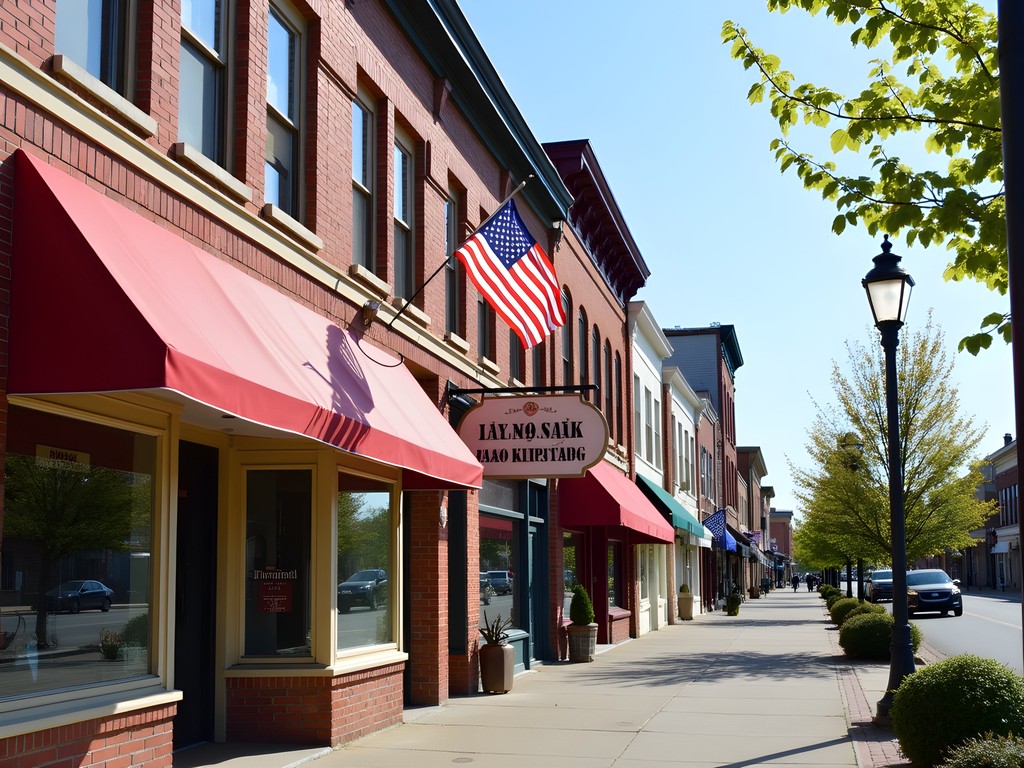
Parma's Polish Village district along Ridge Road feels like stepping into a carefully preserved time capsule of Eastern European heritage. Unlike the polished, tourist-ready ethnic neighborhoods you might find in major cities, there's an authenticity here that reminds me of visiting small regional workshops in rural Japan—places where craft still matters more than commerce.
The district is anchored by a collection of family-owned businesses that have operated for generations. Red and white Polish flags flutter alongside American ones, and storefronts feature bilingual signage. What struck me immediately was how the area functions as a genuine community hub rather than a tourist attraction. On my first morning, I watched elderly residents greeting each other in Polish while younger families—clearly several generations removed from immigration—still participated in cultural traditions.
I spent my first hour simply walking the district, noting the architectural details of buildings that blend American Midwest pragmatism with subtle Eastern European flourishes. Several buildings feature the distinctive parapet rooflines and decorative brickwork that remind me of pre-war Polish urban design, though adapted to their Ohio setting. As a builder, I appreciate these hybrid architectural identities—they tell the story of adaptation without abandonment of heritage.
The neighborhood's churches deserve special attention, particularly St. Charles Borromeo with its stunning stained glass windows depicting Polish saints alongside American imagery—a physical manifestation of cultural integration that's reflected in the food I was about to discover.
💡 Pro Tips
- Visit on Saturday morning when the neighborhood is most active with locals doing their weekly shopping
- Look up at the building facades—many feature subtle Polish architectural details
- Stop by the Polish American Cultural Center to get oriented with maps and background information
Pierogi Perfection: Traditional Techniques
If you want to understand Parma's Polish food scene, you must begin with the pierogi—those half-moon dumplings that showcase the beautiful economy of peasant cuisine. Like many traditional foods I've encountered while traveling, the simplicity of ingredients belies the complexity of technique.
My first stop was Little Polish Diner, an unassuming establishment where the kitchen's workflow reminded me of a well-organized construction site—everyone knowing their role in a choreography perfected over decades. I took a seat at the counter specifically to watch the pierogi-making process, something the staff seemed accustomed to curious visitors doing.
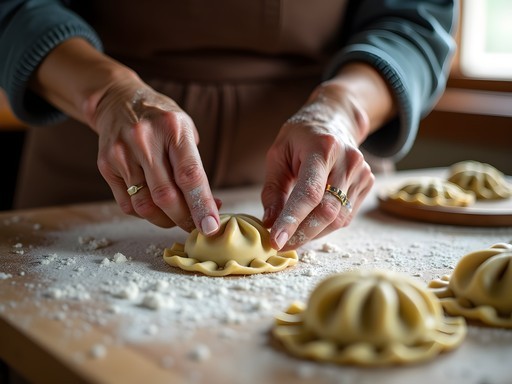
What distinguishes Parma's pierogis from mass-produced versions is immediately apparent in the dough—a perfect balance of tenderness and resilience. The owner explained that they still use wooden rolling pins rather than mechanical presses, believing the inconsistencies create a more pleasing final texture. This reminded me of Japanese craftsmen who insist certain tools cannot be improved upon despite technological advances.
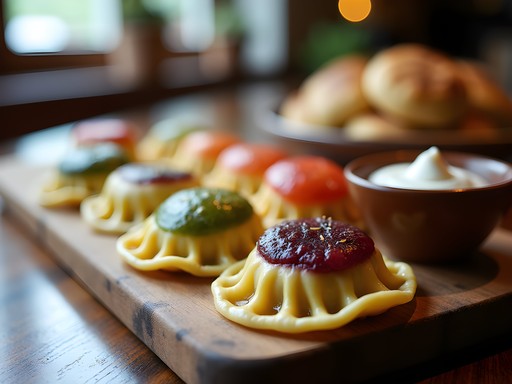
I ordered their sampler platter featuring six varieties: potato and cheese (the classic), sauerkraut and mushroom, sweet cheese with raisin, meat, potato and onion, and a seasonal plum filling. Each arrived perfectly crimped and pan-fried with browned butter and caramelized onions. The contrast between the crisp exterior and tender filling showcases what happens when simple ingredients meet masterful technique.
For those looking to recreate these at home, I recommend investing in a quality rolling pin. The weight and balance make a noticeable difference when working with pierogi dough, which needs to be rolled thin but not transparent.
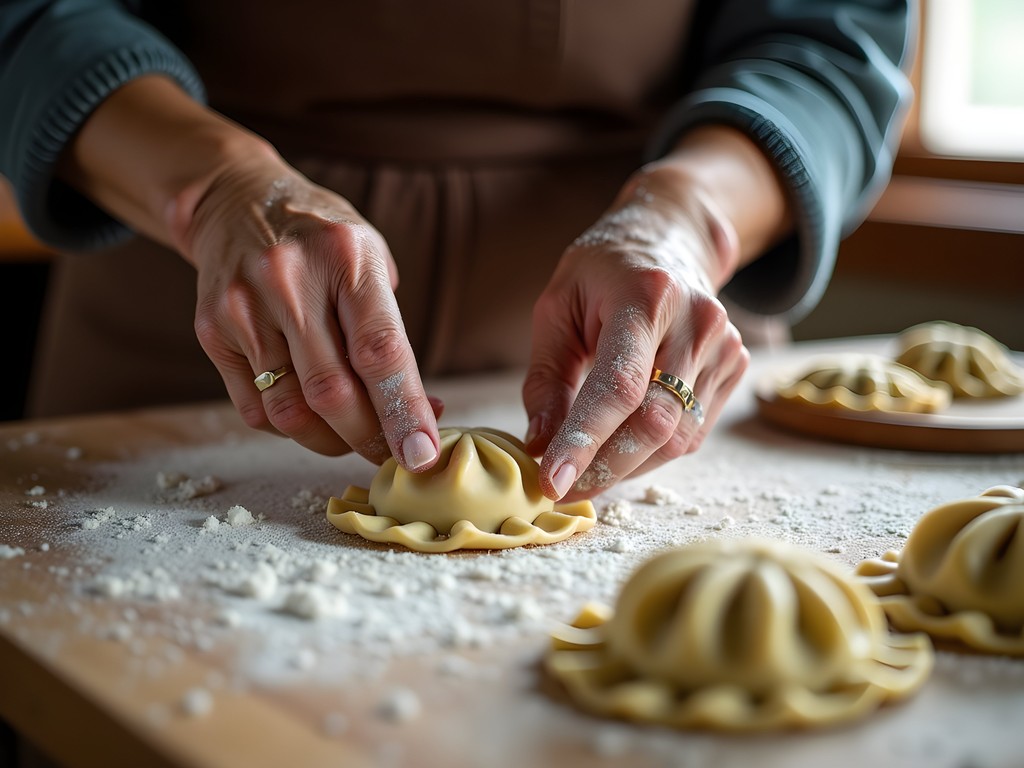
At Krakow Deli, I watched multigenerational families working together, with techniques clearly passed down rather than learned from cookbooks. The grandmother-aged woman pinching each pierogi closed used her thumb and forefinger in a distinctive motion that created a scalloped edge—a regional signature from southeastern Poland, I was told.
💡 Pro Tips
- Order pierogis 'Polish style' with sour cream on the side rather than already dressed
- Try at least one sweet and one savory variety to understand the range
- Visit Little Polish Diner early—they often sell out of popular varieties by mid-afternoon
Beyond Pierogis: Parma's Diverse Polish Cuisine
While pierogis might be the gateway to Polish cuisine, Parma's culinary landscape offers much more depth. As someone who spends months at a time in different cultural contexts, I've learned to look beyond the obvious culinary landmarks.
At Polka Dot Café, I discovered hunter's stew (bigos)—a hearty mixture of sauerkraut, various meats, and wild mushrooms that the server explained had been simmering for three days. The fermentation process creates layers of flavor that reminded me of traditional Japanese preparations where time is considered an essential ingredient. The café itself operates from a converted bungalow, with dining rooms that feel more like eating in someone's home than a restaurant.
Euclid Fish Company, despite its non-Polish name, offers exceptional smoked fish prepared according to Eastern European traditions. Their smoked mackerel particularly impressed me—the smoking process clearly controlled with the same precision that earthquake-resistant structures require: attention to time, temperature, and material properties.
For breakfast, Seven Roses Deli serves pączki (Polish donuts) that demonstrate why the commercialized versions pale in comparison. These yeast-risen pastries filled with rose hip jam achieve the perfect density—substantial without heaviness. The dough has a subtle fermented complexity missing from chain bakery offerings.
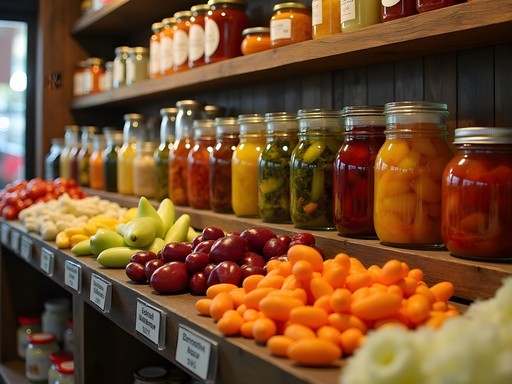
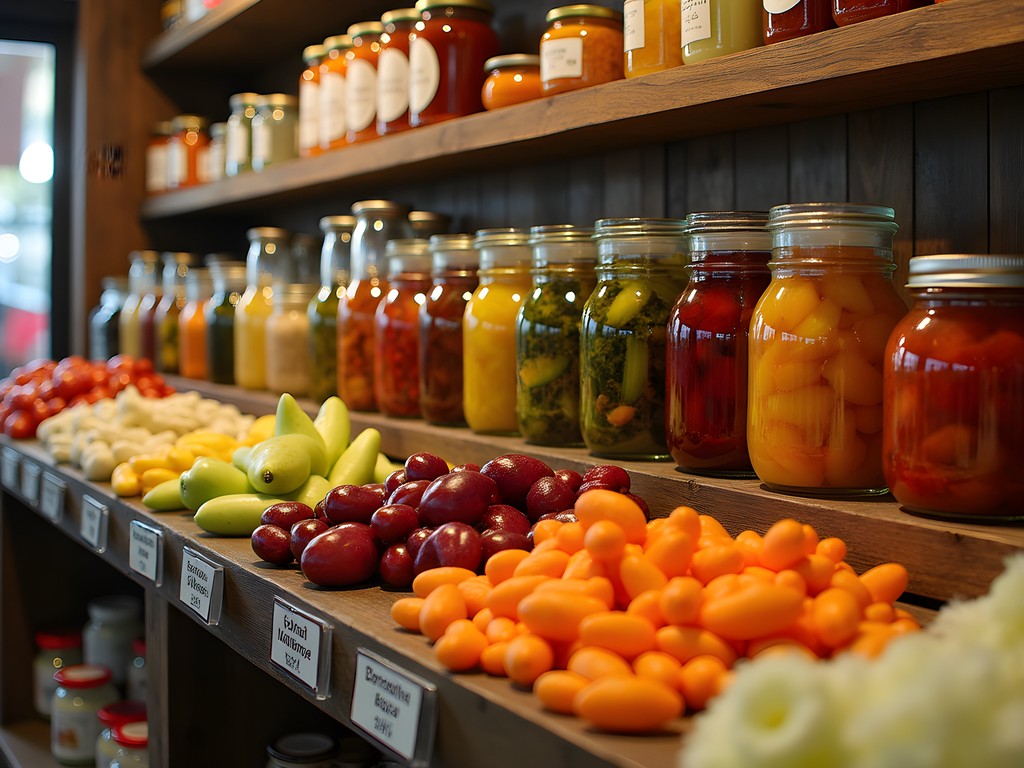
I also discovered that Polish cuisine has a remarkable tradition of preservation methods. At Krakow Foods, the pickle selection alone occupied an entire refrigerated wall, with varieties fermented according to regional recipes. The proprietor explained how different salt concentrations and fermentation vessels affect the final texture—another reminder of how material science appears in culinary traditions.
For home cooking enthusiasts, I found the fermenting crock at the Polish Village Gift Shop to be an excellent investment. These traditional stoneware vessels maintain ideal conditions for creating your own sauerkraut or pickles, with results far superior to quickpickled versions.
💡 Pro Tips
- Ask for a taste of house-made sauerkraut before ordering—each establishment has their own fermentation style
- Try Polish beers like Żywiec or Okocim with your meal for traditional pairing
- Many shops offer vacuum-sealed smoked meats that travel well if you want to bring some home

Hidden Bakeries and Sweet Discoveries
The structural integrity of Polish pastries deserves the same respect we give to load-bearing walls in construction—both require precise calculations and material knowledge. Parma's bakeries showcase this engineering marvel in edible form.
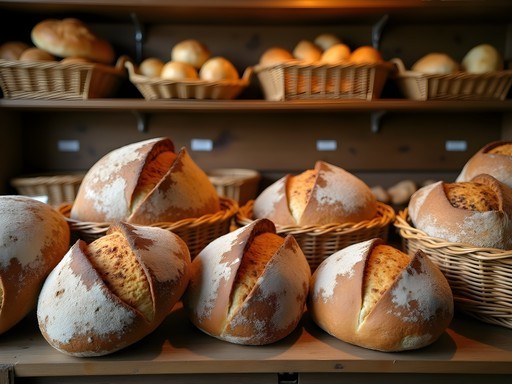
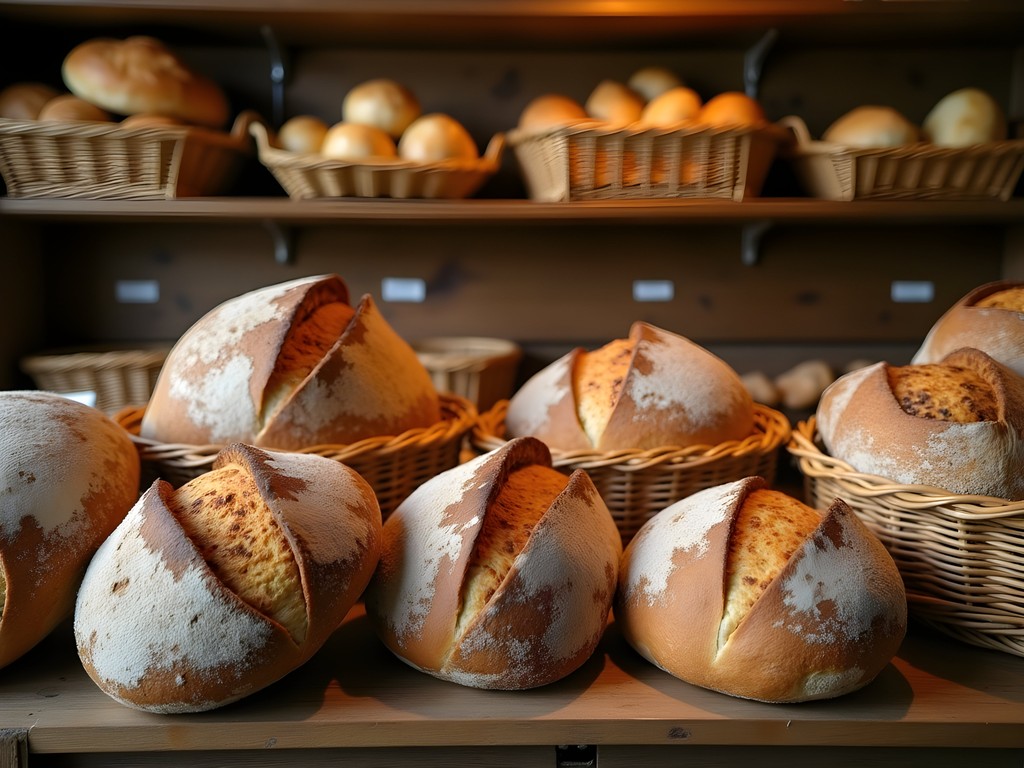
European Bakery on Ridge Road became my morning ritual during my stay. Arriving just after their 6 AM opening, I joined local workers grabbing breakfast and witnessed the fresh-from-the-oven procession of breads and pastries. Their rye bread uses a sourdough starter the owner claims is over 80 years old—brought from Poland and maintained through generations. The structural integrity of this bread is remarkable; dense yet not heavy, with a crust that provides the perfect resistance before giving way.
What fascinated me from a builder's perspective was how the bakeries maintain traditional wood-fired ovens despite modern code requirements. At Rudy's Strudel & Bakery, the owner proudly showed me how they'd adapted their historic brick oven to meet safety standards while preserving the thermal properties that give their kolaczki cookies their distinctive texture—crisp edges with tender centers.
The chrusciki (angel wings) at Seven Roses deserve special mention. These delicate fried pastries dusted with powdered sugar demonstrate the importance of dough lamination—creating thin layers that puff apart during frying. The technique reminded me of precision folding in Japanese origami, where each fold must be exactly placed.
For home bakers wanting to try Polish recipes, I recommend the baking stone to help recreate the thermal environment of traditional ovens. The stone's heat retention properties help achieve the distinctive crust formation essential to Polish breads.
One unexpected discovery was makowiec—a poppy seed roll with a spiral pattern that any engineer would appreciate. The ratio of filling to dough is crucial; too much filling and the structure fails during baking. At Colozza's Bakery, their version achieves perfect structural balance while delivering complex flavor from ground poppy seeds mixed with honey and citrus zest.
💡 Pro Tips
- Visit bakeries before 9 AM for the best selection
- Many bakeries offer half-loaves of bread if you're traveling solo
- Ask about seasonal specialties—many traditional pastries only appear for specific Polish holidays
Local Markets and Take-Home Treasures
As someone who travels extensively, I've developed a habit of seeking out local markets not just for the immediate experience but for transportable treasures that extend my connection to a place. Parma's Polish markets offer exceptional opportunities for this practice.
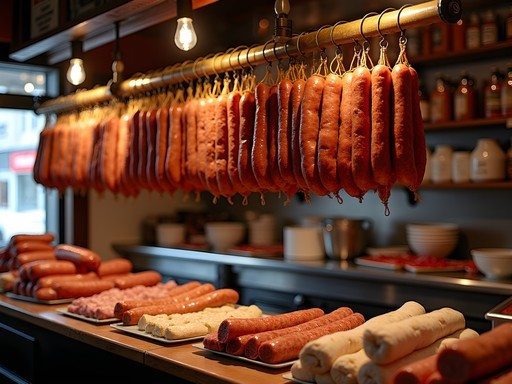
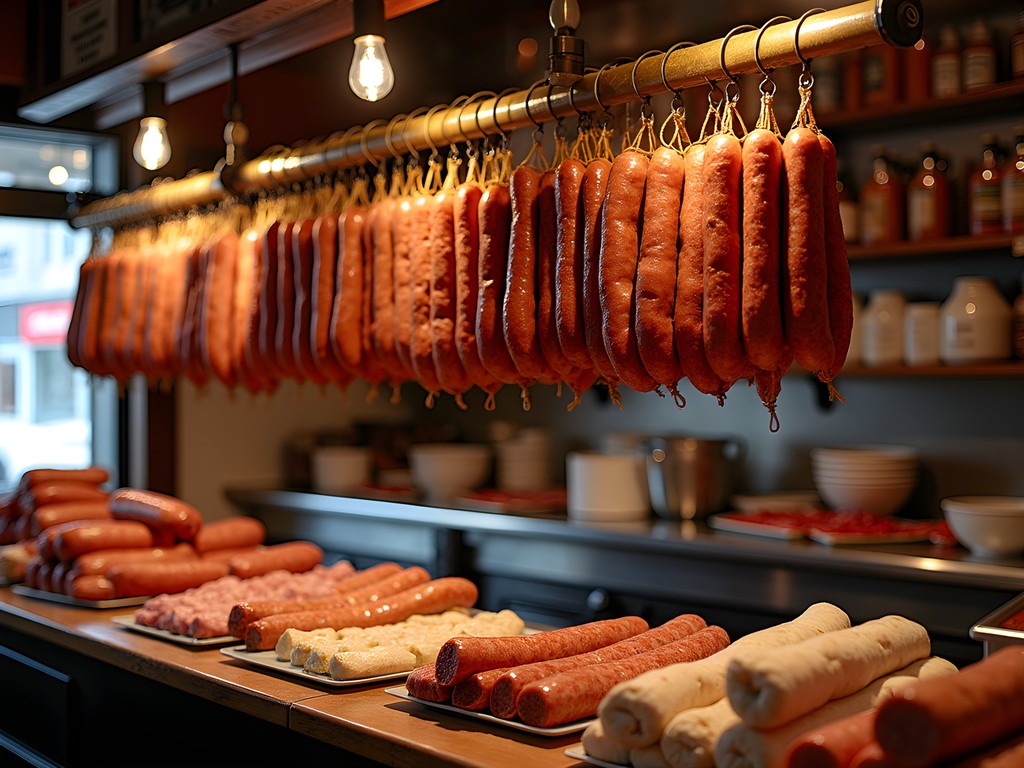
State Road Meats functions as both butcher shop and specialty grocer, with an impressive selection of smoked kielbasa varieties hanging from ceiling hooks. The owner explained how each sausage style originated from different regions of Poland, with varying spice profiles and smoking techniques. I selected a vacuum-sealed hunter's sausage that traveled well in my checked luggage back to Japan, where I shared it with colleagues fascinated by this taste of Polish-American culture.
Parma's Polish markets also excel at packaged goods that travel well. At Krakow Deli, I discovered an impressive selection of Polish candies and chocolates, including Krowki ("little cows")—caramel-filled candies with a distinctive texture between fudge and toffee. These make perfect gifts that survive long flights intact.
For kitchen enthusiasts, Treat Town USA offers an excellent selection of Polish pottery and cooking implements. I purchased a hand-painted stoneware baking dish that now serves as both a functional tool and a conversation piece in my Yokohama apartment. The thermal properties of this traditional stoneware provide excellent heat distribution—something I appreciate both as a cook and as someone who understands material performance.
Perhaps my most valuable discovery was at Little Polish Diner's small market section, where they sell their pierogi dough pre-portioned and frozen. The owner provided detailed instructions for proper handling and cooking, allowing me to recreate a taste of Parma months later. This kind of culinary souvenir creates a lasting connection to a destination that photographs alone cannot match.
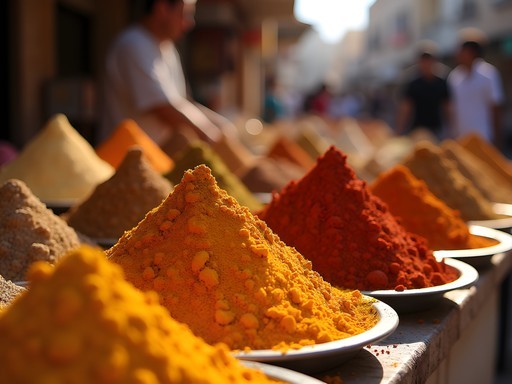
For spice lovers, don't miss the house-blended paprika varieties at State Road Meats. Polish cuisine uses paprika differently than its Hungarian neighbors, often in more subtle applications, and these custom blends reflect regional Polish variations rarely found in commercial products.
💡 Pro Tips
- Bring a collapsible cooler bag for refrigerated purchases if your hotel has a mini-fridge
- Ask about vacuum-sealing services for items you want to transport home
- Many shops can ship non-perishable items internationally if something won't fit in your luggage
Final Thoughts
As I packed my suitcase with vacuum-sealed sausages, jarred pickles, and that beautiful piece of Polish pottery, I reflected on how Parma represents something increasingly rare in our homogenized world—a place where culinary traditions haven't been watered down for mass appeal. Like the earthquake-resistant structures I design, these food traditions have proven remarkably resilient despite tremendous pressure to change. What makes Parma special isn't just the authenticity of its Polish food but how that food continues to function as community glue rather than tourist attraction. For travelers seeking genuine cultural experiences without international flights, this Cleveland suburb offers a weekend immersion into Polish culinary heritage that satisfies both the curious palate and the analytical mind. Whether you're a dedicated foodie or simply someone who appreciates craftsmanship in all its forms, Parma's Polish Village rewards those willing to look beyond the obvious tourist trails.
✨ Key Takeaways
- Parma's Polish food scene represents authentic cultural preservation rather than commercialized ethnic tourism
- The techniques behind traditional pierogi-making demonstrate craftsmanship comparable to fine architectural details
- Many Polish specialty foods are designed for preservation, making them excellent souvenirs
- The community aspect of Parma's Polish Village creates an immersive cultural experience beyond just the food
📋 Practical Information
Best Time to Visit
year-round, though winter months feature special holiday foods
Budget Estimate
$150-200 for a weekend including accommodations and meals
Recommended Duration
2-3 days
Difficulty Level
Easy


Comments
tripwalker
Really cool find. Thanks for sharing!
coolnomad4522
Love the photos! That pottery looks gorgeous.
cityrider
My grandma was Polish and this brought back so many memories. She used to make pierogis from scratch every Sunday. Might have to make the drive from Columbus to check this out and see if it compares to her cooking!
Megan Martin
Excellent coverage of Parma's culinary scene, Sarah. I visited for a feature piece last fall and was equally impressed by the authenticity. The craftsmanship you mention really does come through in the food preparation. I'd recommend travelers also check out the Polish Constitution Day celebrations in May if they can time their visit - the community really comes alive. The pierogis are wonderful, but don't sleep on the żurek soup either. Professional tip: many of these family-owned spots are cash-preferred, so hit an ATM first.
coolnomad4522
Good call on the cash tip! Hate when I forget that.
moonphotographer
Are the bakeries you mentioned open on Sundays? Planning a weekend trip.
Hunter Thompson
Brilliant post, Sarah! I actually stumbled through Parma last year on a shoestring budget and had the best pierogis of my life at this tiny place near State Road. Cost me like $6 for a massive plate. The babcia running the kitchen came out and chatted with everyone - proper authentic experience. The Polish community there is so welcoming to travelers. Did you make it to any of the delis? I loaded up on smoked meats before heading to my next stop and lived off them for days!
cityrider
Which place was that? Going there in April!
Hunter Thompson
Can't remember the exact name mate, but it was walking distance from the Polish Village shops. Had a blue awning I think?
tripwalker
Never thought Ohio would have such amazing Polish food! Definitely adding this to my list.
springway
Those pictures made me so hungry! Yum!
Sophia Gomez
Sarah, this post resonated deeply with me! Being from Pittsburgh, we have our own Polish community, but I had no idea Parma's was so vibrant. I travel frequently for business to Cleveland and always stay downtown, completely missing this cultural treasure. Last week I finally took an afternoon to explore based on your recommendations. The Little Polish Diner was everything you promised! I even picked up a beautiful hand-painted Polish pottery mug from that little shop you mentioned. It's now my favorite morning coffee cup at the office. Your structural engineering perspective on the craftsmanship of these foods was such a unique lens. Looking forward to your next cultural deep-dive!
skylegend
Those bakery photos are killing me! 🤤 Need to plan a trip ASAP!
Venture X
Premium card with 2X miles, $300 travel credit, Priority Pass