
Disclosure: This article contains affiliate links. We may earn a commission from purchases at no extra cost to you, which helps our travel content.
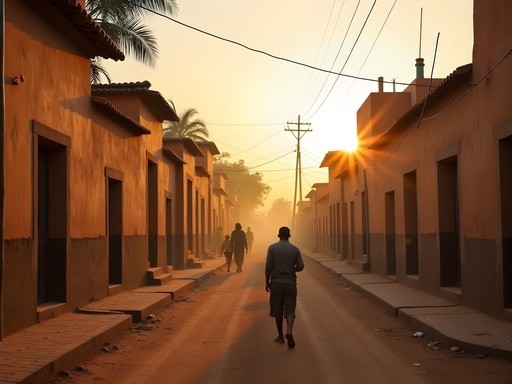
The first time I wandered through Ouagadougou's bustling Marché Central Rood Woko, I was struck by how the culinary landscape of Burkina Faso's capital mirrors its archaeological layers—complex, rich with history, and waiting to be uncovered by those willing to dig a little deeper. After fifteen years in Japan, my palate has grown accustomed to umami and precision, but there's something profoundly grounding about returning to West Africa's bold flavors and communal dining traditions that resonates with my archaeological sensibilities. This weekend food expedition isn't about white tablecloths or Michelin stars—it's about discovering the authentic soul of Ouagadougou through its most democratic medium: food.

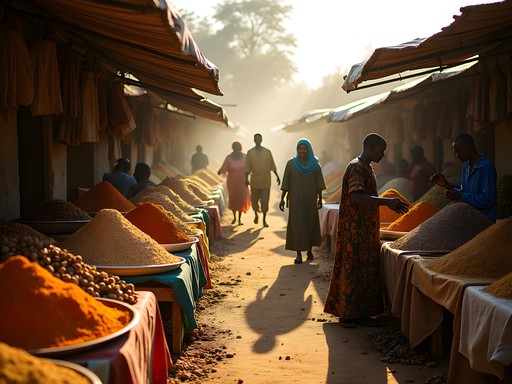
Navigating Ouagadougou's Market Treasures
My relationship with Ouagadougou began during a research expedition studying ancient trade routes across the Sahel. What started as academic curiosity evolved into a deep appreciation for the city's markets—living museums where culinary traditions remain largely unchanged for centuries.
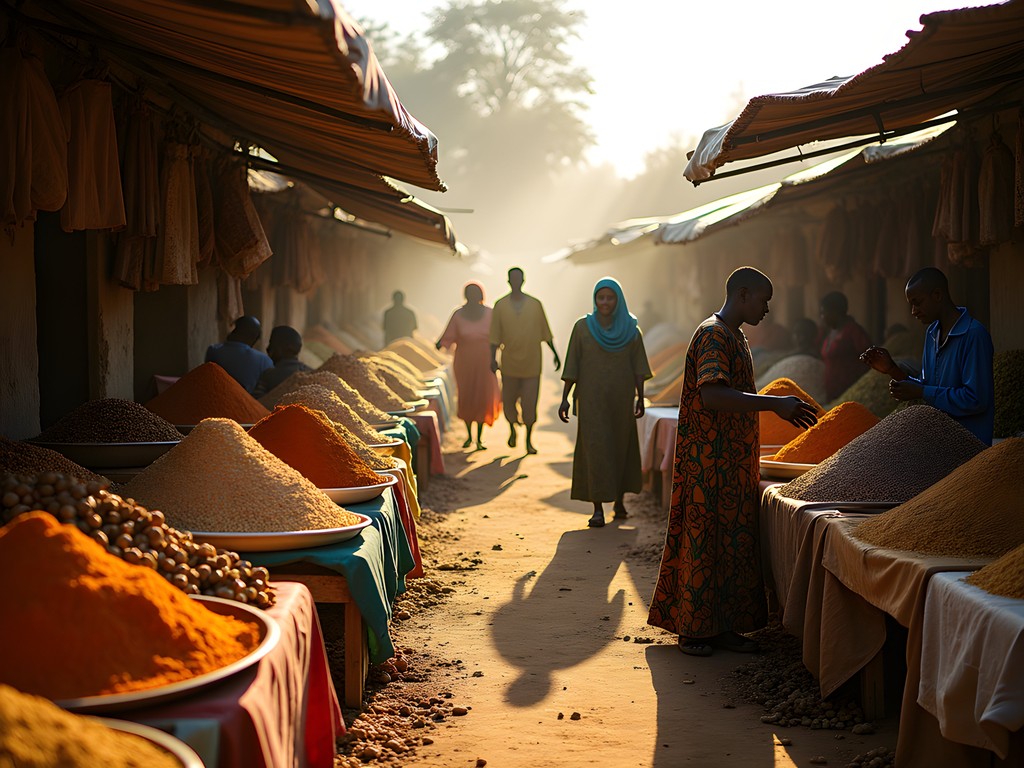
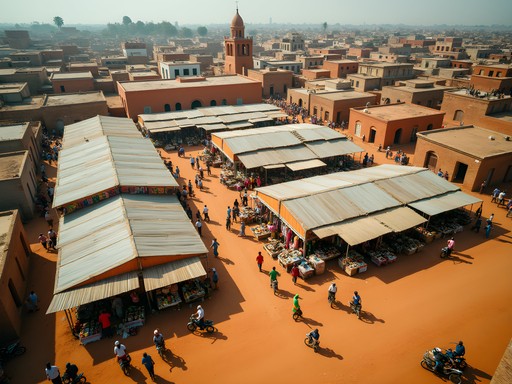
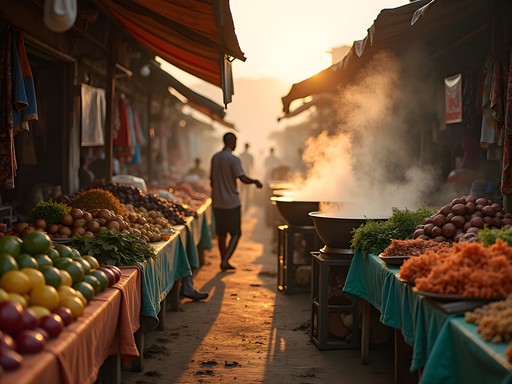
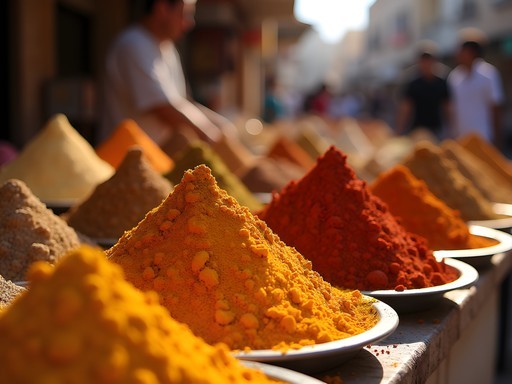
Marché Central Rood Woko stands as the epicenter of Ouaga's food culture. Arrive early (around 7 AM) when the market awakens and temperatures remain merciful. The sprawling labyrinth might intimidate first-timers, but I've found that carrying a small collapsible tote bag proves essential for impromptu purchases of baobab fruit, dried hibiscus flowers for bissap juice, or fragrant spice blends.
Don't miss the grain section where vendors sell the foundation of Burkinabé cuisine: millet, sorghum, and maize—the very same grains I've identified in archaeological contexts dating back centuries. The continuity between past and present here is remarkable. When the sensory overload becomes overwhelming, I recommend retreating to one of the small tea stalls where vendors brew strong, sweet tea in a three-cup ceremony that slows time and refreshes the spirit.
💡 Pro Tips
- Visit markets before 10 AM to avoid peak heat and crowds
- Bring small bills (CFA francs) for easier transactions
- Ask before photographing vendors or their goods—respect is essential
Tô: The Foundation of Burkinabé Cuisine
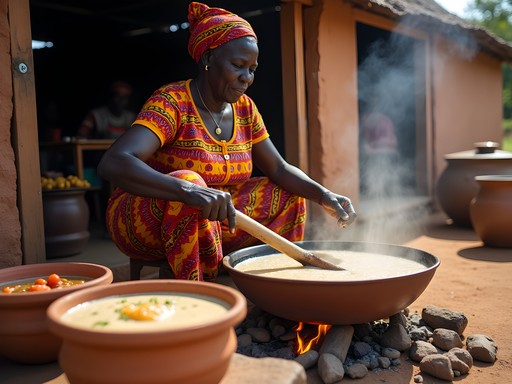
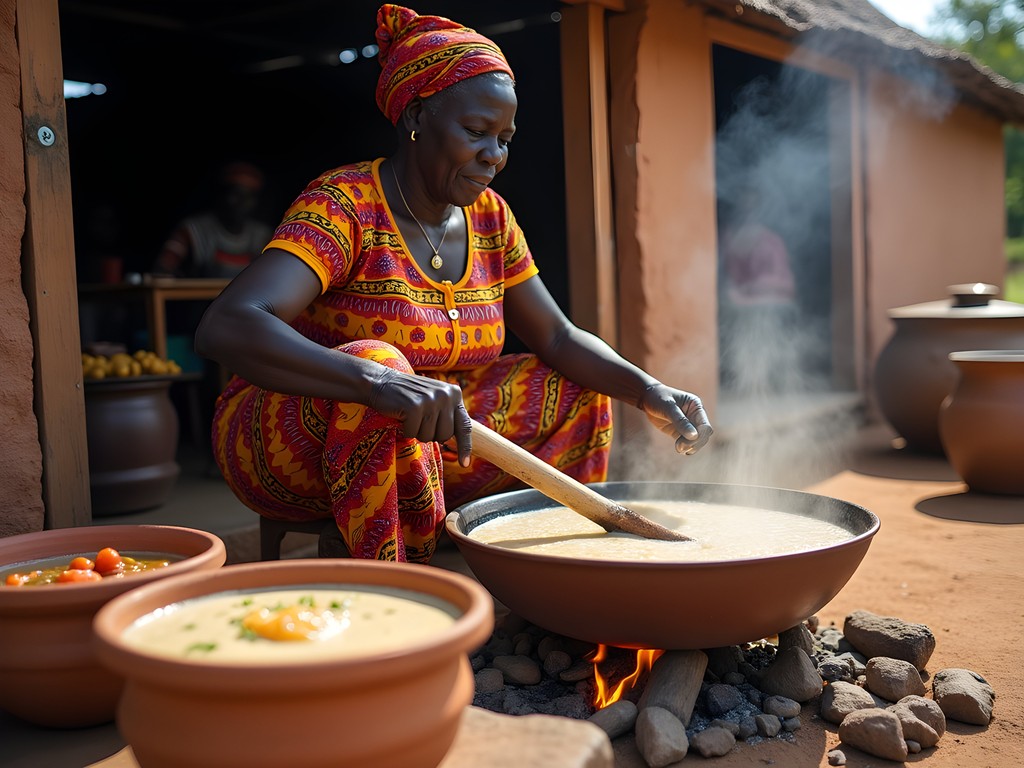
If you want to understand Burkina Faso's culinary soul, you must begin with tô (pronounced 'toe')—a thick porridge typically made from millet, sorghum, or maize that serves as the cornerstone of local cuisine. As an archaeologist, I'm fascinated by how this dish represents continuity; the preparation methods have remained largely unchanged for centuries.
My favorite place to experience authentic tô is at Maquis Le Palmier in the Gounghin neighborhood. Here, Mama Fati prepares tô in traditional clay pots over charcoal fires—a method I've documented in archaeological contexts throughout West Africa. The dish arrives as a dense, slightly elastic mound accompanied by various sauces: baobab leaf (kapok), okra (gombo), or peanut (mana).
The proper technique—demonstrated patiently to me by local friends—involves taking a small portion with your right hand, forming a depression with your thumb, and using this natural spoon to scoop the accompanying sauce. It's communal dining at its most fundamental, and the experience connects you to countless generations who have dined exactly this way.
After several tô experiences, I invested in a small travel spice kit to collect local spice blends. This has allowed me to attempt recreating some of these flavors back in my Yokohama apartment, though nothing quite captures the authentic experience of eating tô under Ouagadougou's starry sky.
💡 Pro Tips
- Always wash hands before eating as most traditional meals are eaten without utensils
- When sharing communal dishes, only use your right hand (cultural etiquette)
- Don't be shy about asking for less spicy versions if needed—locals understand
Street Food Safari: Beyond the Basics
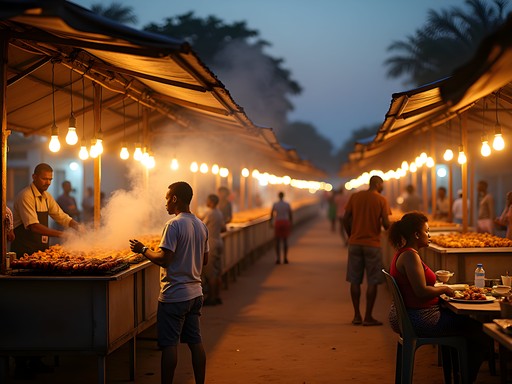
Ouagadougou's street food scene offers archaeological layers of cultural influence—from indigenous traditions to French colonial impacts and more recent global migrations. My fieldwork approach to street food is methodical: start with what locals are eating in abundance, and follow their lead.
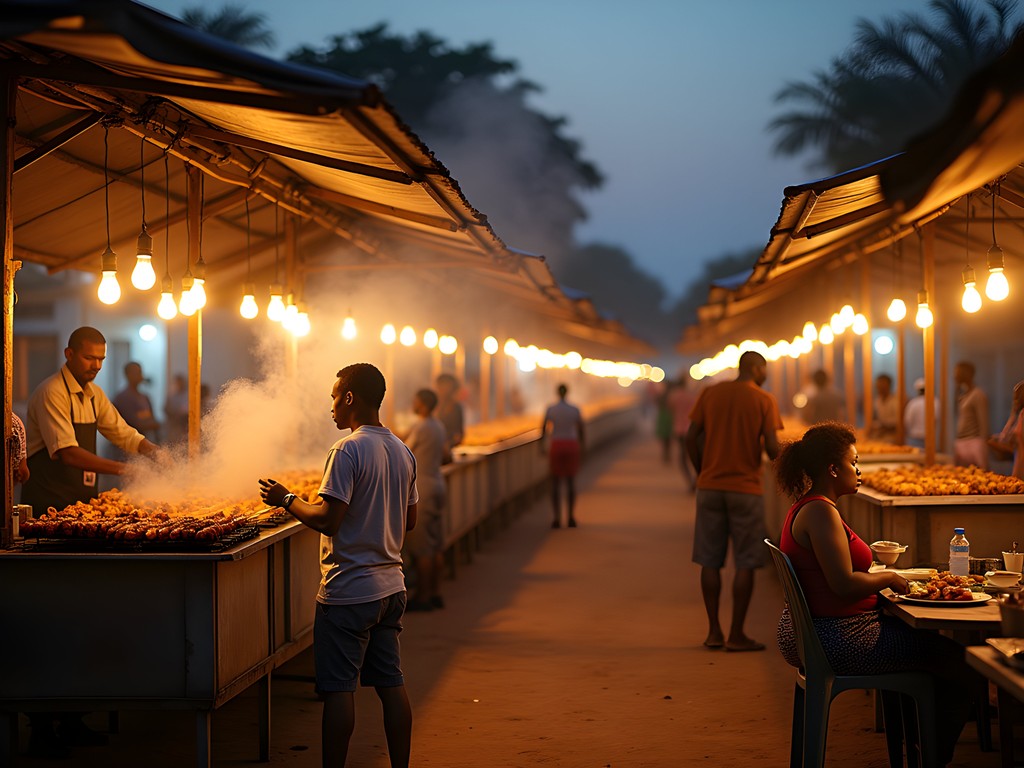
Begin your expedition at Avenue Kwame Nkrumah around dusk, when the street transforms into a linear feast. Here you'll find brochettes (grilled meat skewers) that put most Western barbecue to shame. The lamb and goat versions are particularly remarkable, seasoned with complex spice blends and grilled over open flames.
During my last visit, I discovered an essential tool for serious street food exploration—a portable utensil set with chopsticks (my Japanese influence showing), fork, knife, and collapsible straw. This has proven invaluable for sampling multiple dishes without generating unnecessary waste.
For the adventurous, seek out poulet bicyclette (bicycle chicken)—so named because these free-range birds supposedly run so much they develop muscular legs like cyclists. The resulting flavor is incomparable to industrially raised poultry. My research assistant Amadou introduced me to a particularly excellent version at Maquis de la Paix in the Zogona district.
Don't overlook the aloko (fried plantains) often sold by women with small charcoal setups on street corners. These golden, caramelized morsels pair perfectly with piment (hot sauce) and provide essential fuel for further culinary exploration. I track my favorite vendors using my waterproof notebook, creating a personal food map that evolves with each visit.
💡 Pro Tips
- Watch where locals congregate—the busiest stalls usually offer the best food
- Bring your own napkins or wet wipes as they're rarely provided
- Try the local hot sauce (piment) but apply cautiously—it's genuinely formidable

Dolo: The Ancient Art of Millet Beer
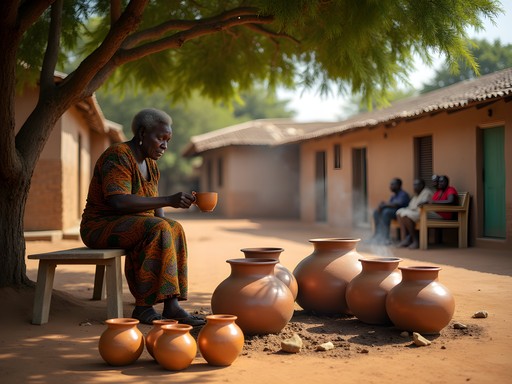
No culinary exploration of Ouagadougou would be complete without experiencing dolo—traditional millet beer that connects present-day Burkinabé to their ancestors through fermentation techniques that archaeological evidence suggests have remained consistent for centuries.
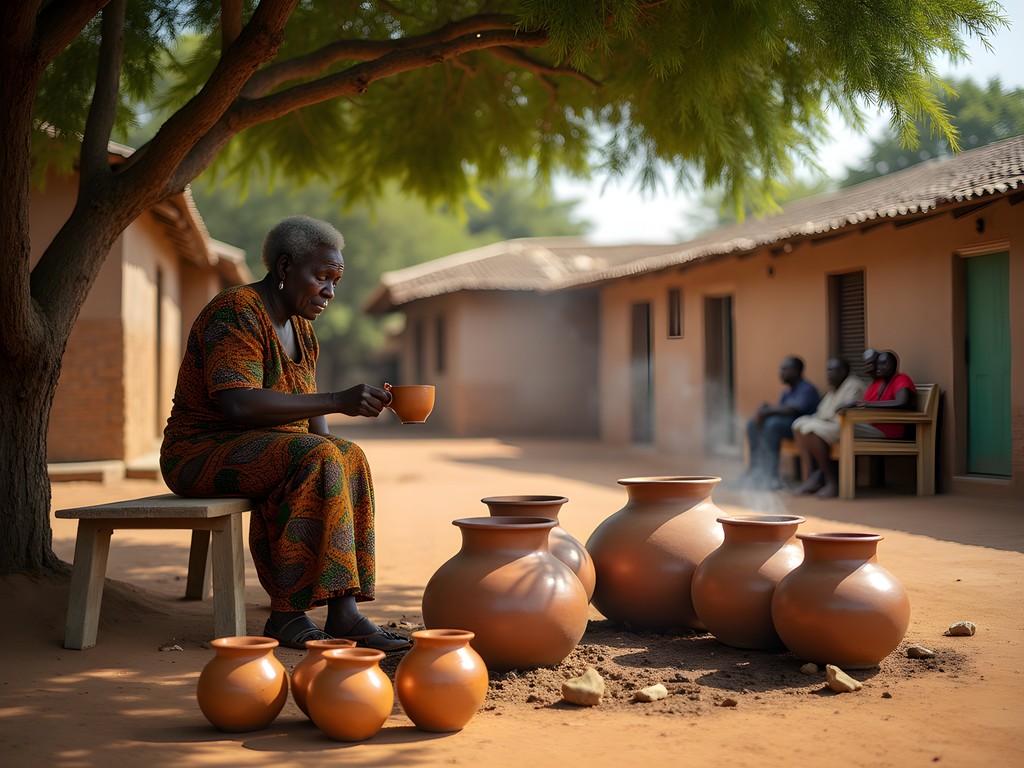
Dolo is typically brewed by women (dolotières) in cabaret-style establishments called cabarets de dolo. These unpretentious venues—often simply a courtyard with a few benches under a shade tree—serve as important community gathering spaces. My archaeological perspective appreciates how these sites function much like ancient meeting grounds, where information is exchanged and community bonds are strengthened.
My favorite dolo spot lies in the Dapoya neighborhood, where Madame Konaté has been brewing for over thirty years. Her dolo, served in calabash gourds, has a complex sour-sweet profile with varying alcohol content depending on fermentation time. The brewing process fascinates me—germinated millet creates enzymes that convert starches to fermentable sugars, a technique I've traced through material remains at archaeological sites across the Sahel.
During extended field sessions, I've found my insulated water bottle invaluable for staying hydrated between dolo samples. The Ouagadougou heat demands constant hydration, especially when sampling fermented beverages.
A word of caution: commercial beer is widely available in Ouagadougou, but experiencing dolo connects you to cultural traditions that predate European contact. Just remember that hygiene standards vary, and the fermentation process itself serves as a natural preservative and protection against certain pathogens—a fact that has contributed to its historical importance.
💡 Pro Tips
- Dolo is often stronger than it tastes—pace yourself accordingly
- Bring small denominations to pay for refills as you go
- Ask about the brewing process—dolotières are usually proud to explain their craft
Modern Ouaga: Where Tradition Meets Innovation
While traditional cuisine forms Ouagadougou's culinary bedrock, the city's food scene is not frozen in time. A new generation of Burkinabé chefs is thoughtfully reinterpreting traditional flavors through contemporary presentations—a process that mirrors how cultures naturally evolve while maintaining core identities.
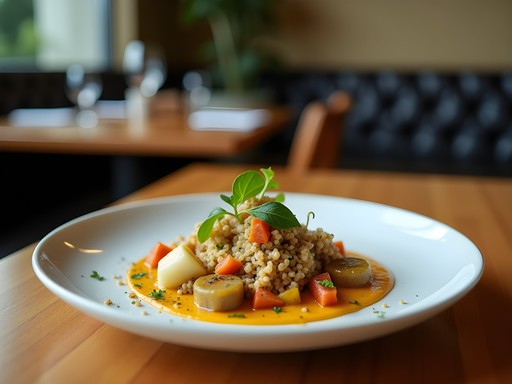
Café Gambidi, located near the cultural center of the same name, represents this evolution beautifully. Here, chef Issouf combines traditional ingredients with techniques he learned while studying in Senegal and France. His deconstructed tô appears as elegant quenelles alongside reduced, intensified versions of traditional sauces. The archaeological parallels are striking—cultural exchange has always influenced cuisine, yet core elements persist.
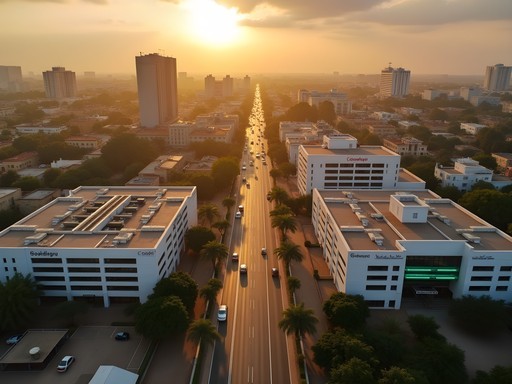
For those seeking air conditioning and reliable Wi-Fi to document their culinary adventures, Le Verdoyant in the Ouaga 2000 district offers excellent coffee and a fusion menu that includes surprisingly good croissants (a French colonial legacy) alongside local ingredients. I often retreat here during midday heat to organize my notes and recharge my devices with my international travel adapter which has proven essential for keeping cameras and phones operational during my food documentation process.
Even in these more upscale venues, I'm struck by how Burkinabé cuisine maintains its identity while adapting to contemporary contexts—much like archaeological cultures that maintain distinctive traits even as they incorporate external influences. The continuity amidst change tells an important story about resilience and cultural pride.

💡 Pro Tips
- Make reservations for upscale restaurants, especially on weekend evenings
- Respect dress codes at nicer establishments—business casual is usually appropriate
- Many upscale venues accept credit cards, but always have cash as backup
Final Thoughts
As I prepare to leave Ouagadougou, my field notebook filled with culinary coordinates and flavor profiles, I'm struck by how food archaeology—for that's essentially what culinary tourism is—reveals the soul of a place more intimately than many traditional research methods. From the communal tô experience that connects diners across centuries to the evolving interpretations at places like Café Gambidi, Ouagadougou's food landscape tells a story of resilience, adaptation, and cultural pride.
What makes this city's culinary scene special isn't refinement or exclusivity—it's authenticity and accessibility. With just a weekend and a modest budget, you can trace the flavor profiles that have sustained this region for centuries while witnessing how they continue to evolve. Whether you're sipping dolo from a calabash under a mango tree or sampling a chef's modern take on traditional ingredients, you're participating in a living cultural heritage.
As an archaeologist, I'm trained to find meaning in material remains—but sometimes the most profound cultural insights come not from what people left behind, but from what they continue to create and share. In Ouagadougou's markets, street corners, and cabarets, those creations invite us not just to observe but to participate in living traditions that stretch back through countless generations.
✨ Key Takeaways
- Ouagadougou's food scene is best experienced through a mix of street food, traditional restaurants (maquis), and markets
- Traditional dishes like tô and dolo connect visitors to centuries of culinary heritage
- Eating communally and with your hands is part of the authentic experience
- The evolution of Burkinabé cuisine demonstrates cultural resilience and adaptability
📋 Practical Information
Best Time to Visit
November to February (dry season with milder temperatures)
Budget Estimate
$25-40 per day for food and drinks
Recommended Duration
2-3 days for culinary exploration
Difficulty Level
Intermediate
Comments
globeguy
Just got back from Ouaga and this post is SPOT ON! The dolo experience is something else - found an amazing spot near our hotel where the brewer had been making it for 30+ years. She showed us the whole process! The tô took some getting used to but by the end of the trip I was craving it. Don't miss the grilled tilapia at the night market near Cinema Burkina - absolute fire! Thanks for capturing this incredible food scene so perfectly!
travelhero
Never even considered Burkina Faso but now I'm seriously intrigued. Thanks for sharing!
Haley Hamilton
This post hit me right in the feels! I stumbled into Ouagadougou almost by accident during a overland trip through West Africa in 2023, and it ended up being one of my favorite food experiences on the entire continent. There was this woman near the Grande Mosquée who made the most incredible tô with peanut sauce every morning - I went back four days in a row. The millet beer scene is no joke either. I remember sitting in this tiny cabaret with a group of musicians who'd just finished rehearsing, passing around calabashes of dolo and discussing everything from politics to football. The hospitality there is just next level. Your archaeology angle is fascinating too - never thought about food that way!
travelhero
This sounds incredible! How long should I plan to stay?
Haley Hamilton
I'd say minimum 4-5 days to really soak in the food scene and not rush. A week would be perfect!
Jean Wells
Your archaeological approach to food culture really resonates with me. I spent time in Ghana and Mali exploring similar culinary traditions, and the parallels are fascinating. The way you describe tô as foundational is exactly right - it's like understanding the base layer before you can appreciate the complexity built on top. The fermentation processes for dolo particularly interest me as they vary so much village to village. Did you notice regional variations even within Ouagadougou itself? I'm planning a research trip through the Sahel region next year and Burkina Faso is definitely on my list now.
coolqueen
Your photos are gorgeous!!
bluebackpacker
This looks amazing! Is dolo easy to find or do you need to know where to look?
Jean Wells
In my experience visiting similar West African cities, the local millet beers are usually found in neighborhood spots rather than tourist areas. Jeremy's mention of the market is spot on - that's where you'll find the authentic experience. Ask around, people are usually happy to direct you.
bluebackpacker
Cool thanks! Gonna try it
redfan
How safe is it to eat street food there? worried about getting sick
Haley Hamilton
I've eaten street food all over West Africa and honestly just follow the crowds - if locals are lining up, it's good and safe. Look for places with high turnover and food cooked fresh in front of you!
redfan
thanks! that makes sense
mountaingal
Love this! Adding to my bucket list
Kimberly Murphy
Jeremy, this absolutely transported me back to my time in West Africa! The way you describe the layers of Ouagadougou's food scene is spot on. I spent three weeks in Burkina back in 2019 and the dolo experience was unforgettable - sitting in those cabarets with locals, the communal calabash being passed around. Did you try the soumbala (fermented locust beans) in any of the sauces? That umami punch is incredible! The street food around Rood Woko after sunset is where the real magic happens. Brilliant post!
Jeremy Price
Yes! The soumbala was a revelation. I'm actually planning a follow-up piece on fermented ingredients across the Sahel region. Those dolo cabarets are social institutions - so much more than just drinking spots.
greenadventurer
This looks amazing! Never heard of tô before - is it hard to find vegetarian options there?
Jeremy Price
Actually loads of veggie options! Tô is usually served with various sauces - the gombo (okra) and leafy green sauces are brilliant and completely plant-based.
Venture X
Premium card with 2X miles, $300 travel credit, Priority Pass