


Disclosure: This article contains affiliate links. We may earn a commission from purchases at no extra cost to you, which helps our travel content.
I've always believed that the soul of a place lives in its kitchens. Not the polished restaurants with their carefully curated ambiance, but the humble, family-run establishments where recipes have been passed down through generations, each carrying stories as rich as their flavors. Lelydorp—Suriname's second-largest town just 20 kilometers south of Paramaribo—isn't on most travelers' radar. But this unassuming community holds culinary treasures that tell the complex story of Suriname's cultural tapestry better than any history book. During my recent weekend exploration, I discovered how this small town has become a microcosm of Suriname's remarkable diversity, where Javanese warung cafés sit beside Creole food stalls and Indigenous flavors blend with Chinese culinary traditions. What makes Lelydorp special isn't fancy dining—it's the authentic, budget-friendly food experiences created by families who have perfected their craft over decades, often in spaces that could easily be mistaken for someone's home. Because, in many cases, they are.

The Javanese Heart of Lelydorp
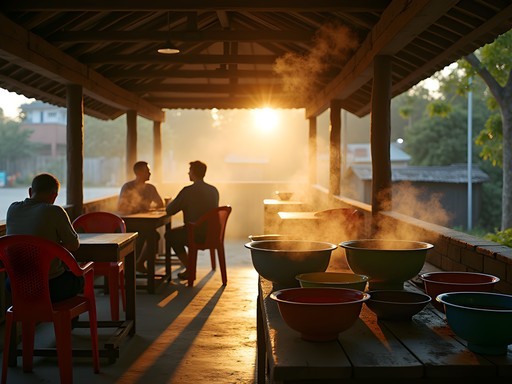
The morning sun had barely risen when I found myself following the intoxicating aroma of spices to a small warung on the eastern edge of town. Warung Soeki doesn't announce itself with flashy signs—just a humble wooden structure with a few plastic chairs scattered across the porch. Inside, I met Ibu Mina, a third-generation Javanese Surinamese woman whose grandparents arrived as contract laborers in the early 1900s.
'My grandmother taught me everything,' she explained while expertly flipping dough for her legendary baka bana (fried plantain fritters). 'Not just recipes, but how food preserves who we are.'
Her bami goreng—stir-fried noodles with vegetables and chicken—carried subtle differences from versions I'd tried in Indonesia. When I mentioned this, she smiled knowingly.
'We adapted to what ingredients we could find here. Now it's not Indonesian anymore, but Surinamese-Javanese.'
The standout dish was her saoto soup—a fragrant chicken broth with vermicelli noodles, shredded chicken, hard-boiled egg, and fried shallots. As I sipped the complex, comforting broth, I watched locals arrive with their own containers for takeaway, exchanging neighborhood news with Ibu Mina. This wasn't just a place to eat—it was a community gathering spot where Javanese heritage continues to thrive through daily rituals of food and conversation.
I captured the moment using my travel tripod, which has become essential for documenting these intimate food experiences without disrupting the natural atmosphere.

💡 Pro Tips
- Visit warung cafés between 6-8am for the freshest morning specialties
- Look for places where locals bring their own containers—it's a sign of quality
- Try saoto soup with sambal (chili paste) on the side to adjust spice levels to your preference
Roti Shops: Where Indian Traditions Meet Creole Flavors
By mid-morning, Lelydorp's main street pulses with activity, and no culinary exploration would be complete without visiting one of the town's celebrated roti shops. Roti—the flaky flatbread with roots in Indian cuisine—has evolved into something uniquely Surinamese through generations of adaptation.
'Our family has been making roti for four generations,' explained Vidya, the matriarch of Roopram Roti Shop, as she expertly rolled out dough with practiced movements. 'When our ancestors came from India as indentured laborers, they brought these recipes, but over time, we incorporated local ingredients.'
The dal puri roti—stuffed with ground yellow split peas and wrapped around curried chicken, potatoes, and green beans—reveals this cultural fusion. The curry carries subtle differences from its Indian counterparts, with Surinamese influences evident in the balance of spices.
What makes Lelydorp's roti shops special is their unpretentious authenticity. At Roopram, plastic chairs and formica tables create a no-frills setting where everyone—from construction workers to government officials—sits elbow to elbow, united by their appreciation for perfectly executed comfort food.
I couldn't resist ordering their specialty: duck curry roti. The tender meat, slow-cooked until it barely clung to the bone, carried complex layers of flavor that spoke to the careful balance of spices and technique refined over decades.
'The secret is patience,' Vidya confided. 'Good curry can't be rushed. That's something my grandmother taught my mother, who taught me.'
While eating, I documented the experience in my travel journal, which has become indispensable for capturing sensory details and recipes I hope to recreate at home.

💡 Pro Tips
- Visit roti shops between 11am-1pm when the bread is freshest
- Don't be afraid to eat with your hands—it's the traditional way
- Order a side of extra tamarind chutney—it perfectly balances the rich curry flavors
Market Day: A Symphony of Street Food
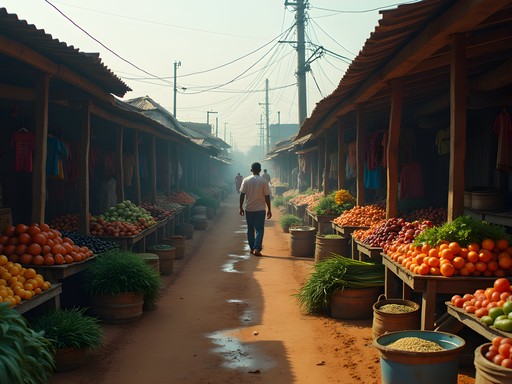
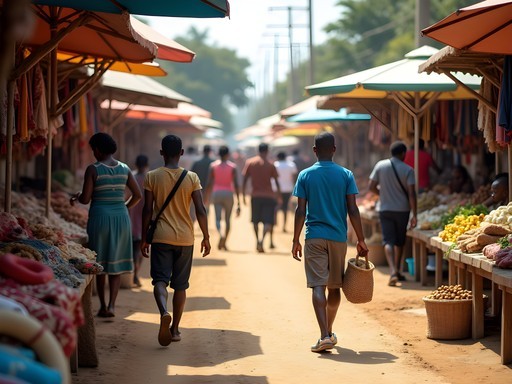
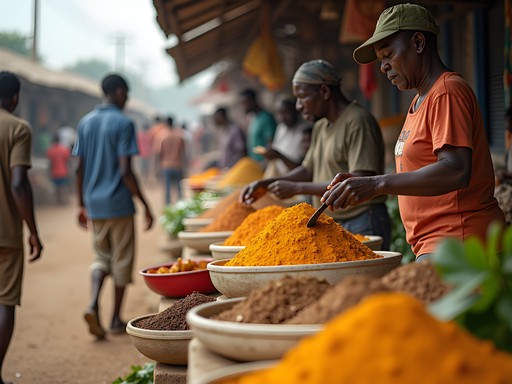
Timing my visit to coincide with Lelydorp's Saturday market was perhaps my wisest decision. By 7am, the normally quiet town center transforms into a vibrant tapestry of food stalls, each representing different facets of Suriname's cultural heritage.
'Our market has been happening every Saturday for over 70 years,' explained Theo, a local historian I met while sampling pom—a traditional Creole dish of chicken and taro root. 'During colonial times, this was where different communities could gather and share their food traditions.'
The market's layout itself tells a story—Javanese vendors cluster near the eastern entrance, while Creole food dominates the center, and Chinese-Surinamese stalls line the western edge. This unconscious organization reflects the town's historical settlement patterns.
I spent hours wandering between stalls, sampling small portions to experience the full spectrum of flavors. Standouts included baka bana (fried sweet plantains), peanut soup with tomtom (pounded plantain), and the most extraordinary bara (fried split pea fritters) served with fiery chutney.
At a modest stall run by an elderly Maroon woman named Ma Esi, I discovered the most remarkable dish of my visit—a cassava-based soup called kasiri with smoked fish and forest herbs I couldn't identify.
'These herbs come from deep in the interior,' she told me. 'My grandmother taught me which ones to gather. Not many young people know anymore.'
The conversation highlighted something I've observed worldwide—how traditional food knowledge is often just one generation away from being lost. Ma Esi's granddaughter, helping at the stall, confessed she hadn't learned all the recipes yet.
'I'm trying to document everything,' she said, showing me notes on her phone. 'These flavors are our heritage.'
I couldn't agree more. As a designer who's documented vernacular architecture, I see parallel importance in preserving culinary traditions—both are cultural expressions shaped by available materials, historical influences, and ingenious adaptation.

💡 Pro Tips
- Arrive early (before 8am) when the market is less crowded and food is freshest
- Bring small bills as vendors rarely have change for larger denominations
- Ask vendors about the history of their dishes—many have fascinating stories to share

Chinese-Surinamese Fusion: Moksi Alesi & More
As afternoon settled over Lelydorp, I followed a local recommendation to a nondescript building with a simple sign reading 'Restaurant Hing.' What I discovered inside was a fascinating culinary story of adaptation and resilience.
The Chinese-Surinamese community has deep roots here, with many families arriving in the late 19th century. Their cuisine has evolved into something entirely unique—neither traditionally Chinese nor purely Surinamese, but a remarkable fusion that speaks to generations of cultural exchange.
'My grandfather came from Guangdong province in the 1920s,' explained Li-Ann, the third-generation owner. 'He started with traditional Cantonese cooking, but gradually incorporated local ingredients and techniques.'
The restaurant's signature dish—moksi alesi (mixed rice)—perfectly illustrates this fusion. The dish combines elements of Chinese fried rice with Creole flavors and ingredients, creating something entirely unique to Suriname. Chicken, salted meat, shrimp, and vegetables are stir-fried with rice and local seasonings.
'Every family has their own version,' Li-Ann told me as she brought out a steaming plate. 'Ours is special because we still use my grandfather's wok. After nearly a century of cooking, it adds something special to the flavor.'
She wasn't exaggerating. The rice carried a distinctive smoky essence that only comes from a properly seasoned wok with decades of use. The balance of flavors—salty, sweet, umami—demonstrated remarkable complexity despite the dish's humble appearance.
I also tried their tjauw min (Surinamese-Chinese noodles) and foefoe (mashed plantain) with bakkeljauw (salted cod)—each dish telling its own story of cultural adaptation.
What struck me most was how the restaurant preserved black and white photos of family members on its walls, creating a visual timeline of their culinary journey. Li-Ann pointed to a faded photograph of her grandfather standing proudly in front of the original restaurant location.
'He wouldn't recognize some of our dishes now,' she laughed. 'But I think he would approve of how we've evolved while keeping our roots.'
I captured these moments with my pocket camera, which is perfect for documenting these intimate dining experiences without being intrusive.

💡 Pro Tips
- Order family-style to try multiple dishes—portions are generous
- Try the housemade hot sauce but use sparingly—it's intensely spicy
- Visit between 2-5pm when the restaurant is less crowded and you can chat with the owners
Sweet Endings: Desserts That Tell Stories
No culinary journey would be complete without exploring sweet traditions, and Lelydorp offers remarkable diversity in its desserts—each reflecting a different cultural heritage while incorporating local ingredients.
My sweet adventure began at Tante Flora's, an institution that's been serving Creole desserts for over 40 years from what appears to be someone's front porch. The space is humble—plastic chairs under a zinc roof—but the flavors are extraordinary.
'My fiadu is made exactly how my grandmother taught me,' explained Flora, a spirited woman in her 70s, as she served me the molasses-sweetened cake. 'The secret is the cassava flour—we process it ourselves.'
The dense, moist cake carried complex notes of ginger, anise, and something I couldn't quite identify. When I asked, Flora smiled mysteriously. 'Some secrets stay in the family.'
Nearby, I discovered Marwina's stall specializing in Javanese-Surinamese sweets. Her spekkoek (layered spice cake) requires extraordinary patience to create, with each thin layer individually baked to create the characteristic striped appearance when sliced.
'It takes me four hours to make one cake,' she explained while cutting a perfect slice. 'Each layer has slightly different spices—cinnamon, cardamom, clove, nutmeg.'
The result was worth every minute of effort—a complex interplay of textures and flavors that revealed different notes with each bite.
Perhaps most fascinating was my discovery of Indigenous-influenced sweets at the Saturday market. A woman named Alida sold cassava-based treats sweetened with forest honey and local fruits I'd never encountered before.
'These fruits only grow in specific seasons,' she explained, offering me a sample of what she called 'maripa candy,' made from palm fruits. 'My people have been making these sweets for centuries, long before sugar came to Suriname.'
The candy—intensely sweet yet with complex fruity notes—offered a literal taste of pre-colonial Surinamese cuisine, a rare glimpse into flavors that have remained largely unchanged for centuries.
I documented these sweet discoveries in my food journal, complete with sketches and notes about ingredients and techniques, continuing my personal mission to preserve culinary traditions through documentation.

💡 Pro Tips
- Save room for dessert by planning a dedicated 'sweet tour' between meals
- Ask about seasonal specialties—many traditional sweets are only available at certain times of year
- Purchase extras to take away—most keep well for several days and make perfect travel snacks
Final Thoughts
As my weekend in Lelydorp drew to a close, I found myself sitting at a simple roadside stand, sipping tart tamarind juice and reflecting on the extraordinary culinary tapestry I'd experienced. What makes this unassuming town special isn't fancy restaurants or innovative fusion cuisine—it's the authentic preservation of traditions that have been carefully maintained through generations, each dish a living artifact of Suriname's complex cultural history. In a world increasingly dominated by homogenized food experiences, Lelydorp stands as a reminder that some of the most profound culinary discoveries happen in the most humble settings. All it takes is the willingness to venture beyond the guidebook, to sit at unfamiliar tables and ask questions that open doors to stories told through flavor. If you visit, come hungry not just for food but for connection—the real magic happens when you allow yourself to be guided by local recommendations, family histories, and the irresistible aromas wafting from unexpected doorways.
✨ Key Takeaways
- Lelydorp's culinary scene represents Suriname's diverse cultural heritage through authentic, family-run establishments
- The best food experiences come from following local recommendations rather than guidebooks or online reviews
- Understanding the historical context of dishes enhances the culinary experience and creates deeper connections
- Document recipes and techniques when possible—many traditional preparations are at risk of being lost
📋 Practical Information
Best Time to Visit
year-round (Saturday market is essential)
Budget Estimate
$15-30 per day for food
Recommended Duration
2-3 days
Difficulty Level
Intermediate




Comments
journeyadventurer
Adding this to my bucket list right now!!
sunnyexplorer
Is Lelydorp worth staying overnight or better as a day trip from Paramaribo?
Olivia Sanchez
I stayed the weekend and loved it, but honestly you could do it as a long day trip if you're short on time. The food scene is best experienced over multiple meals though - I'd recommend at least one overnight if possible!
Sophia Gomez
What a fantastic post, Olivia! I was in Suriname for a conference in Paramaribo last year and managed to squeeze in a day trip to Lelydorp. Wish I'd had more time because the food scene is insane. I remember trying this incredible peanut soup at a Javanese place - rich, spicy, and served with those crispy tempeh bits. The Chinese-Surinamese fusion really caught me off guard too. Coming from Pittsburgh where we have amazing food diversity, I thought I'd seen it all, but Suriname's blend of cultures through food is on another level. One tip for anyone going: bring cash! Most of these smaller places don't take cards. I had my travel wallet which kept everything organized, but definitely hit an ATM in Paramaribo before heading out.
starway4328
How easy is it to get around Lelydorp without speaking Dutch? My Suriname trip is coming up in a few months and I'm a bit nervous about the language barrier
Olivia Sanchez
You'll be totally fine! Most people speak some English, and honestly, pointing at food and smiling works wonders. The locals are super friendly and patient. I barely know any Dutch and had zero problems.
starway4328
that's reassuring, thanks!
oceangal
Your photos are gorgeous! Making me so hungry lol
Sage Dixon
Olivia, this brought me right back to my time in Paramaribo! I spent three weeks exploring Suriname last year and completely fell in love with the food scene. The Javanese influence is so strong throughout the country, but I didn't make it to Lelydorp. That tamarind juice you mentioned - I became absolutely addicted to it. There was this grandmother selling it from a cooler outside the central market in Paramaribo, and I'd stop by every single day. The way these communities have preserved and blended their culinary traditions is just remarkable. Did you get a chance to try any of the Javanese desserts? The klepon (those green rice balls with palm sugar) haunts my dreams.
Olivia Sanchez
Sage! YES to the klepon! I had them at the market and immediately bought more to take back to my guesthouse. That burst of palm sugar is addictive. Suriname really surprised me - I expected good food but not THIS level of culinary diversity.
cityway
Do you remember the names of any of these places? Would love to know which roti shop to hit up
Olivia Sanchez
The best one was called Warung Roti Mini - it's on the main road near the market. Get there before noon because they sell out fast! The chicken roti with pom is incredible.
cityway
perfect thanks!!
mountainseeker
This looks amazing!! Never even heard of Lelydorp before but now I'm obsessed with trying that moksi alesi!
Olivia Sanchez
Right?? The moksi alesi there is something special. Make sure you try it at one of the Chinese-Surinamese spots - the blend of flavors is unlike anything else!
Megan Martin
Olivia, this brought back so many memories! I spent a week in Paramaribo last year but only made it to Lelydorp for a day trip. Your post makes me realize I completely missed out on the real food scene there. The roti shops you mentioned sound incredible - I love how Surinamese cuisine blends so many different cultural influences. The Javanese community's impact on the local food is something I didn't fully appreciate during my visit. Did you find the language barrier challenging at all when ordering at the smaller, family-run places? I'm thinking of heading back this fall and want to be better prepared.
Olivia Sanchez
Hey Megan! Honestly, most people spoke at least some Dutch and English. But even when they didn't, pointing and smiling worked wonders. The families running these places are so welcoming - they'll usually just bring you what's good that day if you're open to it. That's actually how I discovered the best dishes!
luckybuddy
Wow those moksi alesi pics are making me hungry!
Olivia Sanchez
Right?? That dish is seriously addictive. The combination of flavors is just incredible.
luckybuddy
Do you remember which place had the best one? Planning a trip there in a few months
Olivia Sanchez
The little Chinese-Surinamese spot near the market (I think it was called Warung Moi). Get there early though - they sell out by 2pm!
Venture X
Premium card with 2X miles, $300 travel credit, Priority Pass