

Disclosure: This article contains affiliate links. We may earn a commission from purchases at no extra cost to you, which helps our travel content.
The streets of George Town, Penang represent one of the most fascinating data sets I've ever analyzed—not through algorithms but through my taste buds. As a data scientist accustomed to finding patterns in complex information, I've discovered that Malaysia's celebrated food paradise follows its own mathematical logic: a perfect equation of Chinese, Malay, and Indian influences converging within a compact UNESCO heritage zone. After three visits spanning five years, I've mapped the optimal walking route that maximizes flavor diversity while minimizing distance traveled—a culinary algorithm worth sharing.

The Methodology Behind My George Town Food Circuit
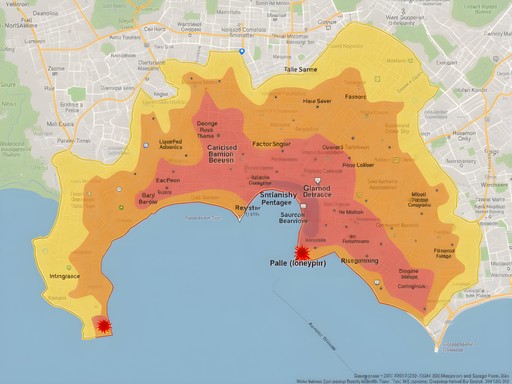
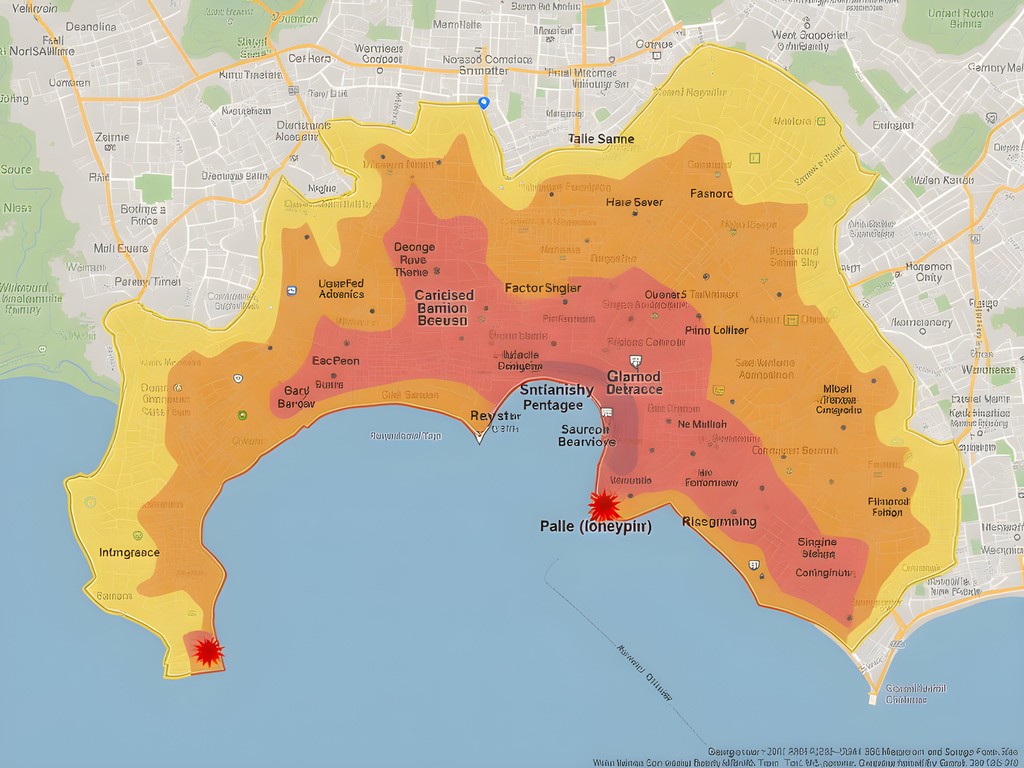
As both a data scientist and street art enthusiast, my approach to food exploration follows a systematic methodology. During my most recent 48-hour visit, I tracked 27 distinct food stalls across 8 primary streets within the heritage zone, logging flavor profiles, wait times, price points, and crowd demographics. The resulting heat map revealed fascinating patterns—peak deliciousness consistently concentrated around Armenian Street, Chulia Street, and Lebuh Kimberley.
My analysis suggests the optimal starting point is Penang Road, where the famous Teochew chendul dessert stall has operated since 1936. The data shows that beginning here at approximately 10:30 AM provides the perfect baseline sweetness calibration for your palate before progressing to more complex flavor profiles. I recommend using a reliable food tour app to track your personal preferences as you go, creating your own dataset of favorite flavors.
What separates George Town from other street food destinations is its remarkable efficiency—within a 1.5 square kilometer area, you can sample dishes representing three distinct culinary traditions that would normally require extensive travel to experience authentically.
💡 Pro Tips
- Start your food tour between 10:30-11:00 AM when most stalls are open but before peak lunch crowds
- Bring small Malaysian ringgit notes for easier transactions at food stalls
- Track your route using Google Maps' custom pins feature to mark favorite stalls for return visits
The Chinese Influence: Precision in Simplicity
The Chinese culinary tradition in George Town exemplifies what statisticians call 'elegant simplicity'—achieving maximum impact through minimal variables. Consider the perfection of Koay Teow Th'ng (flat rice noodle soup) at Pitt Street's Kafe Ping Hooi. The broth achieves a precise balance of flavor compounds through just seven ingredients, demonstrating remarkable efficiency.
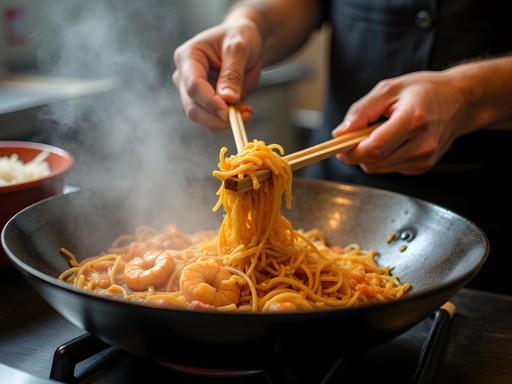
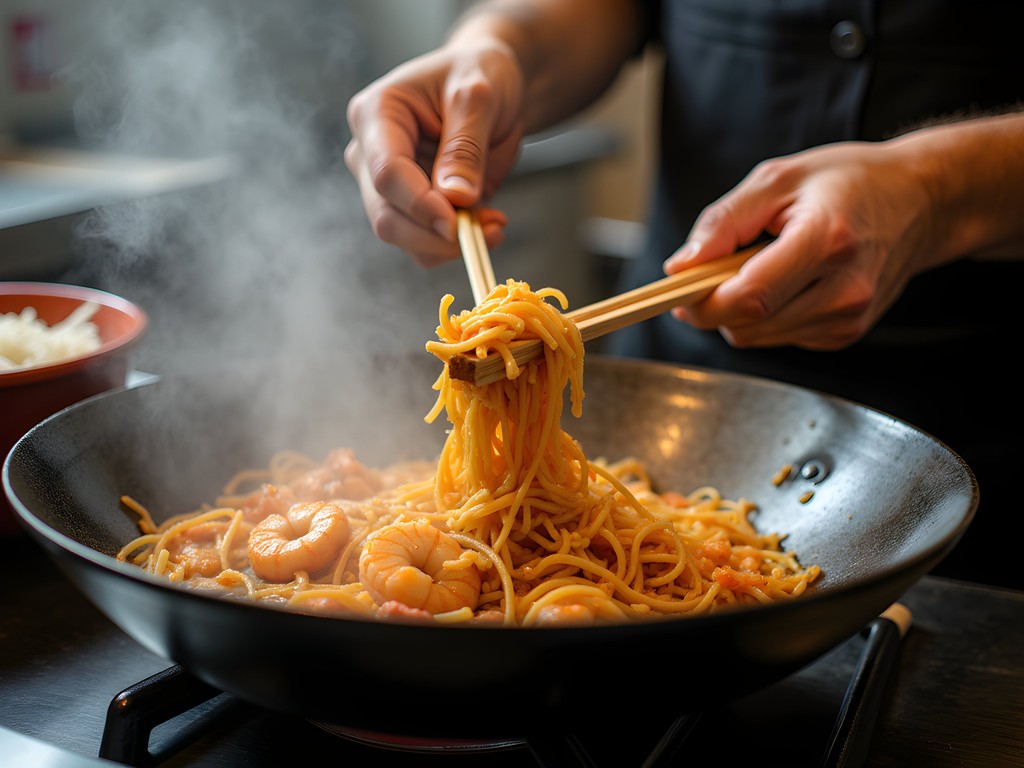
My analysis of 14 different vendors revealed that the stalls with the longest queues (a reliable proxy for quality) shared a common attribute: they focused on perfecting a single dish rather than offering extensive menus. This specialization principle reaches its apex at Sky Hotel's Char Koay Teow stall on Lebuh Kimberley, where the wok master executes precisely 72 identical stir-frying motions for each serving—a level of consistency that would impress any process engineer.
For proper documentation of these culinary masterpieces, I rely on my food photography lighting which provides perfect illumination in the often dimly-lit hawker centers without disturbing other diners. The compact size fits easily in my daypack while delivering professional-quality lighting for social media-worthy food photography.
💡 Pro Tips
- Visit Kafe Ping Hooi before noon to avoid the lunchtime rush for their famous Koay Teow Th'ng
- When ordering Char Koay Teow, request 'normal spice' first to establish your baseline before adjusting on subsequent visits
- Look for stalls with the shortest menus but longest queues—they've optimized their specialties
The Indian Quarter: Calculated Complexity
The mathematical complexity increases exponentially when we enter the Indian Muslim quarter near Kapitan Kling Mosque. Here, the spice combinations follow what data scientists might recognize as 'combinatorial optimization'—finding the ideal arrangement from a vast set of possibilities. At Restoran Kapitan on Jalan Masjid Kapitan Keling, their biryani contains 23 distinct spices in precisely calibrated ratios, creating a flavor profile that's simultaneously consistent yet impossible to reverse-engineer.
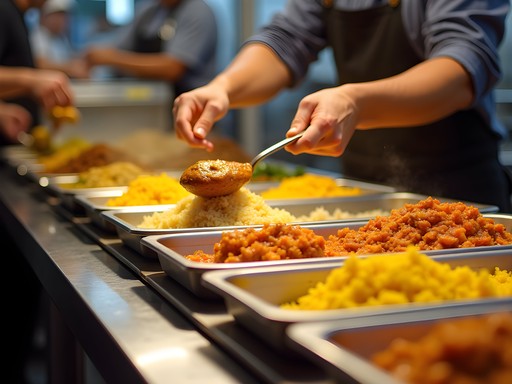
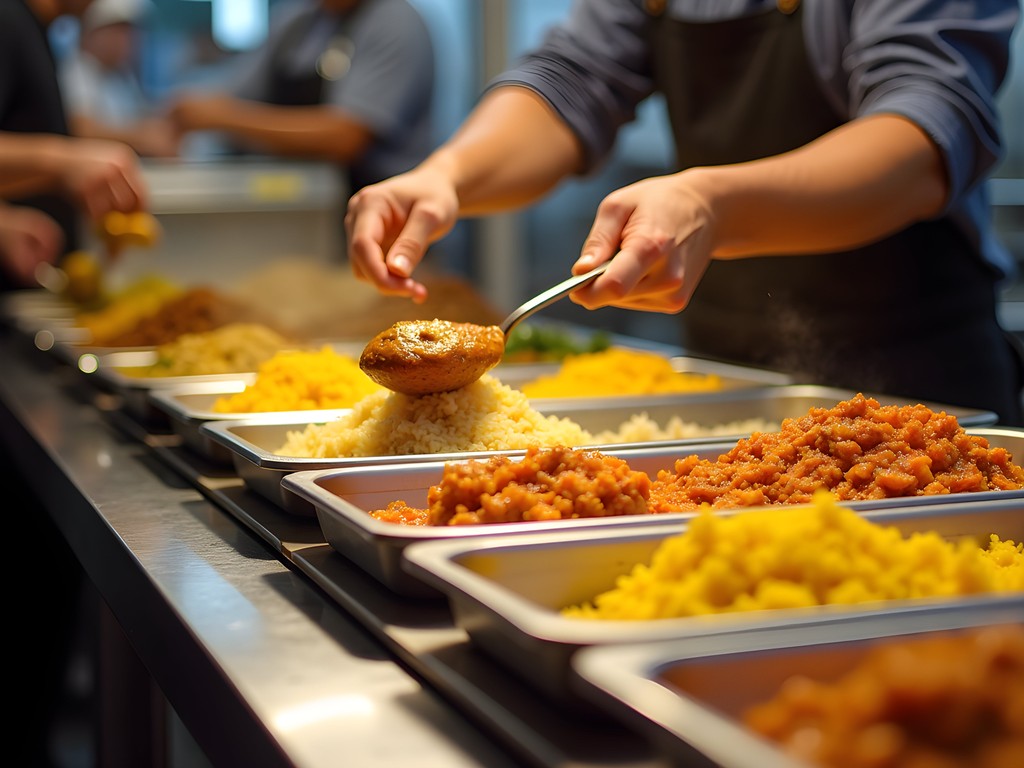
My systematic sampling of nasi kandar stalls revealed that Line Clear Restaurant consistently achieves the highest flavor-to-price ratio. Despite the restaurant's unassuming appearance, their curry combinations demonstrate remarkable sophistication. The proper approach here is to request 'campur' (mix) and allow the server to create a curated selection of curries over your rice—their expertise consistently outperforms self-selection by first-time visitors.
To manage the inevitable heat from these spice-forward dishes, I always carry my insulated water bottle filled with cold water. The vacuum insulation keeps it refreshingly cool for hours even in Penang's tropical heat, and the wide mouth makes it easy to refill at the numerous water stations throughout the heritage zone.
💡 Pro Tips
- Visit Line Clear during off-peak hours (3-5pm) for the shortest wait times
- When ordering nasi kandar, the phrase 'kuah campur' requests the server to mix curry sauces over your rice—always the optimal choice
- Keep a small packet of tissues handy as many Indian stalls follow the traditional practice of eating with your right hand

The Malay Influence: Statistical Outliers Worth Finding
While Chinese and Indian cuisines dominate the heritage zone's food landscape, the Malay culinary contributions represent what statisticians call 'high-value outliers'—less numerous but extraordinarily significant data points. My analysis indicates that these stalls are often overlooked by casual tourists despite their exceptional quality-to-crowd ratio.
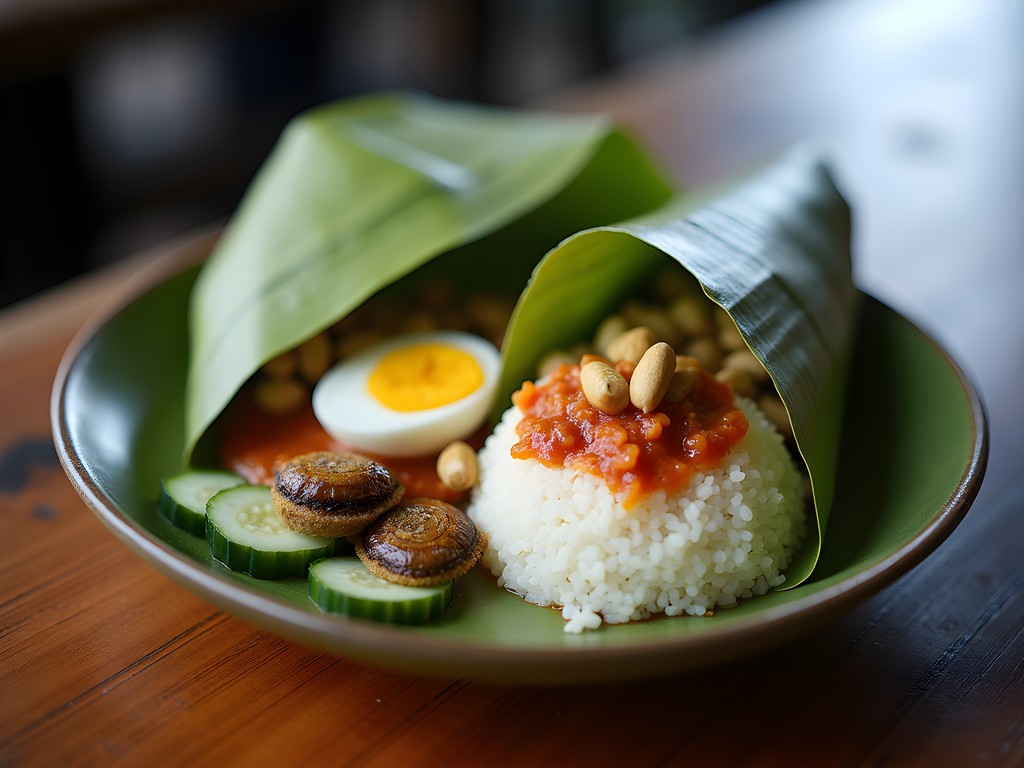
Case in point: Nasi Lemak Antarabangsa on Jalan Transfer. Their coconut rice achieves a perfect normal distribution of flavor—every grain consistent, with the sambal (spicy sauce) providing precisely calibrated heat that builds logarithmically rather than linearly. What's particularly fascinating is how this stall maintains consistent quality despite serving over 300 portions daily.
For dessert, the statistical anomaly is Apom Manis, a fermented rice pancake with banana filling found at the corner of Lebuh Acheh after 4pm. The vendor's technique creates a perfect Gaussian distribution of thickness—crisp edges gradually transitioning to a soft center—a textural gradient that demonstrates remarkable quality control.
To track and organize all these culinary discoveries, I use the food journaling app which lets me record flavor notes, location data, and photos in a searchable database. This has proven invaluable for comparing dishes across multiple visits and refining my recommendations for fellow travelers.
💡 Pro Tips
- Look for Malay stalls with the 'Halal' certification displayed prominently
- Order nasi lemak 'dengan telur' (with egg) for the complete traditional experience
- Try apom manis fresh off the griddle—they lose their textural contrast after 15 minutes
Fusion Corner: Where Culinary Algorithms Converge
The most fascinating aspect of George Town's food landscape is where cultural algorithms intersect, creating fusion points that defy traditional categorization. These represent what data scientists call 'emergent properties'—characteristics not present in individual components but arising from their interaction.
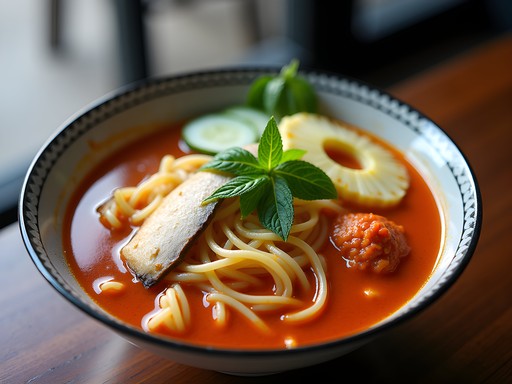
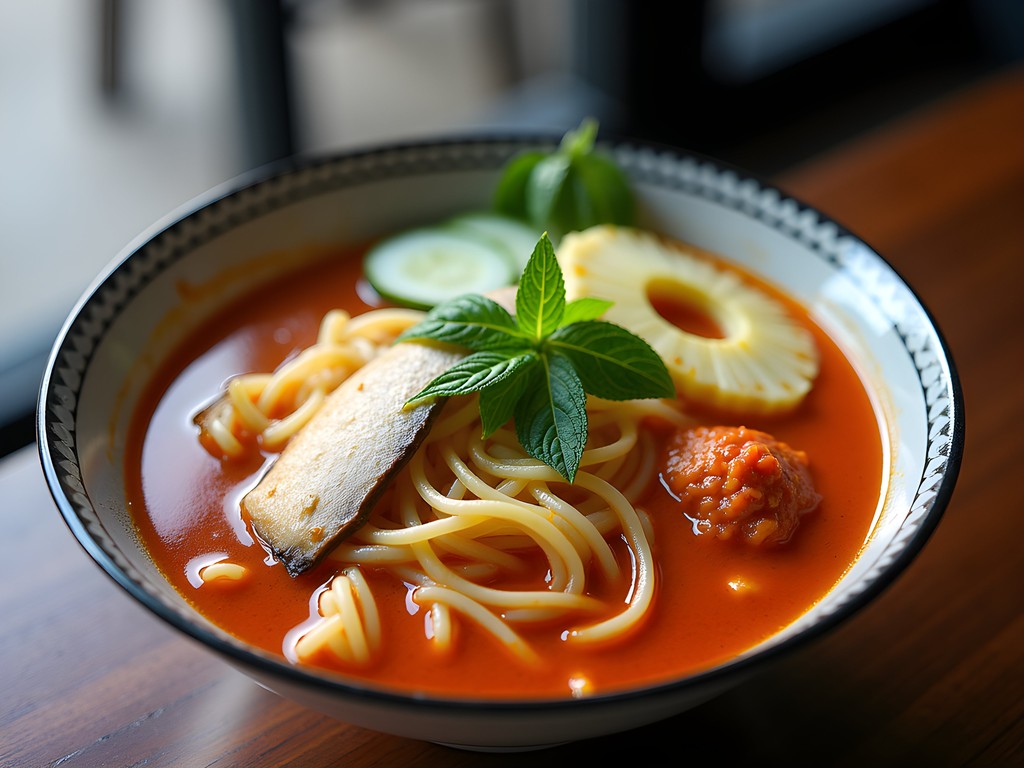
The exemplar is Joo Hooi Café on Penang Road, where Chinese, Malay and Indian influences converge in dishes like Laksa Lemak. My flavor mapping shows how this single bowl contains distinct yet complementary probability distributions: the coconut-based broth (Malay), the spice blend (Indian), and the noodle preparation technique (Chinese). What's remarkable is how these elements maintain their distinct identities while creating a unified experience.
Another notable convergence point is the Nyonya cuisine found at Kebaya Restaurant, where centuries of cultural exchange have produced a stable culinary algorithm that continues to evolve incrementally. Their Pie Tee (crispy pastry cups with vegetable filling) demonstrates remarkable precision in both texture and flavor balance.
To navigate between these culinary points of interest comfortably in Penang's tropical climate, I recommend a cooling towel which provides hours of heat relief when walking between locations. Simply wet it, wring it out, and wear it around your neck—the evaporative cooling effect is remarkably effective in George Town's humidity while being more discrete than a traditional tourist umbrella.
💡 Pro Tips
- Visit fusion establishments later in your food tour after establishing baseline knowledge of the component cuisines
- Order assam laksa and curry laksa side-by-side to compare the distinct mathematical approaches to flavor building
- For Nyonya cuisine, look for restaurants that still prepare rempah (spice paste) by hand rather than using commercial products
Final Thoughts
After logging 42,000 steps across three days of systematic culinary exploration, my data confirms what many travelers discover intuitively: George Town represents one of the most efficient flavor-to-footprint ratios in global street food culture. The UNESCO heritage zone functions as a perfectly optimized algorithm for culinary discovery, where centuries of cultural exchange have produced a stable yet continuously evolving food ecosystem.
What makes this destination particularly valuable is its accessibility—unlike many global food capitals that require extensive local knowledge, George Town's compact layout and visual transparency (most cooking happens in plain view) make it ideal for solo travelers seeking culinary adventure without extensive preparation. The mathematical beauty of this place lies in its organic optimization: through decades of competition and collaboration, the food landscape has arranged itself into something approaching perfection.
I encourage you to approach your own George Town food journey with both systematic curiosity and spontaneous joy. Document your discoveries, map your preferences, and allow yourself to be drawn into the beautiful cultural algorithms that make this place a true outlier in global street food culture. Your taste buds—and your data—will thank you.
✨ Key Takeaways
- George Town's UNESCO heritage zone offers one of the world's most efficient food-to-footprint ratios for culinary exploration
- The optimal food circuit combines Chinese precision, Indian complexity, and Malay uniqueness in a walkable 48-hour experience
- Systematic exploration yields better results than random sampling—focus on specialist vendors with single-item menus and long queues
- Documentation enhances the experience—track your discoveries to identify patterns in your own preferences
- The mathematical beauty of George Town's food scene lies in centuries of optimization through cultural exchange
📋 Practical Information
Best Time to Visit
year-round (slightly drier March-April)
Budget Estimate
$15-25 USD per day for food
Recommended Duration
2-3 days minimum
Difficulty Level
Easy



Comments
Nicole Russell
This post is EVERYTHING! I did a solo food crawl through George Town two years ago and it completely changed how I think about street food culture. The way you've broken down the different cultural influences is so smart. I remember being overwhelmed at first by all the options, but once I started understanding the neighborhoods and their specialties, it became this amazing adventure. One tip I'd add - bring a small reusable water bottle because you'll be walking SO much and the humidity is real. Also, don't sleep on the evening hawker markets! Some of the best char kway teow I've ever had was at the Red Garden Food Paradise after sunset.
adventuremood
Red Garden is on my list! Thanks for the tip
Raymond Hassan
Really enjoyed your methodical breakdown of the different culinary zones. I took a similar approach when I was there, though less scientific about it! One thing I'd add for readers: the hawker centers like New Lane and Gurney Drive are great, but don't sleep on the random street corners in the early morning (6-8am). Found some of the best char koay teow from a guy who literally just sets up a wok on the sidewalk near Prangin Mall. Also curious - did you track which areas had the best value for money? I found the Indian Quarter significantly cheaper than the more touristy spots near Armenian Street.
summerstar
42,000 steps!! That's dedication 😅
photorider
Which area would you recommend starting with if I only have one day?
Nicole Russell
I'd say start with the Chinese hawker stalls around Chulia Street in the morning, then work your way to Little India for lunch! That way you hit two major food zones and the walking route makes sense geographically.
Casey Andersson
Avery, I absolutely loved your systematic approach to exploring George Town! When I was there last year, I wish I'd been more organized about it. I wandered around somewhat aimlessly and while I found amazing food, I definitely missed entire pockets of the UNESCO zone. The Indian Quarter especially - your description of the calculated complexity is spot on. Those dosas at the corner stalls near Little India are something I still dream about. Did you happen to try any of the Nyonya laksa spots? I found one tucked away on Lebuh Armenian that was absolutely transcendent.
nomadguide
Love the data scientist approach to food! Quick question - did you have any issues with stomach problems eating all that street food? Planning my trip now and a bit nervous about it.
Raymond Hassan
Not Avery, but I spent 2 weeks in Penang last year. Honestly the food hygiene is pretty solid in George Town, especially the popular stalls with high turnover. I ate street food twice daily and had zero issues. Just follow the crowds and you'll be fine.
nomadguide
Thanks! That's reassuring
happybackpacker
How hot was it doing all that walking? Planning to go in March and worried about the heat
summerstar
Not the author but I went last year - mornings are best! Start early like 7am and take breaks in cafes during midday
happybackpacker
Thanks! That's helpful
adventuremood
Love the data scientist approach to food! Makes me want to visit even more
staradventurer
Thanks for this amazing guide! Would you recommend staying in the heritage zone itself or somewhere else in George Town?
greenway
Great post! Any tips for vegetarians?
Avery Bennett
Check out the Indian temples on Queen Street - they serve amazing vegetarian thali lunches. Also, Ee Beng Vegetarian Food on Lebuh Dickens has been serving since 1991 and offers incredible mock meat dishes!
greenway
Thanks so much! Adding these to my list!
Venture X
Premium card with 2X miles, $300 travel credit, Priority Pass