


Disclosure: This article contains affiliate links. We may earn a commission from purchases at no extra cost to you, which helps our travel content.
When I first landed in Toronto with my digital forensics toolkit and a week of remote work ahead of me, I had no idea I was stepping into what the United Nations officially recognizes as the world's most diverse city. With over 50% of residents born outside Canada and more than 200 ethnic groups speaking 140+ languages, Toronto isn't just multicultural – it's a living laboratory of global cultures. As someone who approaches travel like an investigation, I found Toronto's neighborhood-by-neighborhood diversity to be the perfect case study in how different cultures can not only coexist but create something greater than the sum of their parts.

Kensington Market: The Cultural Control Center
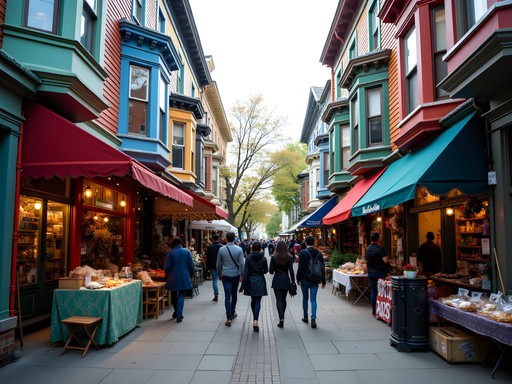
If Toronto's diversity were a computer network, Kensington Market would be its central server – the place where everything connects. This pedestrian-friendly neighborhood is less of a traditional market and more of a living museum of global migration patterns.
On my first morning, I methodically worked my way through the narrow streets, documenting the evidence of cultural layering: Victorian homes repurposed into Jamaican spice shops, vintage clothing stores operated by third-generation Hungarian families, and taquerias sharing walls with Portuguese bakeries. The density of independent businesses here is remarkable – corporate chains are noticeably absent, creating an authentic environment that feels increasingly rare in North American cities.
For families exploring on a budget, Kensington offers the perfect low-cost cultural immersion. My investigation revealed that many shops offer free samples, particularly the cheese shops and bakeries. I spent under $15 for an entire afternoon of culinary exploration, including the exceptional Jamaican patties at Golden Patty (only $2.50 each) and Portuguese egg tarts that rivaled those I've had in Lisbon.
To properly document your Kensington experience, I'd recommend a compact camera with good low-light capability for capturing the vibrant murals and narrow, sometimes dimly-lit shops.

💡 Pro Tips
- Visit on Sundays when many streets close to vehicles for a more relaxed experience
- Bring cash as many smaller vendors don't accept cards
- Check out Bellevue Square Park for free community events and performances
Greektown on the Danforth: European Enclave Analysis
My investigation into Toronto's cultural fabric led me to Greektown on the Danforth, where my systematic approach to travel paid dividends. Unlike other North American Greektowns that exist primarily as tourist attractions, Toronto's Greektown functions as a genuine community hub where Greek traditions seamlessly integrate with Canadian daily life.
The evidence is everywhere: Orthodox churches with services in Greek and English, family-run restaurants where three generations work side by side, and cultural centers teaching traditional dance to diverse groups of Toronto youth. What struck me most was the authenticity – walking into Serano Bakery felt like stepping directly into Athens, complete with the aroma of fresh baklava and the rapid-fire Greek conversations between customers and staff.
For families traveling on a budget, I've identified several cost-efficient approaches to experiencing Greektown. The large portions at Messini's mean a single $12 gyro platter can easily feed a hungry adult and child. Public seating areas along the Danforth provide perfect spots for people-watching while enjoying takeout souvlaki.
As evening approached, I deployed my travel tripod to capture time-lapse footage of the neighborhood's transition from daytime shopping district to evening entertainment hub. The results revealed patterns of community interaction that wouldn't be visible to the casual observer.

💡 Pro Tips
- Visit during Taste of the Danforth festival in August for free entertainment and food samples
- Look for the 'Parea' deals at restaurants – shared plate specials designed for groups
- Many Greek bakeries offer end-of-day discounts after 7pm
Little India: Geisler's Bazaar
My forensic approach to travel often involves identifying patterns that others might miss. In Toronto's Little India (officially the Gerrard India Bazaar), I discovered something fascinating: unlike many ethnic enclaves that form through residential settlement patterns, this vibrant district emerged primarily as a commercial hub when a single theater began showing Bollywood films in the 1970s. The businesses that sprang up around it created a cultural anchor that persists today.
Meticulously exploring the six-block stretch along Gerrard Street East revealed layers of South Asian culture that extend beyond just India. Pakistani, Bangladeshi, Sri Lankan and Nepalese influences create a complex tapestry that rewards careful observation. The neighborhood offers an exceptional sensory experience: the competing aromas of cardamom, cumin, and coriander; the rainbow of silk fabrics displayed in shop windows; and the overlapping sounds of different regional music streaming from store speakers.
For budget-conscious families, Little India offers tremendous value. My investigation identified several key findings: the thali plates (multi-dish samplers) at Udupi Palace provide the most comprehensive food experience for under $15, while the buffet at Moti Mahal represents the best overall value proposition at $14.99 for unlimited authentic dishes.
To fully document your explorations, I recommend a portable charger to keep your devices powered through a full day of photography and navigation.

💡 Pro Tips
- Visit during Diwali or Holi celebrations for special events and sales
- Look for the food stalls behind the main stores – they often have the most authentic and affordable options
- Many fabric shops will negotiate prices if you're buying multiple items

Chinatown & Koreatown: A Tale of Two Asian Influences
When investigating Toronto's Asian cultural centers, I employed a comparative analysis approach. The city hosts not one but several Chinatowns, each with distinct characteristics that reveal different waves of immigration and cultural evolution. The downtown Chinatown at Spadina and Dundas represents the oldest layer, while the Scarborough and North York enclaves showcase more recent patterns of settlement.
What makes Toronto's approach to Asian cultural districts unique is their proximity and interconnection. Following Spadina Avenue north from the traditional Chinatown brings you directly to Koreatown, creating an opportunity to observe how different Asian cultures both maintain distinct identities and influence each other in subtle ways.
My systematic exploration revealed that Toronto's Chinatown differs significantly from those in San Francisco or New York. Here, the focus remains on serving the local community rather than tourists, resulting in more authentic experiences and significantly lower prices. For instance, the dim sum at Rol San offers some of the best value I've found anywhere in North America, with most items between $3-5.
Koreatown, meanwhile, presents an excellent case study in cultural evolution. The Korean businesses here have adapted to Toronto's multicultural environment, creating fusion offerings like the kimchi poutine at The Fry, which brilliantly combines Korean and Canadian culinary traditions.
For families exploring these neighborhoods, I recommend using a baby carrier rather than a stroller, as the narrow sidewalks and crowded shops can be difficult to navigate with larger equipment.

💡 Pro Tips
- Visit Pacific Mall in Markham for North America's largest indoor Asian mall experience
- Look for hand-pulled noodle demonstrations in restaurant windows – these often indicate exceptional quality
- Many bakeries offer significant discounts in the final hour before closing
Little Jamaica & Little Italy: Rhythms and Flavors
My investigation into Toronto's cultural landscape wouldn't be complete without examining the auditory and gustatory evidence found in Little Jamaica and Little Italy. These neighborhoods provide fascinating case studies in how immigrant communities maintain cultural identities while adapting to new environments.
Little Jamaica, centered along Eglinton Avenue West, offers compelling evidence of Caribbean cultural preservation. Record shops here stock vinyl collections that trace the evolution of reggae, calypso, and soca music across decades. The neighborhood soundscape – music flowing from shop doors, patois conversations on street corners – creates an immersive experience that transports visitors to Kingston or Montego Bay.
My systematic sampling of local restaurants revealed that Rap's Restaurant offers the most authentic Jamaican breakfast experience, while Tinnel's serves jerk chicken that rivals anything I've had in the Caribbean, at remarkably reasonable prices ($12 for a plate that could easily feed two).
A short streetcar ride away, Little Italy presents a different model of cultural evolution. While authentic Italian heritage remains evident in establishments like Café Diplomatico (operating since 1968), the neighborhood has undergone significant transformation. My analysis shows a pattern of cultural layering, with Portuguese, Latin American, and Vietnamese influences creating a more diverse district than its name suggests.
For families exploring these neighborhoods, I recommend investing in a good insulated water bottle to stay hydrated while walking between destinations and reduce plastic waste from buying bottled drinks.

💡 Pro Tips
- Time your Little Italy visit for the Taste of Little Italy festival in June for free music performances
- Check out the independent record shops in Little Jamaica for rare reggae and soca vinyl
- Many restaurants in both neighborhoods offer take-out family meal deals that aren't advertised on regular menus – just ask
Final Thoughts
After a week of methodically exploring Toronto's cultural neighborhoods, my investigation has yielded a clear conclusion: this city offers an unparalleled opportunity to experience global cultures without the cost of international travel. What makes Toronto truly exceptional isn't just the presence of diverse communities, but how they've created something greater than the sum of their parts – a uniquely Canadian approach to multiculturalism where differences are celebrated rather than merely tolerated.
For families seeking to give children a global perspective without breaking the budget, Toronto represents an optimal solution. The city's neighborhood structure allows for targeted cultural immersion experiences that can be tailored to specific interests and time constraints. My systematic approach revealed that with careful planning, a family could experience authentic aspects of 5-7 different cultures in a single day using the efficient public transit system.
As I packed away my investigation tools and prepared to leave, I realized that Toronto had given me a new framework for understanding cultural preservation and evolution in urban environments. Like any good investigator, I left with more questions than I arrived with – and isn't that the hallmark of truly meaningful travel?
✨ Key Takeaways
- Toronto's neighborhood-by-neighborhood approach makes cultural exploration manageable and budget-friendly for families
- Public transit provides efficient connections between cultural districts, eliminating the need for rental cars
- The authentic nature of Toronto's cultural enclaves offers deeper insights than tourist-oriented attractions
- Visiting during cultural festivals provides enhanced experiences at minimal additional cost
📋 Practical Information
Best Time to Visit
year-round, with summer offering the most festivals and outdoor events
Budget Estimate
$75-150 per day for a family of four including food, transportation and activities
Recommended Duration
3-7 days
Difficulty Level
Easy



Comments
roamlover
This is so helpful! I'm planning my first big solo trip and Toronto seems way less intimidating than NYC or London. Quick question - is public transit easy to figure out for getting to these neighborhoods? I'm not super experienced with navigating big cities yet but really want to explore properly without just doing touristy stuff.
Kimberly Murphy
Toronto's transit is dead simple! The subway lines are super straightforward and most of these neighborhoods are right on the line. You'll be fine!
luckymood
Is Little India worth it if I've been to actual India? Or is it more of a watered down tourist thing?
Eric Stevens
Still worth checking out! The food is legit (lots of South Asian families eating there which is always a good sign) and the shops have stuff you won't find elsewhere in the city. It's not trying to be India - it's the Toronto version of it, which has its own vibe.
wildmaster
Love this! Toronto is amazing
Kimberly Murphy
Brilliant guide, Eric! I visited Toronto last autumn and absolutely fell in love with Kensington Market - the vintage shops are incredible! One tip I'd add: hit up the Danforth during the Taste of the Danforth festival if you can time it right. The street food and atmosphere are absolutely mental in the best way possible. Also, don't sleep on the Portuguese neighborhoods around Dundas West - some of the best custard tarts outside of Lisbon!
roamlover
When does that festival happen? Planning my first trip there!
Kimberly Murphy
Usually early August! Check their website closer to summer for exact dates.
wandermaster
How walkable is it between these neighborhoods? Can you do Kensington and Chinatown in one day or should I plan separate trips?
Eric Stevens
Definitely doable in one day! Kensington and Chinatown are actually right next to each other, maybe 10 min walk. I'd say give yourself 2-3 hours for each to really explore.
wandermaster
Perfect, thanks!
tripperson
Just got back from Toronto last week! Pro tip - download the transit app before you go. Made getting around so much easier. Also the Portuguese area (Little Portugal) is worth checking out too, amazing custard tarts.
globelife
This is going straight on my bucket list!!! Never thought about Toronto before but wow this looks incredible. How many days would you recommend to really see everything??
Timothy Jenkins
I'd say minimum 4-5 days to properly explore the neighborhoods without rushing. Each area deserves at least half a day.
Charlotte Watkins
We took our teenagers to Toronto two summers ago and this guide would have been gold! We stumbled into Little India by accident and ended up having the most memorable family dinner at a tiny restaurant where the owner's grandmother was cooking. The kids still talk about it. One tip for families: the Aga Khan Museum isn't far from some of these neighborhoods and makes a wonderful educational stop. My daughter used photos from there for a school project. Toronto really does offer something for every age group—it's not just the adults who appreciate the cultural diversity.
vacationphotographer
Planning a trip in spring. Is one neighborhood better than others for food photography? I do a lot of street food shots and market scenes. Also how's the weather in April?
Charlotte Watkins
Kensington Market hands down! The colors, the vintage shops, the street art—it's a photographer's dream. April can be unpredictable though, bring layers.
happygal
Love this post!! Toronto is amazing
Venture X
Premium card with 2X miles, $300 travel credit, Priority Pass