


Disclosure: This article contains affiliate links. We may earn a commission from purchases at no extra cost to you, which helps our travel content.
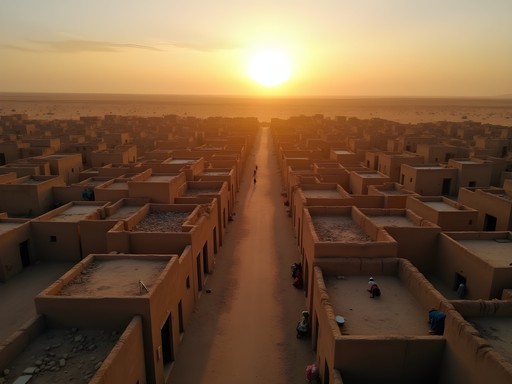
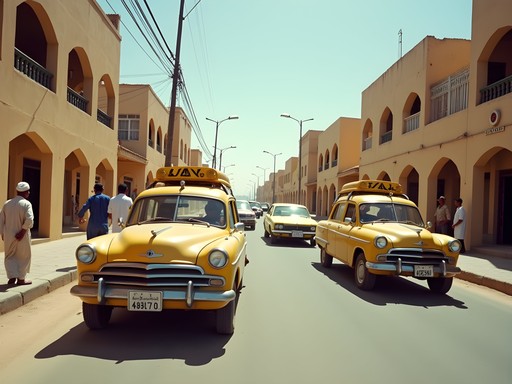
The morning sun cast long shadows across Timbuktu's sand-colored buildings as I adjusted my drone's settings for the perfect aerial shot. The ancient city stretched before me like pages from a history book come to life. Standing there, with my backpack containing little more than essentials and my trusty camera gear, I couldn't help but feel the weight of the journey ahead – 3,000+ miles across the African continent to Dar es Salaam on Tanzania's coast. This wasn't my typical wilderness trek in the Appalachians or Pacific Northwest. This was Africa in winter – raw, challenging, and utterly magnificent. And I was about to traverse it on a shoestring budget that would make even the most frugal college student proud. Buckle up, adventure seekers – this month-long cross-continental journey taught me more about resilience, cultural connection, and budget travel hacks than any coaching clinic ever could.

Preparing for a Trans-African Adventure
When my former college track star Ayana invited me to join her research trip across Africa, I initially balked at the budget – $1,500 for an entire month crossing multiple countries? Challenge accepted.
The key to this journey was ruthless packing minimalism. I ditched my usual gear setup for a lightweight travel backpack that could handle both urban markets and rural villages. Inside went just three quick-dry outfits, a convertible hiking pant/short combo, and my wilderness essentials.
Vaccinations were non-negotiable – Yellow Fever, Typhoid, and Hepatitis A/B topped the list, along with antimalarials appropriate for the regions we'd cross. I spent weeks researching visa requirements, eventually opting for a combination of advance visas and borders where visas-on-arrival were reliable and budget-friendly.
The most valuable preparation? Learning basic phrases in French, Arabic, Swahili, and a handful of regional languages. I recorded native speakers on my phone and practiced during my morning runs. Those simple greetings opened more doors than any amount of money could have bought.
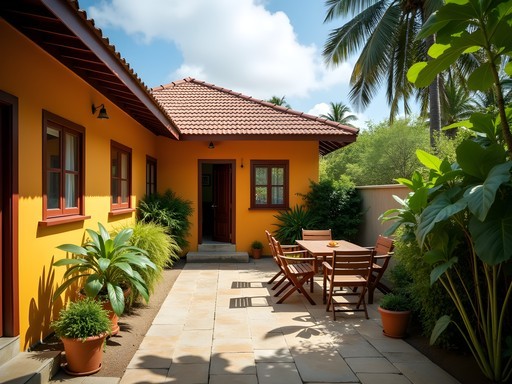
My wilderness training came in handy when plotting our route. Instead of expensive tours, we mapped a combination of public transportation, shared taxis, and occasional hitchhiking (only in safe areas with local recommendation). The money saved on transportation meant occasional splurges on unique accommodations – like the family-run guesthouse in Mali where I learned to ferment millet into a delicious beverage that reminded me of my experiments with kombucha back home.

💡 Pro Tips
- Start visa applications at least 3 months before departure
- Learn to count to ten and say thank you in each regional language
- Pack a comprehensive first aid kit with antibiotics prescribed by a travel doctor
Crossing the Sahel: Mali to Niger
The journey from Timbuktu through eastern Mali into Niger tested every wilderness skill in my arsenal. This wasn't the familiar terrain of New Zealand backcountry or Norwegian fjords – this was the Sahel, where the Sahara gradually gives way to savanna, and climate change has pushed traditional communities to adapt or migrate.
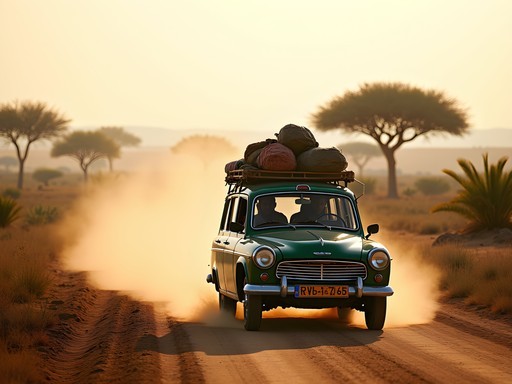
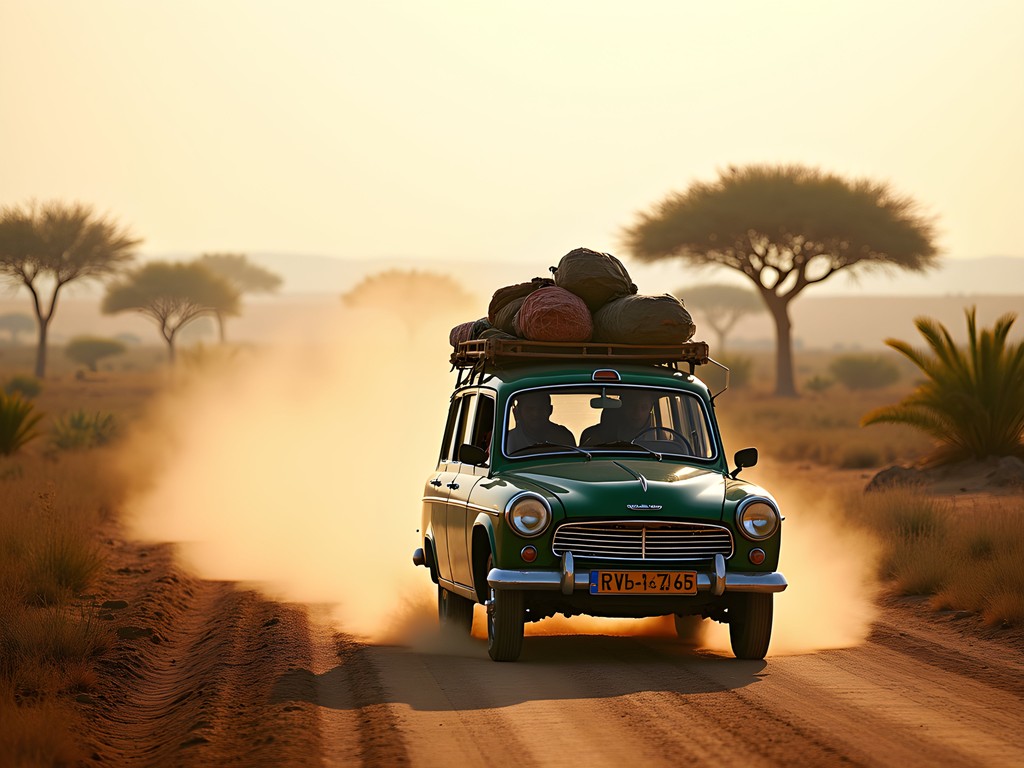
We traveled primarily by sept-place – literally 'seven-place' shared taxis that somehow managed to fit nine people plus chickens. These vintage Peugeot station wagons with roof racks piled high with goods offered front-row views into local life. My water purification system proved invaluable as we crossed regions where clean water was scarce.
In Gao, we connected with a women's cooperative making traditional indigo textiles. I spent an afternoon learning their dyeing techniques, which reminded me of the fermentation workshops I'd run back in Baltimore, just with completely different inputs and cultural significance. The women laughed at my blue-stained hands but praised my willingness to get messy.
The border crossing into Niger required patience and small 'gifts' of tea and sugar rather than bribes. Once across, we joined a group of students heading to Niamey, Niger's capital. They were studying environmental science and shared fascinating insights about desertification and community adaptation projects.
Nights were spent in simple guesthouses or with families who offered rooms to travelers. One memorable evening, we slept on mats under the stars while our host, a former nomadic herder, explained how to read the night sky for navigation – knowledge that paralleled but differed from what I teach in my wilderness orientation courses.
💡 Pro Tips
- Always negotiate transport prices before getting in any vehicle
- Carry small denominations of local currency plus some emergency euros
- Travel with a local whenever possible in border regions
Lake Chad Basin: Navigating Challenges
The Lake Chad Basin presented the most logistically challenging segment of our journey. Once Africa's largest lake, it's now a fraction of its former size, creating environmental and political complications that impact travel. This region required careful navigation – both geographically and culturally.
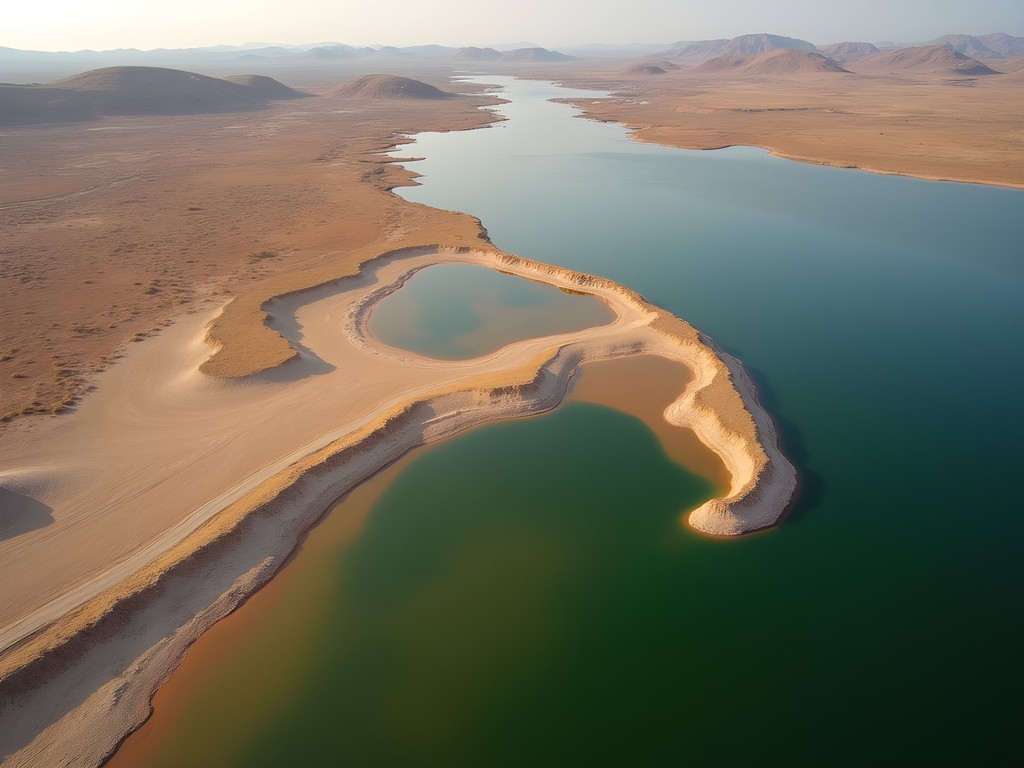
We connected with a student environmental monitoring group that was documenting the lake's changing shoreline. They allowed us to join their research camp for three days, where I put my drone photography skills to work capturing comparative aerial footage of current shorelines against historical markers. The footage was sobering – visible evidence of climate change that reminded me why environmental stewardship drives so much of my travel philosophy.
Food in the region was simple but flavorful. I carried my compact spice kit everywhere, which earned curious looks until I shared my spice blends with our hosts. Those small culinary exchanges created instant connections that transcended language barriers.
Security concerns meant adjusting our route several times. We relied on local university students and teachers for guidance about which areas to avoid. When transportation options dwindled, we joined a convoy of supply trucks heading east – spending two memorable nights sleeping in hammocks strung inside an empty cargo area while the drivers took turns at the wheel.
The long hours of transit gave me time to document our journey in my weatherproof journal. My coaching habit of performance tracking translated well to travel – noting distances covered, money spent, and lessons learned. This region taught me that flexibility isn't just helpful in adventure travel – it's essential. When our planned route through northern Cameroon closed due to local unrest, we pivoted south through N'Djamena and into the Central African Republic, adding days but revealing unexpected treasures.
💡 Pro Tips
- Research current security situations daily using local news sources
- Connect with university environmental groups for both safety and meaningful exchanges
- Always have multiple route options mapped out

East African Highlands: Budget-Friendly Wilderness
After weeks traversing the Sahel and Central Africa, the East African highlands felt like entering a different continent. The temperature dropped, vegetation exploded into lush greens, and my wilderness skills found familiar territory. This region offered the perfect balance of adventure and budget-friendly options for students and backpackers.
In Uganda, we discovered that national parks often have budget accommodations just outside their boundaries. While safari vehicles filled with tourists paid premium prices, we hiked boundary trails with local guides for a fraction of the cost. My compact binoculars became the most-borrowed item among our growing group of fellow travelers.
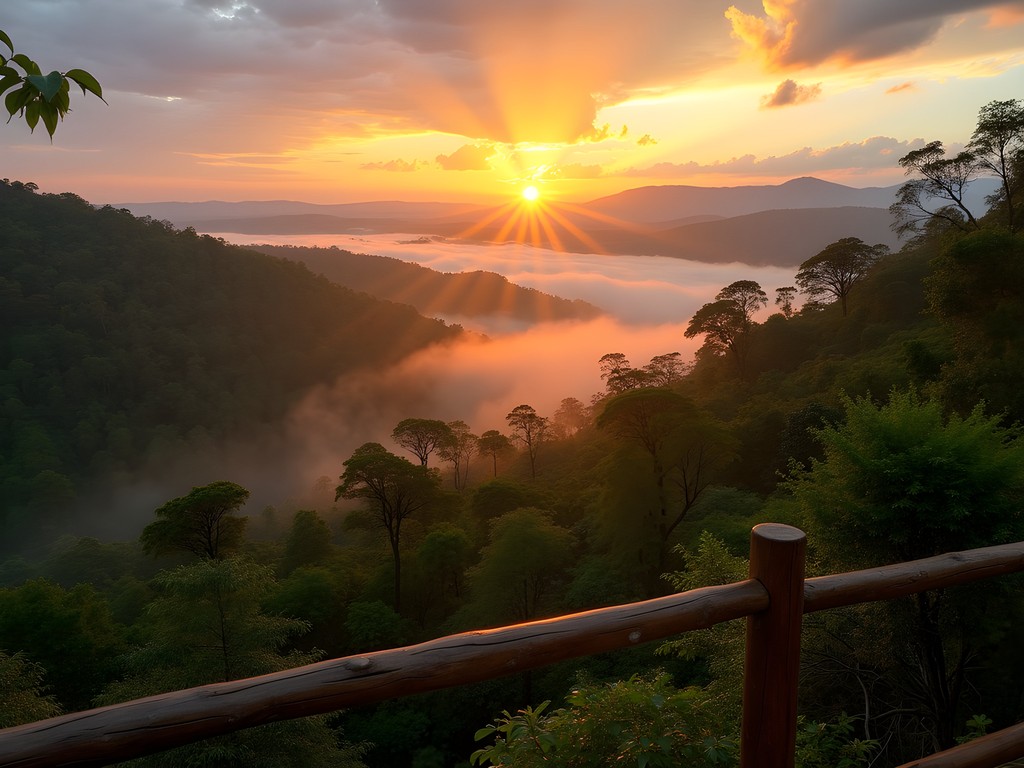
The highlight was Rwanda's breathtaking landscapes. We splurged on a one-night stay at a community-run ecolodge perched on a ridgeline overlooking Nyungwe Forest. The lodge employed former poachers as guides, creating sustainable livelihoods while protecting the forest. Their knowledge of plant medicine reminded me of the Appalachian Trail herbalists I'd met during my viral B&B adventure years ago.
Food costs plummeted as we entered regions with abundant agriculture. Local markets overflowed with fresh produce, and my fermentation expertise found new applications as I traded techniques with women making traditional fermented porridges and beverages. These exchanges usually ended with shared meals and invitations to family compounds.
We crossed into Tanzania at a remote border post where few tourists ventured. The immigration officer was so surprised to see us that he invited us to lunch with his family before stamping our passports. His wife taught me to make ugali (cornmeal porridge) the proper way – a skill I've since incorporated into my wilderness cooking workshops back home.
Throughout the highlands, we stayed primarily in small guesthouses and homestays, averaging $5-10 per night. The real value came from the connections – like the family in western Tanzania who taught us to identify medicinal plants during an impromptu forest hike, or the university students in Mwanza who showed us how to navigate Lake Victoria's ferry system like locals instead of paying tourist prices.
💡 Pro Tips
- Use iOverlander app to find budget accommodations near national parks
- Always ask for student discounts even at small guesthouses
- Learn to cook one local dish in each country you visit
Final Stretch: Tanzania's Interior to Dar es Salaam
The journey's final leg took us through Tanzania's interior toward the Indian Ocean. After weeks inland, the pull of the coast energized our tired bodies. We traveled by a combination of rural buses, motorcycle taxis, and the occasional pickup truck bed – each offering its own adventure and window into local life.
Dodoma, Tanzania's capital, provided a mid-range hostel where we splurged on private rooms ($15!) to reorganize our gear and prepare for the final push. The city's central market became our resupply station, where I replaced my worn sandals with locally-made leather ones that have outlasted any hiking sandals I've owned.
As we moved eastward, the landscape transformed from highland plateaus to rolling hills and eventually coastal plains. Villages grew more frequent, and with them, transportation options multiplied. We joined a group of university students returning to Dar es Salaam after holiday, sharing transportation costs and gaining invaluable local knowledge about navigating the city.
One of my favorite memories came from an unplanned stop in Morogoro, where engine trouble stranded our bus for eight hours. Rather than complain, I pulled out my portable hammock and strung it between mango trees near the repair shop. Soon, local children gathered to watch this strange spectacle. The afternoon evolved into an impromptu cultural exchange – they taught me traditional games while I showed them how to set up the hammock properly.
The approach to Dar es Salaam brought increasing humidity and the unmistakable scent of ocean. After weeks inland, that first glimpse of the Indian Ocean from the hills above the city felt like a victory summit on a challenging trail. We'd traversed a continent on a budget that most travel websites would deem impossible.
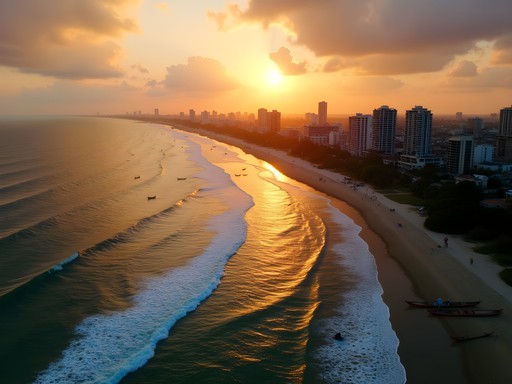
Our final night's accommodation – a modest guesthouse in the Msasani neighborhood – felt luxurious compared to some of our earlier stays. From its rooftop, I launched my drone one last time, capturing the meeting of urban sprawl and ocean blue. The footage showed a city of contrasts – colonial architecture alongside modern skyscrapers, fishing dhows beside container ships – a fitting final chapter to our cross-continental journey.

💡 Pro Tips
- Budget extra time for coastal bus journeys - breakdowns are common
- Download offline maps of Dar es Salaam before arriving - it's a sprawling city
- Consider booking your first night in Dar in advance - it's the one city where showing up without a plan can be overwhelming
Final Thoughts
As my flight lifted off from Dar es Salaam, I scrolled through a month's worth of images – ancient Timbuktu, the shrinking shores of Lake Chad, misty Rwandan forests, and countless faces of people who'd shared their lives and lands with us. This trans-African journey wasn't just about covering distance on a budget; it was about connecting with places in ways that packaged tours simply can't offer. For the students and budget travelers reading this – Africa isn't beyond your reach. With preparation, flexibility, and genuine curiosity, this continent offers adventures that will fundamentally change how you see the world. The $1,500 I spent crossing Africa provided richer experiences than any luxury safari could offer. So pack that backpack, do your research, and step into the journey. The ancient streets of Timbuktu are waiting for your footprints, and somewhere along the way, you'll discover that the true value of travel can't be measured in dollars spent.
✨ Key Takeaways
- Connecting with local students is the best way to find budget accommodation and transportation
- Learning basic phrases in regional languages opens doors that remain closed to typical tourists
- Wilderness skills translate across continents when you're willing to adapt them to new environments
- The most memorable experiences often come from unplanned detours and transportation breakdowns
- A drone can be worth its weight for unique perspectives, but always research local regulations
📋 Practical Information
Best Time to Visit
November-February (dry season across most regions)
Budget Estimate
$1,200-1,800 for one month all-inclusive
Recommended Duration
Minimum 3 weeks, ideally 4-6 weeks
Difficulty Level
Challenging
Comments
tripstar
What was your biggest surprise or unexpected challenge along the way?
Stella White
Honestly? The kindness of locals everywhere. Even in the most challenging areas, people went out of their way to help. Challenge-wise, the heat in the Sahel was more intense than I anticipated - had to adjust my travel schedule to avoid midday completely.
Marco Suzuki
Fascinating route, Stella. I've done segments of this journey but never the full Trans-African corridor. A few observations: The security dynamics in the Sahel have shifted considerably even in the past year - would you still recommend this specific routing today? Also, I noticed you didn't mention visa complications. The Niger-Chad border crossing can be particularly bureaucratic. Did you secure all visas in advance or handle them en route? For anyone considering this, I'd strongly suggest having backup routes planned, especially around the Lake Chad region. The Bradt guide has excellent alternative routing options if security situations change.
Stella White
Great points Marco. I got most visas in advance through embassies in Europe, which I'd definitely recommend. You're right about the security - I was monitoring local news constantly and had alternative routes ready. Wouldn't attempt the exact same path without checking current conditions first.
Megan Martin
This is exactly the kind of realistic assessment I was looking for. Thanks Marco and Stella.
photostar
Did you travel solo the whole way? And was it safe?
greenqueen
Absolutely love this!! The East African Highlands section sounds amazing. Been dreaming of doing something like this for years 💚
coffeeone
Your photos are stunning! How long did the whole trip take?
Stella White
Thanks! About 5 weeks total with a few rest days built in
Megan Martin
Stella, this is an impressive undertaking. I'm curious about your budget breakdown - you mentioned it was budget-friendly, but crossing these regions can be unpredictable cost-wise. What was your daily average? I'm planning a similar route for a client and would love to get realistic figures for the Sahel region particularly. The Lake Chad Basin section must have been challenging given the current security situation.
Stella White
Hi Megan! Daily average was around $45-50 USD including accommodation, food, and local transport. The Sahel was actually cheaper than expected - stayed in local guesthouses ($8-12/night). Lake Chad Basin was indeed tricky, had to hire a local guide which added about $30/day but was absolutely necessary.
moonphotographer
Quick question - what are the drone laws like in Mali and Niger? Been wanting to do something similar but worried about regulations
Stella White
Hey! Mali requires permits from the Ministry of Transport - took me about 3 days to get sorted in Bamako. Niger was trickier, I had to register with local authorities in each region. Definitely research ahead!
moonphotographer
Thanks so much! Super helpful
coffeefan
This is incredible!! Adding to my bucket list right now 🙌
safarilover
Going to Tanzania in December - how did you find the public transportation from Arusha to Dar? Worth it or should I just book a flight?
safarilover
Perfect, thanks! Will definitely try the bus then.
Stella White
The buses are actually quite decent on that route! Look for the Kilimanjaro Express company - comfy seats and AC. Takes about 10 hours but costs only $15-20 vs. $120+ for flights. Great way to see the countryside too!
Hunter Thompson
Absolutely brilliant route, Stella! I did a similar journey last year but took the southern route through Nigeria instead of Niger. The Lake Chad section of your trip looks fascinating - those shrinking shorelines are a sobering sight, aren't they? For anyone planning similar, I found my water filter absolutely essential through those remote areas. Did you find any decent budget accommodation near Moshi? I struggled a bit there with finding places that weren't either super basic or tourist-priced.
adventurous_soul
Hunter - how was the security situation going through Nigeria? I've been hesitant about that route.
Hunter Thompson
I stuck to recommended areas and traveled with local guides when needed. Definitely do your research on current conditions before going - things change quickly!
Stella White
Thanks Hunter! For Moshi, I found a great little hostel called Mountain Breeze about 2km from the town center. Only $12/night and the owner helps arrange budget Kilimanjaro day hikes. Not fancy but clean and friendly!
Venture X
Premium card with 2X miles, $300 travel credit, Priority Pass