


Disclosure: This article contains affiliate links. We may earn a commission from purchases at no extra cost to you, which helps our travel content.
When I told my Filipino mom I was heading to Ndola, Zambia, her first question was, 'Anak, where exactly is that on the map?' Fair question. Tucked in Zambia's industrial Copperbelt Province, Ndola isn't your typical backpacker destination. But after spending a week here during fall break from my remote customer service gig, I discovered a city where industrial grit meets vibrant markets, where copper mining history intertwines with living craft traditions, and where budget travel doesn't mean missing out on authentic experiences.

Getting There & Around: Copper Routes on a Budget
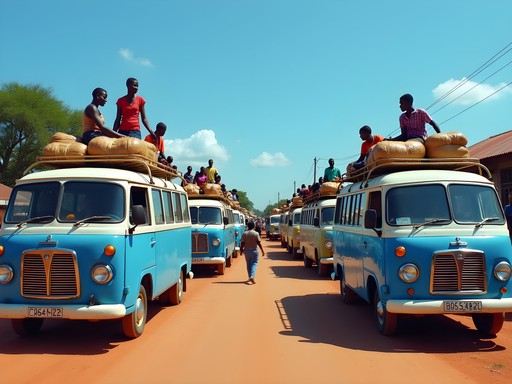
Ndola is served by Simon Mwansa Kapwepwe International Airport, but budget travelers like me usually fly into Lusaka (the capital) and take the 4-hour bus journey north. I snagged a one-way ticket on the Mazhandu Family Bus for just 130 Kwacha ($7) – an adventure in itself as I shared snacks with curious local university students heading home for break.
Once in Ndola, getting around is surprisingly easy. The city center is walkable, and shared minibuses (locals call them 'kombis') connect major points for 5-10 Kwacha per trip. For exploring the outskirts or mining areas, I relied on my offline maps app which proved invaluable when navigating to remote craft villages without cell service. If you're traveling with friends, splitting private taxis becomes affordable – just be sure to negotiate rates upfront (I learned this lesson the hard way after an awkward fare disagreement near the market).

💡 Pro Tips
- Download an offline map app before arrival – cell service can be spotty
- Learn basic Bemba greetings like 'Muli shani' (How are you?) – locals appreciate the effort
- Take photos of taxi rates posted at the bus station to reference during negotiations
Budget Accommodation: Rest Your Head Without Breaking the Bank
Ndola isn't exactly flush with hostels, but budget options exist if you know where to look. My home base was Tapestry Guest House near the city center – basic but clean rooms from 250 Kwacha ($13) per night including a simple breakfast. The real value was the communal kitchen where I cooked meals with ingredients from the market and swapped stories with South African mining contractors and Congolese traders.
For ultra-budget travelers, Dola Hill Backpackers offers dorm beds starting at 150 Kwacha, though facilities are minimal. If you're willing to splurge for one night, Ndola's Michelangelo Hotel has surprisingly affordable weekend rates (around 600 Kwacha) and a pool that's perfect for Zambia's hot afternoons.
My best accommodation tip? I packed my portable door lock which gave me peace of mind in budget accommodations with questionable door security. This tiny gadget has been a lifesaver throughout my travels across Southeast Asia and now Africa.

💡 Pro Tips
- Book accommodations directly by phone or email for better rates than online platforms
- Bring earplugs – Ndola is an industrial city and noise can be an issue
- Ask for rooms away from the street for quieter nights
Copperbelt Museum & Mining Heritage: Industrial Craft Meets History
The Copperbelt Museum became my unexpected favorite spot in Ndola. For just 50 Kwacha ($2.50) for foreign visitors, you get a fascinating glimpse into how copper mining shaped Zambia's identity. What drew me in weren't just the industrial exhibits, but the incredible collection of traditional tools used by early metalworkers.
As someone obsessed with traditional crafts, I was thrilled to discover the museum occasionally hosts demonstrations by local artisans who transform copper wire into intricate jewelry and sculptures. I spent an afternoon learning basic wire-wrapping techniques from Mr. Chanda, a third-generation copper artisan who laughed at my clumsy fingers but patiently showed me again and again.
To record these craft techniques (part of my ongoing documentation project), I relied on my pocket audio recorder which captures crystal-clear audio even in noisy environments. This has been essential for preserving the stories and techniques shared by artisans I meet worldwide.
Don't miss the museum's back room where they've reconstructed a traditional village showing how copper was worked before industrial mining began. The contrast between ancient techniques and modern extraction methods tells a powerful story about Zambia's relationship with this precious metal.

💡 Pro Tips
- Visit on Wednesdays when local school groups come through – guides give more detailed explanations
- Ask at the front desk about any scheduled craft demonstrations
- The museum cafe serves affordable local food in a peaceful garden setting

Market Adventures & Street Food: Eating Well on Pennies
Ndola Central Market is sensory overload in the best possible way. This sprawling marketplace is where I stretched my kwacha furthest, both for meals and unique souvenirs. The textile section offers stunning chitenge fabrics (traditional printed cloth) starting at just 30 Kwacha – I bought several to bring home as gifts and to use in my own weaving projects.
The food section became my daily haunt. A filling meal of nshima (maize porridge) with side dishes costs around 15-25 Kwacha ($1-1.50) from market stalls. My favorite discovery was a woman who made vegetable sambusas (samosa-like pastries) for just 2 Kwacha each – I'd grab five as an affordable breakfast while wandering.
Street food requires some precautions in Zambia. I never travel without my water purification tablets which saved me countless times when safe drinking water wasn't available. For eating street food safely, I followed my Filipino mother's advice: look for busy stalls with high turnover and food cooked fresh in front of you.
Don't miss the dried mopane worms – a protein-rich local delicacy that tastes better than it sounds (think earthy and nutty). After some encouragement from laughing market women, I tried them sprinkled with chili powder. Not bad at all, though the texture takes some getting used to!

💡 Pro Tips
- Visit the market early morning (6-8am) for the freshest produce and most authentic local experience
- Bring small bills – vendors rarely have change for larger notes
- Learn numbers in Bemba to better understand prices quoted by vendors
Day Trips & Hidden Craft Villages: Beyond the City Limits
The real magic of Ndola happens when you venture beyond city limits. About 30km outside town lies Kaniki Village, where I discovered a community of basket weavers creating intricate designs from locally harvested reeds. Unlike tourist-oriented craft centers, this is a working village where craft is still integrated into daily life. I spent a day learning basic weaving techniques, my hands fumbling with patterns that young children executed perfectly.
To visit these outlying villages, you'll need transportation. I joined forces with two German geology students I met at my guesthouse, and we split the cost of hiring a driver for the day (600 Kwacha total, or about $10 each). Worth every penny for the authentic experiences.
When visiting remote areas, I always bring my solar charger which keeps my phone and camera powered even when electricity is unavailable. This has been essential for documenting crafts in off-grid locations throughout my travels.
Another worthwhile day trip is to Dag Hammarskjöld Memorial, marking where the UN Secretary-General's plane crashed in 1961. The site is hauntingly peaceful, and the modest museum contextualizes this important moment in Zambia's path to independence. The 50 Kwacha entrance fee includes a knowledgeable guide.

💡 Pro Tips
- Bring small gifts like notebooks or pencils when visiting villages – useful for local schools
- Learn to say 'Natotela' (thank you) in Bemba – goes a long way with local craftspeople
- Arrange transportation a day in advance as drivers to remote areas can be hard to find last-minute
Final Thoughts
As my week in Ndola drew to a close, I found myself with a backpack full of copper wire sculptures, basket-weaving materials, and chitenge fabrics – each item connected to the hands that created it and the stories shared over its making. Ndola won't appear on most backpackers' Zambian itineraries, overshadowed by Victoria Falls and wildlife safaris. But for travelers seeking authentic cultural exchange and craft traditions still practiced as part of daily life (not just for tourists), this industrial city offers rich rewards.
The copper that built this city continues to shape its identity, from industrial mining operations to the delicate wire art created in small workshops. As a documentation project, my time here revealed how traditional craft knowledge adapts and survives alongside industrial development – something I've observed from Vietnam to Eastern Europe, and now Zambia.
So if you're a student traveler looking to stretch your budget while experiencing a side of Africa few tourists see, give Ndola a chance. Pack light, bring an open mind, and be ready to accept the generous hospitality of a place not yet jaded by tourism. Natotela, Ndola – until we meet again.
✨ Key Takeaways
- Ndola offers authentic cultural experiences at budget prices with almost no other tourists
- Traditional crafts like copper wire art and basket weaving are still practiced as living traditions, not just tourist souvenirs
- Combining resources with other travelers makes remote village visits and craft demonstrations more affordable
- Learning basic Bemba phrases opens doors to deeper cultural exchanges
- The contrast between industrial mining and traditional craftsmanship tells a complex story about Zambia's relationship with copper
📋 Practical Information
Best Time to Visit
May-October (dry season), September-October ideal (cooler, less dusty)
Budget Estimate
$25-35/day including accommodation, food, transport and activities
Recommended Duration
3-5 days (7 if including village visits)
Difficulty Level
Moderate (Limited Tourism Infrastructure, Some Language Barriers)
Comments
first_time_africa
Going there next month, any other tips? Is ATM access reliable or should I bring more cash?
zambia_returns
Not the author but I was there recently - ATMs in town center work fine but bring some USD as backup. Markets are cash only and you'll get better deals with small bills!
first_time_africa
Perfect, thanks for the tip!
Jean Wells
For anyone following Jeffrey's footsteps to Ndola, I'd recommend allocating extra time for conversations with copper artisans. Many have fascinating stories about how mining industry changes have affected traditional crafts. The older artisans particularly can trace design evolution through colonial periods to independence. These conversations provided some of my most meaningful insights into Zambia's economic transitions. Also, the Copperbelt University occasionally hosts cultural events open to visitors - worth checking their bulletin boards when in town.
photo_trekker
That market photo is incredible! The colors of the chitenge fabrics pop so beautifully. What camera setup did you use?
Jeffrey Ruiz
Thanks! Just my trusty old Sony a6000 with the kit lens. The fabrics do all the work honestly - they're even more vibrant in person!
global_nomad_22
Great post! Did you have any language barrier issues? My French is decent but not sure how useful that would be in Zambia.
Jeffrey Ruiz
English is widely spoken in Ndola, especially in areas tourists frequent. Your French might help with some DRC visitors but isn't necessary. Learning a few Bemba greetings goes a long way though!
backpack_wanderer
We did the public minibuses too and it was quite the adventure! That conductor guy hanging out the door shouting destinations was both terrifying and hilarious. Did you try the dried fish from the market? My stomach wasn't ready for it but my local friend absolutely loved it. Also bought one of those copper wire bicycles as a souvenir - still sits on my desk as a reminder of Zambia. Used my travel journal to sketch some of the amazing market scenes.
copper_road_traveler
Those minibuses are wild! I swear they fit like 20 people in a 10-person vehicle when I was there.
backpack_wanderer
Exactly! And somehow they always find room for 'just one more' lol
zambia_fan_2023
Love this! Ndola never gets enough attention in travel blogs. Great to see someone exploring beyond Victoria Falls and safaris!
oceanace
Going there next month!
Jean Wells
Jeffrey, your guide brings back memories of my visit to Ndola last year. The industrial heritage juxtaposed against everyday Zambian life creates such a unique atmosphere that few travelers experience. I found the Copperbelt Museum particularly enlightening regarding the colonial mining history and its ongoing impact on local communities. One aspect you might consider adding is the Sunday market near Kansenshi - it attracts fewer tourists but offers authentic interaction with locals. I documented the changing economic landscape there for my socioeconomic travel series and found residents remarkably candid about both challenges and opportunities in post-industrial Ndola.
Jeffrey Ruiz
Jean, thanks for the thoughtful addition! I completely missed the Kansenshi Sunday market - will definitely check it out next time. Would love to read your socioeconomic piece if you have a link.
nomadtime
How's the public transport situation for getting TO Ndola from Lusaka? Thinking of doing a northern Zambia loop.
Jeffrey Ruiz
Buses run pretty regularly from Lusaka - takes about 5-6 hours. I used Mazhandu Family Bus Services, cost around 150 kwacha. Comfortable enough and they actually left on time which was nice!
nomadtime
Perfect, thanks!
adventurebuddy
This is exactly what I needed! Heading to Zambia in November and adding Ndola to my itinerary now. How safe did you feel walking around the markets alone?
Jeffrey Ruiz
Hey @adventurebuddy! I felt pretty safe overall. Like any city, just keep your wits about you. The market vendors were super friendly, especially if you attempt a few words in Bemba. Enjoy your trip!
adventurebuddy
Thanks Jeffrey! Will definitely learn some basic phrases then. Can't wait to check out those copper crafts you mentioned!
Venture X
Premium card with 2X miles, $300 travel credit, Priority Pass